Well Water Agreement With Landlord
Description
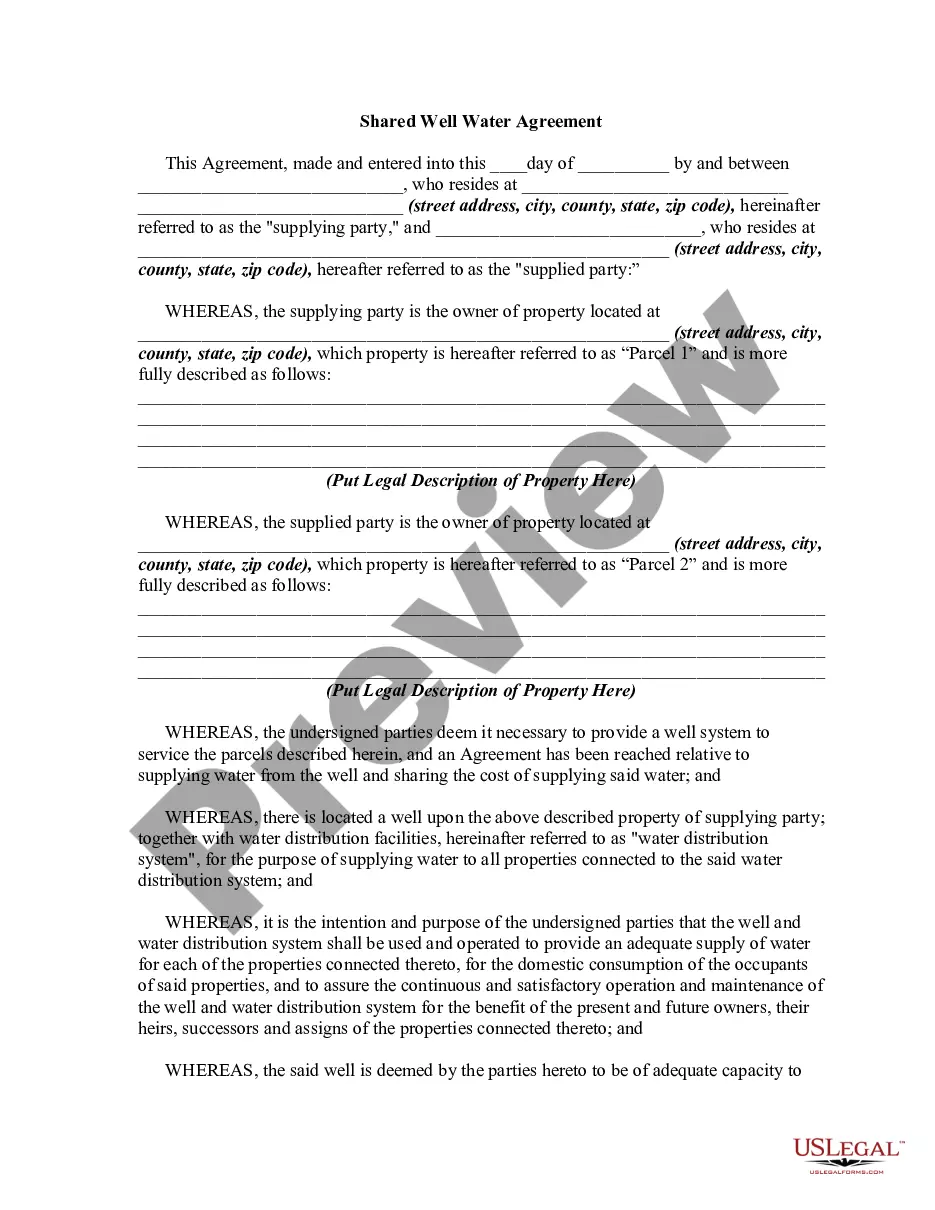
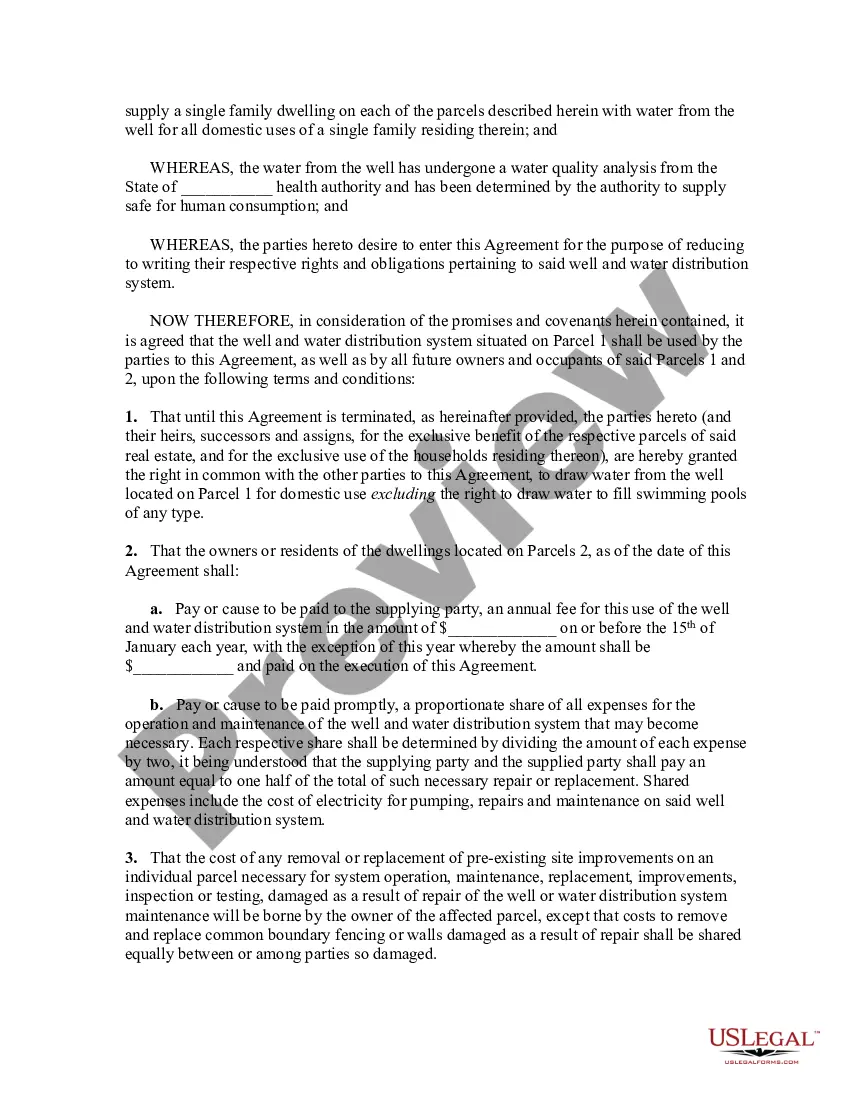
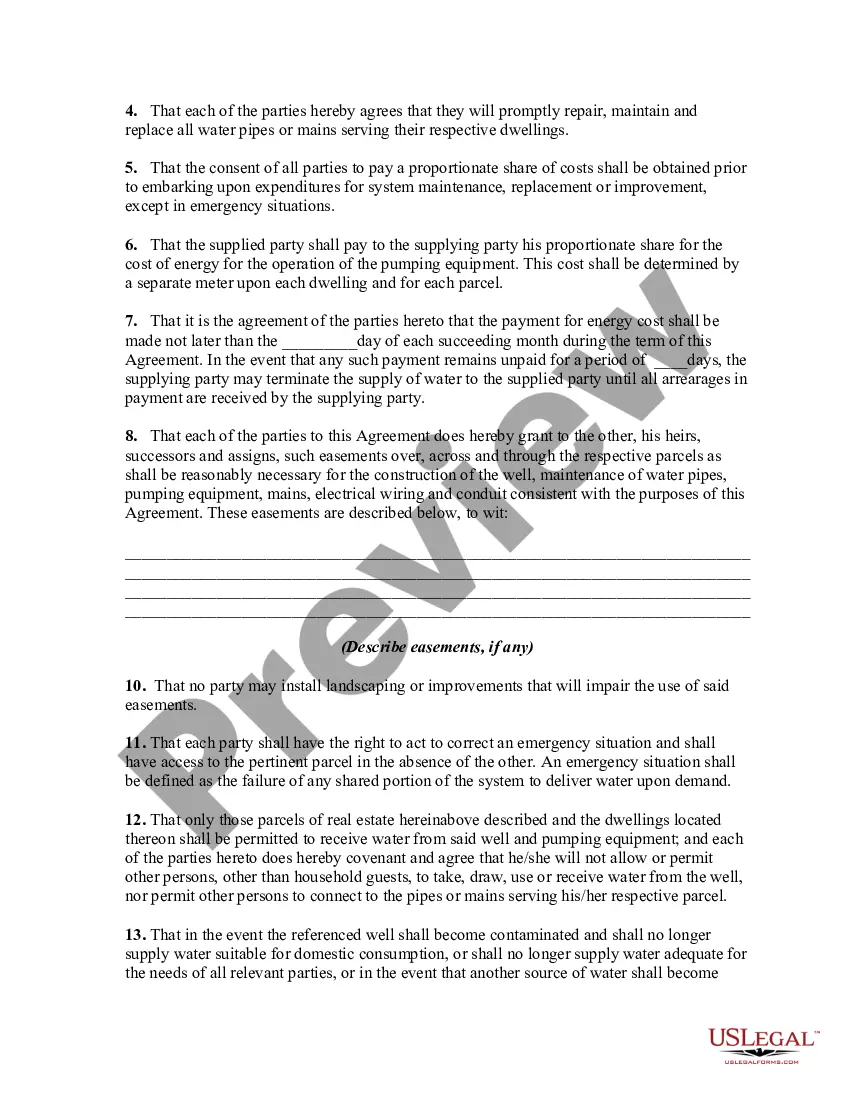
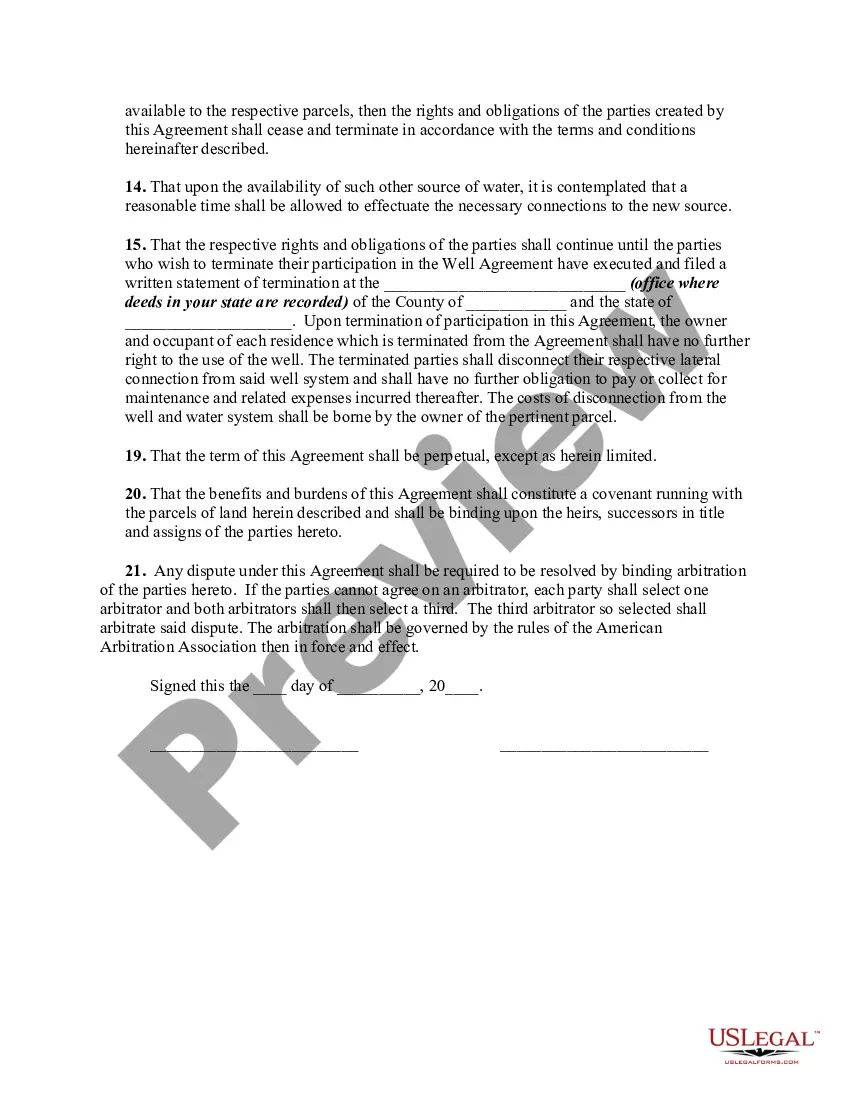
Get your form ready online
Our built-in tools help you complete, sign, share, and store your documents in one place.
Make edits, fill in missing information, and update formatting in US Legal Forms—just like you would in MS Word.
Download a copy, print it, send it by email, or mail it via USPS—whatever works best for your next step.
Sign and collect signatures with our SignNow integration. Send to multiple recipients, set reminders, and more. Go Premium to unlock E-Sign.
If this form requires notarization, complete it online through a secure video call—no need to meet a notary in person or wait for an appointment.
We protect your documents and personal data by following strict security and privacy standards.

Make edits, fill in missing information, and update formatting in US Legal Forms—just like you would in MS Word.

Download a copy, print it, send it by email, or mail it via USPS—whatever works best for your next step.

Sign and collect signatures with our SignNow integration. Send to multiple recipients, set reminders, and more. Go Premium to unlock E-Sign.

If this form requires notarization, complete it online through a secure video call—no need to meet a notary in person or wait for an appointment.

We protect your documents and personal data by following strict security and privacy standards.
Looking for another form?






How to fill out Shared Well Water Agreement?
- If you are a returning user, simply log in to your account and download the well water agreement template by clicking the Download button. Make sure your subscription is current; if not, renew it according to your payment plan.
- For first-time users, begin by reviewing the Preview mode and form description. Ensure that you have selected the appropriate form that fits your legal needs and complies with local regulations.
- If the initial form does not meet your requirements, utilize the Search tab to find another suitable template. Confirm it aligns with your specifications before proceeding.
- Purchase the needed document by clicking the Buy Now button and select your desired subscription plan. You will need to register an account to access the extensive library.
- Complete your payment using your credit card or PayPal to finalize the subscription.
- Download your completed form directly to your device and access it anytime from the My documents section of your profile.
US Legal Forms stands out by providing a robust collection of over 85,000 easily fillable legal forms. This extensive library, combined with access to premium experts, ensures you create precise and legally sound documents.
Don't leave your well water agreement to chance. Get started today with US Legal Forms for a seamless legal document experience!
Form popularity
FAQ
Houses run on well water by utilizing a pump system that draws water from the well and delivers it throughout the home. This system allows for various uses, including drinking, bathing, and washing. To protect your interests, a well water agreement with landlord can clarify water usage rights and responsibilities, ensuring a consistent and quality water supply for all parties involved.
Some downsides of having well water include potential water quality issues and the need for regular testing and maintenance. Contaminants can affect water safety, which is why monitoring is crucial. A well water agreement with landlord can help define who is responsible for these tests and any associated costs, promoting a proactive and healthy living environment.
Buying a house with well water can be a sound investment if you understand the implications and responsibilities. While it offers independence from municipal water supply, it also requires regular monitoring and maintenance. A well water agreement with landlord can provide clear responsibilities that safeguard your investment and ensure that you enjoy the benefits without unexpected issues.
A residential well water system generally consists of a well, a pump, and various plumbing components that lead to the home. The well draws water from underground, while the pump pushes it through a filtration system and into your plumbing. When entering into a well water agreement with landlord, it's important to ensure that the system is properly functioning for both parties' convenience and to maintain water quality.
Well water functions by using a well drill to access underground water sources. A pump draws this water to the surface for your usage, supplying your home or property with water directly. Understanding how to manage and maintain the well is essential, especially when having a well water agreement with landlord, to ensure that both parties benefit from a reliable water supply.
A shared water agreement is a legal document that outlines the terms for using a water source, such as a well, between two or more parties. In this case, it typically involves a landlord and tenant arrangement, establishing rights and responsibilities regarding water access and maintenance. By creating a clear agreement, you can avoid disputes and ensure each party understands their obligations related to the well water agreement with landlord.
Yes, landlords are generally responsible for maintaining the well and ensuring safe water supply, especially when a well water agreement with the landlord exists. Their duty often includes regular testing and servicing of the well to meet safety standards set by local regulations. If there are issues, tenants should promptly report them to their landlord to uphold their rights. For those unsure about their agreements, platforms like US Legal Forms can provide valuable resources.
Landlords are typically not responsible for damages caused by a tenant’s negligence, such as poor upkeep of their own appliances. Additionally, if the well water agreement with the landlord specifies that tenants are responsible for certain maintenance tasks, landlords may not be liable. It’s important for tenants to review their lease to understand their responsibilities clearly. This clarity can prevent misunderstandings.
In Florida, landlords are responsible for maintaining a safe and habitable living environment. This includes providing adequate water service, as outlined in the well water agreement with the landlord. They must ensure that all plumbing and water supply systems are in good working order. Regular maintenance checks can help prevent disputes related to water issues.
Yes, you can sue a landlord for bad water if it violates your lease agreement or local health codes. Many landlords have a legal obligation to provide safe and clean water. If you have a well water agreement with your landlord, you should document any issues, as this evidence can be vital if legal action becomes necessary. It is wise to seek legal advice to understand your rights fully.