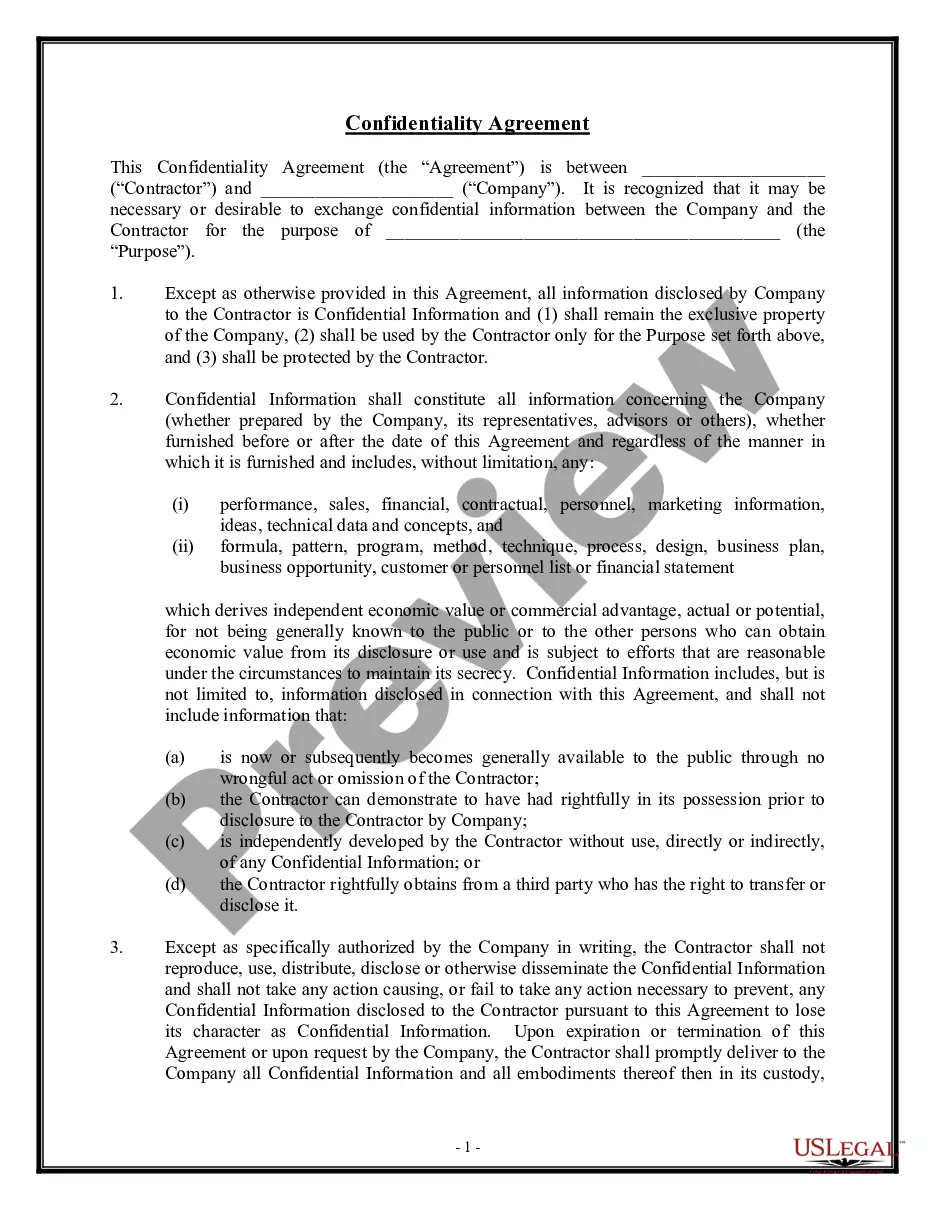
Confidentiality Agreement With Employees
Description

Get your form ready online
Our built-in tools help you complete, sign, share, and store your documents in one place.
Make edits, fill in missing information, and update formatting in US Legal Forms—just like you would in MS Word.
Download a copy, print it, send it by email, or mail it via USPS—whatever works best for your next step.
Sign and collect signatures with our SignNow integration. Send to multiple recipients, set reminders, and more. Go Premium to unlock E-Sign.
If this form requires notarization, complete it online through a secure video call—no need to meet a notary in person or wait for an appointment.
We protect your documents and personal data by following strict security and privacy standards.

Make edits, fill in missing information, and update formatting in US Legal Forms—just like you would in MS Word.

Download a copy, print it, send it by email, or mail it via USPS—whatever works best for your next step.

Sign and collect signatures with our SignNow integration. Send to multiple recipients, set reminders, and more. Go Premium to unlock E-Sign.

If this form requires notarization, complete it online through a secure video call—no need to meet a notary in person or wait for an appointment.

We protect your documents and personal data by following strict security and privacy standards.
Looking for another form?









How to fill out Confidentiality Agreements - Noncompetition In Employment?
Obtaining legal document templates that comply with federal and state laws is crucial, and the web provides countless alternatives to select from.
However, why spend time looking for the right Confidentiality Agreement With Employees sample online when the US Legal Forms digital library already consolidates such templates in one location.
US Legal Forms stands as the largest virtual legal repository featuring over 85,000 editable templates designed by legal professionals for every business and personal scenario.
Explore the template using the Preview option or through the text description to confirm it satisfies your needs.
- They are user-friendly with all documents categorized by state and intended use.
- Our specialists keep pace with legislative updates, ensuring your forms are always current and compliant when acquiring a Confidentiality Agreement With Employees from our site.
- Securing a Confidentiality Agreement With Employees is swift and straightforward for both existing and first-time users.
- If you already possess an account with an active subscription, Log In and retrieve the document template you require in your desired format.
- If you are new to our platform, follow these steps.
Form popularity
FAQ
The legal fees for a Confidentiality agreement with employees can vary depending on several factors, including the complexity of the agreement and the attorney's experience. Typically, you might expect fees to range from a few hundred to several thousand dollars. Additionally, utilizing platforms like US Legal Forms can provide affordable templates and resources, which may help reduce overall legal costs. Therefore, exploring these options can offer you greater flexibility and confidence when drafting your agreements.
An example of a confidentiality agreement with employees might include clauses that specify what information is considered confidential, such as customer lists and internal reports. It should also outline the employee's responsibilities regarding that information both during and after their employment. This agreement serves as a legal framework to protect the company's interests and maintain privacy. Utilizing templates from platforms like US Legal Forms can streamline this process.
Confidentiality in the workplace refers to the practices that protect sensitive information. Examples include keeping client records secure, restricting access to proprietary software, and maintaining privacy during discussions about employee performance. These measures help build trust with clients and employees alike. A well-defined confidentiality agreement with employees can help ensure everyone understands the importance of these practices.
To write a simple confidentiality agreement, begin with a clear title and introductory statement. Include sections on the definitions of confidential information, obligations of the parties, and the duration of confidentiality. Ensure you provide details about permissible exceptions and consequences for violations. Resources such as US Legal Forms can offer templates to help you craft a strong confidentiality agreement with employees.
A confidentiality statement might say something like, 'I agree not to disclose any confidential information acquired during my employment at Company Name. This includes trade secrets, client lists, and proprietary processes.' Such statements are crucial as they remind employees of their obligations to protect company information. A comprehensive confidentiality agreement with employees can formalize this commitment.
To complete a confidentiality agreement, start by clearly stating the names and roles of all parties involved. Next, outline the confidential information being protected and specify the duration of the agreement. After providing details about permissible disclosures and consequences for breaches, ensure that all parties sign and date the document. Using a template for a confidentiality agreement with employees can simplify this process.
Confidentiality rules for employees typically include directives on handling sensitive information. Employees should only share confidential data on a need-to-know basis, both during and after their employment. Additionally, they must secure confidential documents and refrain from discussing sensitive matters in public spaces. Adopting a confidentiality agreement with employees reinforces these rules and clarifies their responsibilities.
A confidentiality policy for employees establishes guidelines that protect sensitive information within a company. For instance, it may state that employees must not disclose trade secrets, client data, or internal processes without permission. By implementing such a policy, organizations ensure employees understand the importance of safeguarding confidential information. A well-drafted confidentiality agreement with employees can support this policy effectively.
An example of a statement of confidentiality might read, 'I, Employee Name, acknowledge that during my employment, I will have access to confidential information belonging to Company Name. I agree to maintain the confidentiality of this information both during and after my employment.' This statement emphasizes the commitment to protect sensitive data and can be included in a confidentiality agreement with employees for clarity.
The confidentiality policy of employees outlines the expectations and responsibilities regarding sensitive information within a company. It typically includes guidelines on what constitutes confidential information and consequences for breaches. A solid confidentiality policy ensures that all employees understand their role in maintaining privacy. Implementing a comprehensive confidentiality agreement with employees reinforces this policy and strengthens trust within the organization.