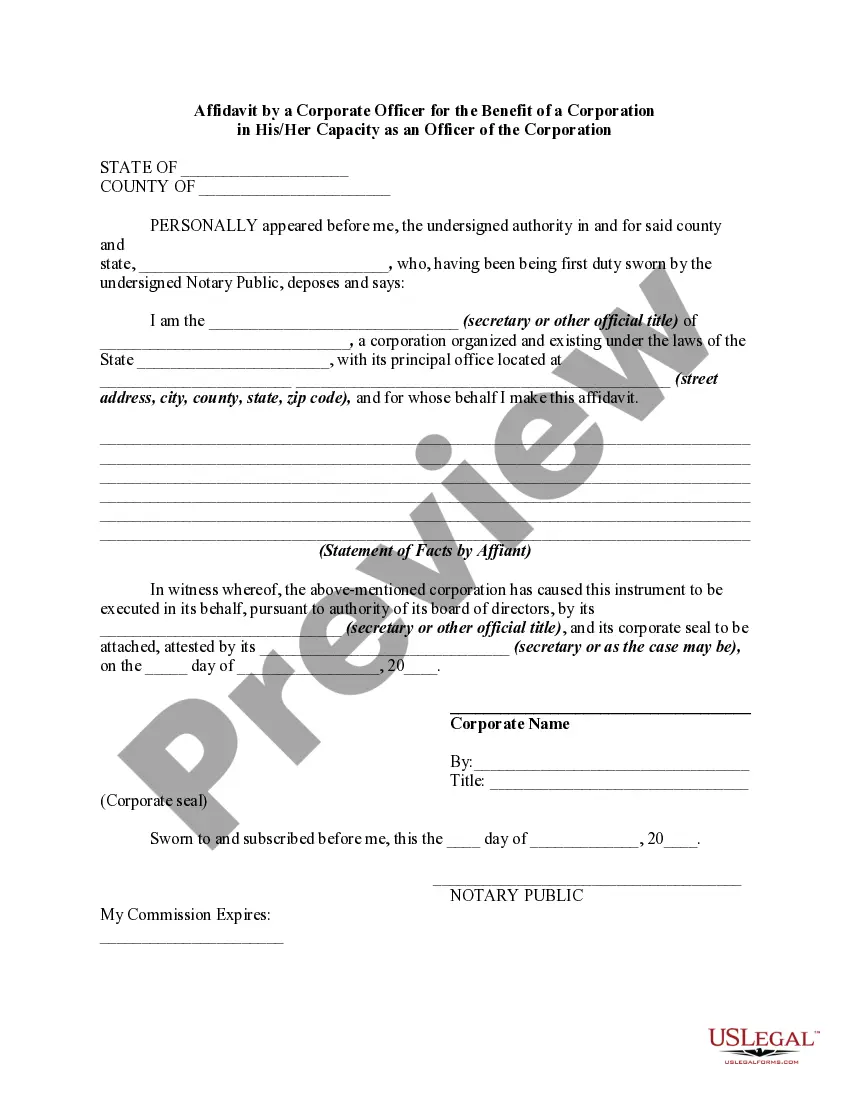
Officer Roles In Corporation
Description

Get your form ready online
Our built-in tools help you complete, sign, share, and store your documents in one place.
Make edits, fill in missing information, and update formatting in US Legal Forms—just like you would in MS Word.
Download a copy, print it, send it by email, or mail it via USPS—whatever works best for your next step.
Sign and collect signatures with our SignNow integration. Send to multiple recipients, set reminders, and more. Go Premium to unlock E-Sign.
If this form requires notarization, complete it online through a secure video call—no need to meet a notary in person or wait for an appointment.
We protect your documents and personal data by following strict security and privacy standards.

Make edits, fill in missing information, and update formatting in US Legal Forms—just like you would in MS Word.

Download a copy, print it, send it by email, or mail it via USPS—whatever works best for your next step.

Sign and collect signatures with our SignNow integration. Send to multiple recipients, set reminders, and more. Go Premium to unlock E-Sign.

If this form requires notarization, complete it online through a secure video call—no need to meet a notary in person or wait for an appointment.

We protect your documents and personal data by following strict security and privacy standards.
Looking for another form?


How to fill out Affidavit By A Corporate Officer For The Benefit Of A Corporation In His Or Her Capacity As An Officer?
It’s clear that you cannot become a legal expert instantly, nor can you swiftly master how to draft Officer Roles In Corporation without a specialized education.
Assembling legal documents is a lengthy endeavor that necessitates particular training and expertise. So why not entrust the preparation of the Officer Roles In Corporation to the professionals.
With US Legal Forms, one of the most comprehensive repositories of legal documents, you can locate anything from court forms to templates for internal communication.
You can re-access your documents from the My documents section whenever you wish. If you’re a current customer, you can simply Log In, and find and download the template from the same section.
Regardless of the intention behind your documents—whether they are financial and legal, or personal—our platform has you covered. Experience US Legal Forms today!
- Explore the form you need by utilizing the search bar at the top of the webpage.
- View it (if this option is available) and examine the accompanying description to ascertain whether Officer Roles In Corporation meets your requirements.
- Restart your search if you require a different document.
- Create a free account and select a subscription plan to acquire the form.
- Select Buy now. Once the payment is processed, you can download the Officer Roles In Corporation, complete it, print it, and send or mail it to the designated recipients or entities.
Form popularity
FAQ
Corporate officers are typically appointed by the board of directors. This structure ensures that those in leadership roles align well with the company's objectives and needs. Maintaining clarity in the appointment process is vital for effective management within officer roles in corporation.
To add an officer to your corporation, follow your bylaws' guidelines to determine the process. Then, hold a board meeting to discuss and vote on the proposed candidate. Always remember to document this addition in your corporate records for clarity on officer roles in corporation.
Typically, the board of directors is responsible for appointing officers in a corporation. They have the authority to choose individuals based on their skills and fit for the role. This structure helps ensure that appointing officers aligns with the corporation's goals.
To add an officer to an S Corp, consult the corporation's bylaws to confirm the procedure. Then, call a meeting of the board of directors to approve the new officer's appointment. Document this addition in the corporate records to maintain clarity in officer roles in corporation.
An officer in a corporation generally includes positions such as the president, vice president, secretary, and treasurer. These individuals usually have specific responsibilities that help manage the corporation's operations. Identifying these roles is essential for defining officer roles in corporation.
To appoint officers to a corporation, you must first ensure that your corporation's bylaws allow for such appointments. Then, gather your board of directors to discuss and vote on potential candidates. Once the decisions are made, make sure to record the appointments officially in your corporate records.
To appoint officers in a corporation, you typically start with a board of directors meeting. During this meeting, the board can vote to appoint individuals to specific officer roles in the corporation. It is important to document this decision in the meeting minutes and update your corporate records.
Officers play multiple critical roles in a corporation, such as strategic planning, operational oversight, and risk management. They work closely with the board and employees to achieve business goals and ensure compliance with regulations. By delineating officer roles in corporations, companies can improve decision-making processes, enhance accountability, and drive success. To effectively manage your corporation, consider using resources like US Legal Forms for essential documents and insights.
Yes, an officer is typically considered an employee of the corporation. While they hold a higher level of authority and responsibility within the company, they are still subject to the employment terms established by the organization. Officers usually receive a salary and may also enjoy additional benefits. Identifying officer roles in corporations is crucial for differentiating between various employee levels.
In a company, an officer is responsible for guiding and managing its business activities. These individuals make critical decisions that affect the company's performance and long-term success. Officers often supervise departments, handle budgets, and set operational goals. Defining officer roles in corporations can enhance understanding and improve the management of the business.