Property Use Of Force
Description

Get your form ready online
Our built-in tools help you complete, sign, share, and store your documents in one place.
Make edits, fill in missing information, and update formatting in US Legal Forms—just like you would in MS Word.
Download a copy, print it, send it by email, or mail it via USPS—whatever works best for your next step.
Sign and collect signatures with our SignNow integration. Send to multiple recipients, set reminders, and more. Go Premium to unlock E-Sign.
If this form requires notarization, complete it online through a secure video call—no need to meet a notary in person or wait for an appointment.
We protect your documents and personal data by following strict security and privacy standards.

Make edits, fill in missing information, and update formatting in US Legal Forms—just like you would in MS Word.

Download a copy, print it, send it by email, or mail it via USPS—whatever works best for your next step.

Sign and collect signatures with our SignNow integration. Send to multiple recipients, set reminders, and more. Go Premium to unlock E-Sign.

If this form requires notarization, complete it online through a secure video call—no need to meet a notary in person or wait for an appointment.

We protect your documents and personal data by following strict security and privacy standards.
Looking for another form?




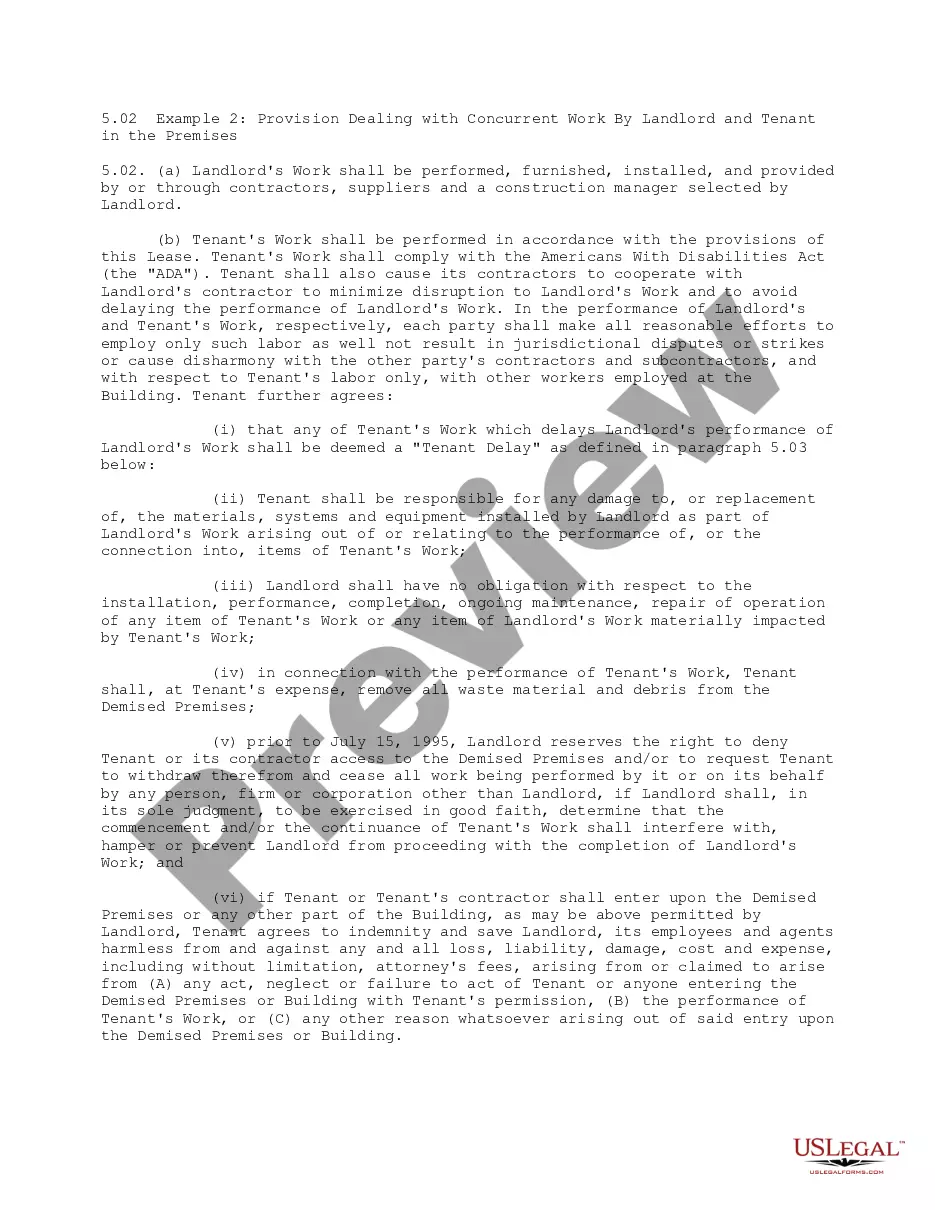


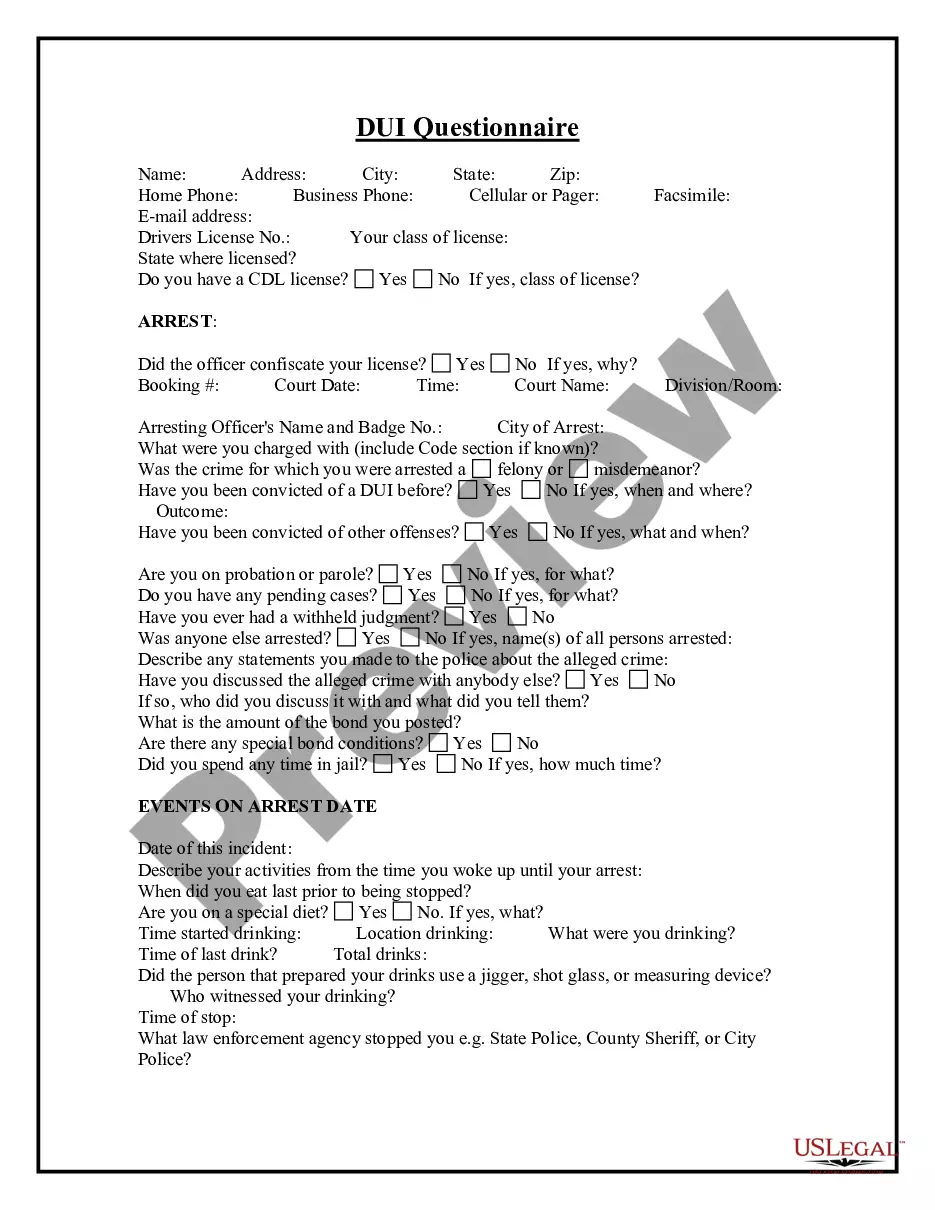

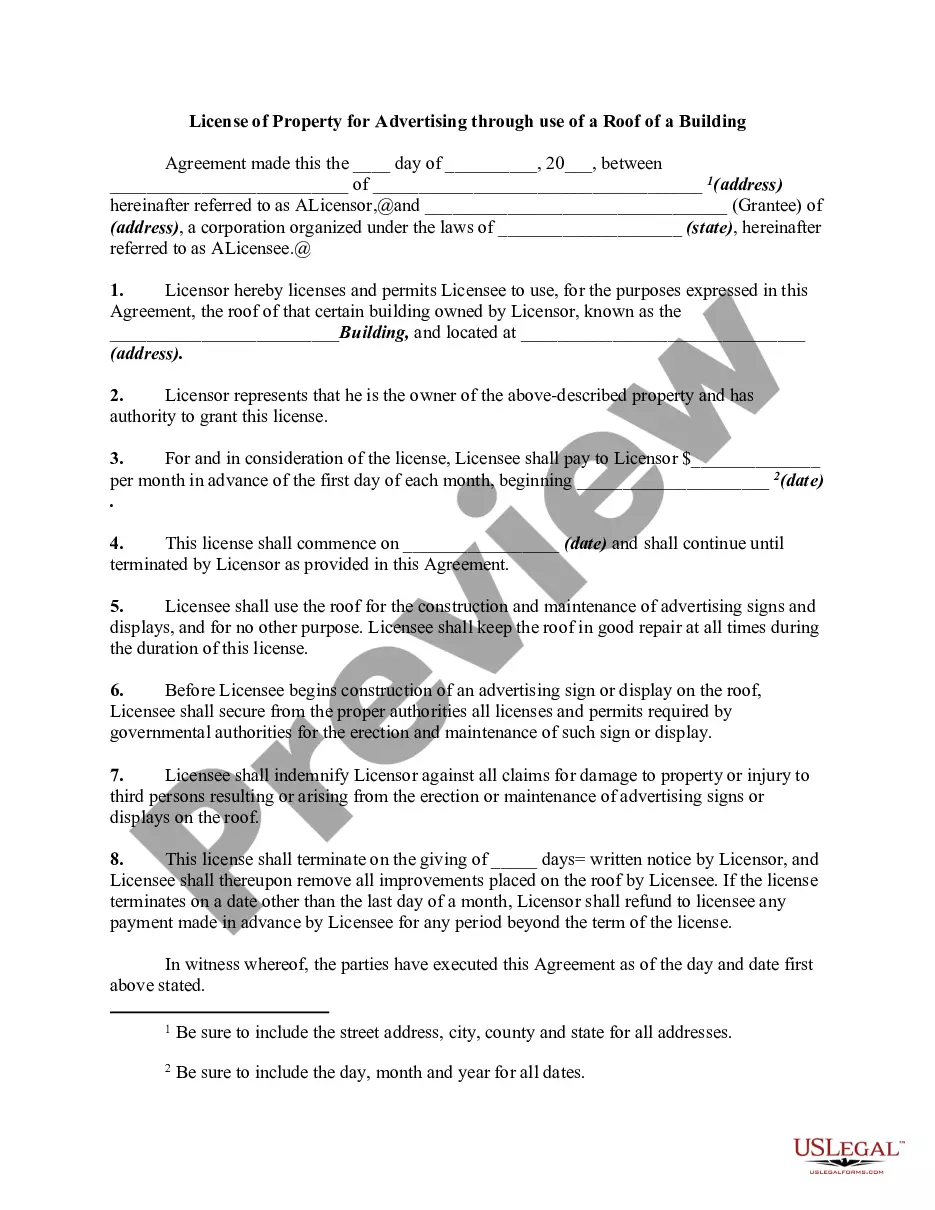
How to fill out License Of Property For Advertising Through Use Of A Roof Of A Building?
It’s widely known that you cannot transform into a legal expert instantly, nor can you learn to swiftly create a Property Use Of Force document without possessing a unique set of abilities.
Drafting legal documents is a lengthy endeavor that demands a specific level of education and expertise. So why not entrust the development of the Property Use Of Force to the professionals.
With US Legal Forms, one of the most extensive legal document repositories, you can discover anything from legal filings to templates for internal communication.
You can revisit your documents from the My documents section at any time. If you are an established client, you can simply Log In, and find and download the template from the same section.
No matter the reason for your documents—be it financial, legal, or personal—our platform is here to assist you. Give US Legal Forms a try today!
- Locate the document you require using the search feature at the top of the page.
- Preview it (if this option is available) and review the accompanying description to determine if Property Use Of Force matches what you need.
- If you require a different form, restart your search.
- Create a free account and choose a subscription plan to acquire the template.
- Select Buy now. After the payment is completed, you can access the Property Use Of Force, complete it, print it, and deliver or mail it to the appropriate individuals or organizations.
Form popularity
FAQ
Feeling threatened, Sarah approaches the intruder, takes hold of their arm, and firmly escorts them off her property. In this example, Sarah used reasonable and proportionate force to protect her property by physically removing the trespasser after requesting them to leave.
Robbery is defined as the taking of another's property by force or threat. It is sometimes also referred to as larceny by threat or force. Because robbery involves injury or the threat of injury, it is considered a more serious crime than many of the other theft crimes.
The amount of force that a defendant may legally use to protect real or personal property is reasonable force, under the circumstances (K.S.A., 2010). The defendant can also chase someone who steals personal property and take the item back (Conn. Gen. Stat., 2010).
The law of defense of property in Los Angeles justifies a defendant's use of force against another person to protect their premises or personal property from immediate danger. Common scenarios where this defense may apply include home invasions, trespassers on a property, and thefts.
Non-deadly force can be used to protect property that is in the defendant's lawful possession if the force that the defendant uses reasonably appears to be necessary to prevent or terminate an unlawful intrusion onto, or interference with, that property.