Landlord Trampoline Waiver Form
Description
Get your form ready online
Our built-in tools help you complete, sign, share, and store your documents in one place.
Make edits, fill in missing information, and update formatting in US Legal Forms—just like you would in MS Word.
Download a copy, print it, send it by email, or mail it via USPS—whatever works best for your next step.
Sign and collect signatures with our SignNow integration. Send to multiple recipients, set reminders, and more. Go Premium to unlock E-Sign.
If this form requires notarization, complete it online through a secure video call—no need to meet a notary in person or wait for an appointment.
We protect your documents and personal data by following strict security and privacy standards.

Make edits, fill in missing information, and update formatting in US Legal Forms—just like you would in MS Word.

Download a copy, print it, send it by email, or mail it via USPS—whatever works best for your next step.

Sign and collect signatures with our SignNow integration. Send to multiple recipients, set reminders, and more. Go Premium to unlock E-Sign.

If this form requires notarization, complete it online through a secure video call—no need to meet a notary in person or wait for an appointment.

We protect your documents and personal data by following strict security and privacy standards.
Looking for another form?










Form popularity
FAQ
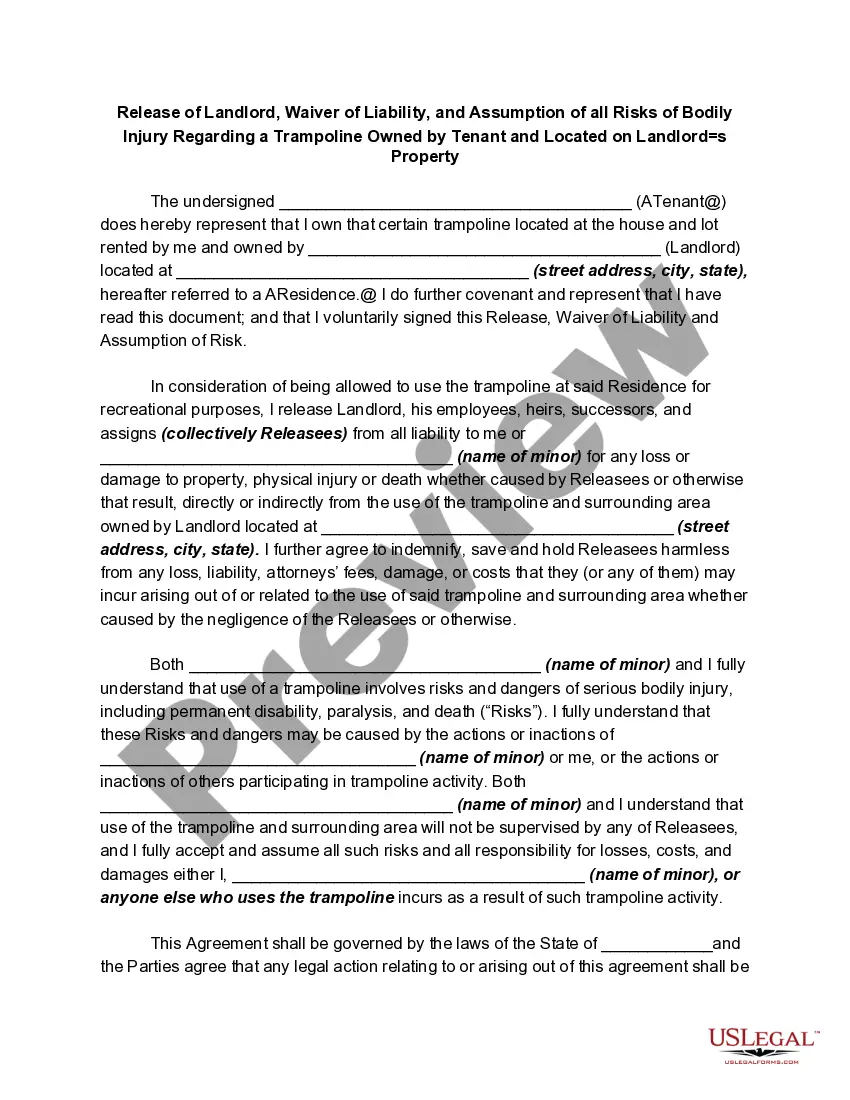
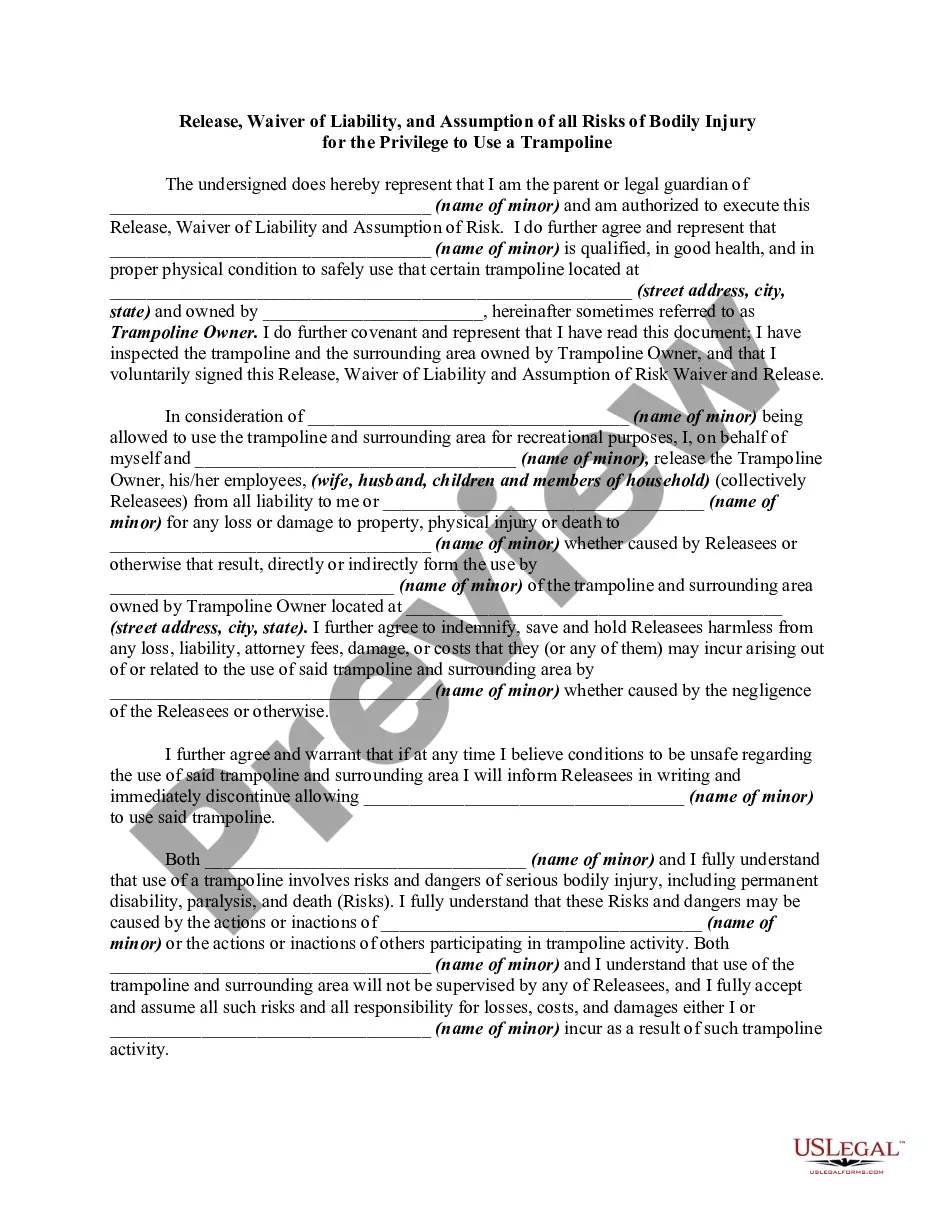
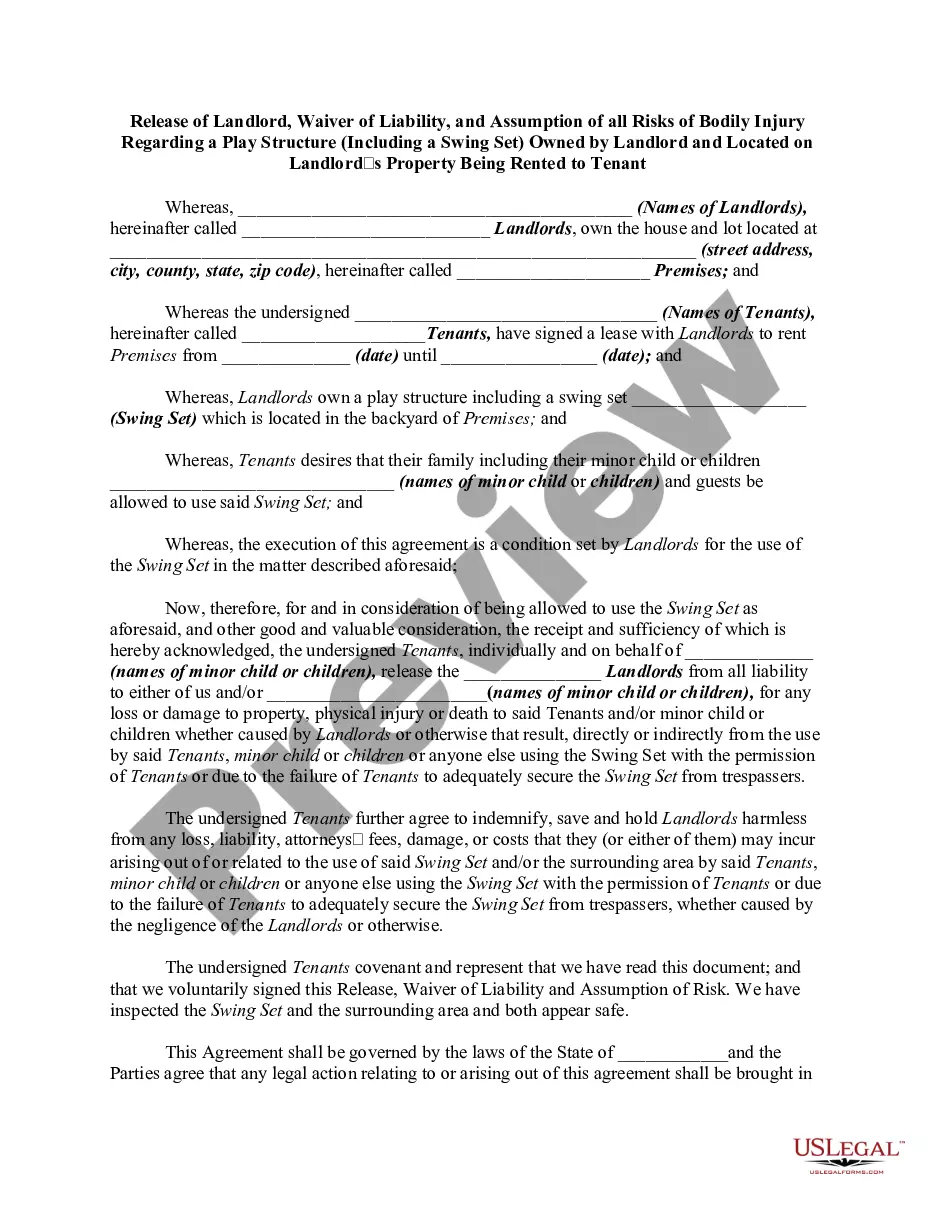
Writing a waiver form starts with ensuring it contains all necessary elements like participant information, activity details, and liability acknowledgments. Use simple language and be direct about the risks involved. A well-crafted 'Landlord trampoline waiver form' effectively communicates expectations and protects both parties involved.
An example of a waiver statement could be: 'I, the undersigned, acknowledge that I have read and understood the terms of the Landlord trampoline waiver form, including the associated risks, and voluntarily assume such risks.' This concise statement ensures clarity and can protect the property owner from liability.
Writing a waiver application involves drafting a formal request that outlines the specific circumstances for which you seek a waiver. Clearly state your reasons and provide any necessary background information. Mention how the terms of a 'Landlord trampoline waiver form' will address the unique situation you are facing.
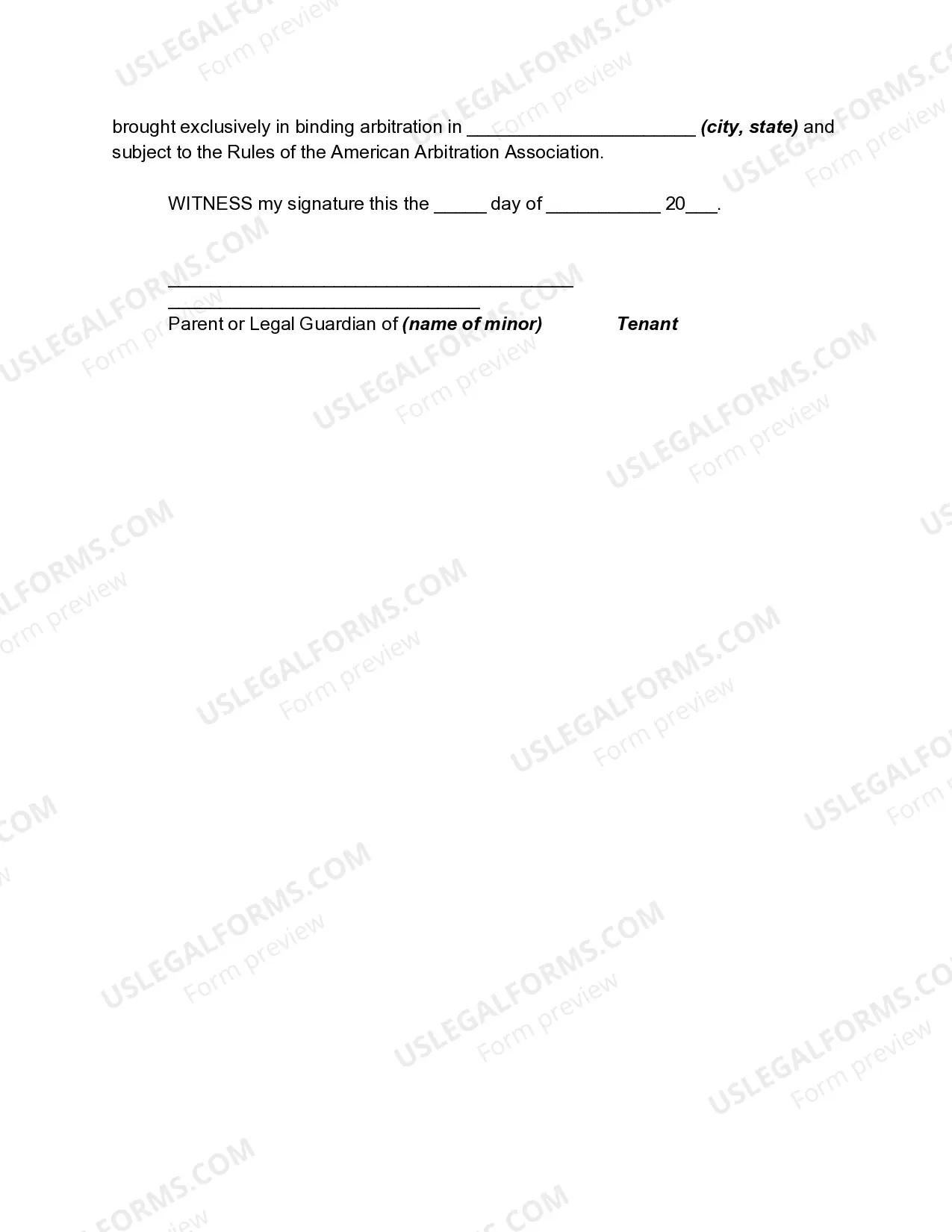
Begin your waiver form by including essential details such as the names of the parties involved and the date. Next, explain the context for the waiver, detailing any potential risks associated with activities. Conclude with a signature line and a statement like 'I understand the terms of this Landlord trampoline waiver form,' to affirm acknowledgment from the signer.
To create an effective waiver, start by clearly stating the purpose of the document. Use straightforward language and outline the specific risks associated with the activity in question. Remember to include a section where the signer acknowledges these risks, ideally using the term 'Landlord trampoline waiver form' to emphasize its relevance to your specific situation.
