Grantor Grantee Statement Fort Worth
Description
Get your form ready online
Our built-in tools help you complete, sign, share, and store your documents in one place.
Make edits, fill in missing information, and update formatting in US Legal Forms—just like you would in MS Word.
Download a copy, print it, send it by email, or mail it via USPS—whatever works best for your next step.
Sign and collect signatures with our SignNow integration. Send to multiple recipients, set reminders, and more. Go Premium to unlock E-Sign.
If this form requires notarization, complete it online through a secure video call—no need to meet a notary in person or wait for an appointment.
We protect your documents and personal data by following strict security and privacy standards.

Make edits, fill in missing information, and update formatting in US Legal Forms—just like you would in MS Word.

Download a copy, print it, send it by email, or mail it via USPS—whatever works best for your next step.

Sign and collect signatures with our SignNow integration. Send to multiple recipients, set reminders, and more. Go Premium to unlock E-Sign.

If this form requires notarization, complete it online through a secure video call—no need to meet a notary in person or wait for an appointment.

We protect your documents and personal data by following strict security and privacy standards.
Looking for another form?







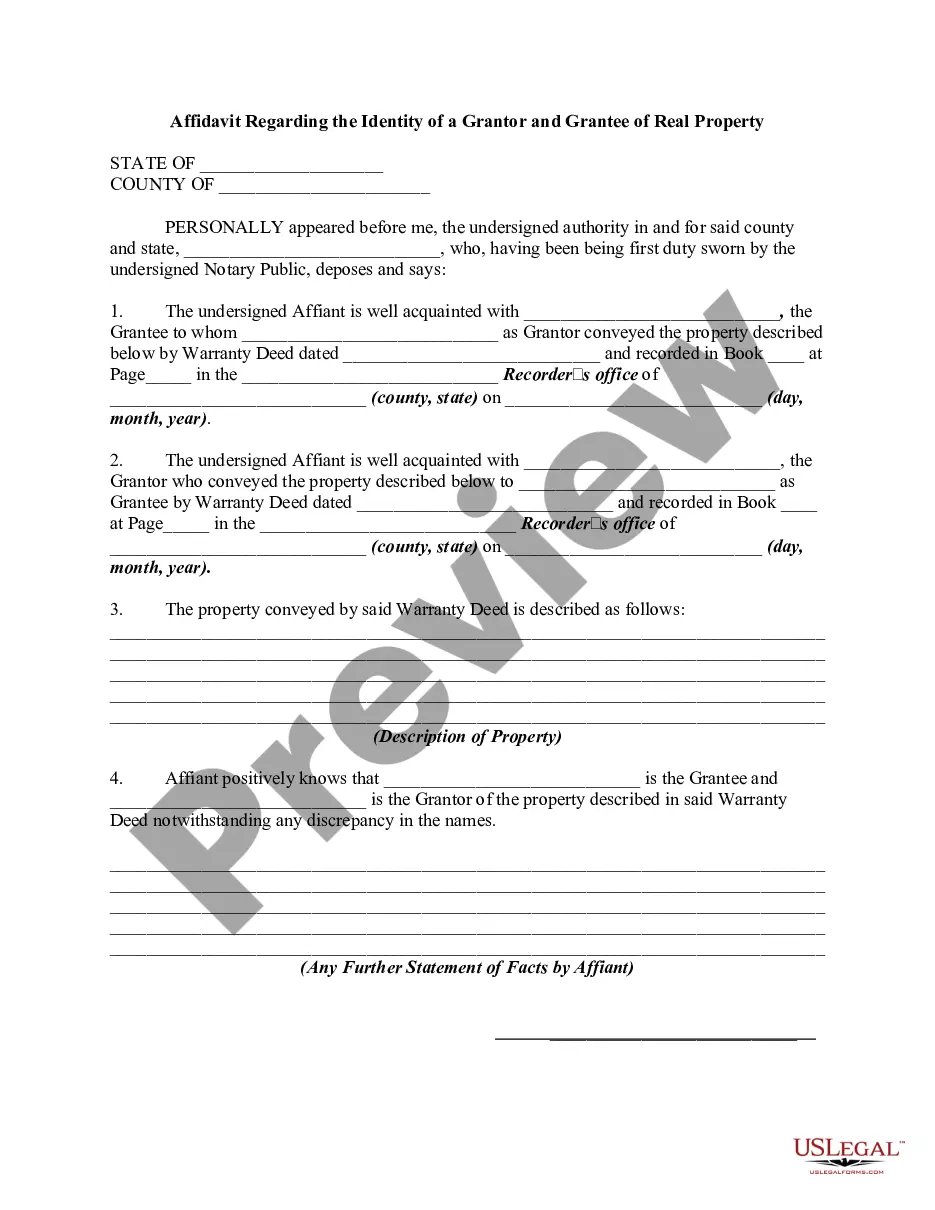
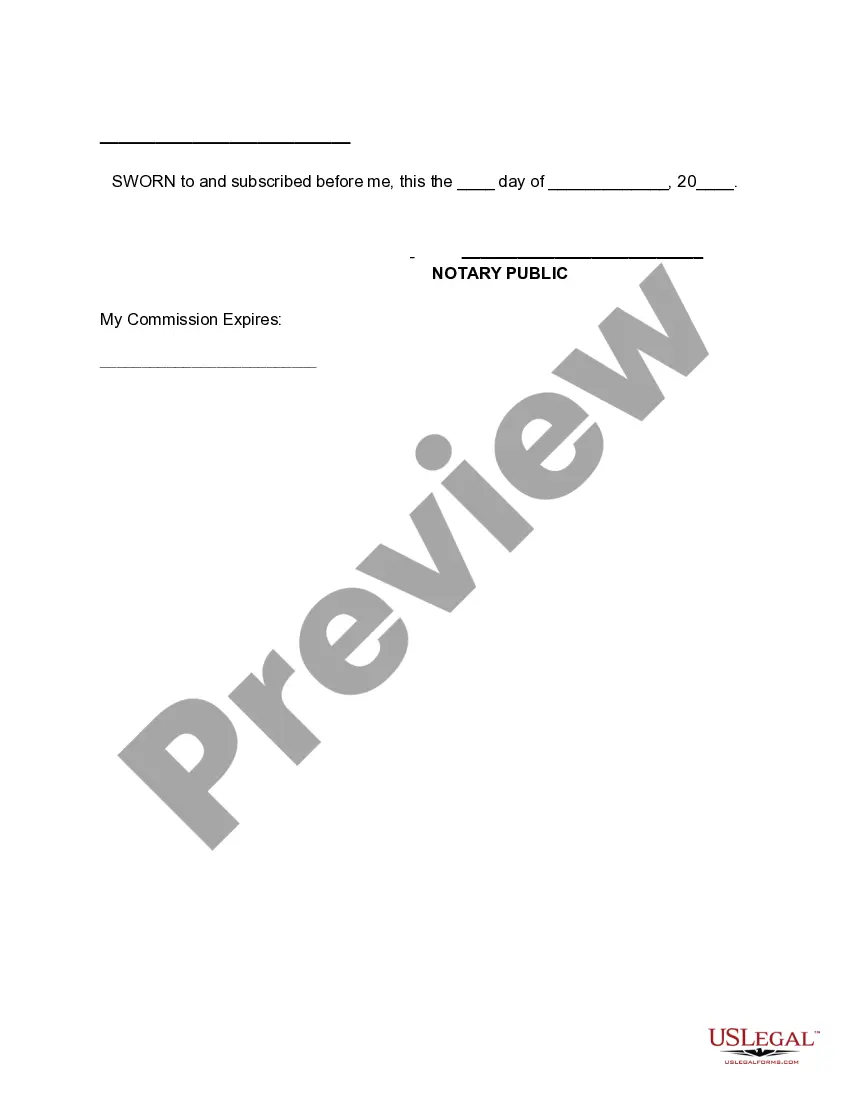
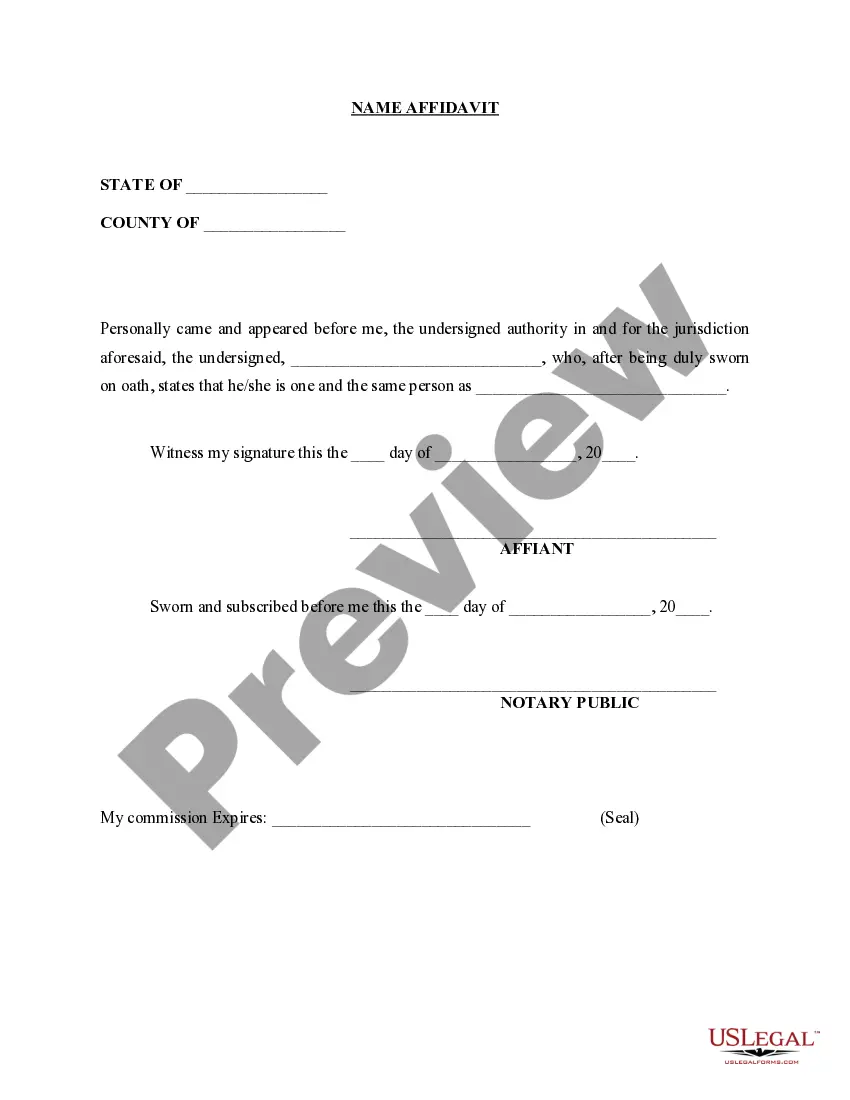
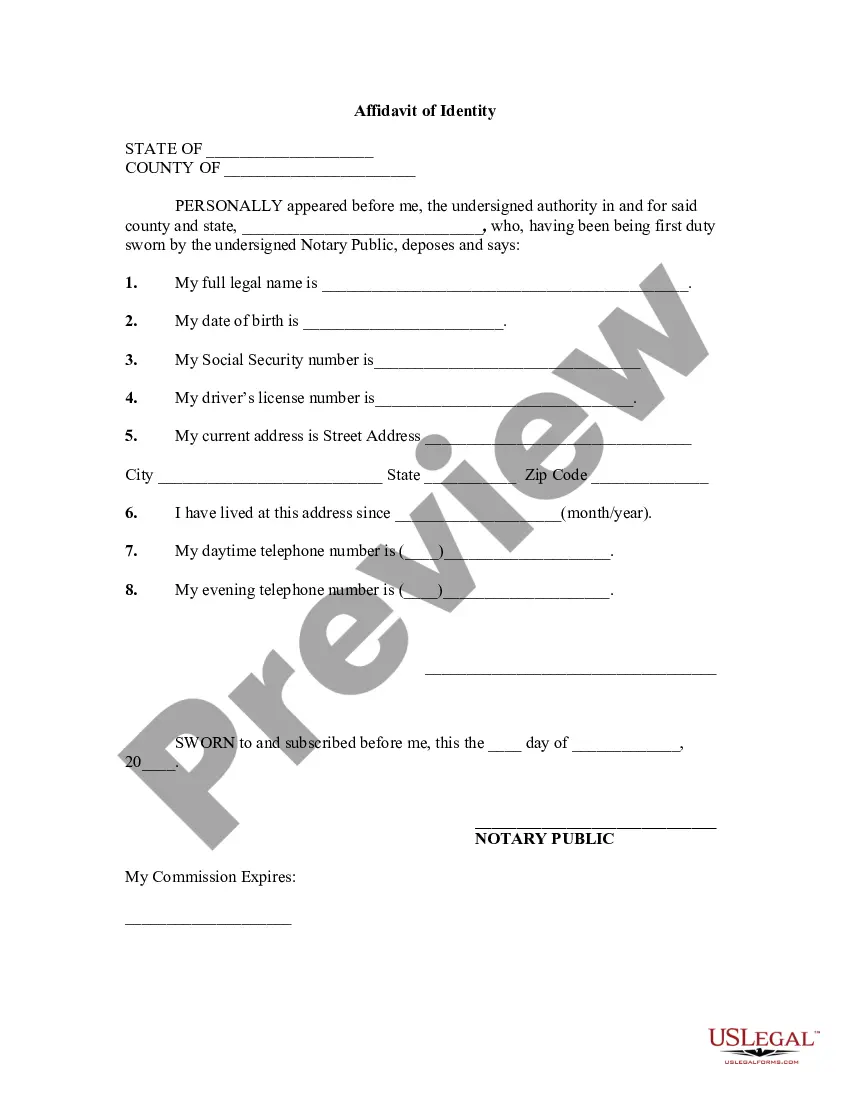
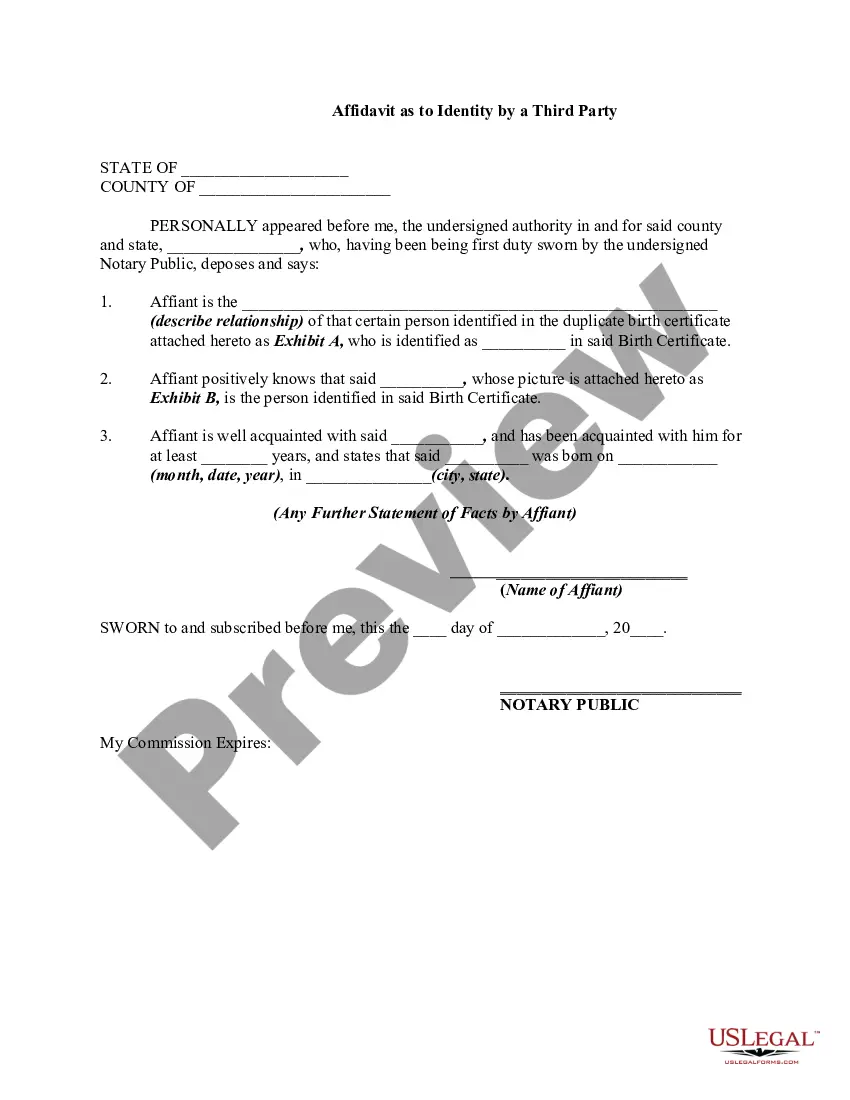
How to fill out Affidavit Regarding The Identity Of A Grantor And Grantee Of Real Property?
Managing legal documents can be challenging, even for the most proficient professionals.
When you need a Grantor Grantee Statement in Fort Worth and lack the time to search for the accurate and current version, the procedures might become overwhelming.
US Legal Forms meets any requirements you may have, from personal to business documents, all in one place.
Leverage sophisticated tools to complete and manage your Grantor Grantee Statement in Fort Worth.
Here are the steps to follow after acquiring the form you need: Verify it is the correct document by previewing and reviewing its details. Ensure that the template is acceptable in your state or county. Click Buy Now when you are prepared. Choose a subscription plan. Select the desired file format, and Download, complete, eSign, print, and submit your document. Take advantage of the US Legal Forms online library, backed by 25 years of expertise and reliability. Streamline your daily document management into a seamless and user-friendly experience today.
- Access a collection of articles, guides, and manuals related to your needs and circumstances.
- Save time and energy by avoiding the hunt for the documents you require, and utilize US Legal Forms’ advanced search and Preview tool to locate Grantor Grantee Statement Fort Worth and obtain it.
- If you possess a subscription, Log In to your US Legal Forms account, search for the form, and retrieve it.
- Check your My documents tab to review the documents you have previously downloaded and organize your folders as desired.
- If it’s your first experience with US Legal Forms, create an account and gain unlimited access to all the benefits of the library.
- An extensive online form repository could revolutionize the way individuals address these scenarios efficiently.
- US Legal Forms stands as an industry leader in online legal forms, offering over 85,000 state-specific legal documents available to you at any time.
- With US Legal Forms, you can access legal and organizational forms tailored to your state or county.
Form popularity
FAQ
A general warranty deed must include the following to be valid: The name and address of the seller (called the grantor) The name and address of the buyer (called the grantee) A legal description of the property (found on the previous deed) A statement that the grantor is transferring the property to the grantee.
You cannot use an oral agreement to transfer real estate. The grantor must sign the deed in front of a notary or two credible witnesses. A grantor can only transfer their own rights to property. That means if more than one person owns the property, each owner must sign.
In Texas, there is a presumption that all property acquired during the marriage is community property unless proven otherwise. This means that even if your name is not on a deed, the property may still be considered community property by default.
The County Clerk only requires an Affidavit of Death to make the transfer effective. You do not need additional proof of death to take ownership. However, you must give the title company a death certificate, obituary, or other acceptable document if you want to sell the property or use it as collateral.
In Texas, you record your deed with the County Clerk in the county where the property exists. If the property is in more than one county, record it in each. It is important to record your deed. In Texas, the property is legally transferred when the grantee accepts the signed deed.