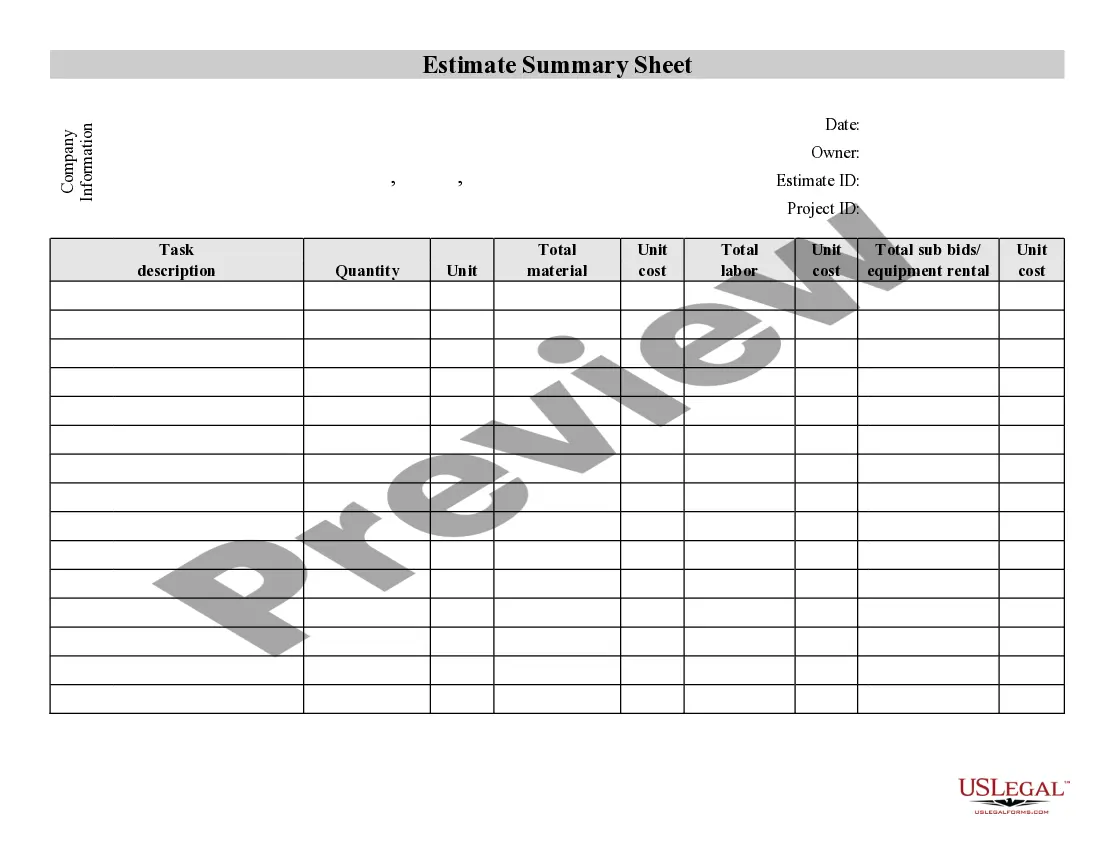
Commercial Construction Bid Form
Description


Get your form ready online
Our built-in tools help you complete, sign, share, and store your documents in one place.
Make edits, fill in missing information, and update formatting in US Legal Forms—just like you would in MS Word.
Download a copy, print it, send it by email, or mail it via USPS—whatever works best for your next step.
Sign and collect signatures with our SignNow integration. Send to multiple recipients, set reminders, and more. Go Premium to unlock E-Sign.
If this form requires notarization, complete it online through a secure video call—no need to meet a notary in person or wait for an appointment.
We protect your documents and personal data by following strict security and privacy standards.

Make edits, fill in missing information, and update formatting in US Legal Forms—just like you would in MS Word.

Download a copy, print it, send it by email, or mail it via USPS—whatever works best for your next step.

Sign and collect signatures with our SignNow integration. Send to multiple recipients, set reminders, and more. Go Premium to unlock E-Sign.

If this form requires notarization, complete it online through a secure video call—no need to meet a notary in person or wait for an appointment.

We protect your documents and personal data by following strict security and privacy standards.
Looking for another form?



How to fill out Contractor's Summary Of An Estimate?
When you are required to fill out a Commercial Construction Bid Form in compliance with your local state's legislation and regulations, there may be numerous options available.
There's no need to inspect every form to verify it meets all the legal criteria if you are a subscriber to US Legal Forms.
It is a dependable resource that can assist you in obtaining a reusable and current template on any topic.
Visit the recommended page and review it for compliance with your requirements.
- US Legal Forms is the most extensive online repository with an archive of over 85,000 ready-to-use documents for both business and personal legal situations.
- All templates are verified to conform to the laws of each state.
- Thus, when you download the Commercial Construction Bid Form from our platform, you can be assured that you possess a valid and current document.
- Acquiring the required template from our platform is exceptionally straightforward.
- If you already have an account, simply Log In to the system, ensure that your subscription is active, and save the selected file.
- In the future, you can navigate to the My documents tab in your profile to access the Commercial Construction Bid Form at any time.
- If this is your first time using our library, please follow the instructions below.
Form popularity
FAQ
To submit a construction bid, start by thoroughly reviewing the project details outlined in the commercial construction bid form. Prepare your proposal, including detailed costs and timelines. Submit your bid following the specified instructions, ensuring it is delivered by the deadline. Consider using platforms like uslegalforms to guide you through the bidding process and make your submission easier.
The bidding process consists of five essential steps that streamline project execution. Initially, the owner prepares the project details and the commercial construction bid form. Then, potential bidders are invited to submit their proposals. After collection, bids are evaluated based on specific criteria. Next, the owner selects a bid for the project, and finally, a contract is awarded to the chosen contractor.
When utilizing sealed bidding, the process involves specific steps to ensure fairness and transparency. First, the owner announces the project and distributes the commercial construction bid form. Next, contractors prepare their bids without knowing others' submissions. After that, all bids are submitted in sealed envelopes at a predetermined date and time. Finally, the owner opens these sealed bids in public and awards the contract.
To write a simple construction proposal, focus on the project scope, timeline, costs, and qualifications. Start with a cover letter that summarizes your intent and expertise, followed by detailed sections addressing the project specifics. A well-designed commercial construction bid form can also add professionalism and clarity to your proposal presentation.
The construction bidding process typically involves five phases: project initiation, preparation of documents, bid solicitation, evaluation of bids, and contract award. Each phase is crucial to ensure that the project runs smoothly and that qualified contractors are selected. Using tools like a commercial construction bid form can enhance the efficiency of this process.
To write a commercial construction bid, start by thoroughly understanding the project requirements. Clearly outline your services, provide estimated costs, and specify project timelines. Utilizing a well-structured commercial construction bid form can streamline this process, making it easier for you to present a professional and competitive proposal.
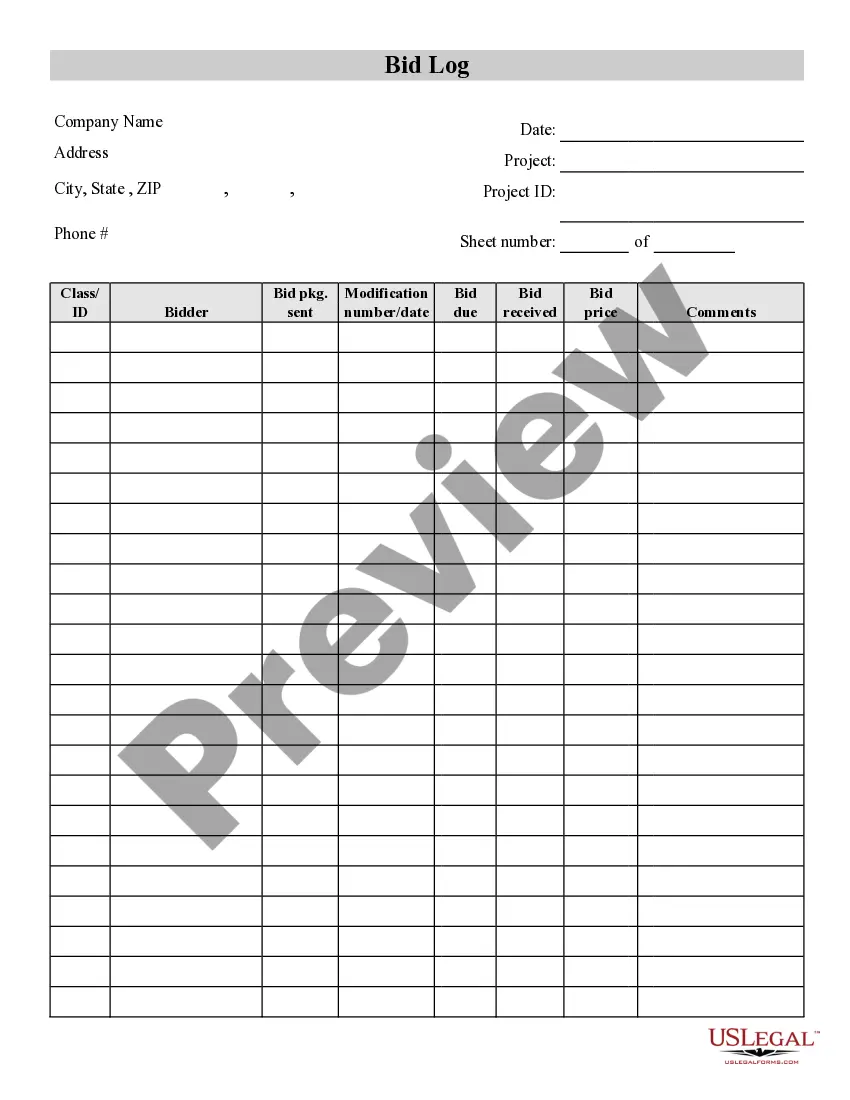
A bid form in construction is a document that bidders fill out to propose their costs and terms for a construction project. It serves as a formal offer from contractors to clients, detailing aspects such as labor, materials, and timelines. Having a standardized commercial construction bid form helps ensure all bidders provide consistent and comparable offers.
To create a bid form, start by outlining the essential information needed to receive an accurate proposal. Include sections for project details, scope of work, costs, and terms and conditions. You can utilize resources like US Legal Forms to guide you in crafting a comprehensive commercial construction bid form tailored to your specific project needs.
A formal construction bid typically includes a title page, introductory summary, and a breakdown of costs. This document should clearly list the project scope, your qualifications, and any terms and conditions. A well-structured commercial construction bid form lays out all necessary information in an easy-to-read format, ensuring clarity for the review process.
Filling out a commercial construction bid form involves several key steps. Start by entering your company information at the top, including your name, address, and contact details. Then, provide specific details about the project, such as the scope of work, materials required, and estimated timeline. Finally, review your numbers for accuracy and submit the form to the relevant parties.