Construction Contract Form With 2 Points In Pennsylvania
Description


Get your form ready online
Our built-in tools help you complete, sign, share, and store your documents in one place.
Make edits, fill in missing information, and update formatting in US Legal Forms—just like you would in MS Word.
Download a copy, print it, send it by email, or mail it via USPS—whatever works best for your next step.
Sign and collect signatures with our SignNow integration. Send to multiple recipients, set reminders, and more. Go Premium to unlock E-Sign.
If this form requires notarization, complete it online through a secure video call—no need to meet a notary in person or wait for an appointment.
We protect your documents and personal data by following strict security and privacy standards.

Make edits, fill in missing information, and update formatting in US Legal Forms—just like you would in MS Word.

Download a copy, print it, send it by email, or mail it via USPS—whatever works best for your next step.

Sign and collect signatures with our SignNow integration. Send to multiple recipients, set reminders, and more. Go Premium to unlock E-Sign.

If this form requires notarization, complete it online through a secure video call—no need to meet a notary in person or wait for an appointment.

We protect your documents and personal data by following strict security and privacy standards.
Looking for another form?





Form popularity
FAQ
A contract begins with an offer from one party and an acceptance from another. Under Pennsylvania law, both parties must agree to the terms laid out in the contract. The offer is a proposal for a specific exchange or service, while the acceptance indicates that the other party agrees to the terms without modifications.
A standard form contract will typically be one prepared by one party to the contract and not negotiated between the parties—it is offered on a 'take it or leave it' basis.
Standard-form contracts are pre-drafted templates with standard terms and conditions popular in similar transactions. By using a standard form, parties can save time and resources negotiating individual contract terms. It can be especially beneficial in industries with frequent transactions and similar terms.
How To Write A Construction Contract With 7 Steps Step 1: Define the Parties Involved. Step 2: Outline the Scope of Work. Step 3: Establish the Timeline. Step 4: Determine the Payment Terms. Step 5: Include Necessary Legal Clauses. Step 6: Address Change Orders and Modifications. Step 7: Sign and Execute the Contract.
The JCT Standard Building Contract is designed for large or complex construction projects where detailed contract provisions are needed. Standard Building Contracts are suitable for projects procured via the traditional or conventional method.
Standard Form Contracts are agreements that employ standardised, non-negotiated provisions, usually in pre-printed forms. These are sometimes referred to as 'boilerplate contracts', 'contracts of adhesion', or 'take it or leave it' contracts.
A standard form contract is generally understood as a set of standard terms and conditions that is issued on a repetitive basis to multiple people, for example, a gym membership application form or the terms and conditions governing an electricity service.
How to draft a contract in 13 simple steps Start with a contract template. Understand the purpose and requirements. Identify all parties involved. Outline key terms and conditions. Define deliverables and milestones. Establish payment terms. Add termination conditions. Incorporate dispute resolution.
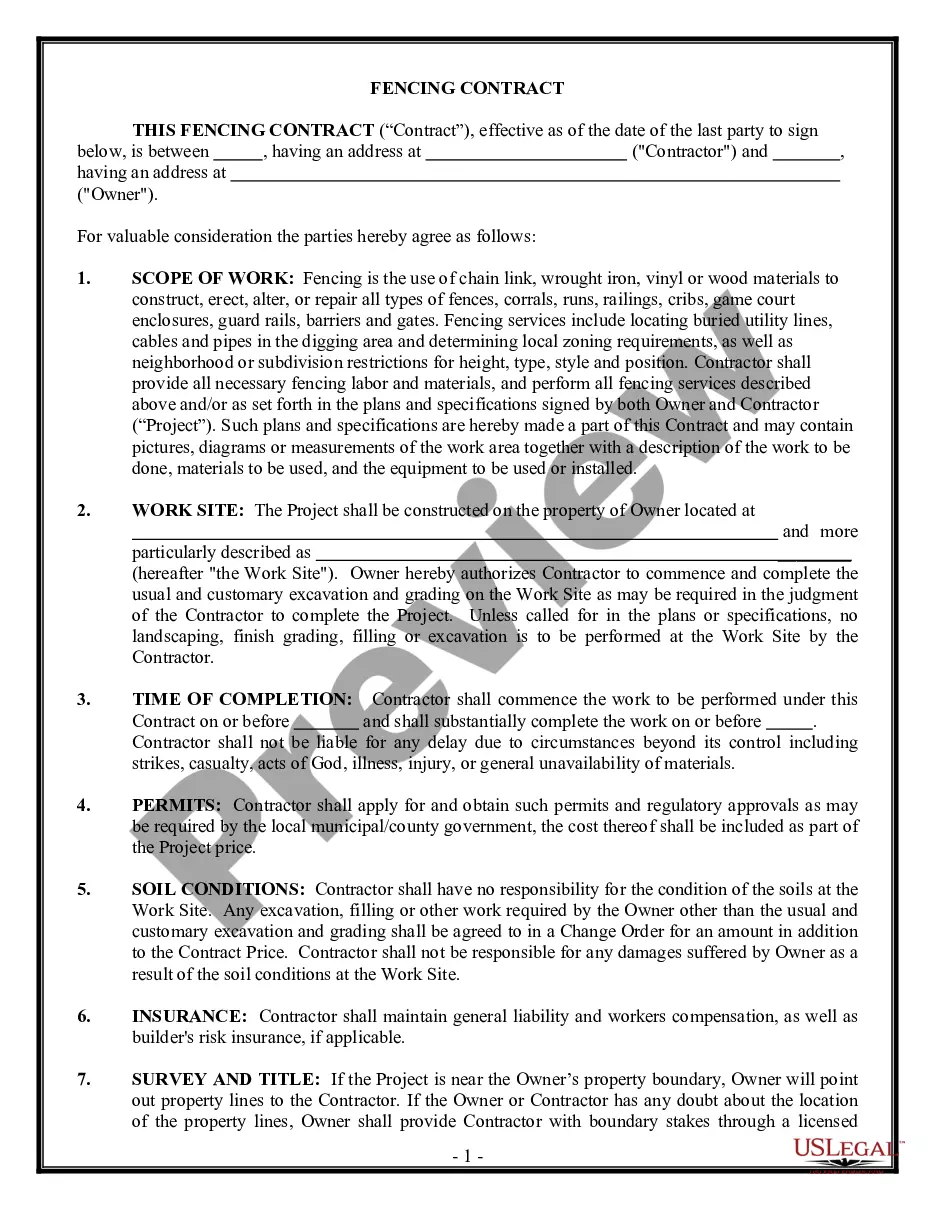
What should I include in a construction contract template? Name and contact information of the project owner. Name and contact information of the contractor. Legal description of the property being worked on. Detailed description of the work to be completed. Completion date and date of final payment.
