Construction Contracts Oregon Withholding In Florida
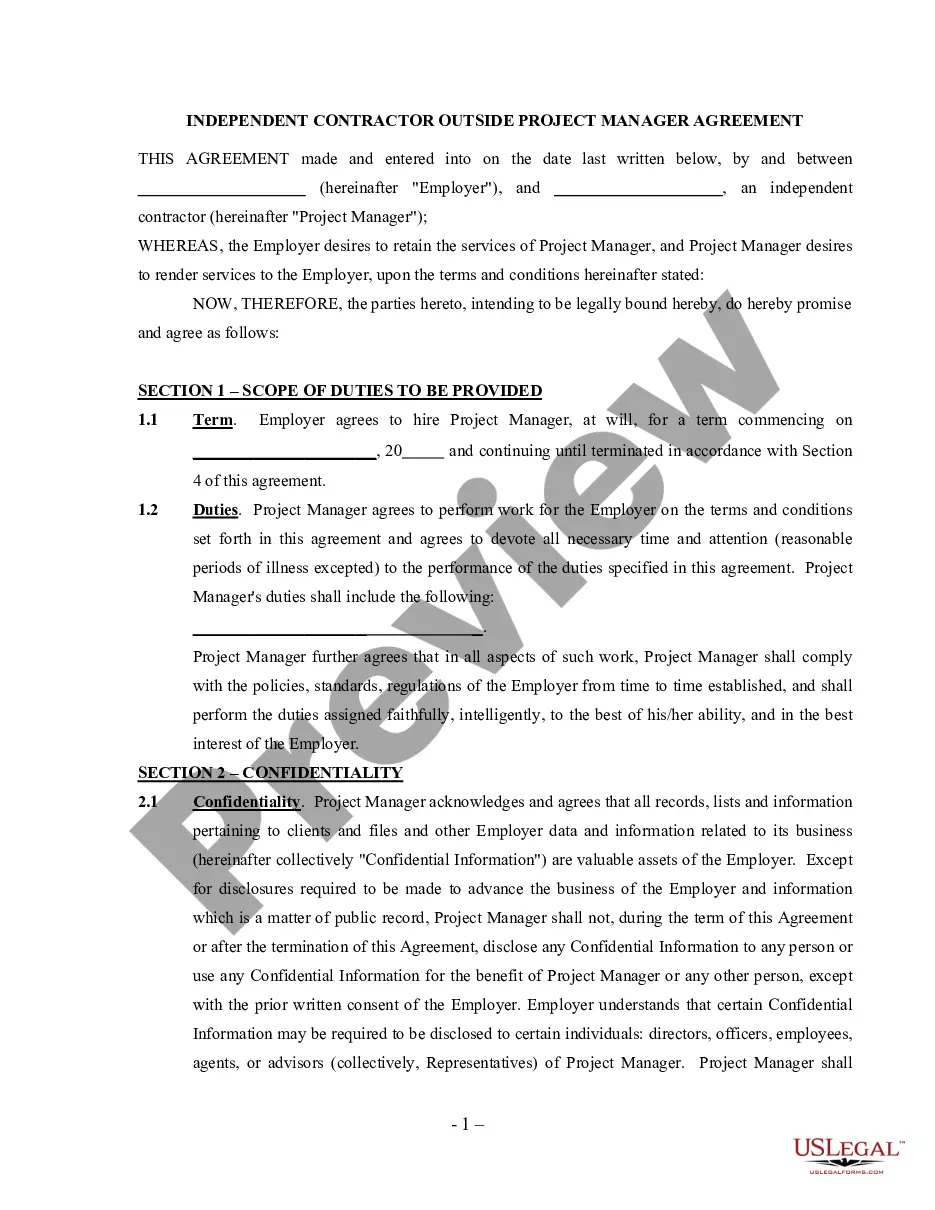
Description

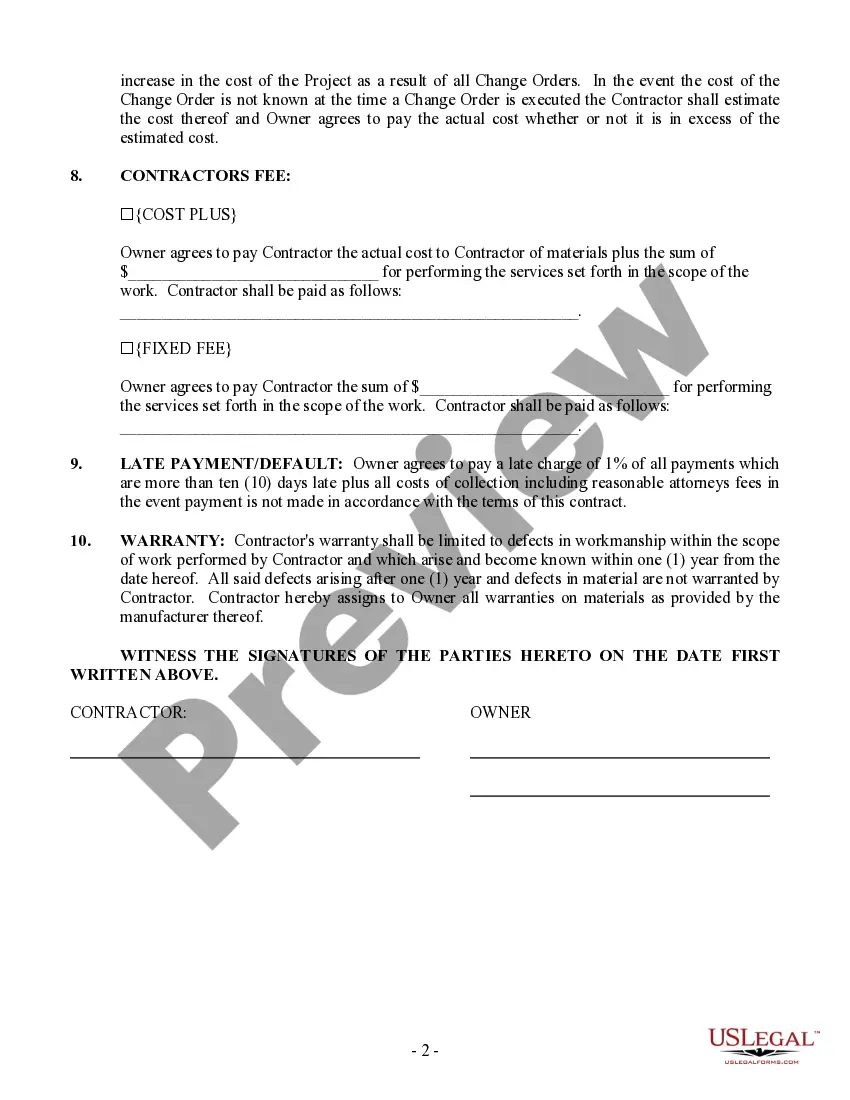
Get your form ready online
Our built-in tools help you complete, sign, share, and store your documents in one place.
Make edits, fill in missing information, and update formatting in US Legal Forms—just like you would in MS Word.
Download a copy, print it, send it by email, or mail it via USPS—whatever works best for your next step.
Sign and collect signatures with our SignNow integration. Send to multiple recipients, set reminders, and more. Go Premium to unlock E-Sign.
If this form requires notarization, complete it online through a secure video call—no need to meet a notary in person or wait for an appointment.
We protect your documents and personal data by following strict security and privacy standards.

Make edits, fill in missing information, and update formatting in US Legal Forms—just like you would in MS Word.

Download a copy, print it, send it by email, or mail it via USPS—whatever works best for your next step.

Sign and collect signatures with our SignNow integration. Send to multiple recipients, set reminders, and more. Go Premium to unlock E-Sign.

If this form requires notarization, complete it online through a secure video call—no need to meet a notary in person or wait for an appointment.

We protect your documents and personal data by following strict security and privacy standards.
Looking for another form?




Form popularity
FAQ
In Oregon, parties who withhold retainage are limited to five percent of the amount earned with each progress payment. However, on large projects, retainage can end up being hundreds of thousands, or even millions, of dollars, withheld from payment even though it has been earned.
Generally, all construction contracts in Florida must contain are required to disclose the contractor or subcontractor's registration number issued by the Florida DPBR; if required. Furthermore, all construction contracts should also include a construction defect notice and opportunity to cure provisions.
Yes, you can definitely sue. But it won't be easy. For one, it might be very difficult to prove there was indeed a verbal agreement between you and the client. Secondly, suing for unpaid work is such a hassle, and it might not even be worth it.
When dealing with construction and renovation, hiring a licensed contractor is critical to ensuring quality work and legal compliance. In Florida, unlicensed contracting is not only a risky affair for homeowners and businesses but also a legal issue that can result in criminal charges and civil actions.
Chapter 558 of the Florida Statutes broadly governs “construction disputes.” The Statute generally requires that owners (i.e., associations) provide a pre-suit notice to developers, contractors, subcontractors, material suppliers and/or design professionals before the commencement of legal action against any of the ...
There are three elements that must be present for a contract to exist: offer, acceptance and consideration. The first step to a contract is an offer. An offer is a written or spoken statement by one of his or her intention to be held to a commitment upon acceptance of the offer.
Public construction retainage. (1) With regard to any contract for construction services, a public entity may withhold from each progress payment made to the contractor an amount not exceeding 10 percent of the payment as retainage until 50-percent completion of such services.
