Building Contract For In Bexar
Description

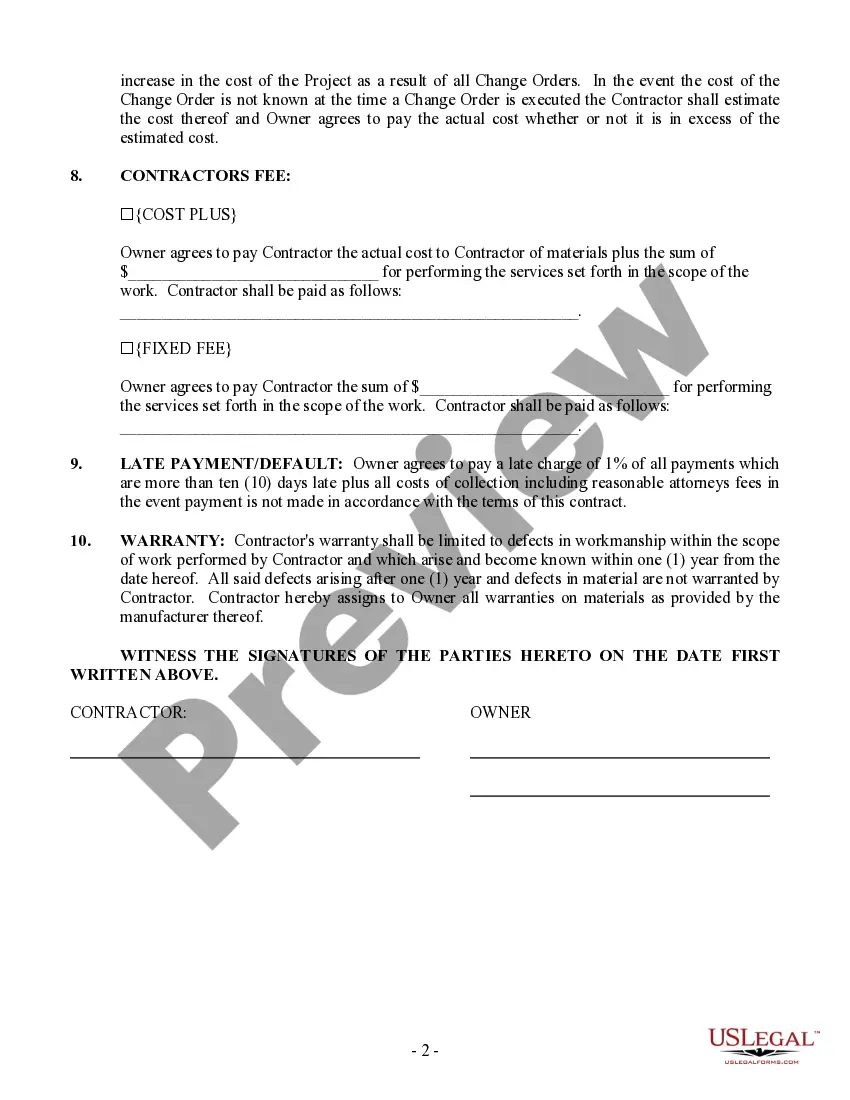
Get your form ready online
Our built-in tools help you complete, sign, share, and store your documents in one place.
Make edits, fill in missing information, and update formatting in US Legal Forms—just like you would in MS Word.
Download a copy, print it, send it by email, or mail it via USPS—whatever works best for your next step.
Sign and collect signatures with our SignNow integration. Send to multiple recipients, set reminders, and more. Go Premium to unlock E-Sign.
If this form requires notarization, complete it online through a secure video call—no need to meet a notary in person or wait for an appointment.
We protect your documents and personal data by following strict security and privacy standards.

Make edits, fill in missing information, and update formatting in US Legal Forms—just like you would in MS Word.

Download a copy, print it, send it by email, or mail it via USPS—whatever works best for your next step.

Sign and collect signatures with our SignNow integration. Send to multiple recipients, set reminders, and more. Go Premium to unlock E-Sign.

If this form requires notarization, complete it online through a secure video call—no need to meet a notary in person or wait for an appointment.

We protect your documents and personal data by following strict security and privacy standards.
Looking for another form?

Form popularity
FAQ
Most buildings in Texas need a permit; exceptions include sheds <200 sqft, decks <30 inches, and fences <7 feet. Permit is required for plumbing, electrical work, residential additions, pools, and concrete pouring. Non-permit projects can include landscaping and temporary structures, but must comply with zoning laws.
Most buildings in Texas need a permit; exceptions include sheds <200 sqft, decks <30 inches, and fences <7 feet. Permit is required for plumbing, electrical work, residential additions, pools, and concrete pouring.
In the City of Los Angeles, if the size of floor space exceeds 120 sq. ft. or the structure is over 12 feet in height, you need a permit. Any electrical work will require an electrical permit.
Storage sheds that are less than 120 square feet and eight feet in height do not require a building permit, but still require Planning Division approval through an over-the-counter application called a Zoning Clearance.
Typically a building permit is required if you decide to build, remodel, repair or demolish a structure on your property. We have a few exceptions for some general repairs.
Laws in Texas are strict concerning licenses, permits, and the local building code. Which makes it all the more critical you follow them. You won't need a permit for a storage shed of less than 200 square feet not used for business, work, or as a living space in Dallas, San Antonio, Fort Worth, Houston, or Austin.
There's a misconception that building a home in an unincorporated area (County) of Texas doesn't require any permits. This isn't entirely accurate. While some minor projects might not require permits, constructing a new home almost always does. The building permit in Texas Counties is often the Septic Permit.
NO PERMIT REQUIRED FOR: Replacement of any switch, receptacle, fuse, fan, light fixture or similar equipment that does not alter mechanical, electrical or plumbing systems. Ordinary, minor nonstructural repair(s) or remodeling such as painting, papering, siding and similar finish work.
While selling a house with unpermitted work is not ideal, it is possible. Most jurisdictions require sellers to disclose known issues with the property to potential buyers, including any unpermitted work. Failure to disclose such information can lead to legal action from the buyer, including lawsuits for nondisclosure.
A building permit is required in the unincorporated areas of the county any time an individual, company, corporation, or group of individuals acting as an organization constructs, builds, or s a new building to be used for commercial, public accessible, or multi-family residential purposes; OR a pre-built building ...
