Atv Form Without License In Fairfax
Description
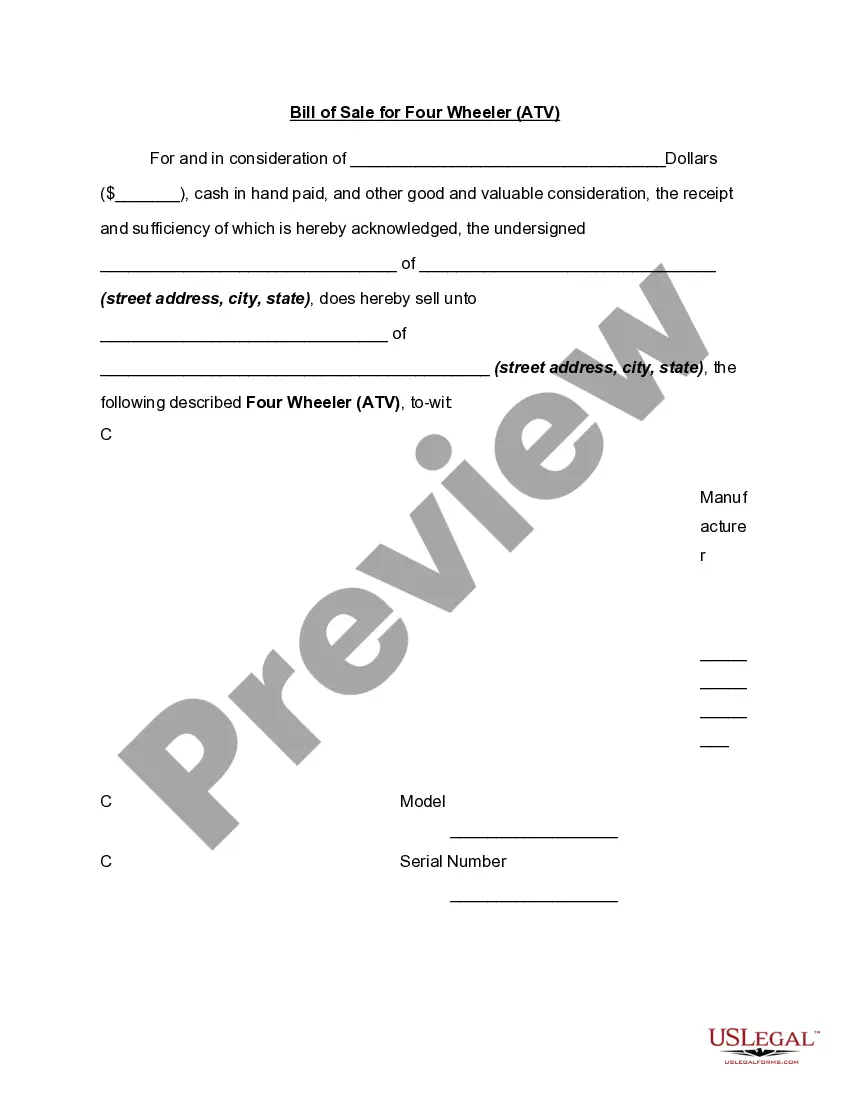
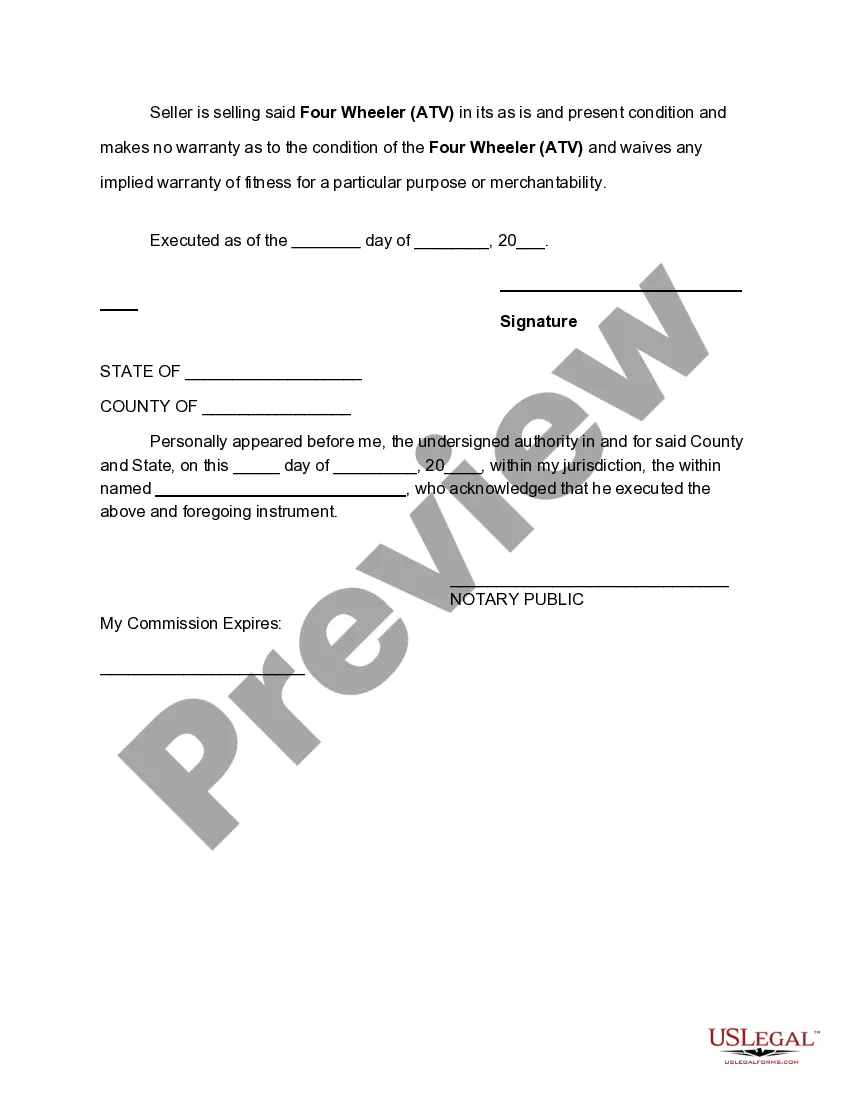
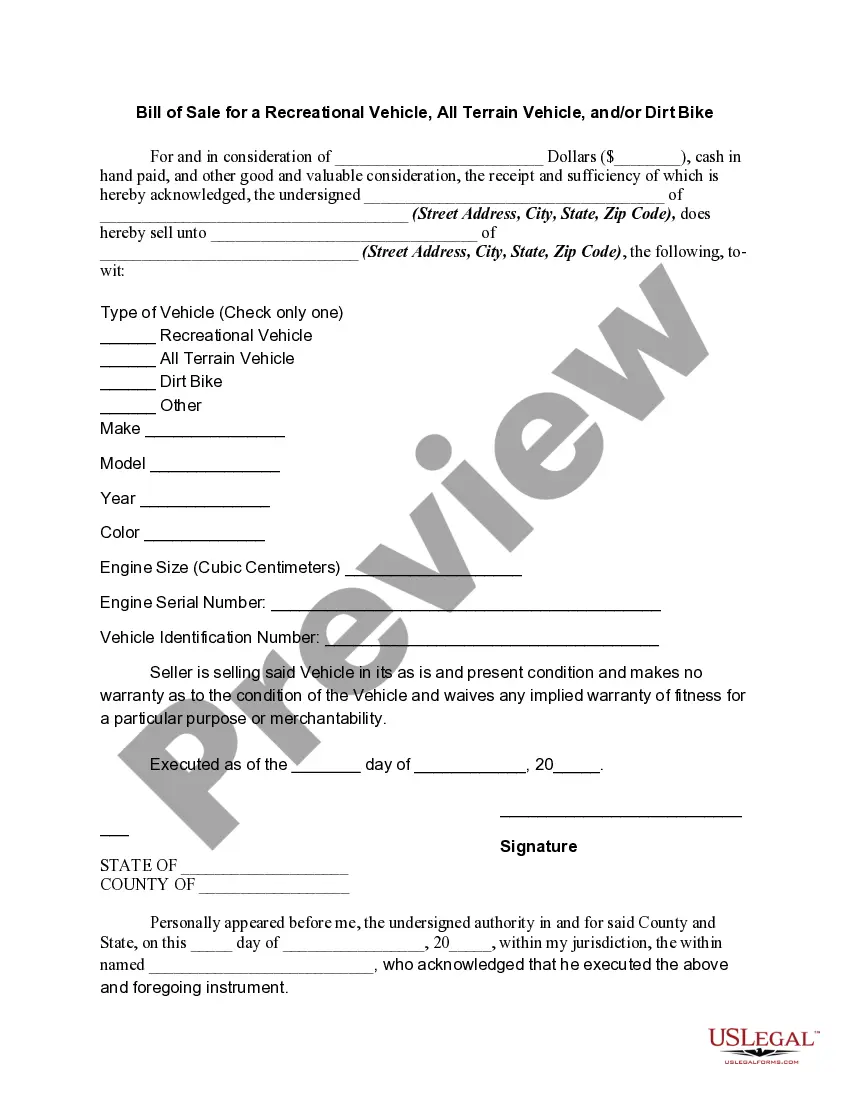
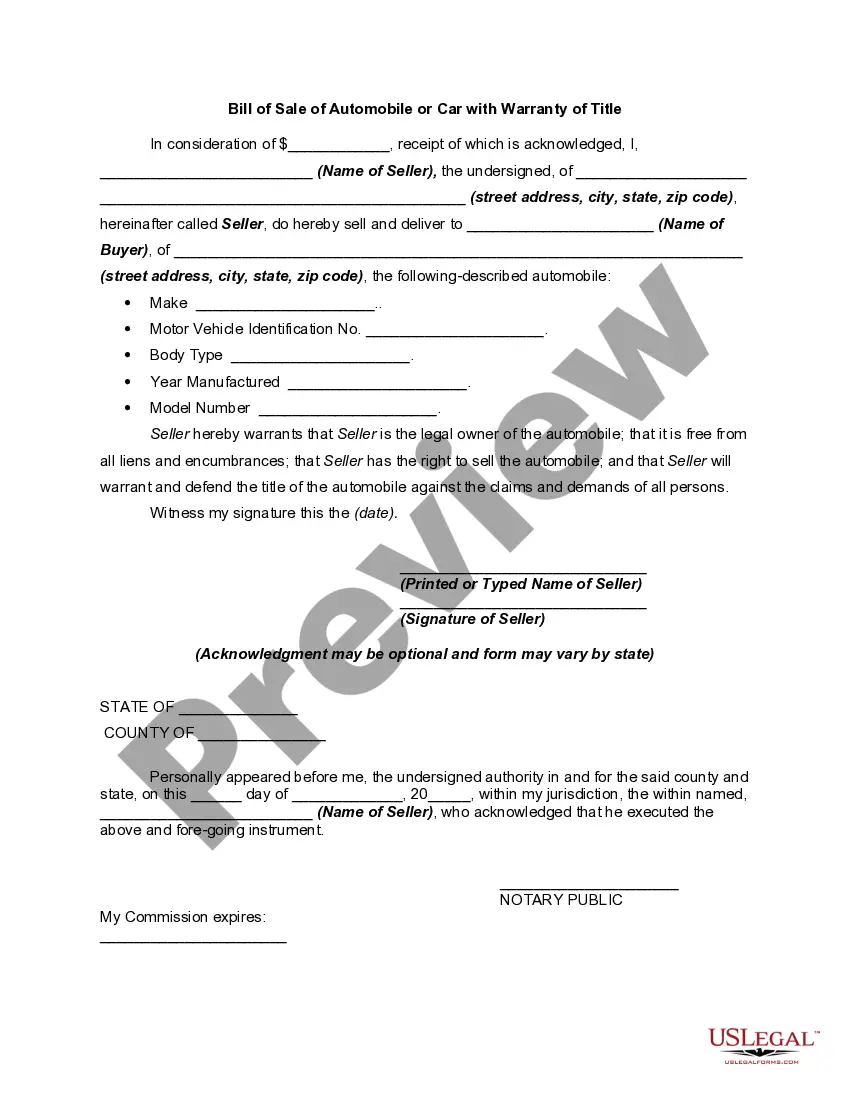
Get your form ready online
Our built-in tools help you complete, sign, share, and store your documents in one place.
Make edits, fill in missing information, and update formatting in US Legal Forms—just like you would in MS Word.
Download a copy, print it, send it by email, or mail it via USPS—whatever works best for your next step.
Sign and collect signatures with our SignNow integration. Send to multiple recipients, set reminders, and more. Go Premium to unlock E-Sign.
If this form requires notarization, complete it online through a secure video call—no need to meet a notary in person or wait for an appointment.
We protect your documents and personal data by following strict security and privacy standards.

Make edits, fill in missing information, and update formatting in US Legal Forms—just like you would in MS Word.

Download a copy, print it, send it by email, or mail it via USPS—whatever works best for your next step.

Sign and collect signatures with our SignNow integration. Send to multiple recipients, set reminders, and more. Go Premium to unlock E-Sign.

If this form requires notarization, complete it online through a secure video call—no need to meet a notary in person or wait for an appointment.

We protect your documents and personal data by following strict security and privacy standards.
Looking for another form?





Form popularity
FAQ
The state of Virginia doesn't mandate comprehensive motorcycle coverage or collision motorcycle coverage, but both coverages offer motorcycle owners a way to protect their bike against physical damage and loss.
Off-Road Vehicle Rules of the Road New ATV or off-road motorcycles powered by a gasoline or diesel engine displacing more than 50 CCs must be titled. ATVs and off-road motorcycles are not required to be registered.
In Virginia, riders must be at least 16 years old to operate a motor vehicle, including dirt bikes, on public roads. It's essential to have a valid driver's license, and if under 18, some additional restrictions and educational requirements might apply.
Virginia Code § 46.2-706 requires all Virginia registered motor vehicles to be insured by a liability policy issued through an insurance company licensed to do business in Virginia, and it must remain insured while registered, whether or not it is operated. Penalties are severe for violation of this requirement.
It is illegal to operate ATVs on any public highway or other private property, unless proper authorities allow it to: Cross a public highway by the most direct route. Be operated by law-enforcement officers, firefighters, or emergency medical services responding to emergencies.
Virginia law defines an ATV as “a motor vehicle having three or more wheels that is powered by a motor and is manufactured for off-highway use.” ing to the Virginia DMV, “Operation of all-terrain vehicles on any public highway or other private property is prohibited” except in limited circumstances described in a ...
General Information. Personal property tax relief is provided for any passenger car, motorcycle, or pickup or panel truck having a registered gross weight with DMV of 10,000 pounds or less on January 1. Qualifying vehicles must be owned or leased by an individual and be used 50% or less for business purposes.
Per the Code of Virginia § 58.1-3668, a veteran with a 100% service-connected, permanent and total disability may apply for a personal property tax exemption on one motor vehicle (passenger car or a pickup or panel truck) registered for personal use which is owned and used primarily by or for a veteran of the Armed ...
ATVs and off-road motorcycles are not required to be registered. You may title a used ATV or off-road motorcycle or any reason, including recording a lien or documenting proof of ownership.
