Consignment Note For Scheduled Waste Malaysia In Salt Lake
Description

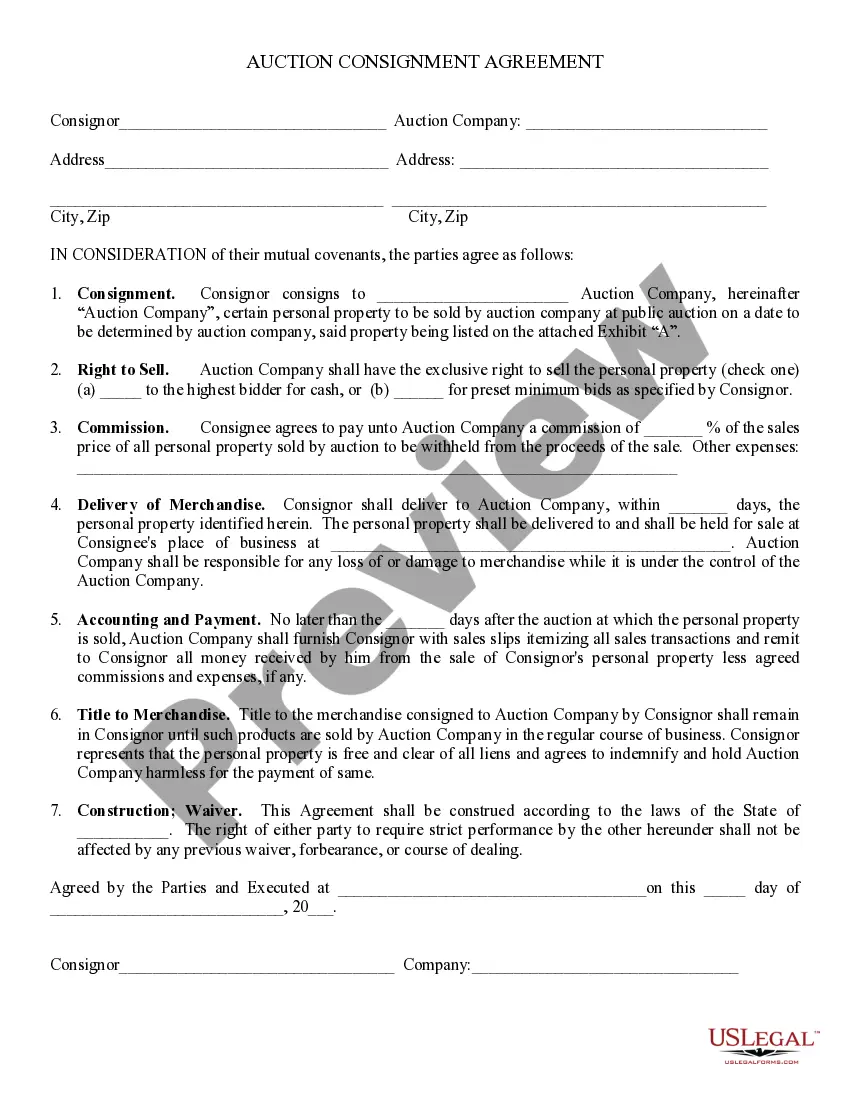
Get your form ready online
Our built-in tools help you complete, sign, share, and store your documents in one place.
Make edits, fill in missing information, and update formatting in US Legal Forms—just like you would in MS Word.
Download a copy, print it, send it by email, or mail it via USPS—whatever works best for your next step.
Sign and collect signatures with our SignNow integration. Send to multiple recipients, set reminders, and more. Go Premium to unlock E-Sign.
If this form requires notarization, complete it online through a secure video call—no need to meet a notary in person or wait for an appointment.
We protect your documents and personal data by following strict security and privacy standards.

Make edits, fill in missing information, and update formatting in US Legal Forms—just like you would in MS Word.

Download a copy, print it, send it by email, or mail it via USPS—whatever works best for your next step.

Sign and collect signatures with our SignNow integration. Send to multiple recipients, set reminders, and more. Go Premium to unlock E-Sign.

If this form requires notarization, complete it online through a secure video call—no need to meet a notary in person or wait for an appointment.

We protect your documents and personal data by following strict security and privacy standards.
Looking for another form?


Form popularity
FAQ
Repeat offenders will be required to assist local councils by sweeping streets, cleaning drains and even washing public toilets, with a maximum penalty of up to 12 hours. "If you litter, be prepared to serve a community service sentence in addition to a RM2,000 fine," he said.
● Hazardous waste is defined as any. waste falling within the categories of. waste listed in the First Schedule of the Environment Quality (Scheduled Wastes) Regulations 2005. Hazardous Substances Division. Department of Environment Malaysia.
The Malaysian Solid Waste and Public Cleansing Management Act No. 672 of 2007 aims to establish regulations and guidelines for the management of controlled solid waste and public cleansing. Its primary objective is to ensure adequate sanitation and address related matters as necessary.
Following the amendment of the EQA in 1996 section 34B provides strict provisions which cover the control of exporting and importing scheduled waste, which include a penalty of RM500,000.00 or 5 years imprisonment or both for the illegal trafficking of scheduled wastes.
In order to dispose the scheduled waste, the waste generator should fill in and submit the disposal form to PTJ appointed officer. The appointed officer will then make an application to CMU for SW disposal. Download the disposal form here.
Scheduled waste is any waste that has hazardous characteristics that have the potential to negatively impact the public and the environment.
In Malaysia, there are a total of 77 types of scheduled waste listed under the First Schedule, Environmental Quality (Scheduled Waste) Regulations 2005, and the management of such waste shall be in ance with the provisions under the above Regulations.
The policy is a government initiative to make Malaysia a clean country and to create a society that adopts the practice of cleanliness in order to guarantee the well-being of the people and sustainability of the environment. Cleanliness is one of the vital aspects to achieve developed nation status.
There are many types of waste disposal methods; Landfill, waste compaction, incineration, biogas production and vermicomposting are the popular methods for disposing waste to keep a clean environment.
Electronic Scheduled Waste Information Systems (eSWIS)
