Consignment Form Template For Food
Description

Get your form ready online
Our built-in tools help you complete, sign, share, and store your documents in one place.
Make edits, fill in missing information, and update formatting in US Legal Forms—just like you would in MS Word.
Download a copy, print it, send it by email, or mail it via USPS—whatever works best for your next step.
Sign and collect signatures with our SignNow integration. Send to multiple recipients, set reminders, and more. Go Premium to unlock E-Sign.
If this form requires notarization, complete it online through a secure video call—no need to meet a notary in person or wait for an appointment.
We protect your documents and personal data by following strict security and privacy standards.

Make edits, fill in missing information, and update formatting in US Legal Forms—just like you would in MS Word.

Download a copy, print it, send it by email, or mail it via USPS—whatever works best for your next step.

Sign and collect signatures with our SignNow integration. Send to multiple recipients, set reminders, and more. Go Premium to unlock E-Sign.

If this form requires notarization, complete it online through a secure video call—no need to meet a notary in person or wait for an appointment.

We protect your documents and personal data by following strict security and privacy standards.
Looking for another form?






How to fill out Consignment Agreement?
Legal administration can be daunting, even for the most experienced professionals.
When you seek a Consignment Form Template For Food and lack the time to search for the suitable and current version, the processes can be overwhelming.
Access legal and business forms specific to your state or county.
US Legal Forms caters to all your needs, from personal to business documentation, all in one location.
If this is your first experience with US Legal Forms, create a free account and gain unrestricted access to all the platform's advantages. Here are the steps to follow after downloading the necessary form: Validate that it is the correct document by previewing it and reviewing its description. Ensure that the template is valid in your state or county. Select Buy Now when you are prepared. Choose a subscription plan. Select the format you require, and Download, fill out, sign, print, and submit your documents. Leverage the US Legal Forms online library, backed by 25 years of reliability and expertise. Revolutionize your daily document management into a seamless and user-friendly process today.
- Utilize cutting-edge tools to complete and manage your Consignment Form Template For Food.
- Tap into a resource pool of articles, guides, and materials pertinent to your needs and circumstances.
- Conserve time and energy searching for the documents you require, and use US Legal Forms' sophisticated search and Preview feature to find the Consignment Form Template For Food you need.
- If you have a membership, Log In to your US Legal Forms account, search for the form, and acquire it.
- Check your My documents tab to review the documents you have previously saved and manage your folders as desired.
- A robust online form repository can be a transformative solution for anyone looking to navigate these circumstances effectively.
- US Legal Forms is a leader in digital legal documents, offering over 85,000 state-specific legal forms accessible at any time.
- With US Legal Forms, you can.
Form popularity
FAQ
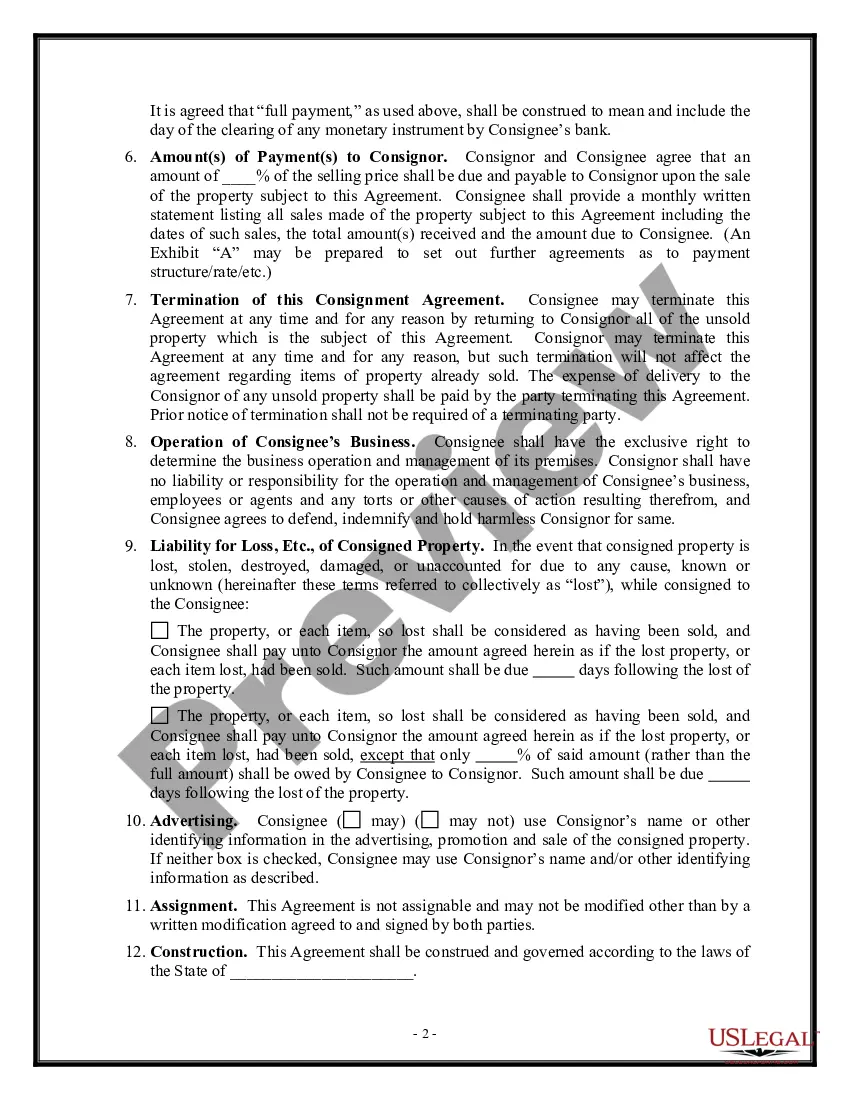
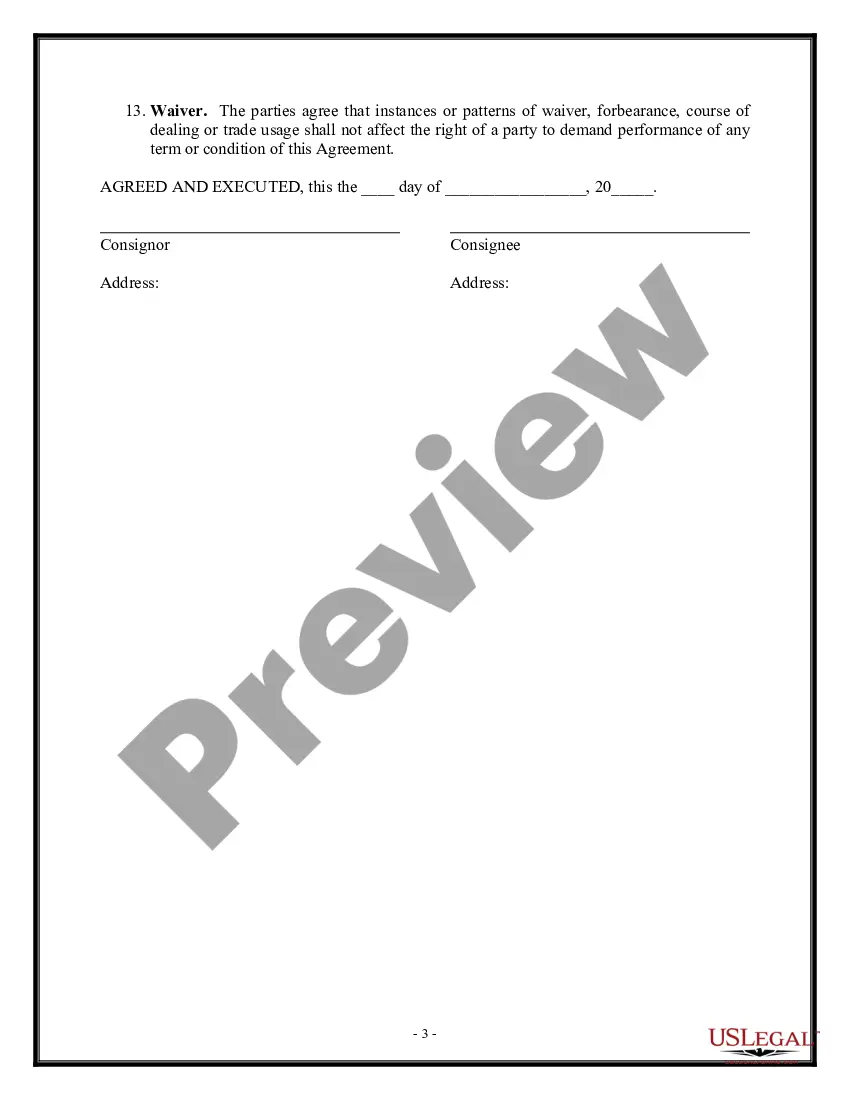
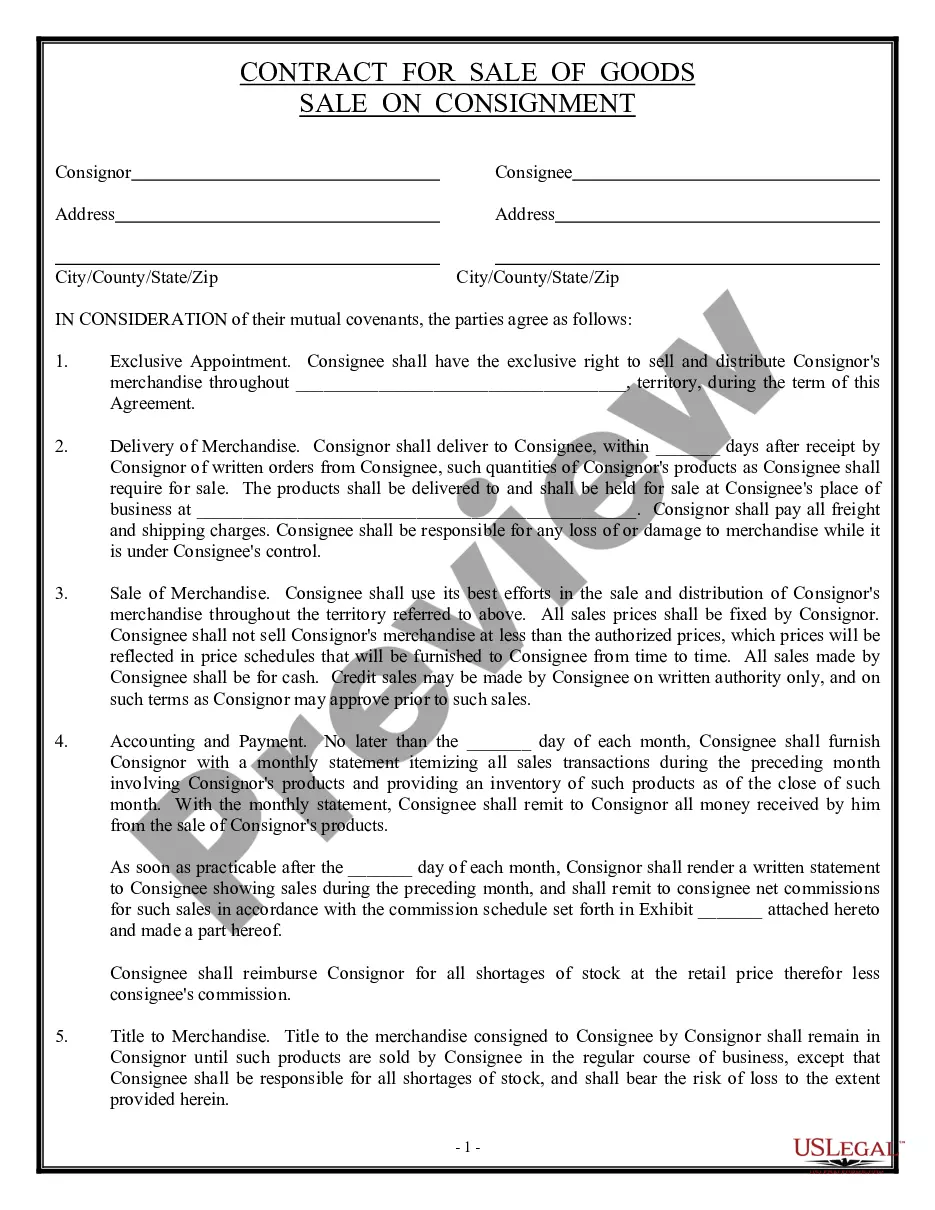
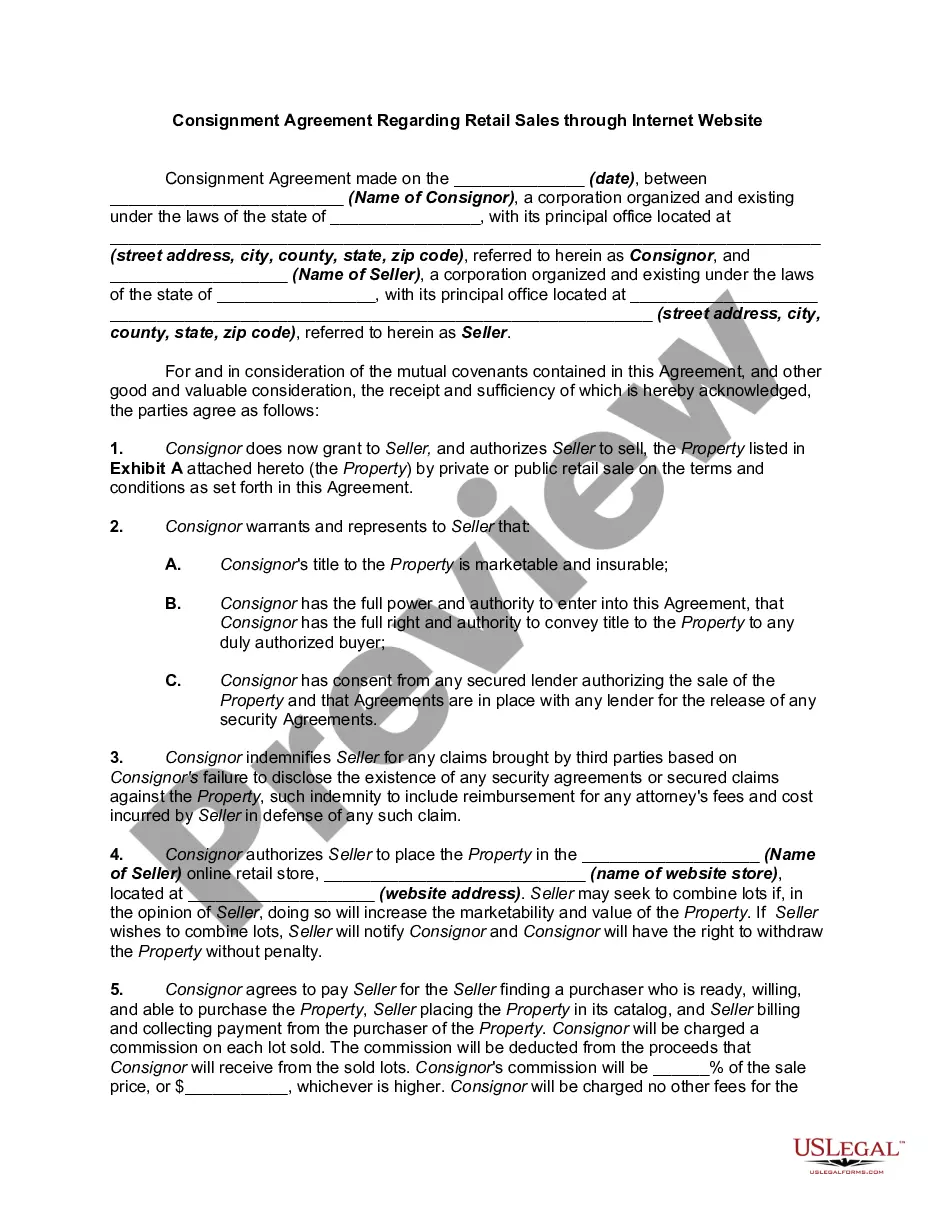
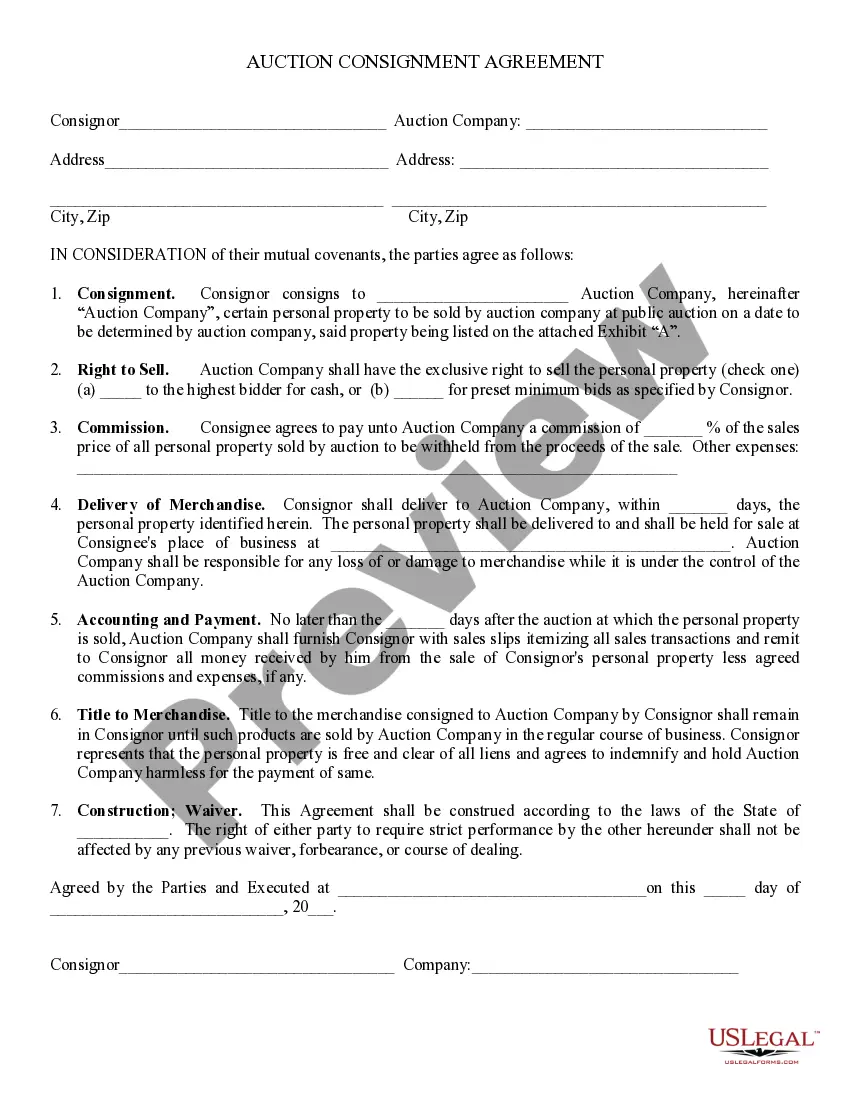
To write a simple agreement, start by stating the purpose of the agreement and identifying the parties involved. Clearly list the terms, including what is being consigned, payment details, and any conditions related to returns or unsold items. A consignment form template for food can simplify this process by guiding you through essential elements to include, ensuring clarity and compliance.
The consignment process typically starts with the seller delivering food items to the retailer, followed by the retailer displaying and selling these items. Once a sale occurs, the retailer keeps a portion of the proceeds and remits the remaining amount to the seller. Implementing a consignment form template for food can streamline this process by providing a structured framework for transactions.
An example of a consignment arrangement could be a local bakery providing its pastries to a grocery store. The bakery supplies the goods without requiring immediate payment, while the grocery store sells them and pays the bakery only for the items sold. A consignment form template for food can help formalize this relationship and make the arrangement clear and efficient.
Food consignment involves an arrangement where a seller provides food products to a retailer, who sells them on behalf of the seller. The seller retains ownership until the products are sold, allowing for lower risk for the retailer. Using a consignment form template for food simplifies this process by clearly outlining the terms and conditions, ensuring both parties understand their responsibilities.
A consignment agreement is a contract between the consignor and the consignee, and should include these basic provisions: Parties. Provide the names and addresses of the consignor and the consignee. Item(s) for sale. ... Pricing. ... Payment. ... Expenses. ... Record-keeping. ... Ownership. ... Insurance.
3. Consignment agreement instructions Introduction of Parties. Identifies the parties and the date of the agreement. ... Recitals. ... Section 1: Consigned property. ... Section 2: Delivery of goods. ... Section 3: Consignment period. ... Section 4: Efforts to sell. ... Section 5: Title to products. ... Section 6: Payment; commission.
Consignment is an arrangement in which goods are left with a third party to sell. The party that sells the goods on consignment receives a portion of the profits, either as a flat rate fee or commission. Selling via a consignment arrangement can be a low-commission, low-time-investment way of selling items or services.
A consignment agreement is a contract that places an item the consignor (or owner) owns with the consignee (or seller) for the consignee to sell. The consignee often takes a commission or fee and then the remainder of the sale price is paid to the consignor.
The dealer has no risk and you have your merchandise before the public. Examples of goods often sold on consignment include light bulbs, produce, eggs, poultry, magazines, newspapers, Christmas decorations, garden seeds, batteries for flashlights and potted plants such as those found in supermarkets.