Consignment Agreement For Retail
Description


Get your form ready online
Our built-in tools help you complete, sign, share, and store your documents in one place.
Make edits, fill in missing information, and update formatting in US Legal Forms—just like you would in MS Word.
Download a copy, print it, send it by email, or mail it via USPS—whatever works best for your next step.
Sign and collect signatures with our SignNow integration. Send to multiple recipients, set reminders, and more. Go Premium to unlock E-Sign.
If this form requires notarization, complete it online through a secure video call—no need to meet a notary in person or wait for an appointment.
We protect your documents and personal data by following strict security and privacy standards.

Make edits, fill in missing information, and update formatting in US Legal Forms—just like you would in MS Word.

Download a copy, print it, send it by email, or mail it via USPS—whatever works best for your next step.

Sign and collect signatures with our SignNow integration. Send to multiple recipients, set reminders, and more. Go Premium to unlock E-Sign.

If this form requires notarization, complete it online through a secure video call—no need to meet a notary in person or wait for an appointment.

We protect your documents and personal data by following strict security and privacy standards.
Looking for another form?
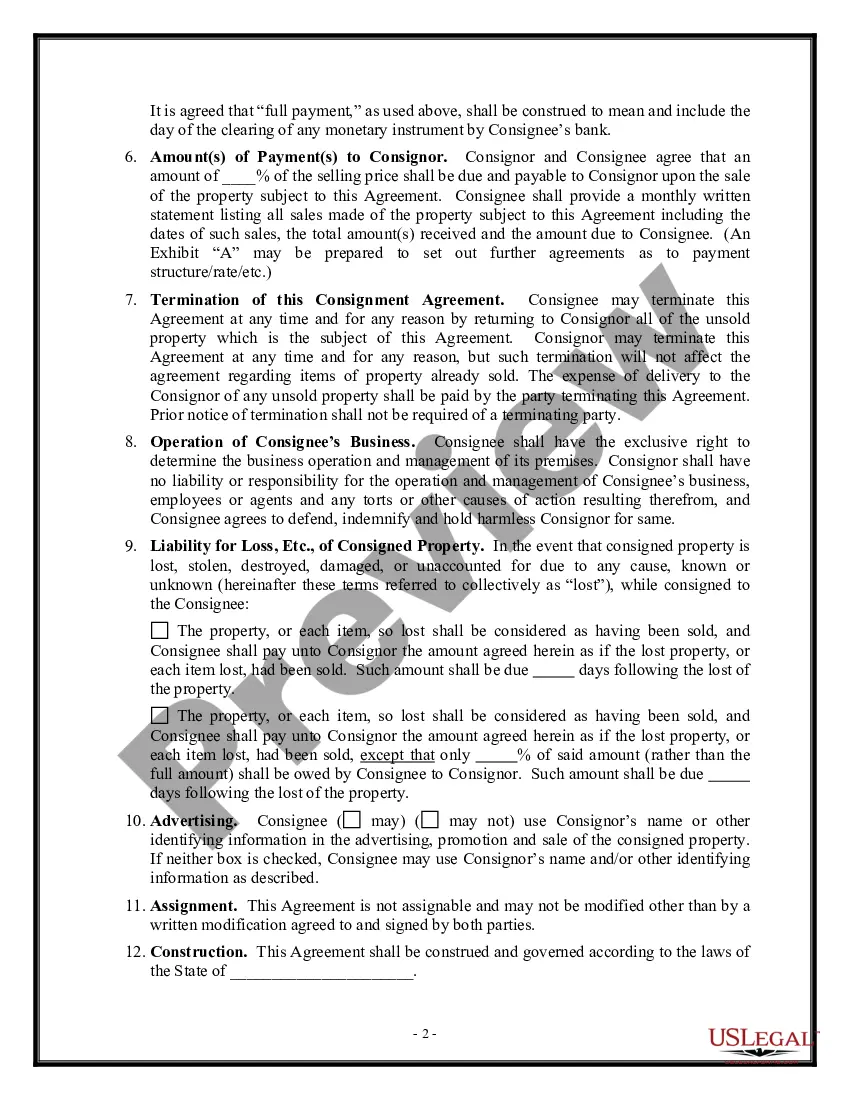
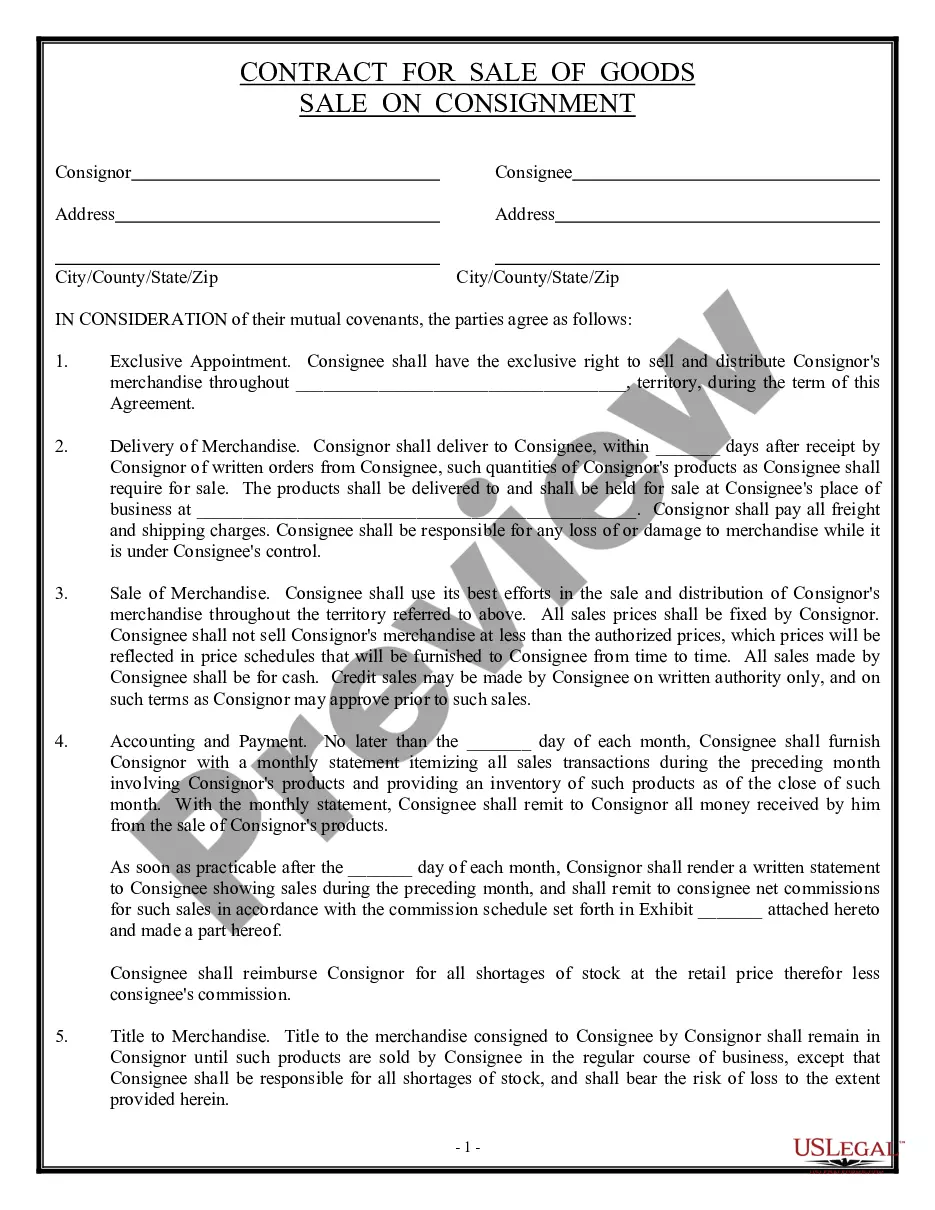
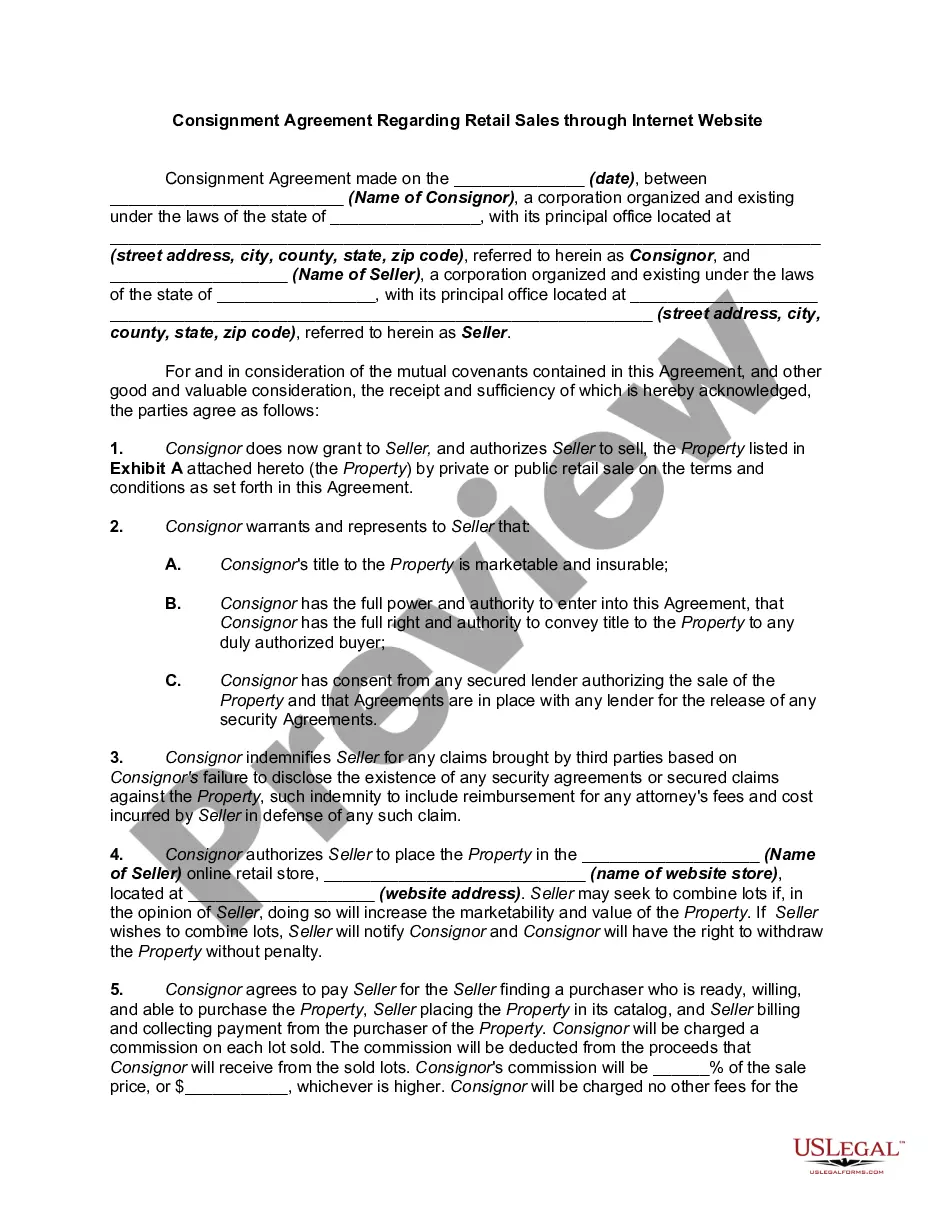
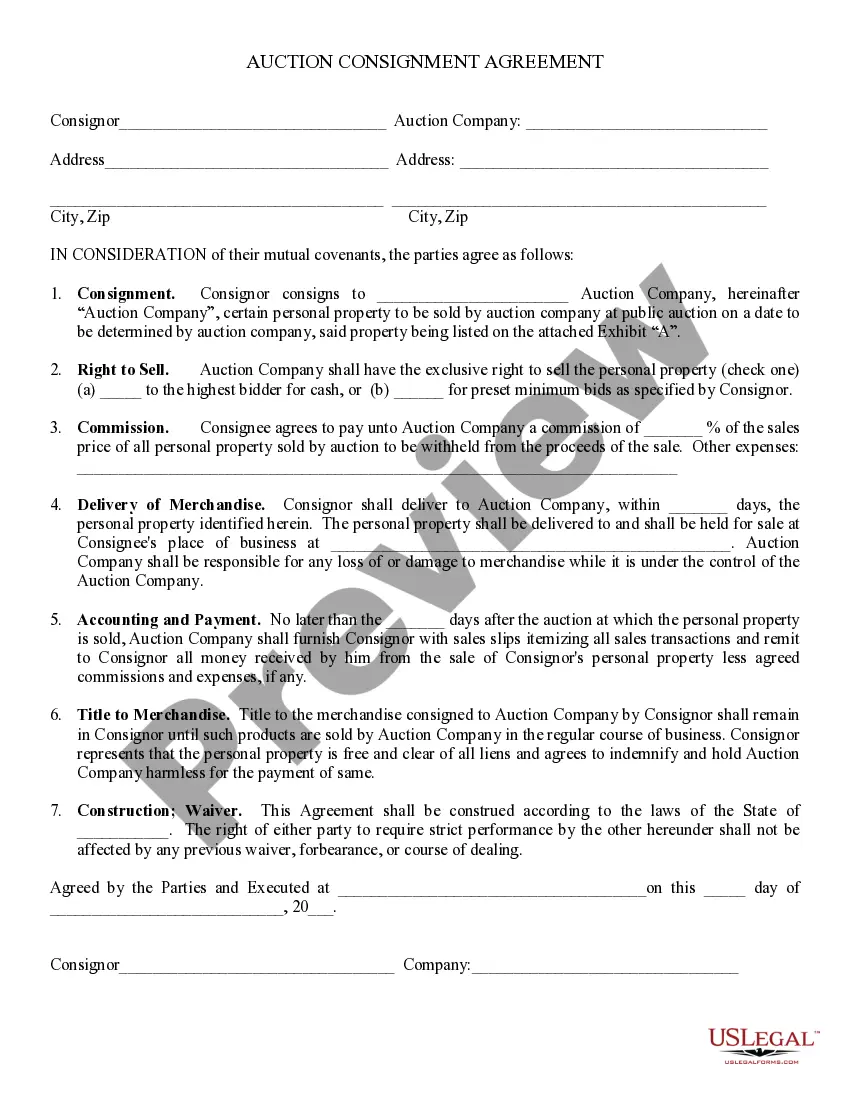
How to fill out Consignment Agreement?
Collaborating with legal paperwork and processes can be an arduous task to add to your daily routine.
Consignment Contract For Retail and similar documents usually require you to search for them and navigate the means to fill them out accurately.
For this reason, whether you are managing financial, legal, or personal issues, having a comprehensive and user-friendly online repository of documents readily available will be tremendously beneficial.
US Legal Forms is the leading online service for legal templates, featuring over 85,000 state-specific documents and a range of tools to help you complete your paperwork with ease.
Simply Log In to your account, find Consignment Contract For Retail, and download it instantly from the My documents section. You can also access previously saved documents.
- Browse the collection of relevant documents available with a single click.
- US Legal Forms offers state- and county-specific documents accessible for download at any time.
- Protect your paperwork management tasks by utilizing a high-quality service that allows you to prepare any document in minutes without any added or concealed fees.
Form popularity
FAQ
4 Types of Legal Structures for Business: Sole Proprietorship. General Partnership. Limited Liability Company (LLC) Corporations (C-Corp and S-Corp)
Oklahoma LLC Formation Filing Fee: $100 To form your Oklahoma LLC, you'll need to file Articles of Organization with the Oklahoma Secretary of State and pay the $100 filing fee ($104 if paying with a credit card). Your articles are what creates your Oklahoma LLC.
There are three common types of businesses?sole proprietorship, partnership, and corporation?and each comes with its own set of advantages and disadvantages. Here's a rundown of what you need to know about each one.
There are five basic forms of business entities: Sole Proprietorship. Partnership. Corporation. S Corporation. Limited Liability Company?LLC.
An overview of the four basic legal forms of organization: Sole Proprietorship; Partnerships; Corporations and Limited Liability Company follows.
If you are forming an LLC, partnership, non-profit, etc., you must file your business with the Oklahoma Secretary of State. As a registered business, you can legally sell goods or services in Oklahoma.
The sole proprietorship is the most common form of business organization. One person conducts business for him or herself. A sole proprietorship is not a legal entity. It has no life of its own separate and apart from the owner of the business.
The three major forms of business in the United States are sole proprietorships, partnerships, and corporations. Each form has implications for how individuals are taxed and resources are managed and deployed.