S Corporation Form In Philadelphia
Description


Get your form ready online
Our built-in tools help you complete, sign, share, and store your documents in one place.
Make edits, fill in missing information, and update formatting in US Legal Forms—just like you would in MS Word.
Download a copy, print it, send it by email, or mail it via USPS—whatever works best for your next step.
Sign and collect signatures with our SignNow integration. Send to multiple recipients, set reminders, and more. Go Premium to unlock E-Sign.
If this form requires notarization, complete it online through a secure video call—no need to meet a notary in person or wait for an appointment.
We protect your documents and personal data by following strict security and privacy standards.

Make edits, fill in missing information, and update formatting in US Legal Forms—just like you would in MS Word.

Download a copy, print it, send it by email, or mail it via USPS—whatever works best for your next step.

Sign and collect signatures with our SignNow integration. Send to multiple recipients, set reminders, and more. Go Premium to unlock E-Sign.

If this form requires notarization, complete it online through a secure video call—no need to meet a notary in person or wait for an appointment.

We protect your documents and personal data by following strict security and privacy standards.
Looking for another form?







Form popularity
FAQ
PA S corporations are subject to corporate net income tax to the extent of any built- in gains recognized for federal income tax purposes. All other income of a PA S corporation is reported by shareholders and taxed at 3.07 percent, the PA personal income tax rate.
Log into your Philadelphia Tax Center profile. Find your BIRT account, and select “File, view, or amend returns.” Pick “File now” on the “Returns” screen.
Start an S corp in Pennsylvania Step 1 – Choose a name. Step 2 – Designate a Pennsylvania registered office. Step 3 – File Pennsylvania Certificate of Organization. Step 4 – Create an operating agreement. Step 5 – Apply for an EIN. Step 6 – Apply for S Corp status with IRS Form 2553.
A PTET election allows PTEs, which are not subject to the SALT cap, to deduct the state income taxes on the PTE's activities for federal income tax purposes. Pennsylvania is one of only five states, along with Delaware, Maine, North Dakota, and the District of Columbia, to have a PIT but no PTET election.
If Built-In-Gains are triggered in any subsequent tax year, the PA S Corporation would have to file the RCT-101 to report the amount of gain subject to tax. Such return should be marked as both “First Report” and “Final Report”.
If you're a physician assistant (PA), you SHOULD form a Professional Corporation taxed as an S-Corporation.
Pennsylvania S corporations are subject to the corporate net income tax only to the extent of built-in-gains.
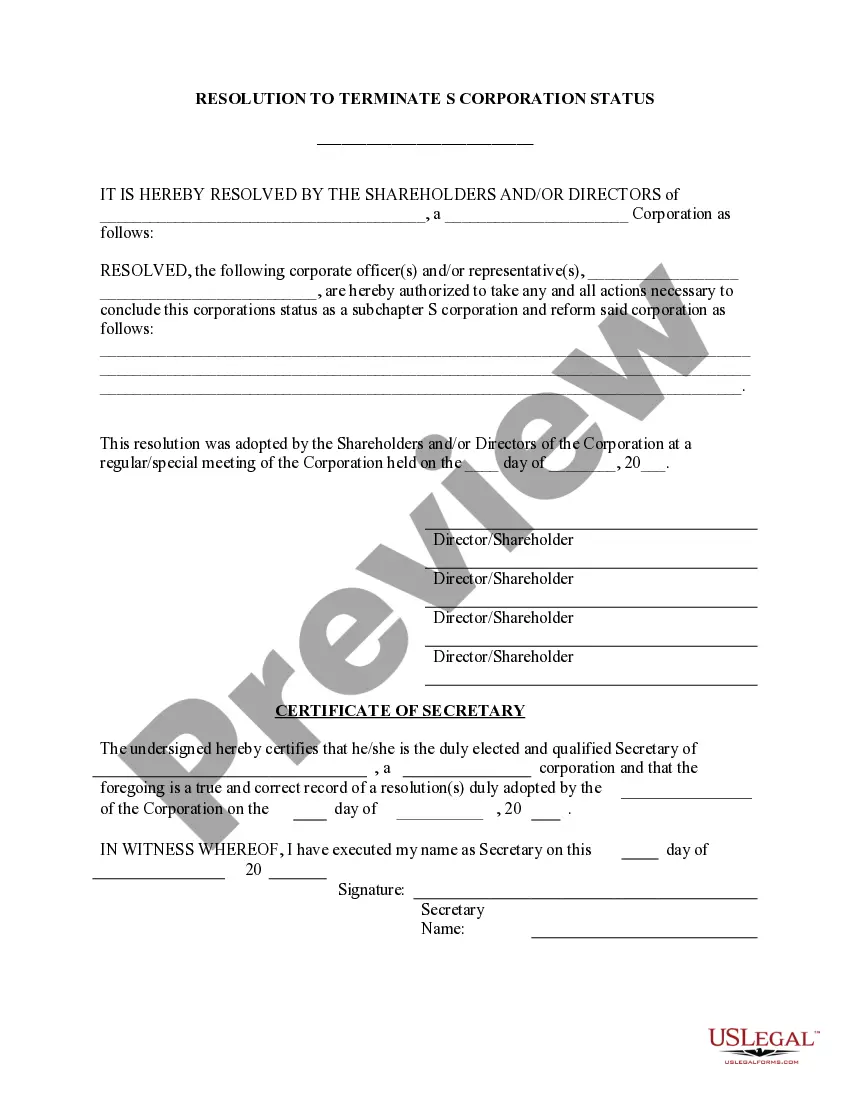
Businesses that elect federal subchapter S status are considered Pennsylvania S corporations, unless they opt to be taxed as a C corporation in Pennsylvania by filing the REV-976, Election Not to be Taxed as a Pennsylvania S Corporation PDF(opens in a new tab).
The Net Profits Tax (NPT) is imposed on the net profits from the operation of a trade, business, profession, enterprise, or other activity by: Philadelphia residents, even if their business is conducted outside of Philadelphia. Non-residents who conduct business in Philadelphia.
