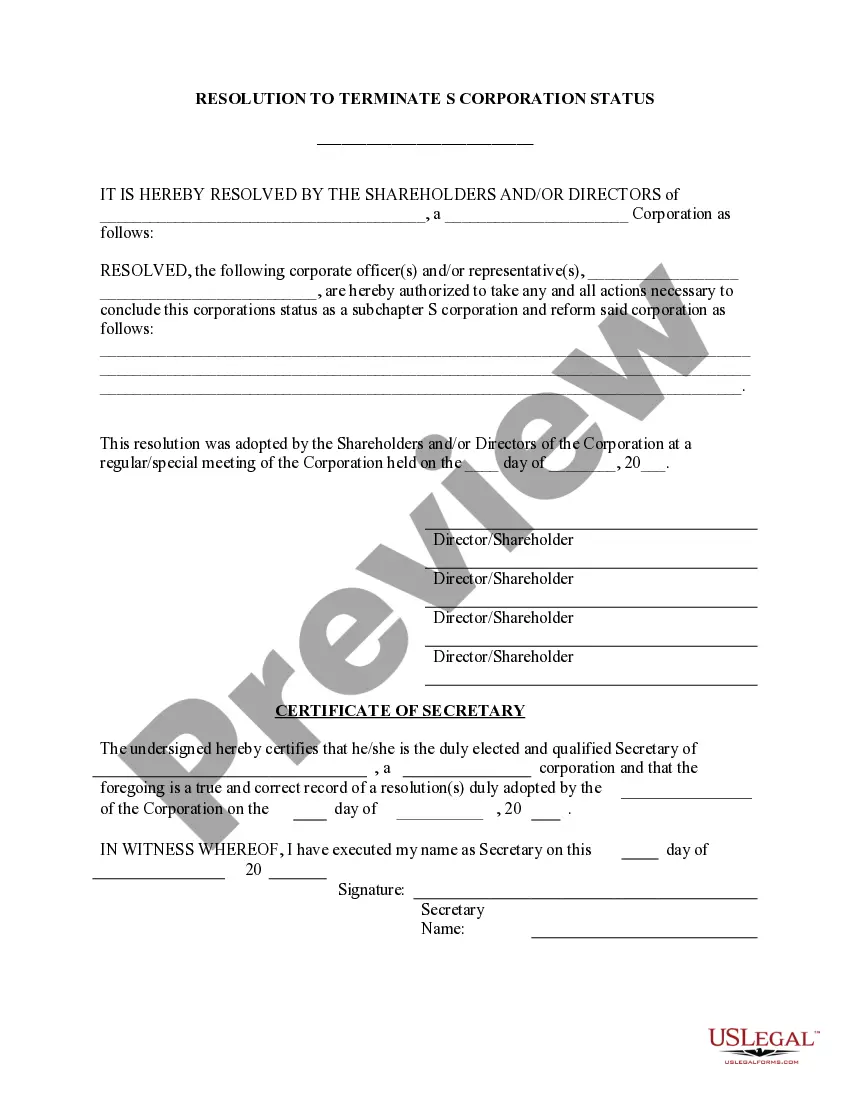
S Corp Status For Llc In Georgia
Description


Get your form ready online
Our built-in tools help you complete, sign, share, and store your documents in one place.
Make edits, fill in missing information, and update formatting in US Legal Forms—just like you would in MS Word.
Download a copy, print it, send it by email, or mail it via USPS—whatever works best for your next step.
Sign and collect signatures with our SignNow integration. Send to multiple recipients, set reminders, and more. Go Premium to unlock E-Sign.
If this form requires notarization, complete it online through a secure video call—no need to meet a notary in person or wait for an appointment.
We protect your documents and personal data by following strict security and privacy standards.

Make edits, fill in missing information, and update formatting in US Legal Forms—just like you would in MS Word.

Download a copy, print it, send it by email, or mail it via USPS—whatever works best for your next step.

Sign and collect signatures with our SignNow integration. Send to multiple recipients, set reminders, and more. Go Premium to unlock E-Sign.

If this form requires notarization, complete it online through a secure video call—no need to meet a notary in person or wait for an appointment.

We protect your documents and personal data by following strict security and privacy standards.
Looking for another form?








Form popularity
FAQ
LLC cons: Unlike a corporation, an LLC cannot issue shares of stock. Any new investor would need to become a member of the LLC, which is more complicated. Furthermore, many outside investors consider LLCs risky, and prefer to invest in corporations.
As a Georgia LLC, LLP, partnership or sole proprietorship, you are subject to the 15.3% Self Employment/FICA tax on all of your net earnings. The S corporation, on the other hand, pays you a deductible salary (which is subject to FICA), and then the profits flow through your personal return via a Schedule K-1.
Because of the one-class-of-stock restriction, an S corporation cannot allocate losses or income to specific shareholders. Allocation of income and loss is governed by stock ownership, unlike partnerships or LLCs taxed as partnerships where the allocation can be set in the partnership agreement or operating agreement.
A Limited Liability Company (LLC) is a business entity that offers certain limited personal liability on the part of the owner, like a corporation. It also offers the possibility of certain “pass-through” tax benefits, like a partnership. Therefore, an LLC is essentially a cross between a partnership and a corporation.
Yes. A consent agreement for each shareholder shall be filed by the corporation with its corporate return in the year in which the Subchapter “S” corporation is first required to file a Georgia income tax return.
If you own a Limited Liability Company, C Corporation, or other registered business entity in Georgia and you want to open a business bank account, expand your business into another state, seek funds from investors, or conduct certain other business activities, you'll need to have a Certificate of Existence.
The corporate Georgia LLC tax rate is six percent of Georgia taxable income. It is payable by the LLC if C corporation status is elected, and by the members if S corporation status is elected. The net worth tax is also assessed, if the net worth of the LLC is more than $100,000.
