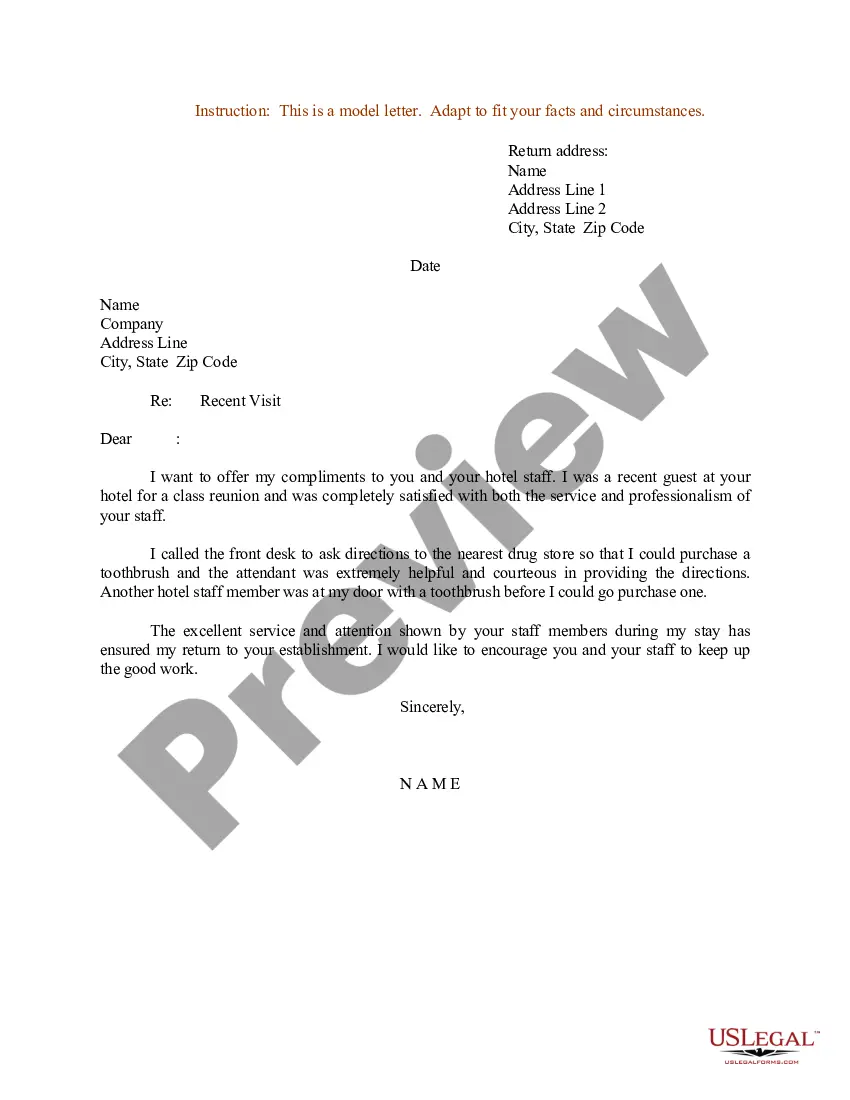
Sample Hotel Complaint Letter In Middlesex
Description
Get your form ready online
Our built-in tools help you complete, sign, share, and store your documents in one place.
Make edits, fill in missing information, and update formatting in US Legal Forms—just like you would in MS Word.
Download a copy, print it, send it by email, or mail it via USPS—whatever works best for your next step.
Sign and collect signatures with our SignNow integration. Send to multiple recipients, set reminders, and more. Go Premium to unlock E-Sign.
If this form requires notarization, complete it online through a secure video call—no need to meet a notary in person or wait for an appointment.
We protect your documents and personal data by following strict security and privacy standards.

Make edits, fill in missing information, and update formatting in US Legal Forms—just like you would in MS Word.

Download a copy, print it, send it by email, or mail it via USPS—whatever works best for your next step.

Sign and collect signatures with our SignNow integration. Send to multiple recipients, set reminders, and more. Go Premium to unlock E-Sign.

If this form requires notarization, complete it online through a secure video call—no need to meet a notary in person or wait for an appointment.

We protect your documents and personal data by following strict security and privacy standards.
Looking for another form?




Form popularity
FAQ
Dear Contact Person: This letter is to notify you {or} follow up on our conversation of {date} about a problem I am having with the name of product or service performed that I bought, leased, rented or had repaired at your name of location location on date.
Dear Hotel Manager Name, I am writing this letter to inform you about my upcoming visit to your hotel. My family and I will be arriving on date and staying for number of nights. We are really excited to spend our vacation at your hotel as we have heard great things about it from our friends.
The Top 10 Common Hotel Complaints Cleanliness Concerns. Clean rooms are non-negotiable, yet cleanliness remains one of the top complaints. Noise Complaints. Room Comfort Issues. Wi-Fi Problems. Check-In and Check-Out Delays. Housekeeping Inconsistencies. Customer Service Issues. Parking Concerns.
Dear Hotel Manager's Name, I am writing to express my extreme disappointment with the level of customer service I received during my recent stay at Hotel Name. As a frequent traveler, I understand that not every hotel experience can be perfect, but the issues I encountered during my stay were unacceptable.
Information To Include in Your Letter Give the basics. Tell your story. Explain how you want to resolve the problem. Describe your next steps. Send your complaint letter. Your Mailing Address Your City, State, Zip Code Your email address
The Golden Rule for Hotel or Airline Compensation. Pinpoint the Issue. Know Your Rights. Offer a Potential Solution. Make Your Complaint Specific and Concise. Know When To Ask for a Supervisor or Manager (or Not) ... Taking the Matter Higher or to Social Media. Get Travel Insurance.
In-Person: If you're still at the establishment, speak to a manager directly. Be calm and polite when explaining your issue. Phone or Email: If you've left, contact the hotel or restaurant via phone or email. Use the official contact information found on their website.
How to File a Consumer Complaint in the UK Step 1: Gather Evidence and Document Your Complaint. Step 2: Contact the Service Provider Directly. Step 3: Utilize Alternative Dispute Resolution (ADR) Mechanisms. Step 4: Escalate to Relevant Authorities. Step 5: Seek Legal Action in the County Court.