Caregiver Medical Consent Form For Child In Texas
Description
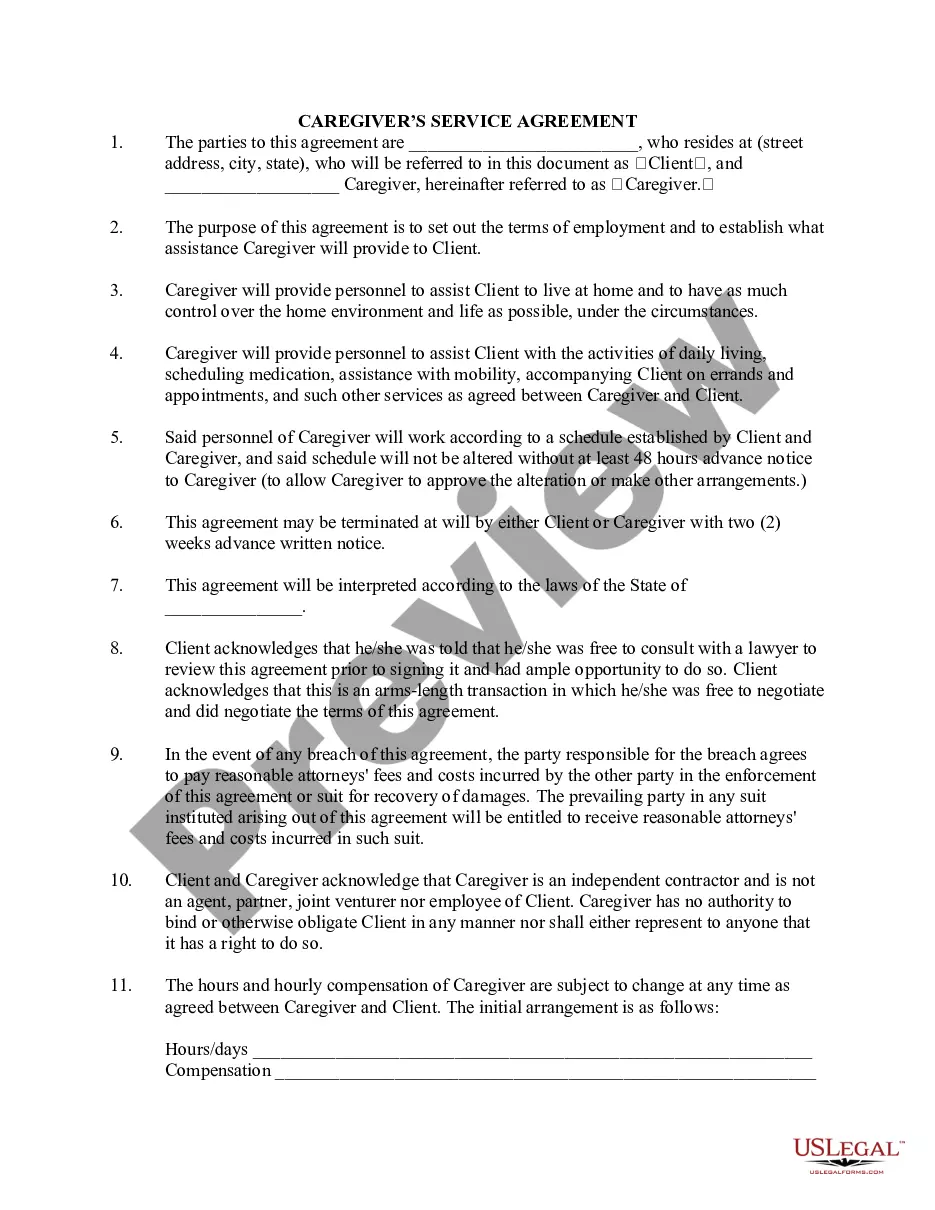
Get your form ready online
Our built-in tools help you complete, sign, share, and store your documents in one place.
Make edits, fill in missing information, and update formatting in US Legal Forms—just like you would in MS Word.
Download a copy, print it, send it by email, or mail it via USPS—whatever works best for your next step.
Sign and collect signatures with our SignNow integration. Send to multiple recipients, set reminders, and more. Go Premium to unlock E-Sign.
If this form requires notarization, complete it online through a secure video call—no need to meet a notary in person or wait for an appointment.
We protect your documents and personal data by following strict security and privacy standards.

Make edits, fill in missing information, and update formatting in US Legal Forms—just like you would in MS Word.

Download a copy, print it, send it by email, or mail it via USPS—whatever works best for your next step.

Sign and collect signatures with our SignNow integration. Send to multiple recipients, set reminders, and more. Go Premium to unlock E-Sign.

If this form requires notarization, complete it online through a secure video call—no need to meet a notary in person or wait for an appointment.

We protect your documents and personal data by following strict security and privacy standards.
Looking for another form?
Form popularity
FAQ
The Texas Family Code provides comprehensive provisions for addressing family violence and issuing protective orders to safeguard victims. These laws aim to protect individuals, particularly those at risk of domestic violence, stalking, or harassment, by providing legal mechanisms for safety and enforcement.
The Informed Consent Statute provides that, for a patient to recover against a provider for lack of informed consent, the patient must show that the provider was negligent in failing to disclose the risks or hazards that could have influenced a reasonable person in making a decision to give or withhold consent.
A parent can sign an “authorization agreement” form to give a nonparent the authority to care for and make decisions for a child. An authorization agreement lets a nonparent make decisions for a child without going to court.
101.003. CHILD OR MINOR; ADULT. (a) "Child" or "minor" means a person under 18 years of age who is not and has not been married or who has not had the disabilities of minority removed for general purposes.
Texas Family Code § 32.002 A consent form for a non-parent to give consent for health-care treatment must be: In writing. Signed by the person giving consent. Given to the doctor, hospital, or medical facility that administers the treatment.
In Texas, the physician is required to make reasonable disclosure of the risks of medical treatment and must secure the authority or consent of the patient to legally perform a medical procedure (4). In 1977, the duty to obtain a patient's informed consent was codified in statute (5).
Sec. 32.002. CONSENT FORM. (a) Consent to medical treatment under this subchapter must be in writing, signed by the person giving consent, and given to the doctor, hospital, or other medical facility that administers the treatment.
Sixteen years old or older and resides separate and apart from parents, managing conservator, or guardian (with or without their consent) and is managing his/her own financial affairs, regardless of the source of income. Unmarried and pregnant and consents to treatment related to pregnancy, other than abortion.
The age of consent in Texas is 17 years of age. This means that somebody under the age of 17 is incapable of legally consenting to sexual activity.