Caregiver Form Sample For Employer In King
Description

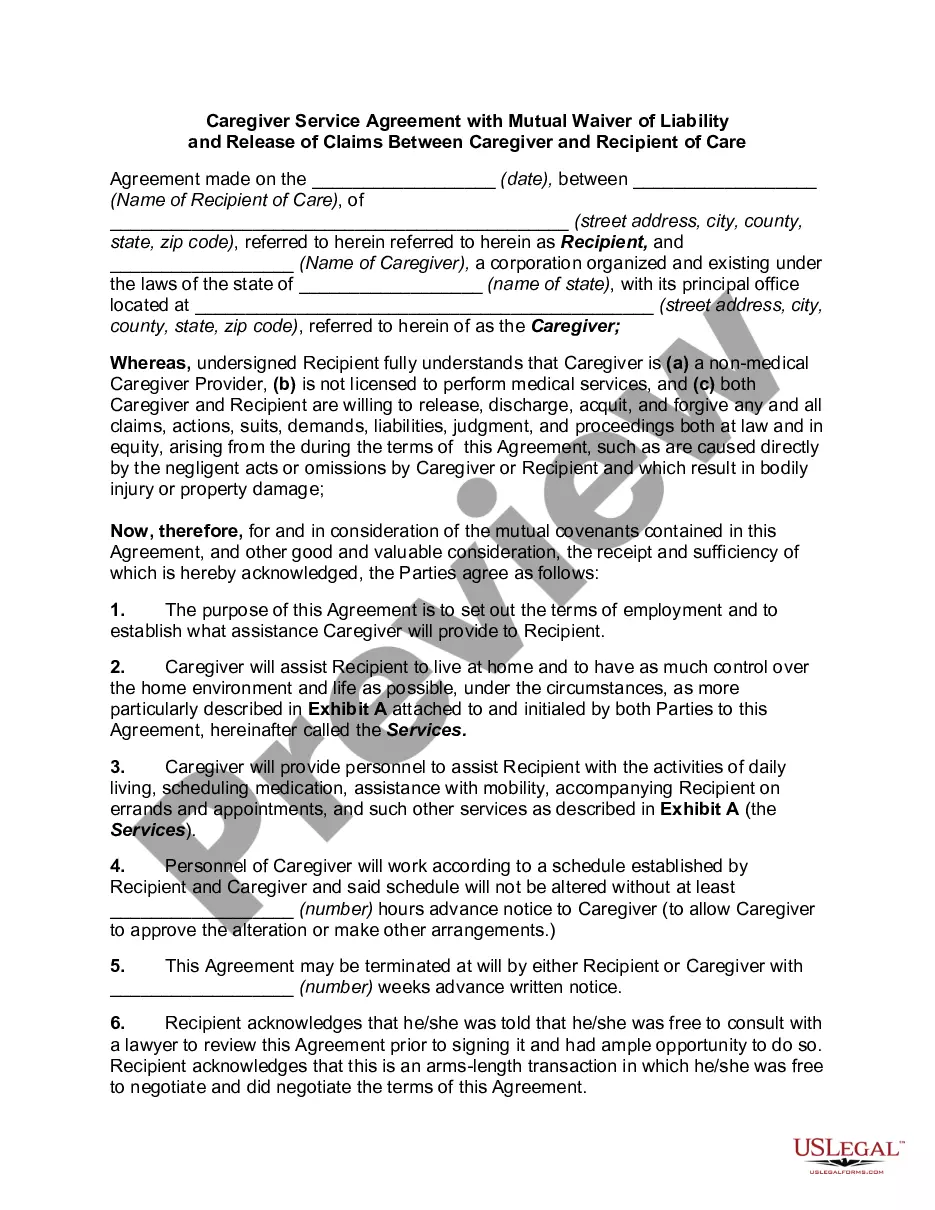
Get your form ready online
Our built-in tools help you complete, sign, share, and store your documents in one place.
Make edits, fill in missing information, and update formatting in US Legal Forms—just like you would in MS Word.
Download a copy, print it, send it by email, or mail it via USPS—whatever works best for your next step.
Sign and collect signatures with our SignNow integration. Send to multiple recipients, set reminders, and more. Go Premium to unlock E-Sign.
If this form requires notarization, complete it online through a secure video call—no need to meet a notary in person or wait for an appointment.
We protect your documents and personal data by following strict security and privacy standards.

Make edits, fill in missing information, and update formatting in US Legal Forms—just like you would in MS Word.

Download a copy, print it, send it by email, or mail it via USPS—whatever works best for your next step.

Sign and collect signatures with our SignNow integration. Send to multiple recipients, set reminders, and more. Go Premium to unlock E-Sign.

If this form requires notarization, complete it online through a secure video call—no need to meet a notary in person or wait for an appointment.

We protect your documents and personal data by following strict security and privacy standards.
Looking for another form?







Form popularity
FAQ
Compassion – The ability to translate empathic feelings into action (desire to alleviate suffering). Optimism – Expect a favourable or positive outcome. Confidence – Sure of one's self and one's abilities. Organization – Methodical and efficient in arrangement or function.
Family caregiver leave in Ontario is unpaid but it protects your job. Here's how it works: you can get up to 8 weeks of caregiver leave each calendar year for certain family members needing your care or support. you can take more than 1 caregiver leave in a calendar year for different family members.
Experienced caregivers explain that they are able to stay strong by searching inside themselves and relying on their strength of character to keep them going during difficult days. Some examples of these strengths include patience, love, faith, core values, integrity, and compassion.
Empathy, patience, and adaptability are the three main strengths that distinguish exceptional caregivers. By embodying these qualities, caregivers not only meet the physical needs of their clients but also provide emotional support, foster meaningful connections, and enhance overall well-being.
7 Essential Caregiver Skills Compassion. Caregiving is about more than simply offering a helping hand. Selflessness. Caregiving is a selfless profession. Patience. Patience is a virtue, especially for caregivers. Time Management and Organization. Reliability. Communication. Problem-Solving.
I am very passionate about being a caregiver and my positive and cheery disposition makes me very much suited to work. If you hire me, I will be available to work the hours needed, cover additional shifts to help when needed and support my co-workers to ensure the best possible care is always afforded to your clients.”
Whether it's helping a client regain their independence, achieve a health milestone, or stay active, these accomplishments bring immense joy and satisfaction. Recognizing these successes boosts morale, reaffirms the importance of the caregiving role, and motivates caregivers to continue making a positive impact.
Given the nature of their job, truly great caregivers are naturally dependable, compassionate, and trustworthy. They should be able to empathize with the needs of their patients and identify them even before their families do.
The best way to be a caregiver is to approach the role with compassion, empathy, and patience. Listen actively to the needs and concerns of the person you are caring for, and be responsive to their emotions. Educate yourself about their specific condition or situation to provide the best possible care.
Diplomas and NVQs: Pursuing a Level 2 or Level 3 Diploma in Health and Social Care or an equivalent National Vocational Qualification (NVQ) can enhance your skills and increase your employability. These qualifications provide in-depth training on various aspects of caregiving and care management.
