Agreement Caregiver Contract With Employer In Harris
Description





Get your form ready online
Our built-in tools help you complete, sign, share, and store your documents in one place.
Make edits, fill in missing information, and update formatting in US Legal Forms—just like you would in MS Word.
Download a copy, print it, send it by email, or mail it via USPS—whatever works best for your next step.
Sign and collect signatures with our SignNow integration. Send to multiple recipients, set reminders, and more. Go Premium to unlock E-Sign.
If this form requires notarization, complete it online through a secure video call—no need to meet a notary in person or wait for an appointment.
We protect your documents and personal data by following strict security and privacy standards.

Make edits, fill in missing information, and update formatting in US Legal Forms—just like you would in MS Word.

Download a copy, print it, send it by email, or mail it via USPS—whatever works best for your next step.

Sign and collect signatures with our SignNow integration. Send to multiple recipients, set reminders, and more. Go Premium to unlock E-Sign.

If this form requires notarization, complete it online through a secure video call—no need to meet a notary in person or wait for an appointment.

We protect your documents and personal data by following strict security and privacy standards.
Looking for another form?







Form popularity
FAQ
Here's how to write a professional, airtight service agreement using ClickUp: Step 1: Identify the parties involved. Step 2: Define the scope of services. Step 3: Set payment terms. Step 4: Outline the responsibilities of each party. Step 5: Add termination, dispute resolution, and other essential clauses.
How to write an agreement letter Title your document. Provide your personal information and the date. Include the recipient's information. Address the recipient and write your introductory paragraph. Write a detailed body. Conclude your letter with a paragraph, closing remarks, and a signature. Sign your letter.
Ing to Boundy (2012), typically, a written contract will include: Date of agreement. Names of parties to the agreement. Preliminary clauses. Defined terms. Main contract clauses. Schedules/appendices and signature provisions (para. 5).
HOW TO WRITE A BUSINESS CONTRACT USE PLAIN LANGUAGE. The clearer and simpler your business contracts are, the better. IDENTIFY THE 5 W'S. Include all of the relevant details in your contract. INCLUDE PAYMENT INFORMATION. DESCRIBE TERMINATION PROCEDURES. INCLUDE DISPUTE RESOLUTION.
The agreement outlines the role and responsibilities of the Shared Lives (SL) Carer(s) in working with the SL Service and the role and responsibilities that the SL Service has in supporting and working with the SL Carer(s).
How to Write a Letter of Agreement Start with Basic Information. Define Employment Terms. Outline Compensation and Benefits. Include Non-Disclosure and Non-Compete Clauses. Address the Probationary Period (if applicable). Set the Code of Conduct and Policies. Explain Termination Conditions. Detail Severance Terms:
7 steps to a solid statement of work Write the introduction. List the key activities and requirements. Create your project timeline. List required resources. List project deliverables. Highlight dependencies. Define project tracking and communication:
7 Best Practices When Drafting Simple Agreements Start with a clear statement of purpose. Define key terms and definitions. Use clear and concise language. Include dispute resolution provisions. Consider the potential consequences of the breach. Include termination and renewal provisions. Use a standard contract template.
In this sense, the caregiver is a facilitator, that is, she or he provides the time and the environment in which the client can work on him or herself. The caregiver cannot force the client to do anything.
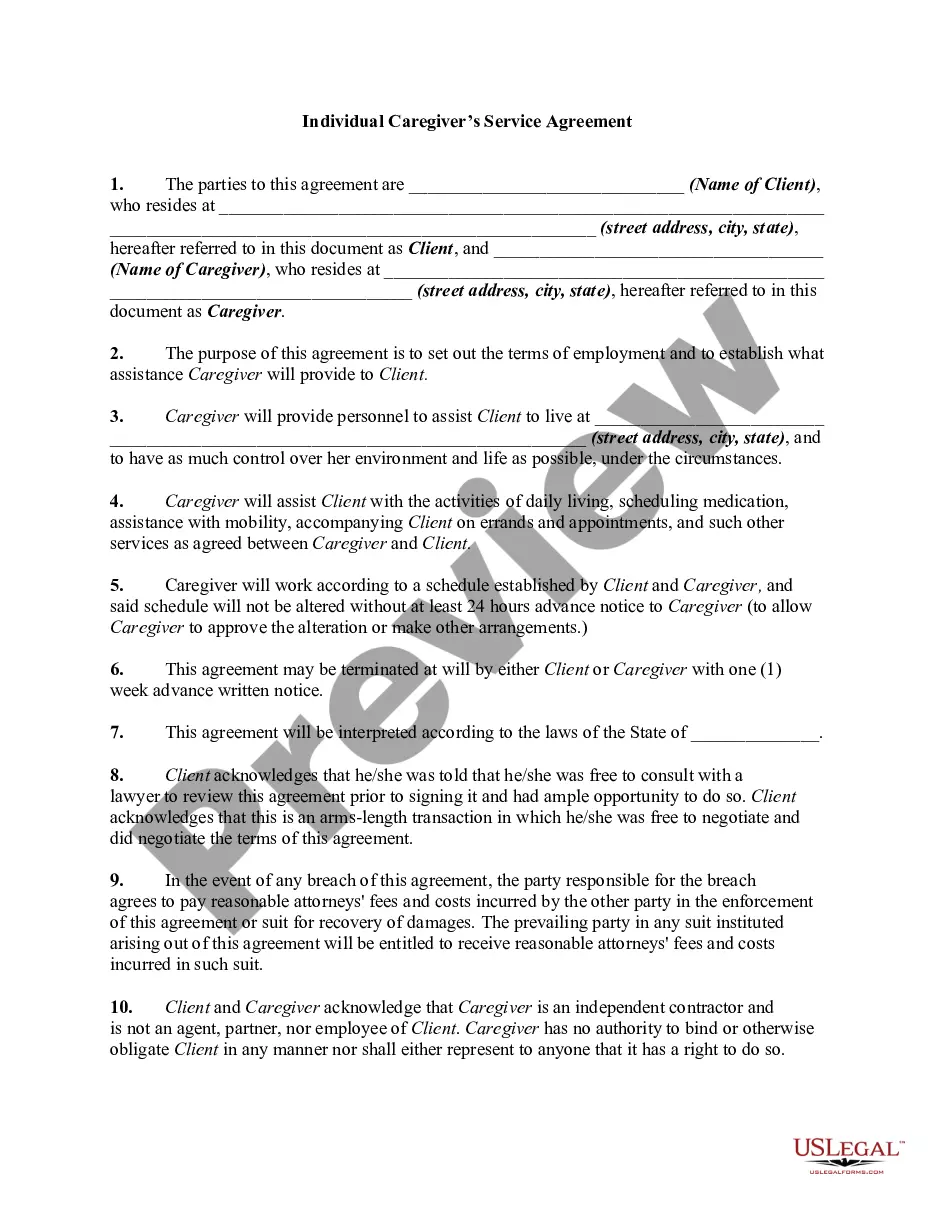
The agreement is a contract typically between a family member who agrees to provide caregiver services for a disabled or aging relative and the person receiving care.