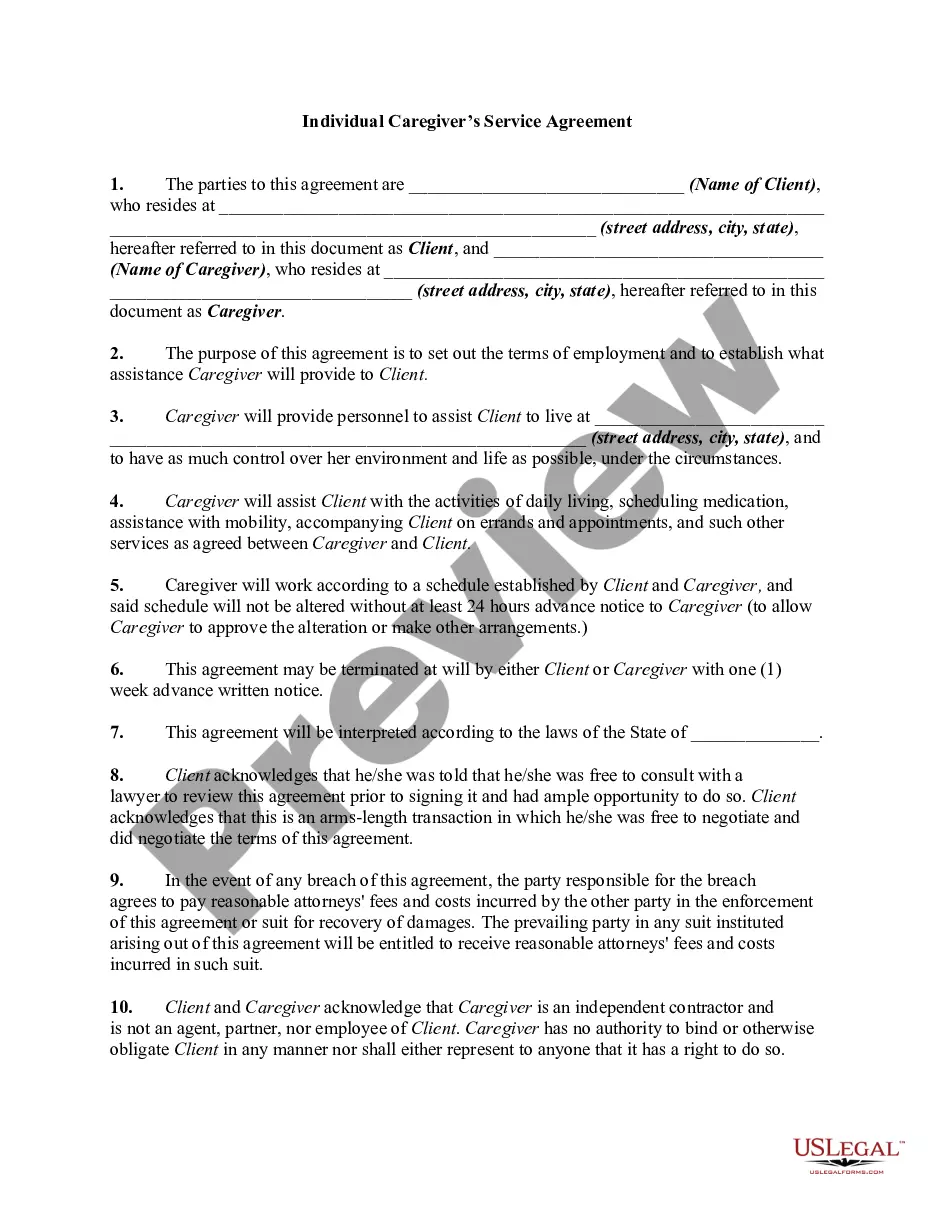
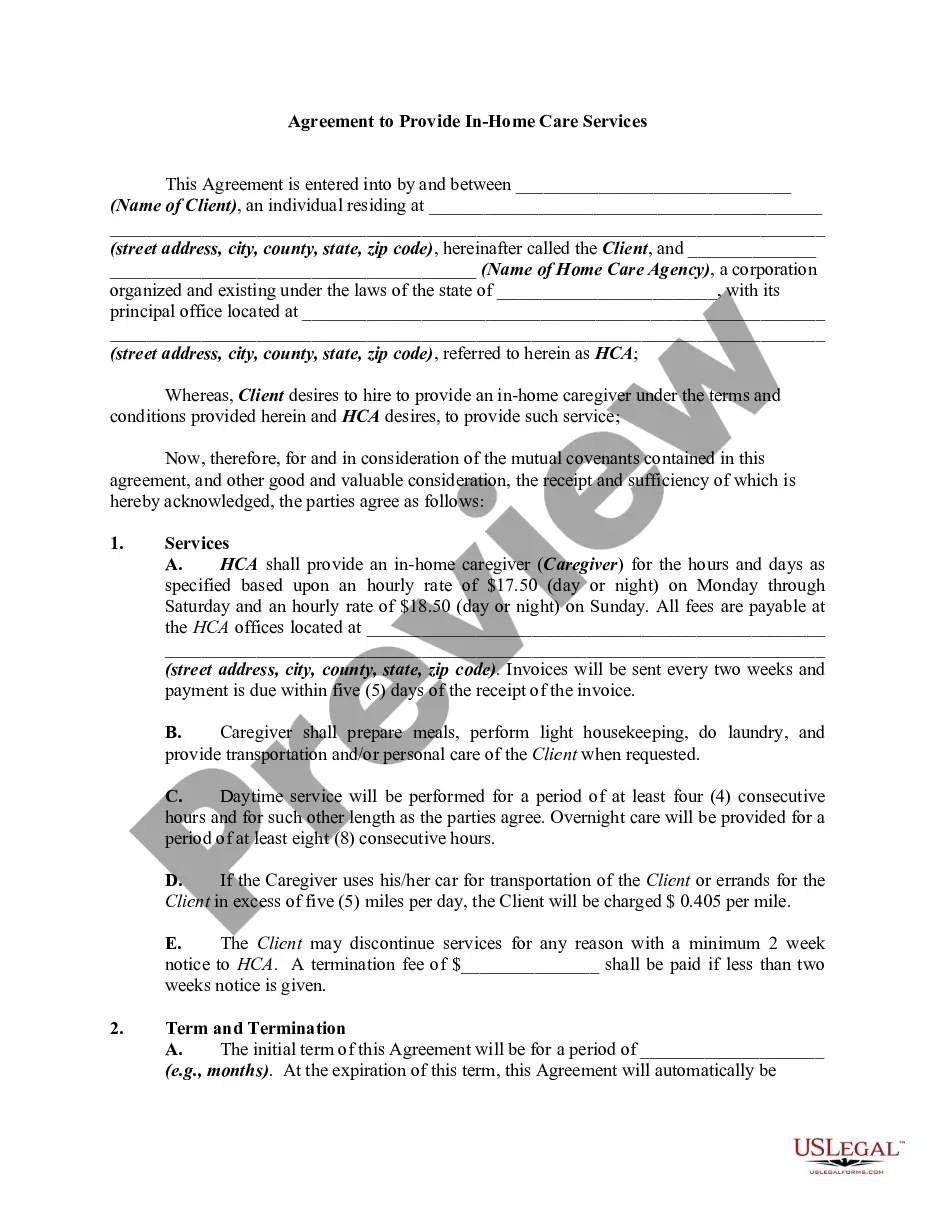
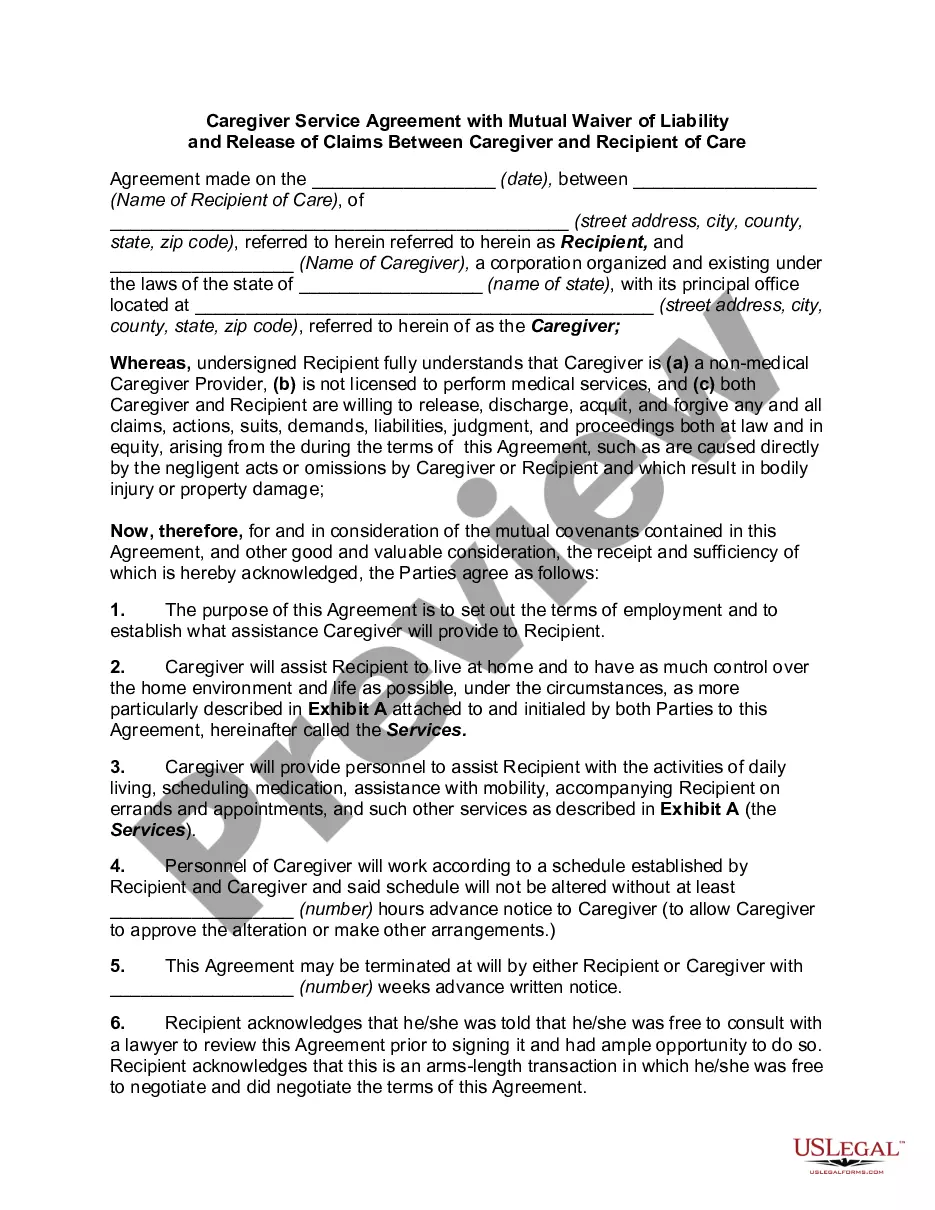
Independent Contractor Agreement For Caregiver In Fairfax
Description



Get your form ready online
Our built-in tools help you complete, sign, share, and store your documents in one place.
Make edits, fill in missing information, and update formatting in US Legal Forms—just like you would in MS Word.
Download a copy, print it, send it by email, or mail it via USPS—whatever works best for your next step.
Sign and collect signatures with our SignNow integration. Send to multiple recipients, set reminders, and more. Go Premium to unlock E-Sign.
If this form requires notarization, complete it online through a secure video call—no need to meet a notary in person or wait for an appointment.
We protect your documents and personal data by following strict security and privacy standards.

Make edits, fill in missing information, and update formatting in US Legal Forms—just like you would in MS Word.

Download a copy, print it, send it by email, or mail it via USPS—whatever works best for your next step.

Sign and collect signatures with our SignNow integration. Send to multiple recipients, set reminders, and more. Go Premium to unlock E-Sign.

If this form requires notarization, complete it online through a secure video call—no need to meet a notary in person or wait for an appointment.

We protect your documents and personal data by following strict security and privacy standards.
Looking for another form?









Form popularity
FAQ
7 Harmful Behaviors for Family Caregivers to Avoid Comparing Your Experience to Others. Playing the Blame Game. Indulging in Vices. Skipping Your Workout. Putting Off Health Checkups. Refusing Offers of Help. Skipping Sleep.
Here are the most widely seen 4 types of caregivers: Professional caregivers. Those who are trained, certified, and employed to provide care services are known as professional caregivers. Family caregivers. Volunteer caregivers. Informal caregivers.
10 mistakes senior caregivers should avoid Allowing job creep. Private professional senior caregivers are at greater risk of job creep. Not communicating effectively. Getting burned out. Giving into power struggles. Fearing asking for help. Doing tasks at random. Ignoring changes. Being disorganized.
Top 10 Caregiver Do's and Don'ts Don't make Assumptions. Do Ask. Don't Expect every day to be the same. Do go with the flow. Don't get to the point of burnout. Do Take breaks and respite. Don't withhold care. Do Communicate.
Such caregivers should avoid any role in the client's financial or legal matters unless specifically directed to do so. Activities that are prohibited include: The custody of the client's bank accounts or investments. And you are literally signing the legal paperwork for this person.
There are some household duties that they won't be able to help you with. These include window cleaning, maintenance of specialist clinical equipment and heavy lifting of any kind. Household maintenance, including DIY, is also beyond your carer's remit.
Family caregiving is the act of providing at-home care for a relative, friend, or other loved one with a physical or mental health problem. As life expectancies increase, medical treatments advance, and more people live with chronic illnesses and disabilities, many of us find ourselves caring for a loved one at home.
Personality Traits of a Good Caregiver Patience. People who need care often take longer to complete simple tasks. Compassion. Empathy and understanding are absolutely necessary. Humor. Being Present. Detail Oriented. Able to Accept Help. Willing to Set Boundaries. Cooperative.
Write the contract in six steps Start with a contract template. Open with the basic information. Describe in detail what you have agreed to. Include a description of how the contract will be ended. Write into the contract which laws apply and how disputes will be resolved. Include space for signatures.