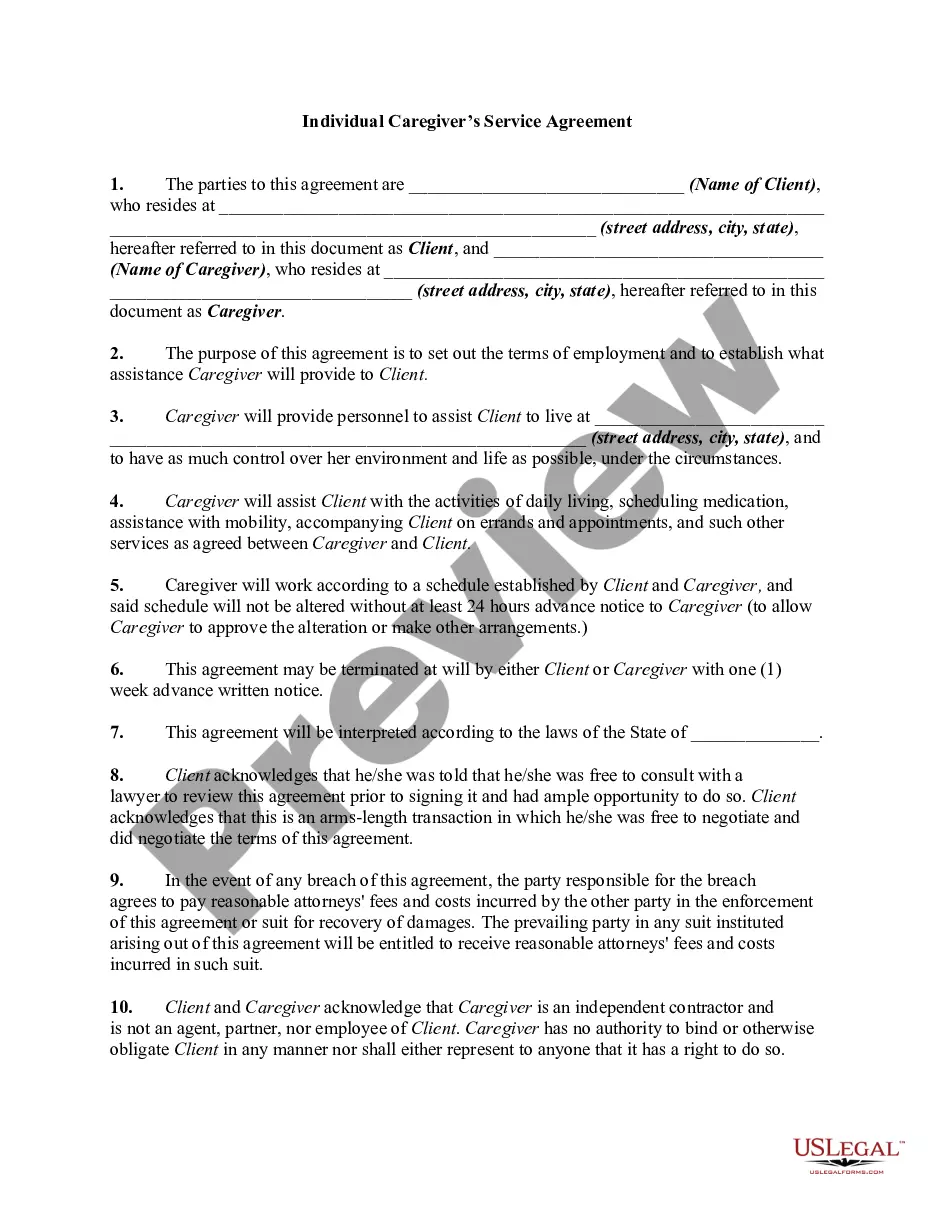
Caregiver Form Sample For Employer In Allegheny
Description





Get your form ready online
Our built-in tools help you complete, sign, share, and store your documents in one place.
Make edits, fill in missing information, and update formatting in US Legal Forms—just like you would in MS Word.
Download a copy, print it, send it by email, or mail it via USPS—whatever works best for your next step.
Sign and collect signatures with our SignNow integration. Send to multiple recipients, set reminders, and more. Go Premium to unlock E-Sign.
If this form requires notarization, complete it online through a secure video call—no need to meet a notary in person or wait for an appointment.
We protect your documents and personal data by following strict security and privacy standards.

Make edits, fill in missing information, and update formatting in US Legal Forms—just like you would in MS Word.

Download a copy, print it, send it by email, or mail it via USPS—whatever works best for your next step.

Sign and collect signatures with our SignNow integration. Send to multiple recipients, set reminders, and more. Go Premium to unlock E-Sign.

If this form requires notarization, complete it online through a secure video call—no need to meet a notary in person or wait for an appointment.

We protect your documents and personal data by following strict security and privacy standards.
Looking for another form?


Form popularity
FAQ
Top 10 Caregiver Do's and Don'ts Don't make Assumptions. Do Ask. Don't Expect every day to be the same. Do go with the flow. Don't get to the point of burnout. Do Take breaks and respite. Don't withhold care. Do Communicate.
The Pennsylvania Caregiver Support Program helps people who take care of others. It offers resources and support to make caregiving easier and to keep a good relationship with the person being cared for. The program aims to reduce caregiver stress by focusing on the caregiver's well-being.
There are some household duties that they won't be able to help you with. These include window cleaning, maintenance of specialist clinical equipment and heavy lifting of any kind. Household maintenance, including DIY, is also beyond your carer's remit.
Family caregiving is the act of providing at-home care for a relative, friend, or other loved one with a physical or mental health problem. As life expectancies increase, medical treatments advance, and more people live with chronic illnesses and disabilities, many of us find ourselves caring for a loved one at home.
In conclusion, there are 4 types of caregivers: family caregivers, professional caregivers, volunteer caregivers, and informal caregivers. Each caregiver faces unique challenges, including physical and emotional exhaustion, financial strain, and balancing personal and caregiving responsibilities.
Say this to show appreciation ``Thank you for what you are doing. It must be very challenging at times, but you keep forging ahead, and I admire you for that. I'd like to do X, Y or Z to support you.'' Or surprise a caregiver with a supportive card, gift certificate, present or anything that makes her feel appreciated.
Such caregivers should avoid any role in the client's financial or legal matters unless specifically directed to do so. Activities that are prohibited include: The custody of the client's bank accounts or investments. And you are literally signing the legal paperwork for this person.
A family and friends care arrangement, also known as kinship care, is one in which a child who cannot be cared for by their parent(s) or another person with parental responsibility goes to live with a relative, friend, or other connected person.
Listen to their concerns without judgment or advice. It's the best way to let them know that you care about how they feel and that you want to help. Show understanding, empathy, and compassion for them as a caregiver and as a person. Be supportive by asking ``how can I help?'' or ``what do you need me to do?''
