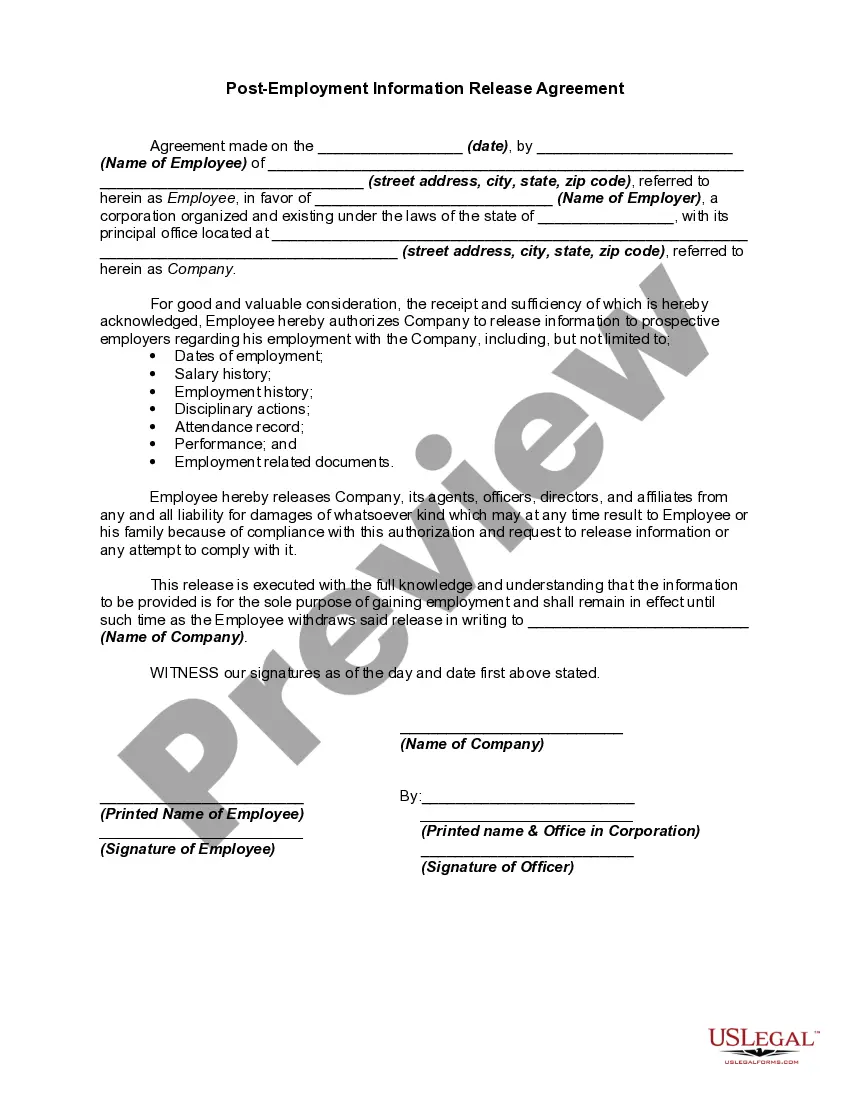
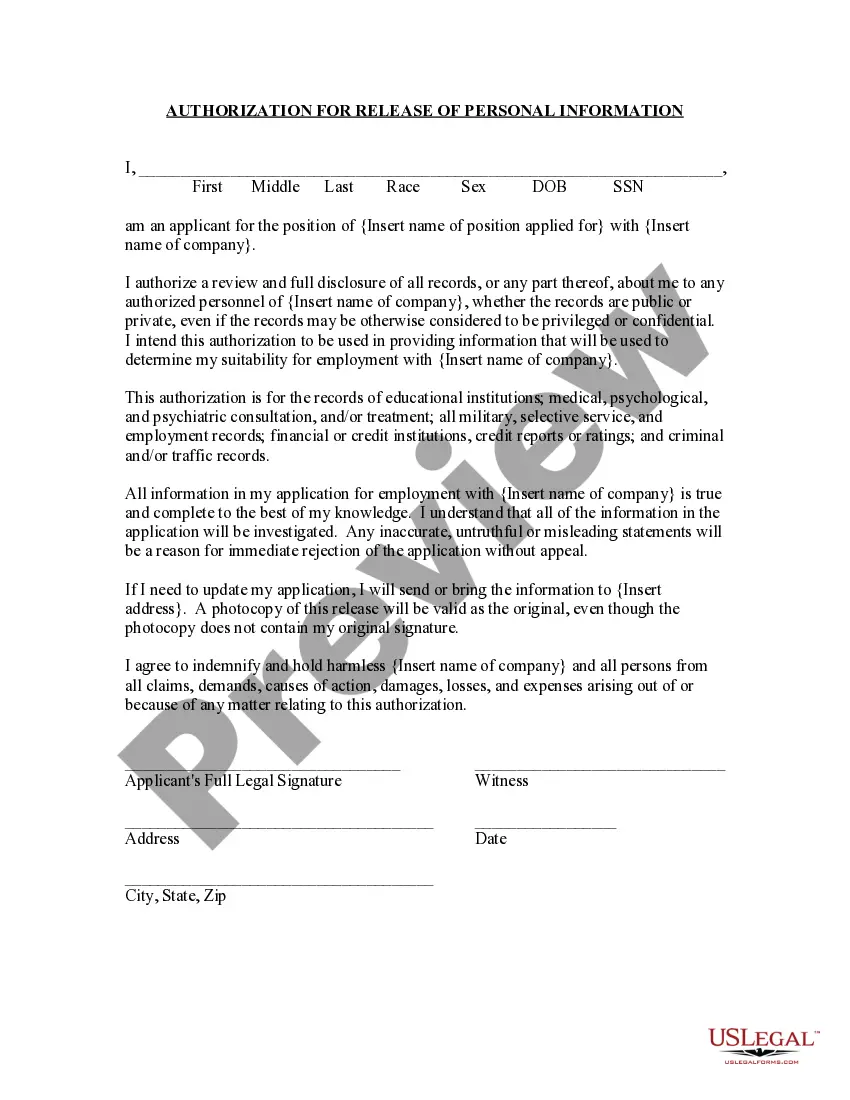
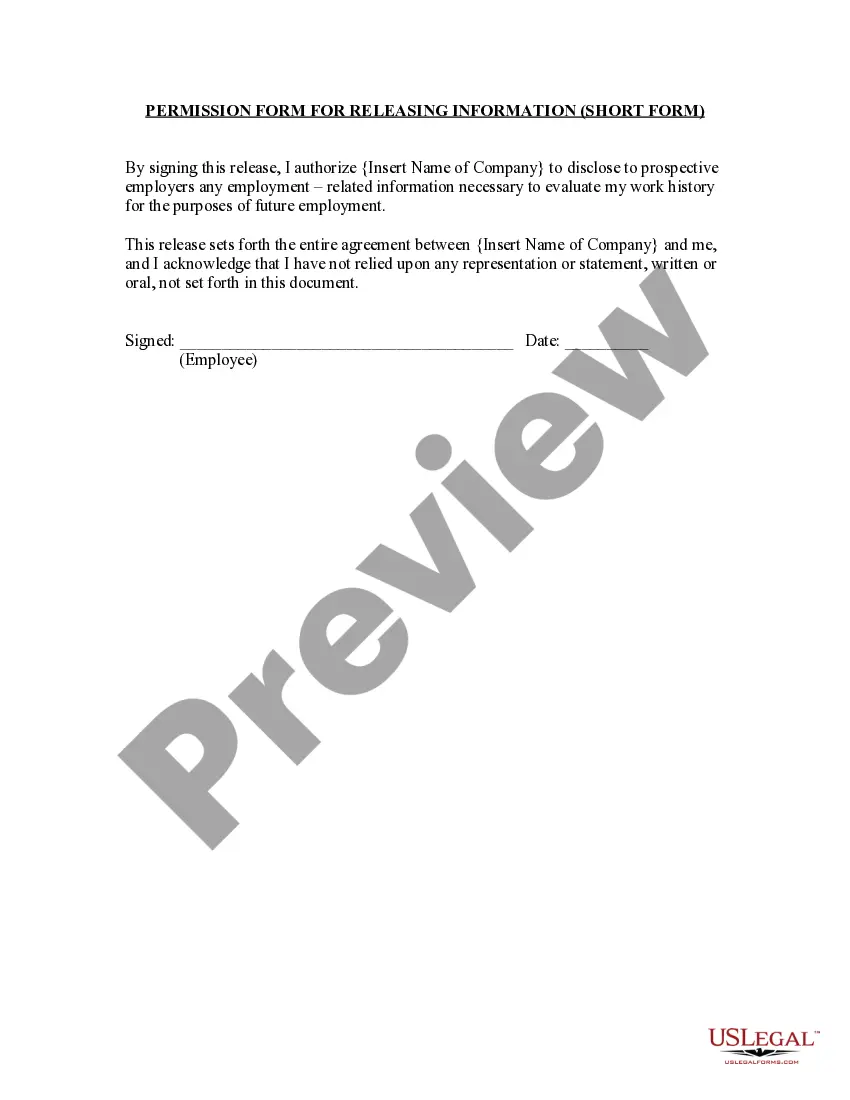
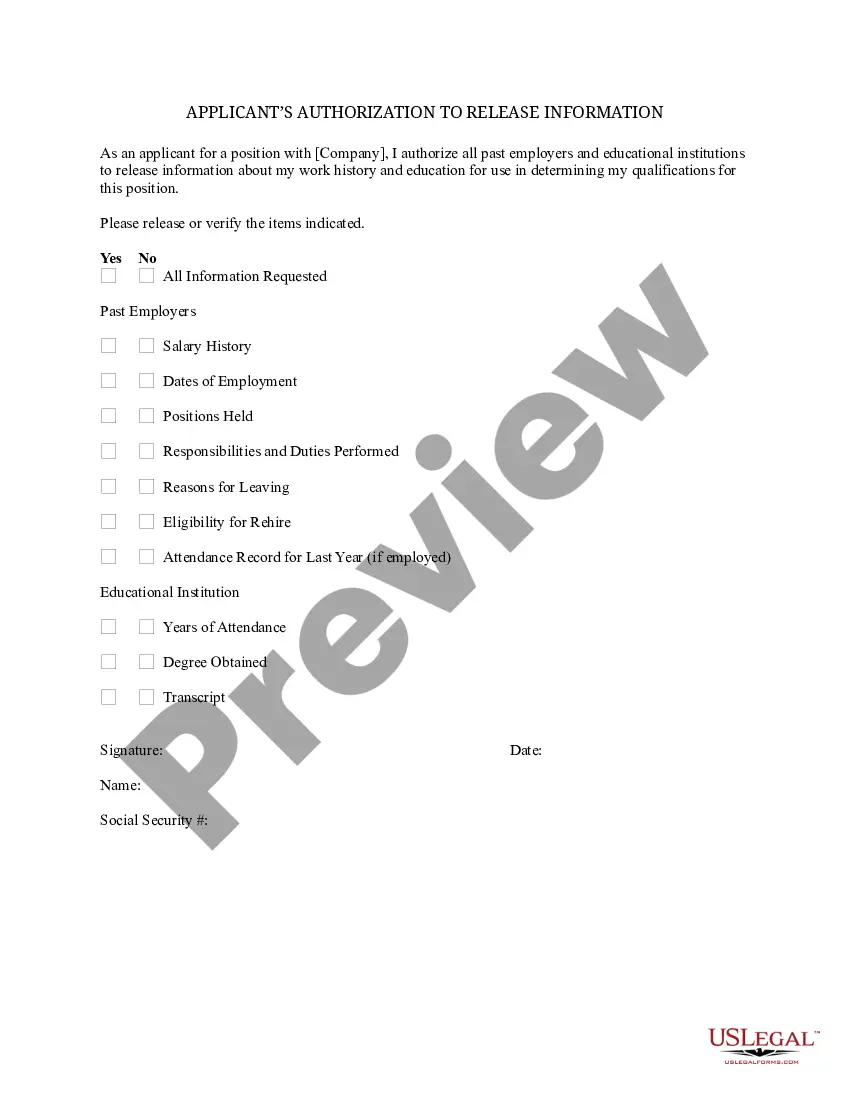
Release Of Information For Therapist In Maryland
Description
Form popularity
FAQ
§4–311. (a) Subject to subsection (b) of this section, a custodian shall deny inspection of a personnel record of an individual, including an application, a performance rating, or scholastic achievement information. (iii) personal cell phone number. (iv) records relating to a disciplinary decision.
Pursuant to State Government Article, §20-304, Annotated Code of Maryland, it is unlawful for an owner or operator of a place of public accommodation or an agent/employee of the owner or operator to refuse, withhold from, or deny to anyone the accommodations, advantages, facilities and privileges of a place of public ...
Under Maryland's common law doctrine of informed consent, a “mentally competent adult” is entitled to give or withhold consent to medical treatment after receiving a fair and reasonable explanation of the proposed treatment.
Code, Health-Gen. § 4-302. Section 4-302 - Confidentiality and disclosure generally (a) A health care provider shall: (1) Keep the medical record of a patient or recipient confidential; and (2) Disclose the medical record only: (i) As provided by this subtitle; or (ii) As otherwise provided by law.
I am writing to request access to my medical records under section 45 of the Data Protection Act 2018. I include below relevant personal information to assist you in identifying these.
§4-306. Disclosures without authorization of person in interest – Investigations. (a) Compulsory process. — In this section, "compulsory process" includes a subpoena, summons, warrant, or court order that appears on its face to have been issued on lawful authority.
In the state of Maryland, psychiatrists are legally required to release information about a client that involves child abuse or neglect. Psychiatrists also have the legal duty to release information to law enforcement if a threat is made to an individual or a group of people during the therapy session.
In Maryland, the age of consent is 16 which means anyone under that age is not legally considered to be able to give consent to have sexual intercourse, regardless of whether they say they want to or regardless of how old they look.
Under Maryland's Wiretap Act, it is unlawful to record any private in-person conversation or any telephone or electronic communication unless you are a party to the conversation and have the permission of all the other parties. Additionally, recording with criminal or tortious purpose is illegal, regardless of consent.

