Release Of Information For Therapist In Alameda
Description
Get your form ready online
Our built-in tools help you complete, sign, share, and store your documents in one place.
Make edits, fill in missing information, and update formatting in US Legal Forms—just like you would in MS Word.
Download a copy, print it, send it by email, or mail it via USPS—whatever works best for your next step.
Sign and collect signatures with our SignNow integration. Send to multiple recipients, set reminders, and more. Go Premium to unlock E-Sign.
If this form requires notarization, complete it online through a secure video call—no need to meet a notary in person or wait for an appointment.
We protect your documents and personal data by following strict security and privacy standards.

Make edits, fill in missing information, and update formatting in US Legal Forms—just like you would in MS Word.

Download a copy, print it, send it by email, or mail it via USPS—whatever works best for your next step.

Sign and collect signatures with our SignNow integration. Send to multiple recipients, set reminders, and more. Go Premium to unlock E-Sign.

If this form requires notarization, complete it online through a secure video call—no need to meet a notary in person or wait for an appointment.

We protect your documents and personal data by following strict security and privacy standards.
Looking for another form?
Form popularity
FAQ
Who can get access to a deceased patient's records? The beneficiary or personal representative of a deceased patient has a full right of access to the deceased person's medical records under the same requirements that would apply to requests from the patient himself or herself. (Health & Safety Code 123110, 123105(e).)
California Law Requires a Written Request to Your Doctor While your doctor's office may honor a request for medical records made over the phone, California law requires a written request to the doctor, detailing which specific records you're requesting.
Under the California Confidentiality of Medical Information Act (CMIA), patient medical records may not be disclosed without authorization unless disclosure is required for litigation or is required to communicate important medical information to other healthcare providers, insurers, and other interested parties.
(a) Patients may authorize the release of their health care information by completing the CDCR 7385, Authorization for Release of Protected Health Information , to allow a family member or friend to request and receive an update when there is a significant change in the patient 's health care condition.
All employees have the right to keep their medical conditions confidential if they wish. Rather, an employer should ask if their recent medical history is preventing them from performing the job tasks they used to do before the illness.
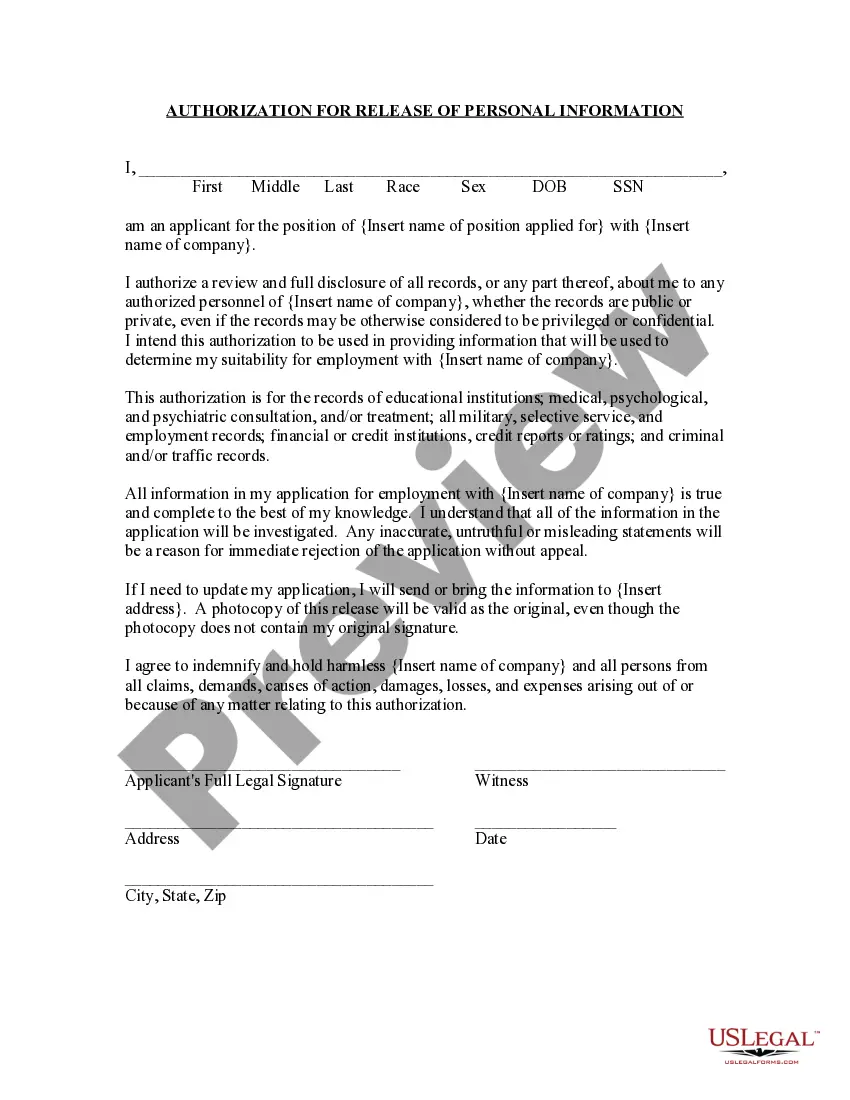
Begin by specifying your name, the entity authorized to disclose information, and the individuals or entities you authorize to receive it. Indicate the specific information and purpose for which it will be disclosed, add an expiration date or event, and sign and date the form to confirm your consent.
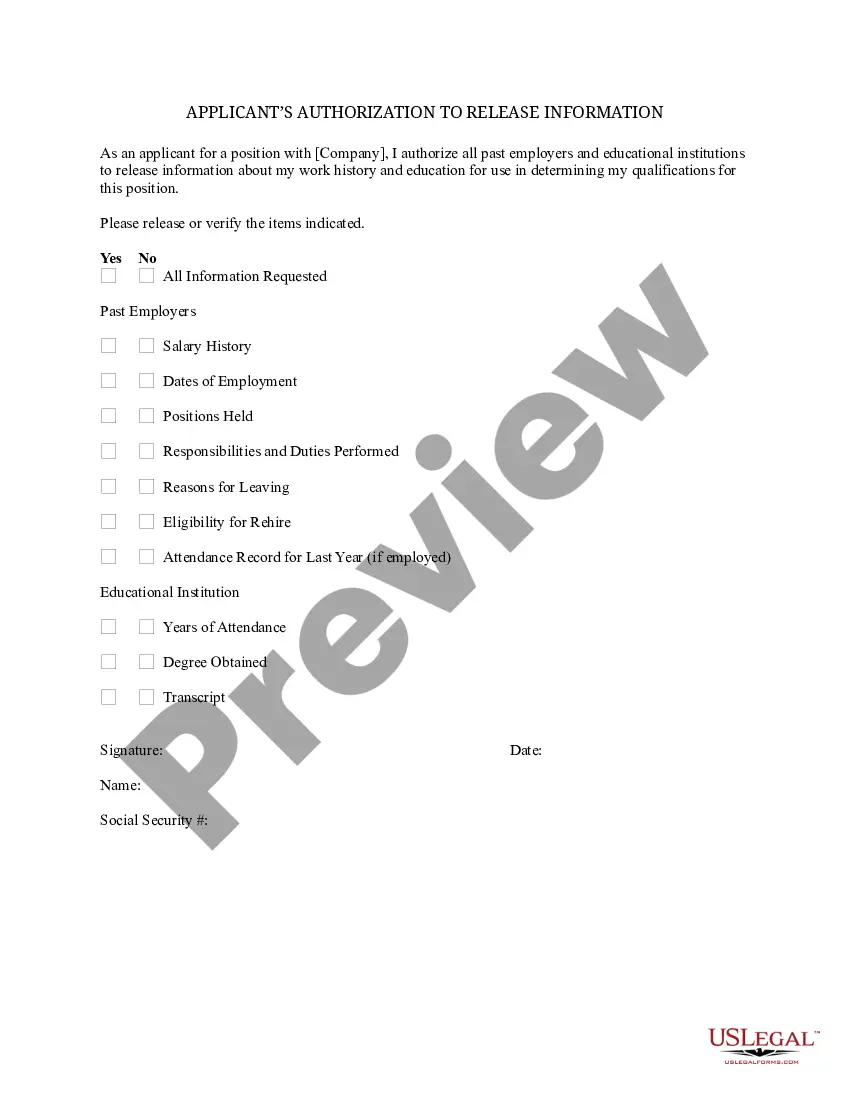
Release of Information Authorization Under the HIPAA Privacy Rule, when a release of information is intended for purposes other than medical treatment, healthcare operations, or payment, you'll need to sign an authorization for ROI.
What is CMIA? The Confidentiality of Medical Information Act (CMIA) is a California law that protects the confidentiality of individually identifiable medical information obtained by health care providers, health insurers, and their contractors.
Federal laws govern the privacy protection of medical records, along with some state laws. California medical records laws state that a patient's information may not be disclosed without authorization unless it is pursuant to a court order, or for purposes of communicating important medical data to other health care ...
All health records of discharged patients shall be completed and filed within 30 days after discharge date and such records shall be kept for a minimum of 7 years, except for minors whose records shall be kept at least until 1 year after the minor has reached the age of 18 years, but in no case less than 7 years.

