Non-disclosure Agreement Example In North Carolina
Description
Get your form ready online
Our built-in tools help you complete, sign, share, and store your documents in one place.
Make edits, fill in missing information, and update formatting in US Legal Forms—just like you would in MS Word.
Download a copy, print it, send it by email, or mail it via USPS—whatever works best for your next step.
Sign and collect signatures with our SignNow integration. Send to multiple recipients, set reminders, and more. Go Premium to unlock E-Sign.
If this form requires notarization, complete it online through a secure video call—no need to meet a notary in person or wait for an appointment.
We protect your documents and personal data by following strict security and privacy standards.

Make edits, fill in missing information, and update formatting in US Legal Forms—just like you would in MS Word.

Download a copy, print it, send it by email, or mail it via USPS—whatever works best for your next step.

Sign and collect signatures with our SignNow integration. Send to multiple recipients, set reminders, and more. Go Premium to unlock E-Sign.

If this form requires notarization, complete it online through a secure video call—no need to meet a notary in person or wait for an appointment.

We protect your documents and personal data by following strict security and privacy standards.
Looking for another form?










Form popularity
FAQ
The nondisclosure agreement should identify the parties to the agreement and which one is the disclosing party, or side sharing the information, and the recipient. Names and addresses of the parties should be included. The agreement should also identify other individuals who may be parties to the agreement.
The key elements of Non-Disclosure Agreements: Identification of the parties. Definition of what is deemed to be confidential. The scope of the confidentiality obligation by the receiving party. The exclusions from confidential treatment. The term of the agreement.
A good NDA describes why you're sharing the information without specifying the confidential information. For example, 'The purpose of the NDA is to': Evaluate the new technology.
I hereby undertake to treat as confidential all and any information that I receive while participating in the work of evaluating project proposals, to use this information solely for the purpose of evaluation of the proposals, not to disclose it to any third party and not to make it publicly available or accessible ...
Before signing an NDA, look out for seven crucial red flags that could limit your freedom or expose you to risks, including broad definitions of confidential information, indefinite duration, lack of mutuality, restrictive non-compete clauses, absence of provisions for legal disclosures, unclear remedies for breach, ...
While a one to five-year period is common, business owners must tailor the NDA's lifespan to protect their interests effectively. The optimal duration should ensure that confidential information remains protected for as long as it retains its value and sensitivity.
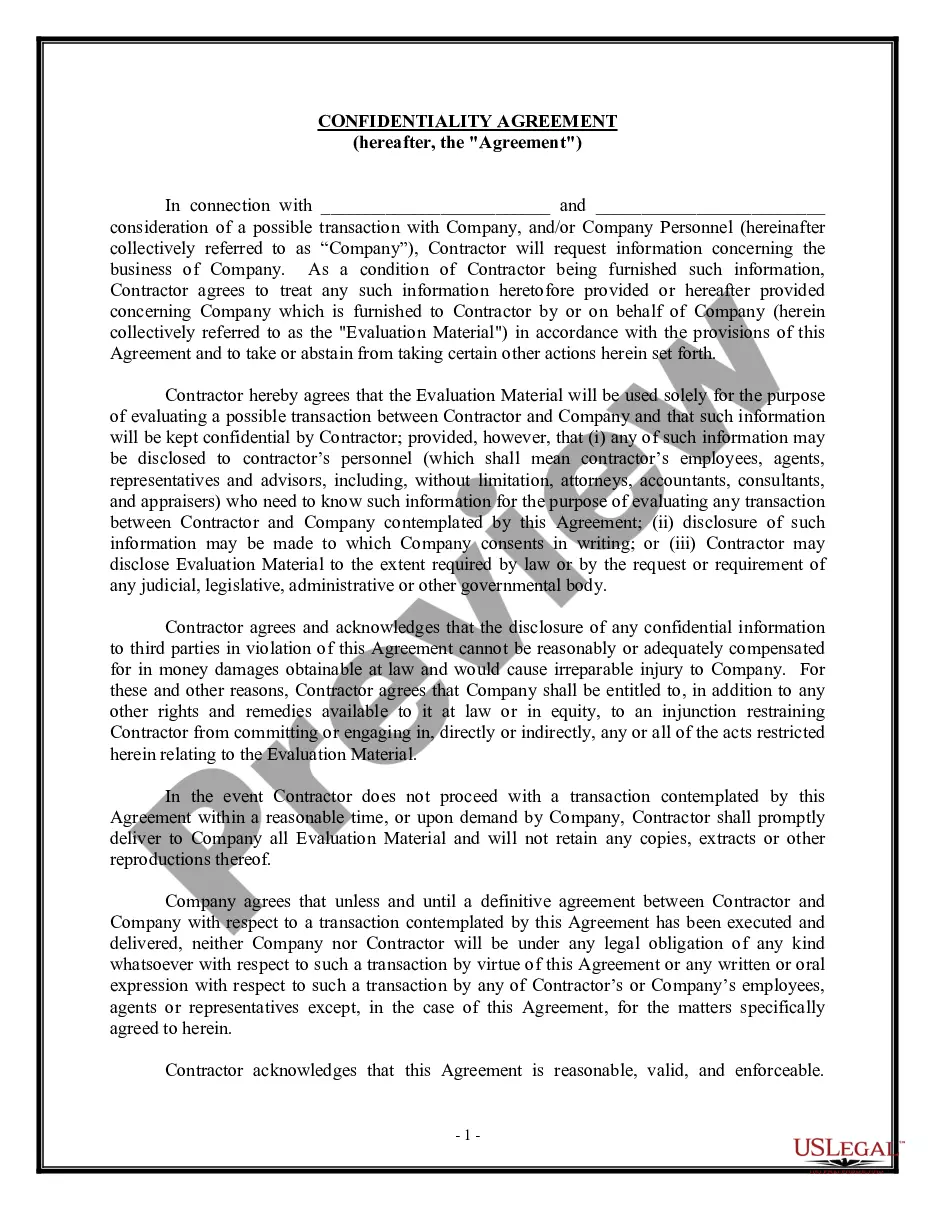
A North Carolina non-disclosure agreement (NDA) is a legal contract that safeguards confidential information shared between parties. This confidentiality agreement prevents the receiving party from using the disclosed information without permission, in compliance with North Carolina state law.
Confidentiality and nondisclosure agreements typically: Describe the context for the parties' agreement, referencing any related transactional documents. Define the specific information to remain confidential. Outline the parameters for the parties' use of confidential information.
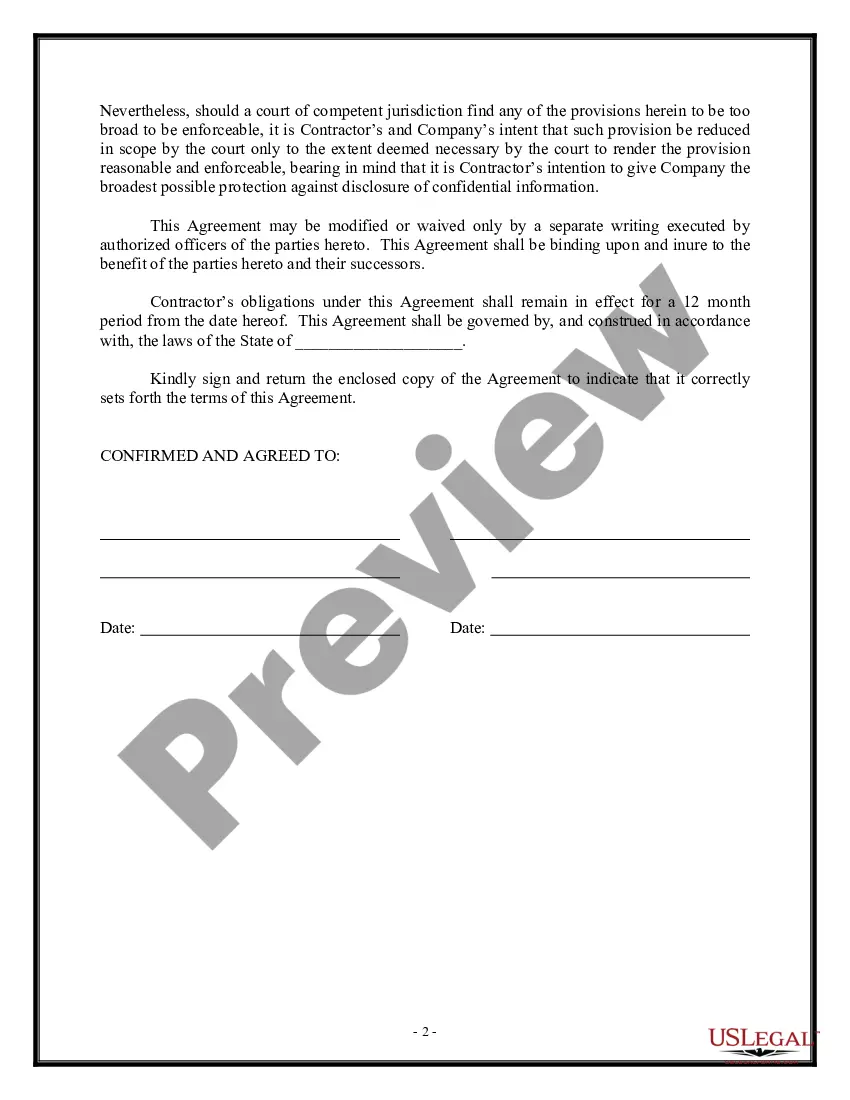
Both parties must enter into the NDA voluntarily and with a clear understanding of its terms. If there was coercion or deception involved, the agreement may not be valid.
Explain the Context: Start by explaining why you need the NDA. Be clear about the sensitive information involved and why it's important to keep it confidential. Be Honest and Transparent: Share your reasons for needing an NDA. Emphasize that it's not about distrust but about protecting both parties' interests.
