Non Disclosure Confidentiality Agreement For Employees In Michigan
Description

Get your form ready online
Our built-in tools help you complete, sign, share, and store your documents in one place.
Make edits, fill in missing information, and update formatting in US Legal Forms—just like you would in MS Word.
Download a copy, print it, send it by email, or mail it via USPS—whatever works best for your next step.
Sign and collect signatures with our SignNow integration. Send to multiple recipients, set reminders, and more. Go Premium to unlock E-Sign.
If this form requires notarization, complete it online through a secure video call—no need to meet a notary in person or wait for an appointment.
We protect your documents and personal data by following strict security and privacy standards.

Make edits, fill in missing information, and update formatting in US Legal Forms—just like you would in MS Word.

Download a copy, print it, send it by email, or mail it via USPS—whatever works best for your next step.

Sign and collect signatures with our SignNow integration. Send to multiple recipients, set reminders, and more. Go Premium to unlock E-Sign.

If this form requires notarization, complete it online through a secure video call—no need to meet a notary in person or wait for an appointment.

We protect your documents and personal data by following strict security and privacy standards.
Looking for another form?


Form popularity
FAQ
Three main categories of confidential information exist: business, employee and management information. It is important to keep confidential information confidential as noted in the subcategories below. Customer lists: Should someone get a hold of your customer list, they could steal customers from you.
Non-Disclosure Agreements (NDAs) as well as Proprietary Information Agreements (PIAs) and Confidentiality Agreements (CAs) are synonymous terms for legal contracts that protect and govern the exchange of confidential or proprietary information.
There are three types of NDAs: unilateral, bilateral, and multilateral. Read on to learn when you should use each type. You'll also learn how to use a contract management tool like Ironclad to draft and manage them.
A 3-Way Non-Disclosure Agreement (NDA), also known as a Tripartite Non-Disclosure Agreement, is a legal contract that involves three parties. This agreement is designed to protect confidential and sensitive information that is shared among these parties.
NDAs generally will only be enforced if the enforcing party can show: (1) the existence of a trade secret or other confidential information; (2) that the trade secret or confidential information was acquired improperly or as a result of a confidential relationship; and (3) that there was actual or threatened ...
There are three types of NDAs: unilateral, bilateral, and multilateral. Read on to learn when you should use each type. You'll also learn how to use a contract management tool like Ironclad to draft and manage them.
In contrast, a mutual NDA, or two-way NDA, involves a shared exchange of confidential information between two parties. So unlike a one-way NDA, where only one party shares sensitive information, a mutual NDA has a double obligation with both parties committed to protecting each other's confidential information.
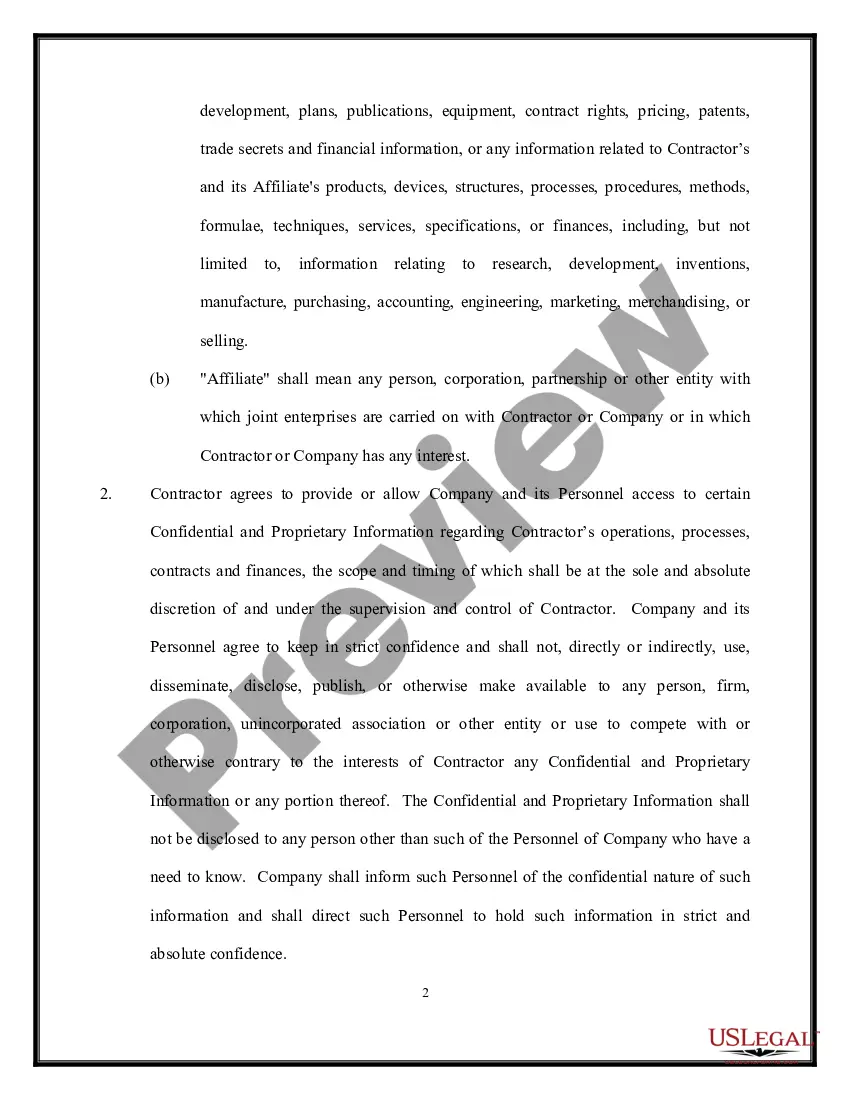
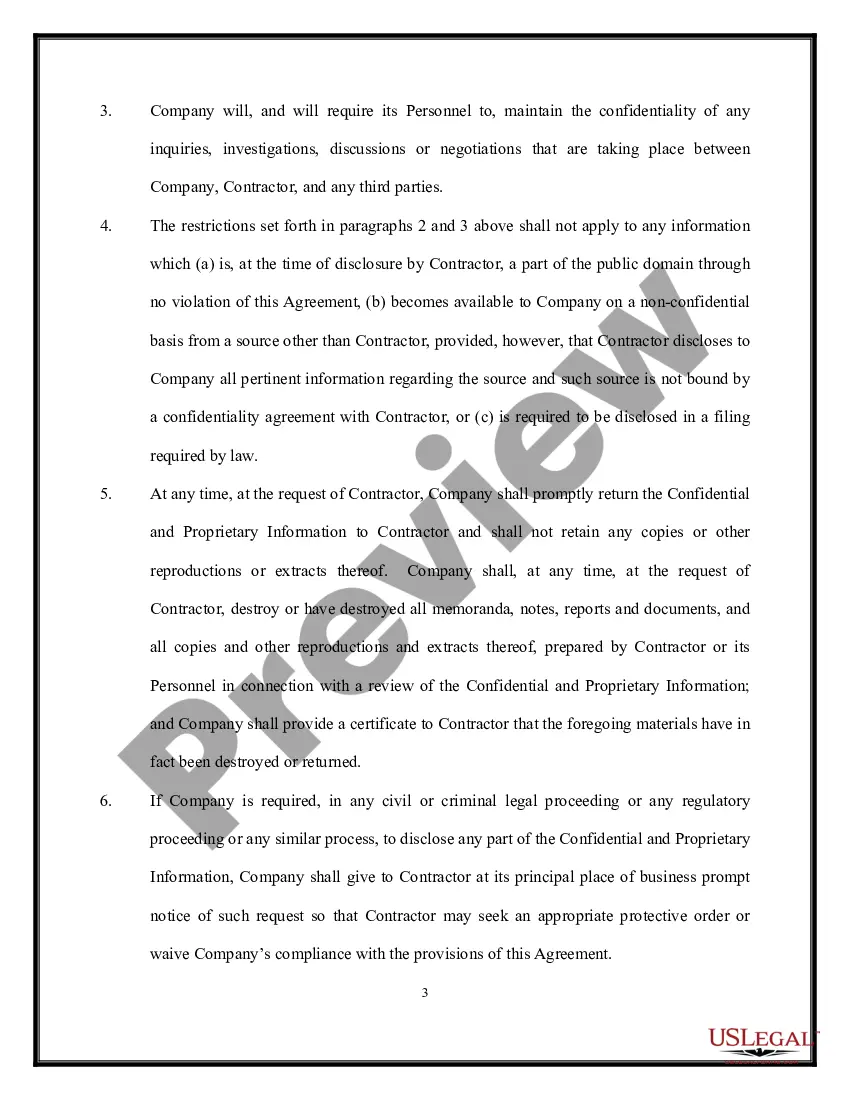
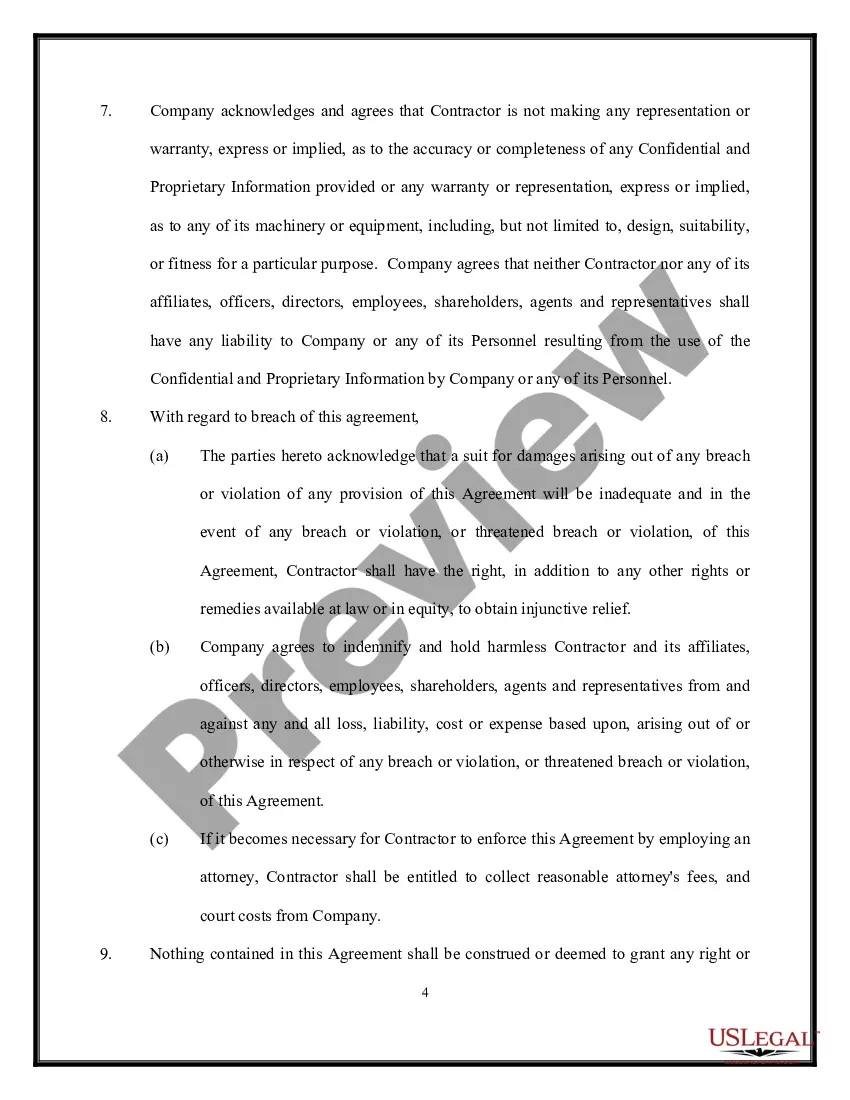
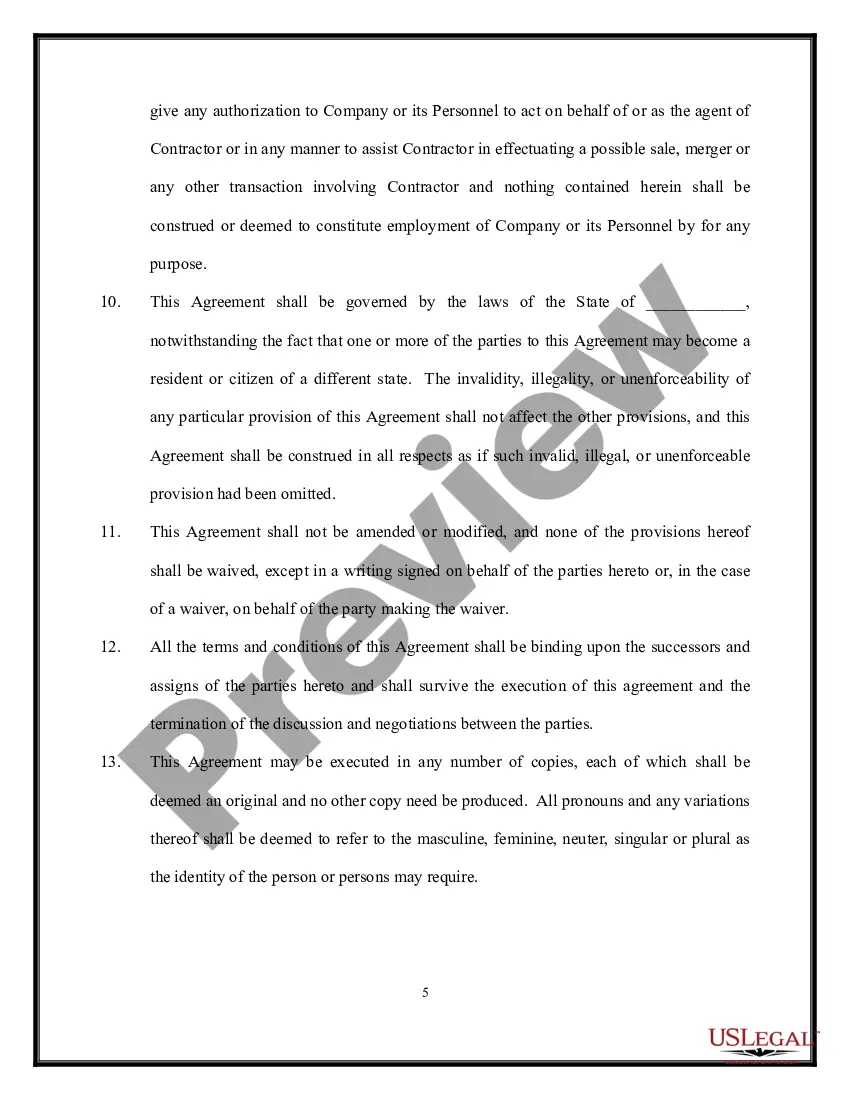
Employee agrees that he/she will never use any Confidential Information for his/her own benefit or for the benefit of any person or entity other than the Company, and will not permit or allow any Confidential Information to be used in competition with the Company.
What is a nondisclosure agreement? Whereas confidentiality agreements are typically devised in employment or personal situations to protect sensitive information, NDAs are often used in business and legal settings to protect trade secrets, client lists, and financial data.
