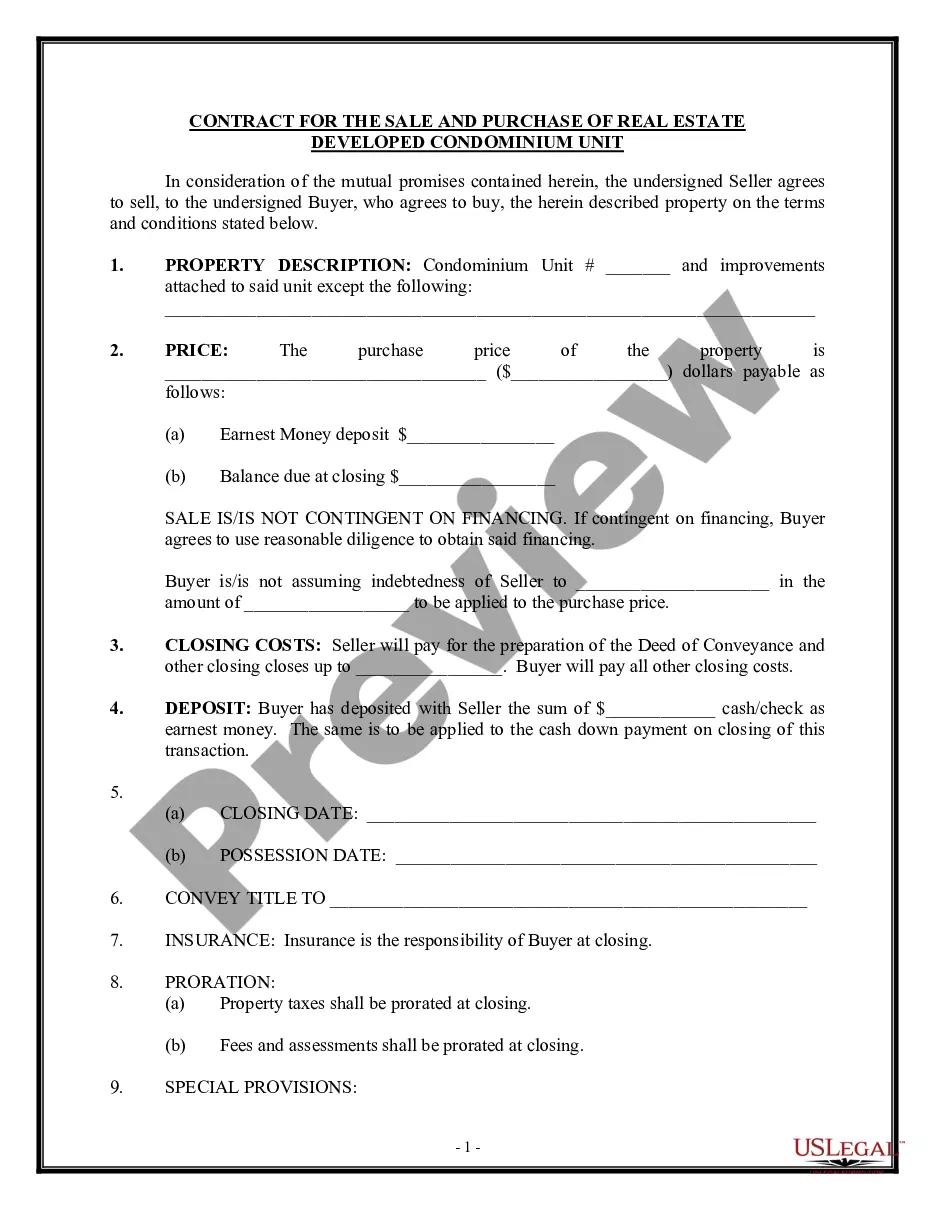
Define Condominium In Real Estate In Arizona
Description


Get your form ready online
Our built-in tools help you complete, sign, share, and store your documents in one place.
Make edits, fill in missing information, and update formatting in US Legal Forms—just like you would in MS Word.
Download a copy, print it, send it by email, or mail it via USPS—whatever works best for your next step.
Sign and collect signatures with our SignNow integration. Send to multiple recipients, set reminders, and more. Go Premium to unlock E-Sign.
If this form requires notarization, complete it online through a secure video call—no need to meet a notary in person or wait for an appointment.
We protect your documents and personal data by following strict security and privacy standards.

Make edits, fill in missing information, and update formatting in US Legal Forms—just like you would in MS Word.

Download a copy, print it, send it by email, or mail it via USPS—whatever works best for your next step.

Sign and collect signatures with our SignNow integration. Send to multiple recipients, set reminders, and more. Go Premium to unlock E-Sign.

If this form requires notarization, complete it online through a secure video call—no need to meet a notary in person or wait for an appointment.

We protect your documents and personal data by following strict security and privacy standards.
Looking for another form?







Form popularity
FAQ
Challenges in Selling Condos Managing a condo's sale comes with challenges that can often catch sellers by surprise. One of the most substantial hurdles is dealing with the HOA fees. Potential buyers might be deterred if these fees are high, fearing long-term financial commitments.
Lack of privacy: Condos share common areas, so you're going to have to regularly interact with your neighbors — a plus for some people, but a negative for others. Neighbors may also potentially hear each other through shared walls.
Hidden Restrictions and Fees These restrictions can limit an investor's flexibility in property management and use. Additionally, hidden fees and rental restrictions can impede the potential profitability of condo investments, adding an extra layer of complexity for investors.
Townhouses have multiple stories in most cases and the neighbors are on each side. iniums are horizontal spaces. That's nice but your lender and bank have a different criteria. They rely on the county assessor to determine the type of property associated with an address.
One major advantage of condo living is that condo buildings are typically found in or around downtown areas, so residents have great access to nearby entertainment and business districts. This means living within walking distance of employers, restaurants and bars, public transit, major attractions, and tons of events.
The measure used to determine a condo owner's share of inium contributions (fees) and voting rights. Typically, unit factor is proportional to the size of the owner's inium unit.
33-1243 - Board of directors and officers; conflict; powers; limitations; removal; annual audit; applicability. A. Except as provided in the declaration, the bylaws, subsection B of this section or other provisions of this chapter, the board of directors may act in all instances on behalf of the association.
Townhouses have multiple stories in most cases and the neighbors are on each side. iniums are horizontal spaces. That's nice but your lender and bank have a different criteria. They rely on the county assessor to determine the type of property associated with an address.
Arizona Planned Communities Act This act governs homeowners associations in Arizona and details a number of matters pertaining to planned communities, such as assessment collection limitations, the maintenance of a homeowner's association records, the management of such entities, and the requirements for meetings.
ACT is the statewide high school achievement test for Arizona students in the Grade 11 cohort. ACT will be administered to students in Cohort 2026 in Spring 2025.
