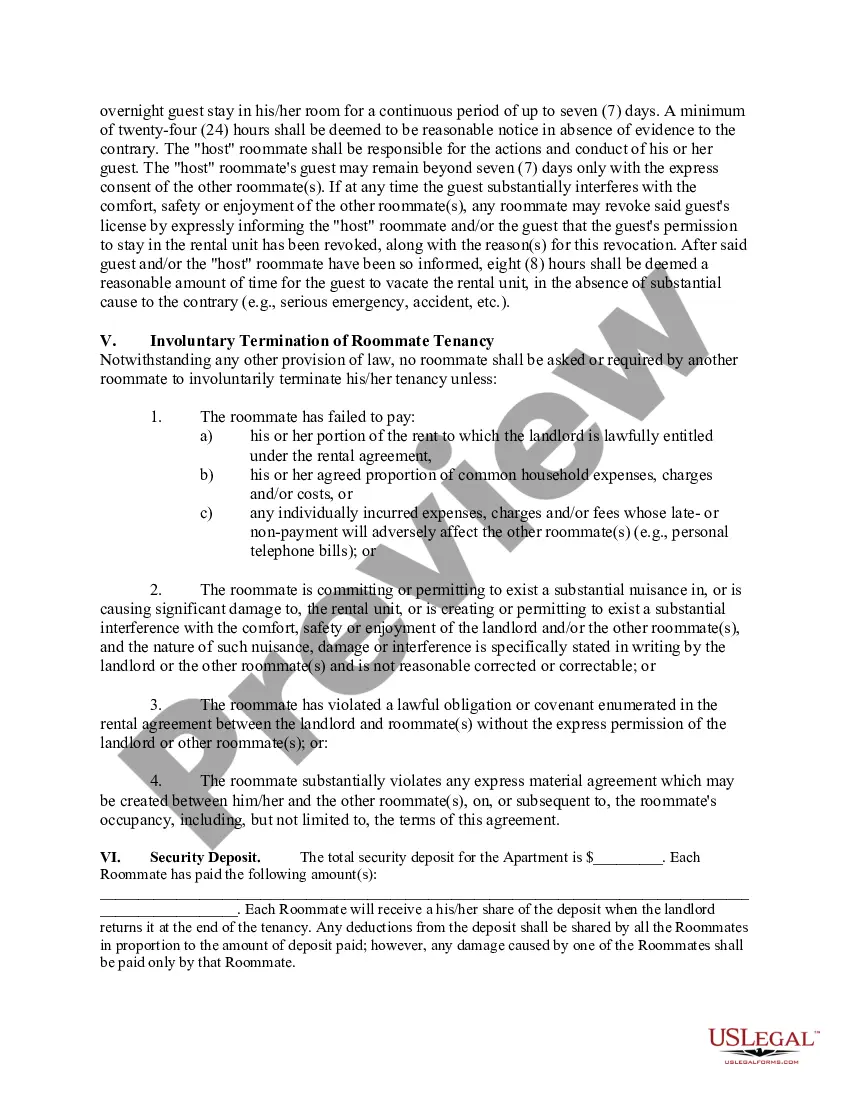
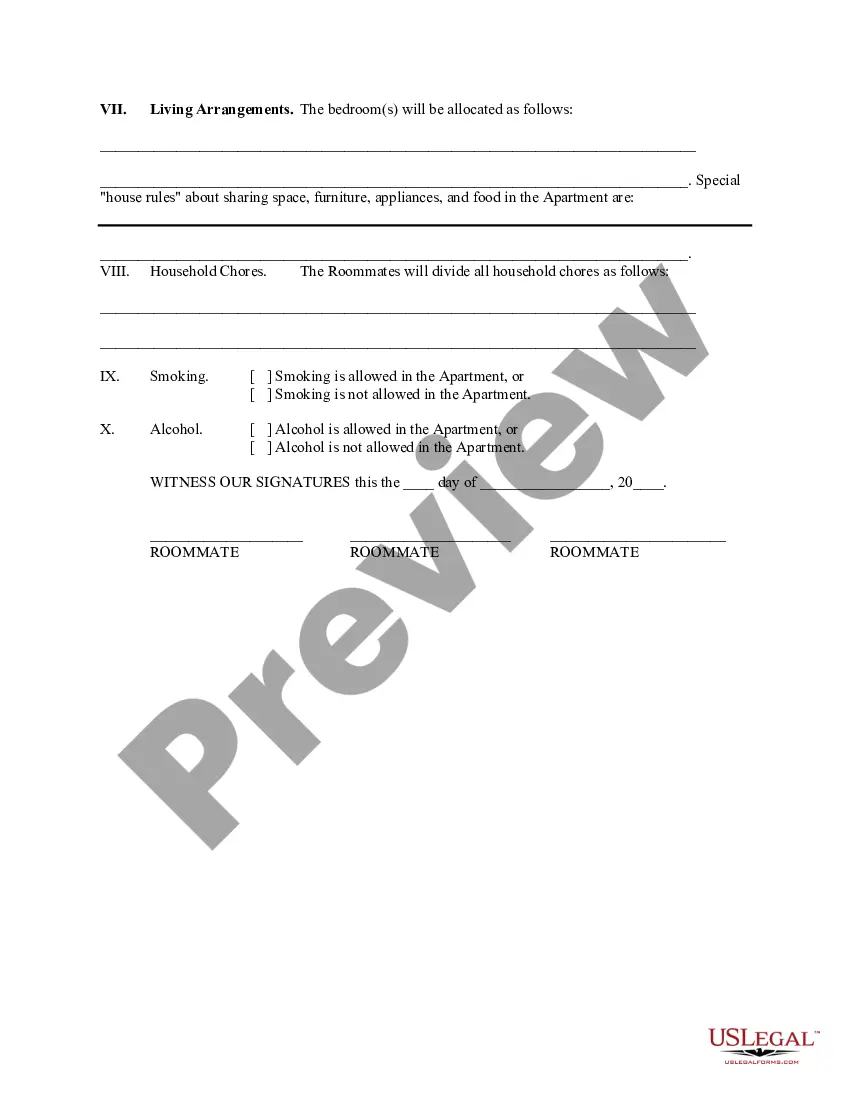
Roommate Form Agreement For College In Wake
Description

Get your form ready online
Our built-in tools help you complete, sign, share, and store your documents in one place.
Make edits, fill in missing information, and update formatting in US Legal Forms—just like you would in MS Word.
Download a copy, print it, send it by email, or mail it via USPS—whatever works best for your next step.
Sign and collect signatures with our SignNow integration. Send to multiple recipients, set reminders, and more. Go Premium to unlock E-Sign.
If this form requires notarization, complete it online through a secure video call—no need to meet a notary in person or wait for an appointment.
We protect your documents and personal data by following strict security and privacy standards.

Make edits, fill in missing information, and update formatting in US Legal Forms—just like you would in MS Word.

Download a copy, print it, send it by email, or mail it via USPS—whatever works best for your next step.

Sign and collect signatures with our SignNow integration. Send to multiple recipients, set reminders, and more. Go Premium to unlock E-Sign.

If this form requires notarization, complete it online through a secure video call—no need to meet a notary in person or wait for an appointment.

We protect your documents and personal data by following strict security and privacy standards.
Looking for another form?



Form popularity
FAQ
The purpose of the Roommate Release Request Form is for roommates to request that one person be released from the lease prior to the end of the lease, where one roommate wants to remain in the apartment. Both roommates must agree to release one roommate of their responsibility for the lease.
However, it's crucial to remember that while your roommate agreement is a binding contract between the roommates, it's not the same as a formal lease agreement. Thus, any eviction based on it must still adhere to Florida's landlord-tenant laws.
Your roommate agreement is a way to discuss what issues might come up throughout the year and talk about how you might handle them. It's also good to know what style of communication works best for you and your roommate.
How to write a roommate agreement Names of both tenants. The property address. The dates the lease begins and ends. The amount of rent each person pays. Who pays for utilities. Who pays the security deposit. Which bedroom each person occupies. Who buys food, or if you're each buying your own food.
As a continuing student, you will be able to select your community and choose your own roommate(s).
Any roommate who is named as a tenant in the tenancy agreement is presumptively a tenant with rights and obligations under the Act; whether any roommate is a tenant or not is ultimately a legal determination that can only be made by a Residential Tenancy Branch arbitrator who will weigh the factors in favour and ...
You probably don't expect to sue your roommate someday. Yet, it does happen. An agreement creates expectations to keep the living arrangement fair. They also provide protection and peace of mind because they are legally binding.
Introduce yourself with one or two lines and inquire as to whether they are seeking a roommate. Best to meet in person if this person is actively looking. You can best determine if your personalities line up. Bring with you a list of ten important needs you have while living together.
How to write a roommate agreement Names of both tenants. The property address. The dates the lease begins and ends. The amount of rent each person pays. Who pays for utilities. Who pays the security deposit. Which bedroom each person occupies. Who buys food, or if you're each buying your own food.
