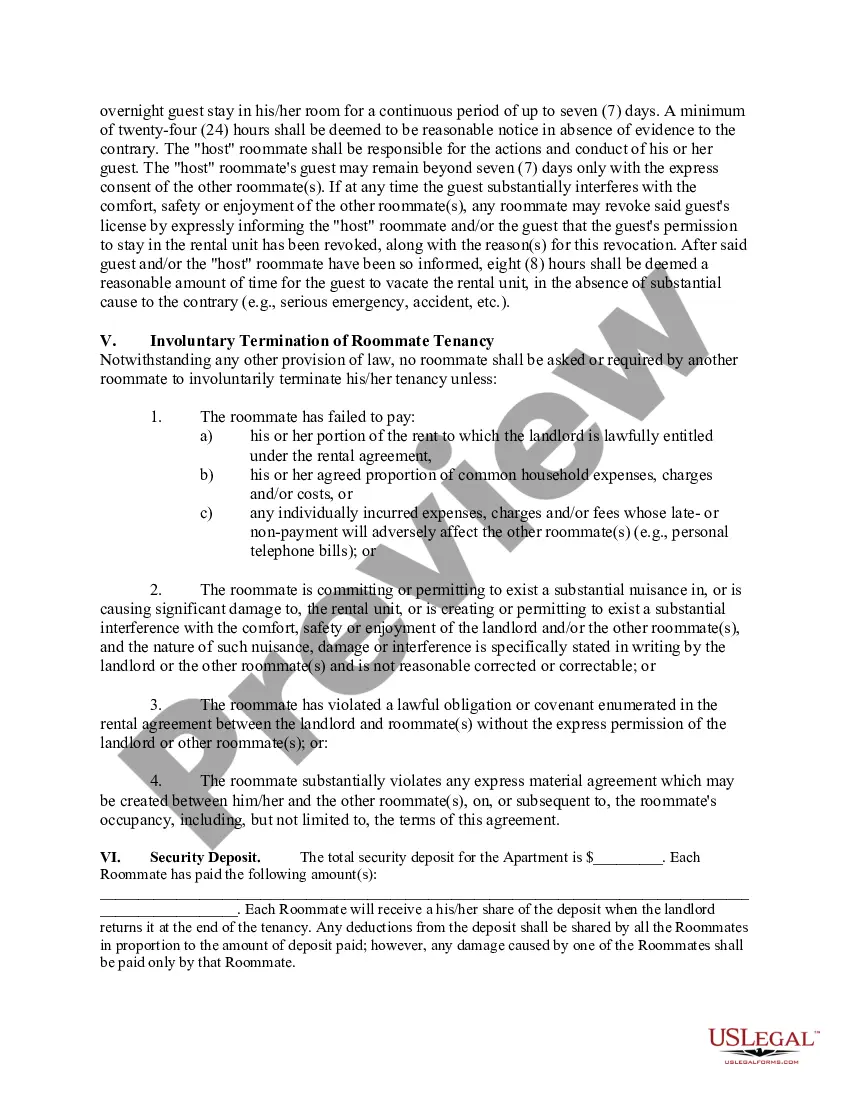
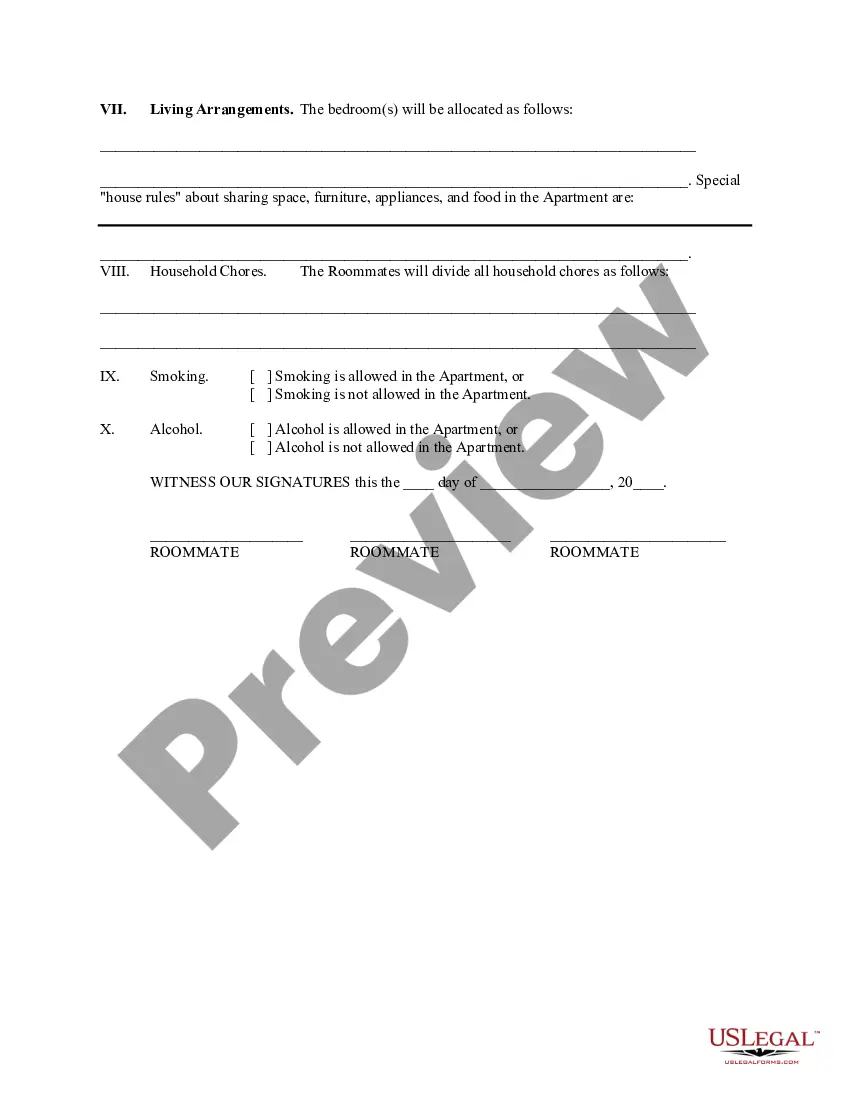
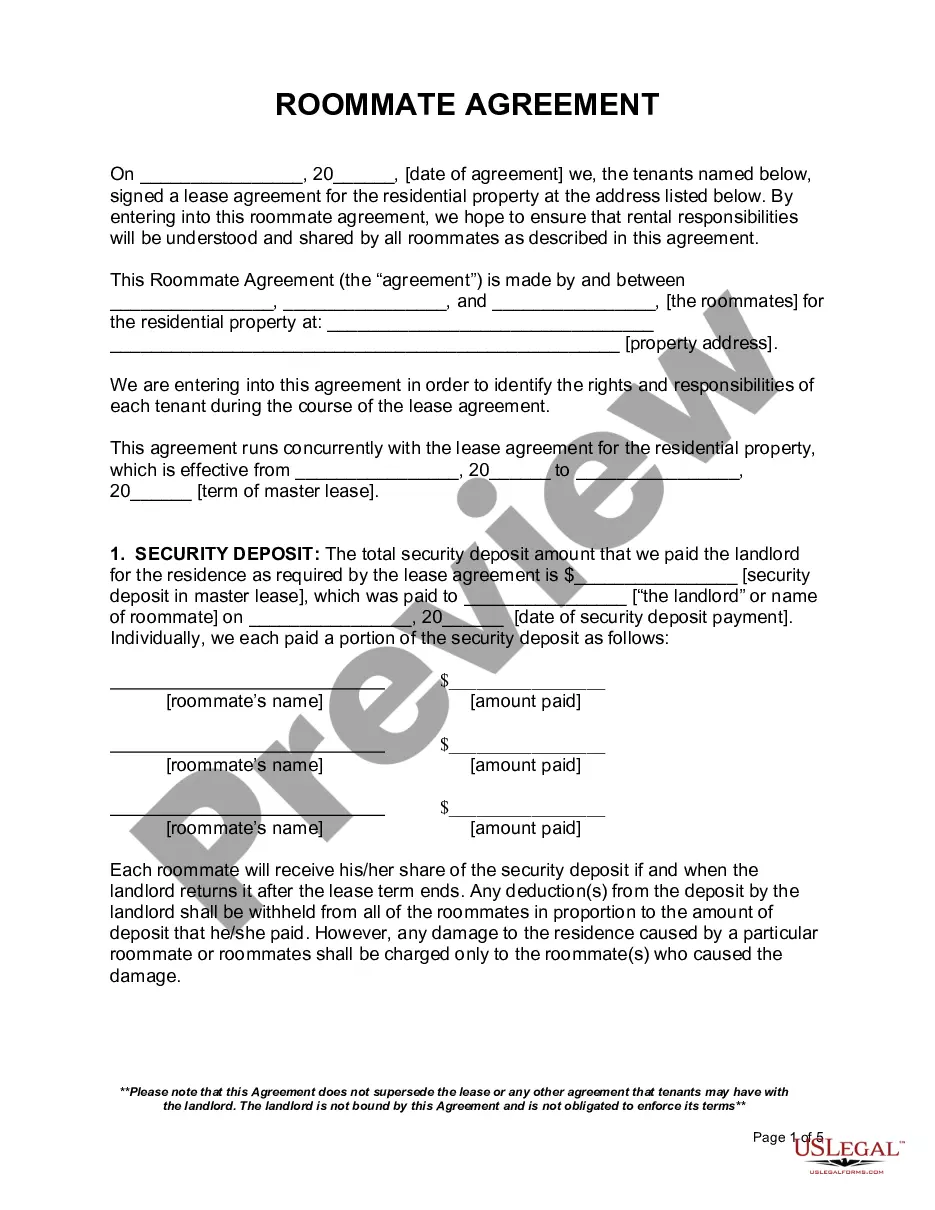
Roommate Form Contract With Landlord In Ohio
Description

Get your form ready online
Our built-in tools help you complete, sign, share, and store your documents in one place.
Make edits, fill in missing information, and update formatting in US Legal Forms—just like you would in MS Word.
Download a copy, print it, send it by email, or mail it via USPS—whatever works best for your next step.
Sign and collect signatures with our SignNow integration. Send to multiple recipients, set reminders, and more. Go Premium to unlock E-Sign.
If this form requires notarization, complete it online through a secure video call—no need to meet a notary in person or wait for an appointment.
We protect your documents and personal data by following strict security and privacy standards.

Make edits, fill in missing information, and update formatting in US Legal Forms—just like you would in MS Word.

Download a copy, print it, send it by email, or mail it via USPS—whatever works best for your next step.

Sign and collect signatures with our SignNow integration. Send to multiple recipients, set reminders, and more. Go Premium to unlock E-Sign.

If this form requires notarization, complete it online through a secure video call—no need to meet a notary in person or wait for an appointment.

We protect your documents and personal data by following strict security and privacy standards.
Looking for another form?







Form popularity
FAQ
A lease agreement is a legally binding contract outlining the terms under which one party agrees to rent property, whether real or personal, from another party. This agreement includes important details such as the rent amount, duration, responsibilities of both parties, and conditions for terminating the agreement.
The landlord tenant laws that allow you to break a lease are different from state to state. In many places, you can get out of your lease without penalty for a number of reasons, such as domestic violence, an unsafe environment, or if you've been called up for military service.
Verbal versus Written Leases Ohio law does allow some types of verbal agreements to constitute valid contracts, but certain types of leases cannot be enforced at law if not in writing and signed by the party against whom enforcement is sought.
In all other cases, the landlord must give the tenant a 30 day notice. The 30 days does include weekends and holidays. The notice may be served personally on the tenant, or it may be posted on the unit door or left in a conspicuous location.
Document your reason: If you're breaking the lease for a legally accepted reason, such as active military duty, unsafe living conditions, or domestic violence, gather all necessary documentation. Provide notice: Ohio law typically requires tenants to provide written notice to their landlord before terminating a lease.
A. The landlord may not increase rent, decrease services, evict, or even threaten to evict you because you complained about needed repairs, have your home inspected by your local government housing inspector, or participated in a tenants' group or union.
(B) Except as provided in division (C) of this section, the landlord or the tenant may terminate or fail to renew a month-to-month tenancy by notice given the other at least thirty days prior to the periodic rental date.
An Ohio month-to-month lease agreement is a flexible, short-term arrangement that automatically renews every month. Tenants under this type of agreement are referred to as “tenants-at-will.” While this type of lease agreement provides more flexibility, it still requires state-mandated disclosures.
