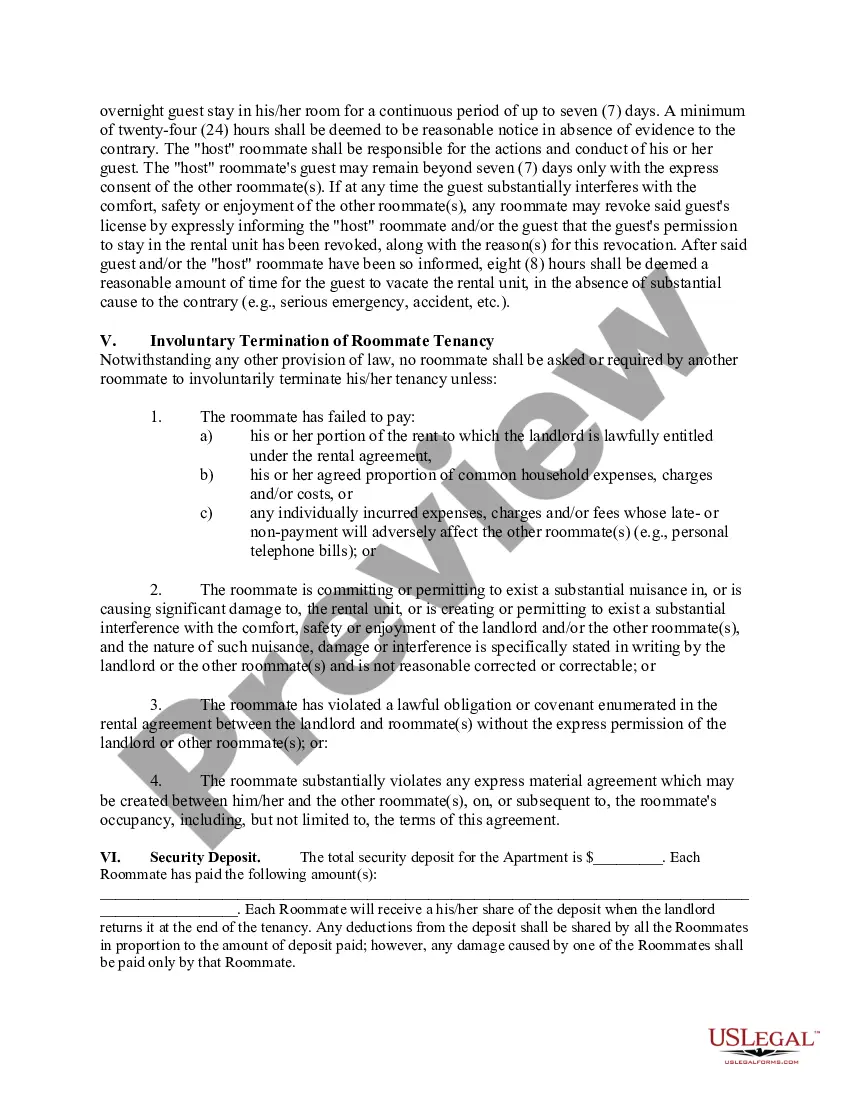
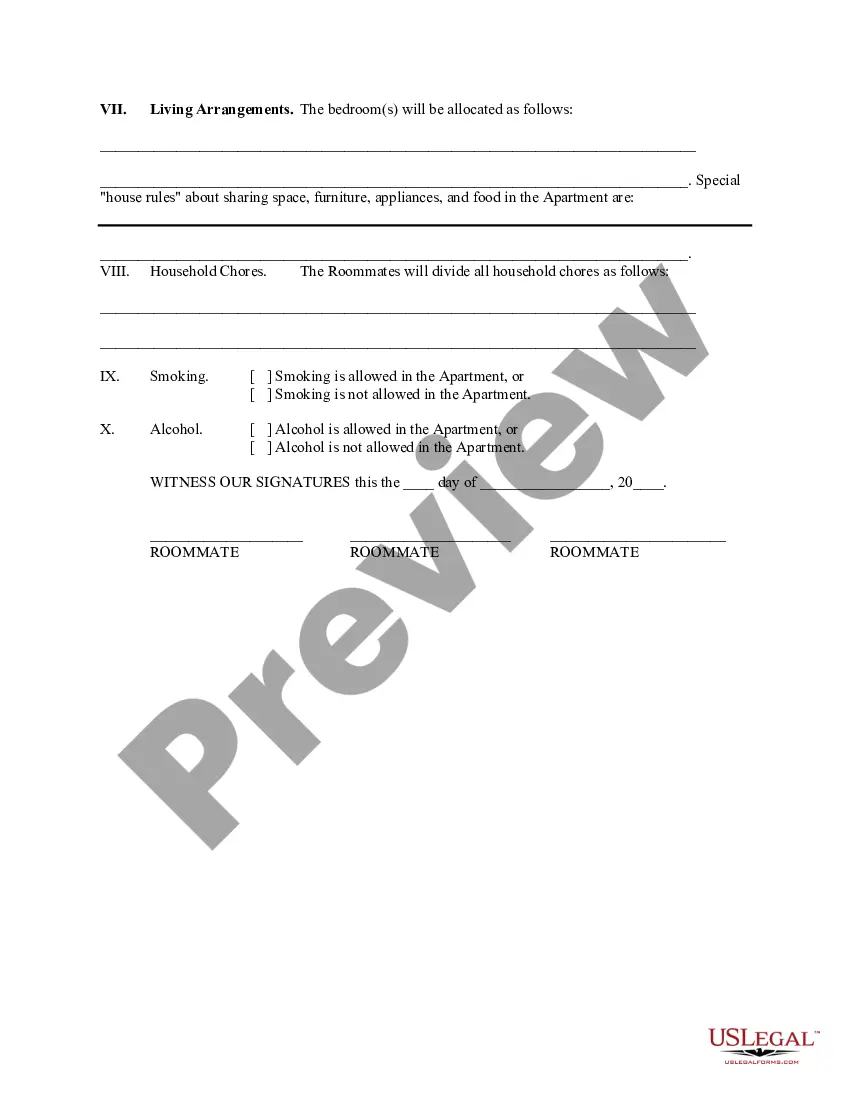
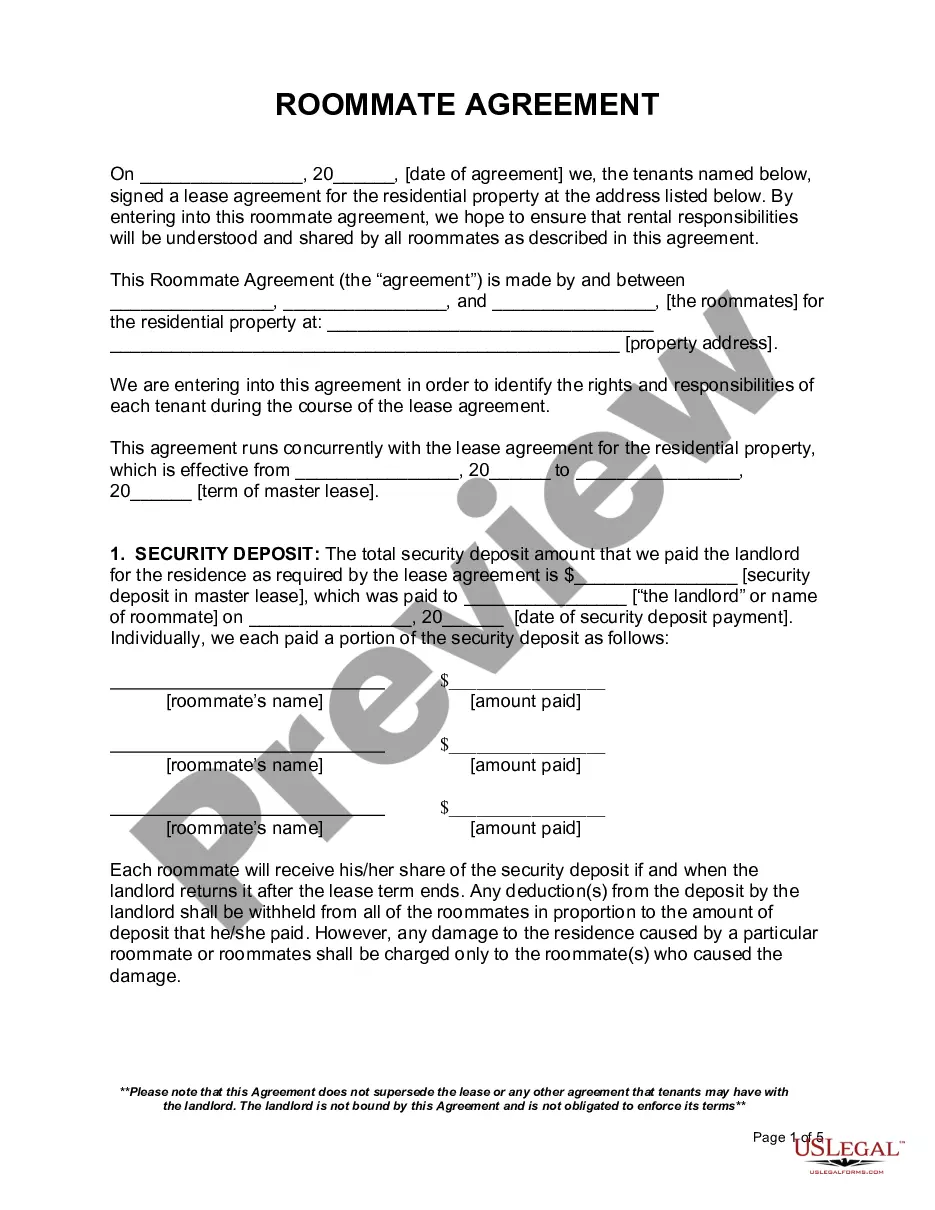
Roommate Agreement In Michigan In Miami-Dade
Description

Get your form ready online
Our built-in tools help you complete, sign, share, and store your documents in one place.
Make edits, fill in missing information, and update formatting in US Legal Forms—just like you would in MS Word.
Download a copy, print it, send it by email, or mail it via USPS—whatever works best for your next step.
Sign and collect signatures with our SignNow integration. Send to multiple recipients, set reminders, and more. Go Premium to unlock E-Sign.
If this form requires notarization, complete it online through a secure video call—no need to meet a notary in person or wait for an appointment.
We protect your documents and personal data by following strict security and privacy standards.

Make edits, fill in missing information, and update formatting in US Legal Forms—just like you would in MS Word.

Download a copy, print it, send it by email, or mail it via USPS—whatever works best for your next step.

Sign and collect signatures with our SignNow integration. Send to multiple recipients, set reminders, and more. Go Premium to unlock E-Sign.

If this form requires notarization, complete it online through a secure video call—no need to meet a notary in person or wait for an appointment.

We protect your documents and personal data by following strict security and privacy standards.
Looking for another form?

Form popularity
FAQ
How to write a roommate agreement Names of both tenants. The property address. The dates the lease begins and ends. The amount of rent each person pays. Who pays for utilities. Who pays the security deposit. Which bedroom each person occupies. Who buys food, or if you're each buying your own food.
Florida law allows for a legal action know as an Ejectment to remove a non-rent paying person living in your home, who has not signed a lease and has no title or interest in the property. Often times, this involves a person whom you have allowed to live in your home and who later refuses to leave when asked.
However, it's crucial to remember that while your roommate agreement is a binding contract between the roommates, it's not the same as a formal lease agreement. Thus, any eviction based on it must still adhere to Florida's landlord-tenant laws.
A Roommate Agreement is a written contract between roommates that outlines their rights and obligations while living together. This agreement includes house rules, maintenance duties, restricted behaviors, and more. For a Roommate Agreement to be useful, everyone sharing the household must agree to it.
If there is no written agreement, you can give them a written 30 day notice to vacate. If they don't vacate, then you can file a formal eviction action in court to get a hearing date and then a judgment and writ of possession that the sheriff would execute to force them to leave.
YOu would first have to serve them with a written notice to leave and then if they refuse to leave you will have to file a suit for forcible entry and detainer in the local municipal court.
Contact Eko Law today to work with our business attorney in Clearwater. While you can legally write your own commercial lease agreement in Florida, the risks often outweigh the benefits. For most landlords and business owners, the expertise of a qualified attorney is invaluable in this process.
Roommates cannot evict one another. The eviction process is only available in landlord-tenant relationships. This means you cannot force your roommate to leave the home, and your roommate cannot force you to leave the home. This is true even if your roommate stopped paying for their portion of rent and utilities.
A guest does not give you anything or do anything in exchange for allowing them in your home. As a result, you can ask a guest to leave at any time. You do not need to go through the courts to get this person to leave. If they refuse, you could contact your local law enforcement agency for help.
