Roommate Form Contract Format In Mecklenburg
Description

Get your form ready online
Our built-in tools help you complete, sign, share, and store your documents in one place.
Make edits, fill in missing information, and update formatting in US Legal Forms—just like you would in MS Word.
Download a copy, print it, send it by email, or mail it via USPS—whatever works best for your next step.
Sign and collect signatures with our SignNow integration. Send to multiple recipients, set reminders, and more. Go Premium to unlock E-Sign.
If this form requires notarization, complete it online through a secure video call—no need to meet a notary in person or wait for an appointment.
We protect your documents and personal data by following strict security and privacy standards.

Make edits, fill in missing information, and update formatting in US Legal Forms—just like you would in MS Word.

Download a copy, print it, send it by email, or mail it via USPS—whatever works best for your next step.

Sign and collect signatures with our SignNow integration. Send to multiple recipients, set reminders, and more. Go Premium to unlock E-Sign.

If this form requires notarization, complete it online through a secure video call—no need to meet a notary in person or wait for an appointment.

We protect your documents and personal data by following strict security and privacy standards.
Looking for another form?






Form popularity
FAQ
term lease is the most traditional lease. They're called fixed term because tenants and landlords are agreeing to abide by the lease for a fixed amount of time, normally six to 14 months.
The North Carolina Residential Rental Agreements Act was passed by the General Assembly in 1977 to define the duties of both the landlord and the tenant with respect to the maintenance and repair of the premises. It has been amended several times since then to address additional duties.
The North Carolina Standard Lease Agreement initiates the dedication of acceptance to allow a tenant to use a property in exchange for remitted payment to the unit's owner. The allocated form aids in documenting the arrangement, accounting for various components of the landlord and tenant's commitment.
A North Carolina month-to-month rental agreement is a rental contract that renews monthly until either the landlord or tenant provides a notice to terminate. The minimum requirement is 7 days to cancel the agreement.
As a first concern, all leases should be in writing, even if the law does not require it. North Carolina's Statute of Frauds only requires that leases exceeding three years from the making need be in writing.
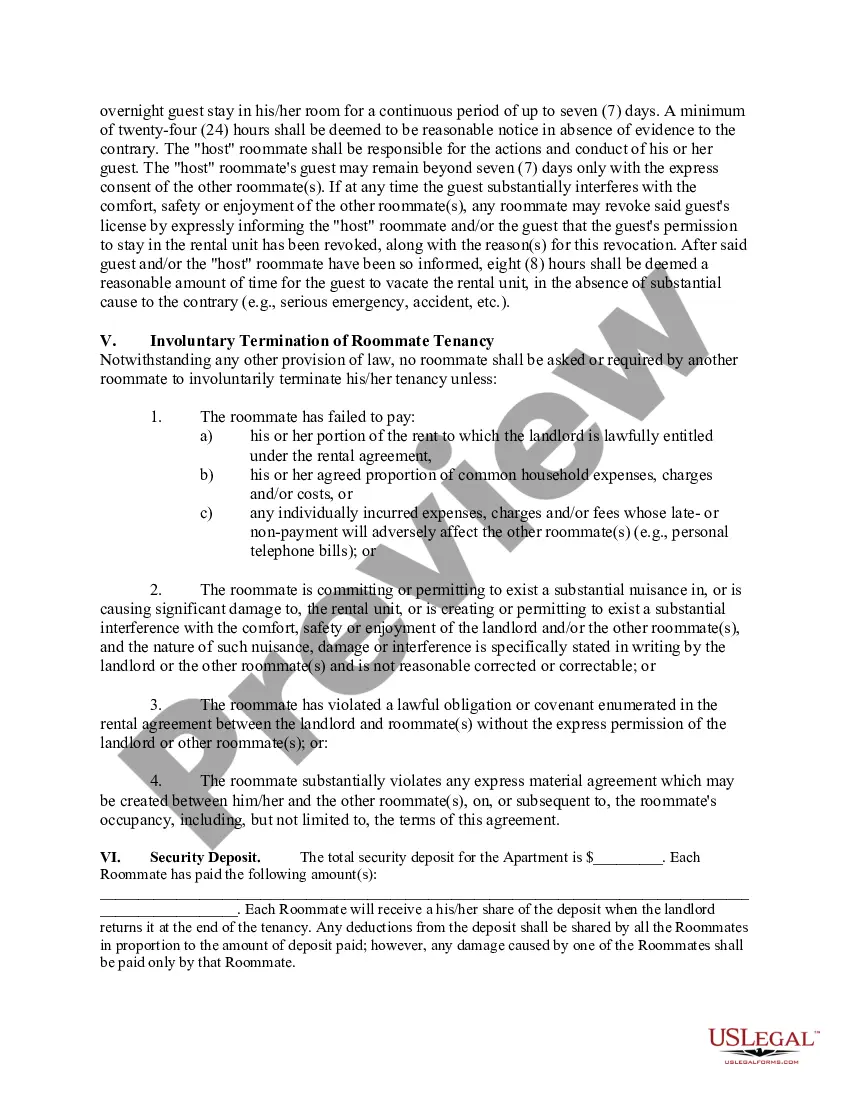
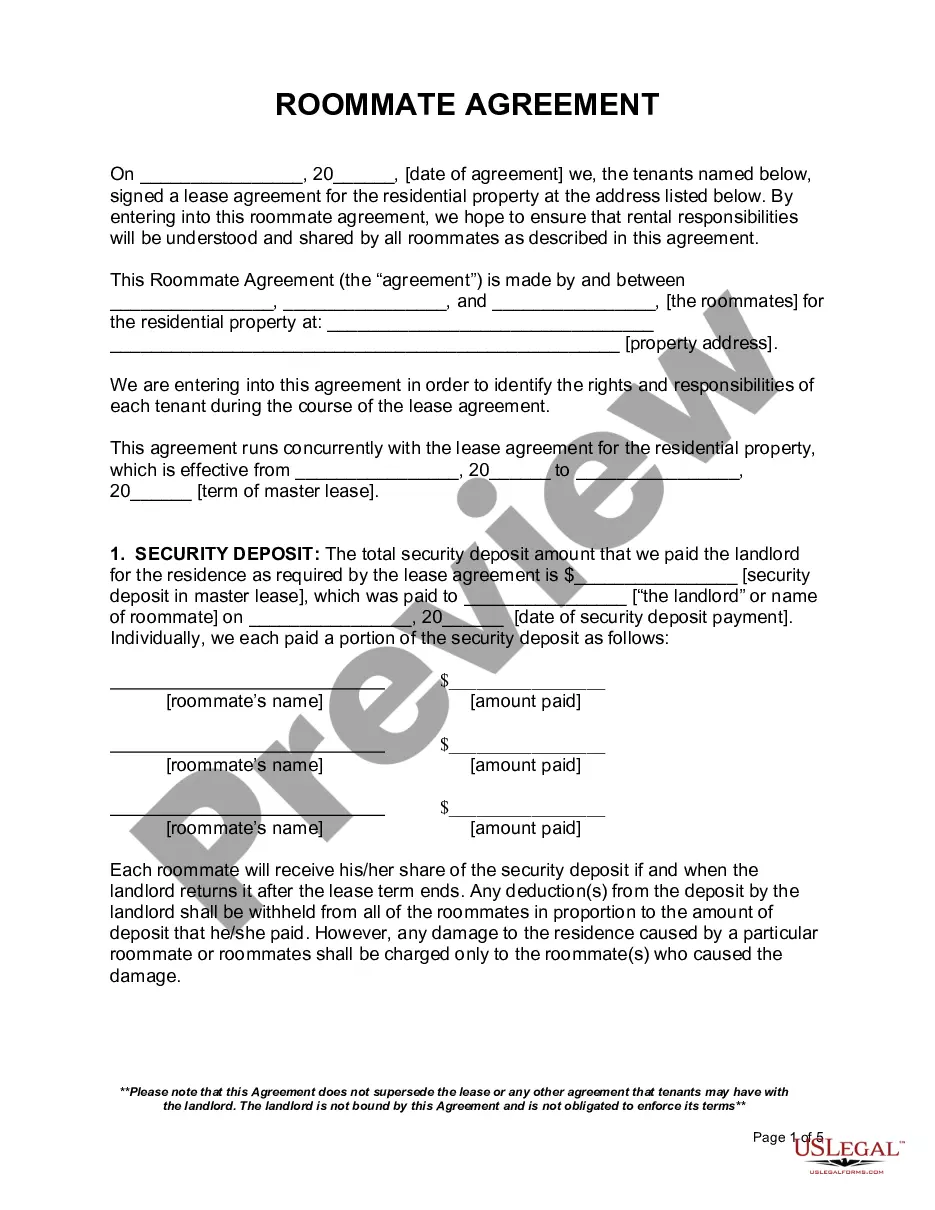
How to write a roommate agreement Names of both tenants. The property address. The dates the lease begins and ends. The amount of rent each person pays. Who pays for utilities. Who pays the security deposit. Which bedroom each person occupies. Who buys food, or if you're each buying your own food.
North Carolina has no statutory limits on the amount a landlord can raise rent, so clear communication and negotiation are essential. Tenants should review their lease terms and stay informed about local rental market trends to ensure reasonable proposed increases.
The North Carolina Residential Rental Agreements Act was passed by the General Assembly in 1977 to define the duties of both the landlord and the tenant with respect to the maintenance and repair of the premises. It has been amended several times since then to address additional duties.
The Residential Rental Agreements Act is set out in G.S. Chapter 42, Sections 38 to 44. This law, which was passed in 1977, re-wrote the common law to provide that landlords must maintain residential rental premises to be fit to live in, and to make clear that a tenant's right to such housing cannot be waived.
