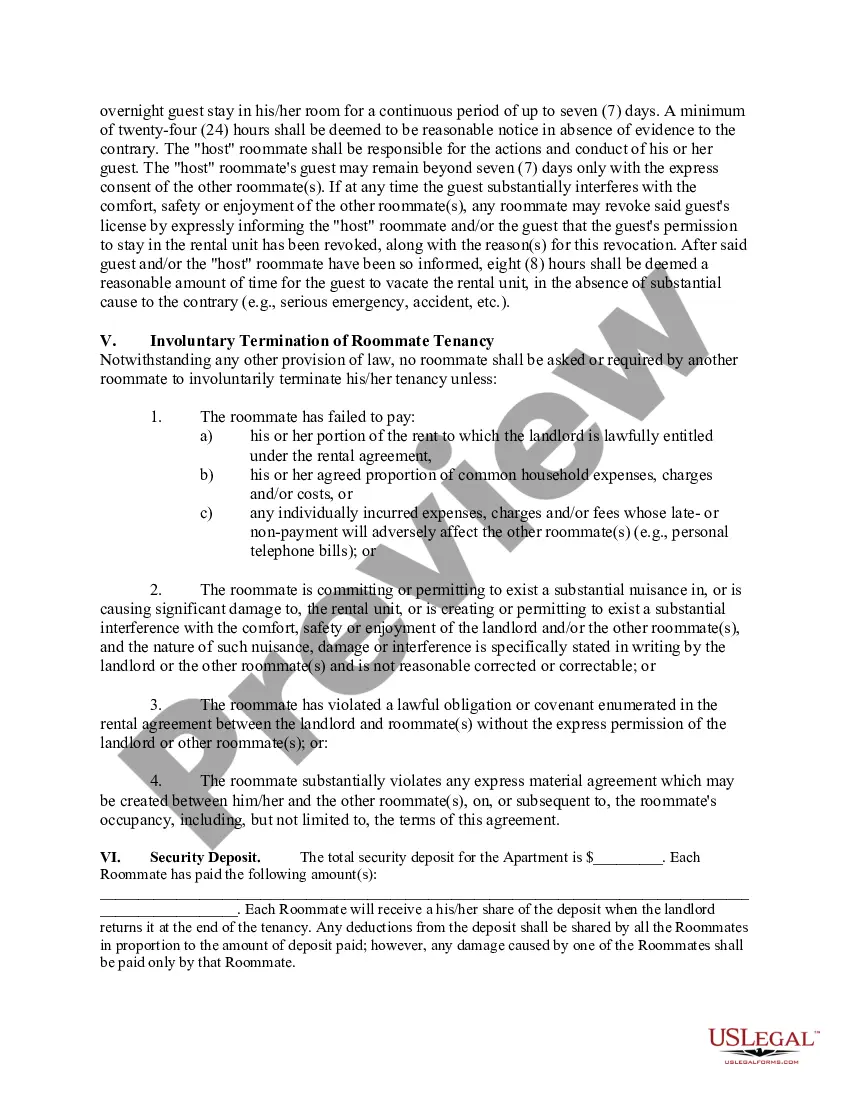
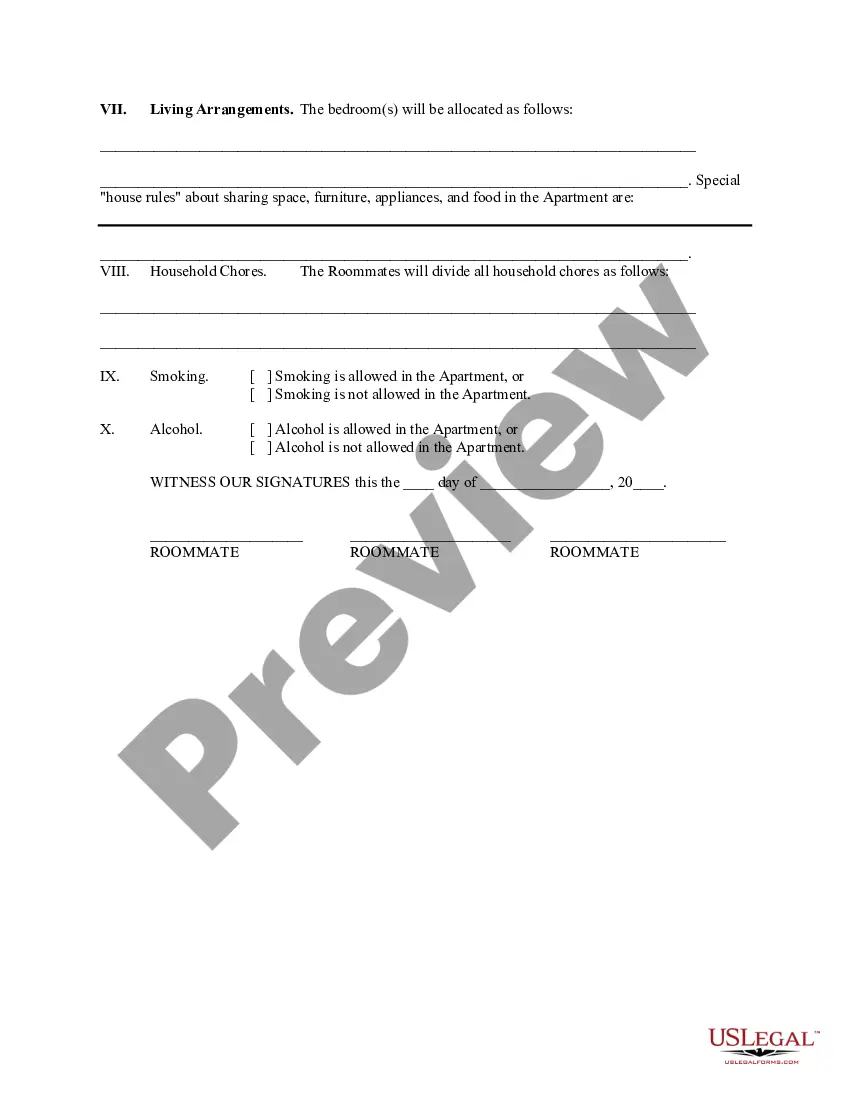
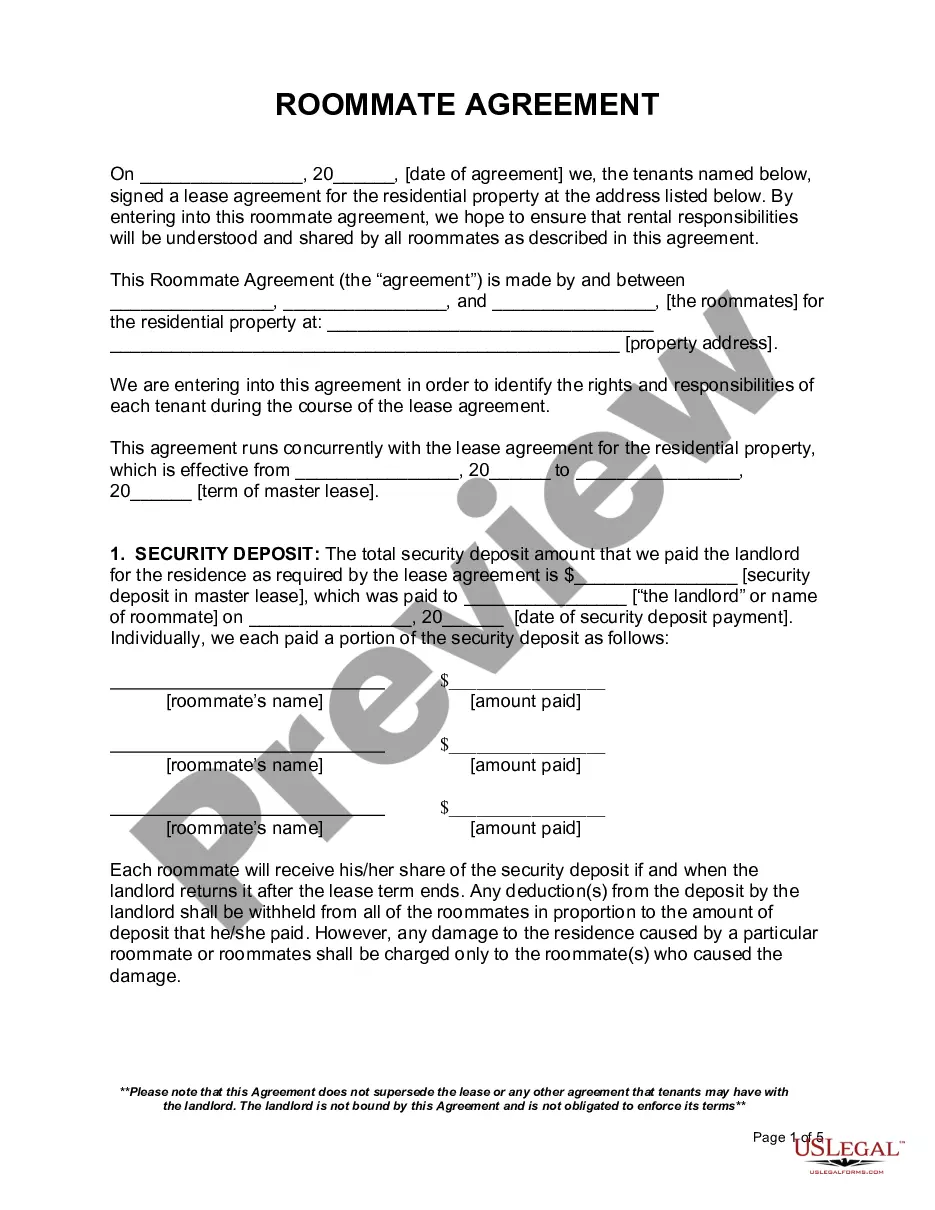
Roommate Form Contract With Landlord In Clark
Description

Get your form ready online
Our built-in tools help you complete, sign, share, and store your documents in one place.
Make edits, fill in missing information, and update formatting in US Legal Forms—just like you would in MS Word.
Download a copy, print it, send it by email, or mail it via USPS—whatever works best for your next step.
Sign and collect signatures with our SignNow integration. Send to multiple recipients, set reminders, and more. Go Premium to unlock E-Sign.
If this form requires notarization, complete it online through a secure video call—no need to meet a notary in person or wait for an appointment.
We protect your documents and personal data by following strict security and privacy standards.

Make edits, fill in missing information, and update formatting in US Legal Forms—just like you would in MS Word.

Download a copy, print it, send it by email, or mail it via USPS—whatever works best for your next step.

Sign and collect signatures with our SignNow integration. Send to multiple recipients, set reminders, and more. Go Premium to unlock E-Sign.

If this form requires notarization, complete it online through a secure video call—no need to meet a notary in person or wait for an appointment.

We protect your documents and personal data by following strict security and privacy standards.
Looking for another form?




Form popularity
FAQ
NRS 118A. 290 provides the requirements for a landlord to maintain a habitable dwelling. Habitability violations constitute problems such as plumbing, pest and vermin infestations, holes in the walls, electrical problems, etc.
If you have questions regarding evictions, tenant rights, or housing issues, contact our eviction prevention hotline at 702-386-1070.
If the landlord fails to fix or make a reasonable attempt to fix the problem, you can sue for damages, terminate your rental agreement and move out, withhold rent that becomes due, and repair and deduct. You cannot withhold rent if you owe rent to the landlord.
Nevada landlord-tenant law allows landlords to collect required rent payments, use security deposits to cover damages that exceed normal wear and tear and pursue an eviction lawsuit if any breach occurs in the rental agreement.
Defining Landlord Harassment Examples of harassment may include, but are not limited to, the following prohibited actions by landlords: Unwarranted or excessive entry into the rental unit without proper notice, infringing on tenant privacy.
New laws affecting renters in Washington State in 2023 Within 30 days after a tenant moves out, the landlord must either return the full security deposit or give the tenant a written statement documenting why they kept some or all of it.
Nevada Legal Services can be reached at (702) 386-0404 or online at .nlslaw. For more information on the rights and obligations of tenants and landlords, visit the Nevada Revised Statutes Chapter 118A – Landlord and Tenant: Dwellings webpage.
RCW 59.18. 230 that tenants cannot sign away their legal rights under the landlord-tenant act in a rental agreement. Your contract may require 30 days' notice or more, but it may be arguable that tenants can only be held to the 20 days notice legally required under state law in RCW 59.18. 200.
Nevada law requires a thirty-day notice to the tenant (or a seven-day notice if the tenant pays rent weekly), followed by a second five-day Notice to Quit for Unlawful Detainer (after the first notice period has elapsed) instructing the tenant to leave because tenant's presence is now unlawful.
