Roommate Agreement With Boyfriend Without Hurting Him In Queens
Description

Get your form ready online
Our built-in tools help you complete, sign, share, and store your documents in one place.
Make edits, fill in missing information, and update formatting in US Legal Forms—just like you would in MS Word.
Download a copy, print it, send it by email, or mail it via USPS—whatever works best for your next step.
Sign and collect signatures with our SignNow integration. Send to multiple recipients, set reminders, and more. Go Premium to unlock E-Sign.
If this form requires notarization, complete it online through a secure video call—no need to meet a notary in person or wait for an appointment.
We protect your documents and personal data by following strict security and privacy standards.

Make edits, fill in missing information, and update formatting in US Legal Forms—just like you would in MS Word.

Download a copy, print it, send it by email, or mail it via USPS—whatever works best for your next step.

Sign and collect signatures with our SignNow integration. Send to multiple recipients, set reminders, and more. Go Premium to unlock E-Sign.

If this form requires notarization, complete it online through a secure video call—no need to meet a notary in person or wait for an appointment.

We protect your documents and personal data by following strict security and privacy standards.
Looking for another form?
Form popularity
FAQ
Set Clear Boundaries: Discuss and agree on personal boundaries regarding privacy, shared spaces, and quiet hours. Be clear about what you're comfortable with. Communication: Keep communication open but limited to necessary topics. Establish Personal Space: Make your personal area distinct. Limit Shared Activities:
Do Not Use Each Other's Things Without Asking. Not using each other's things without asking is one of the more obvious roommate rules. While some people are more casual about sharing, others are not. You have to learn what kind of person your roommate is and then act ingly.
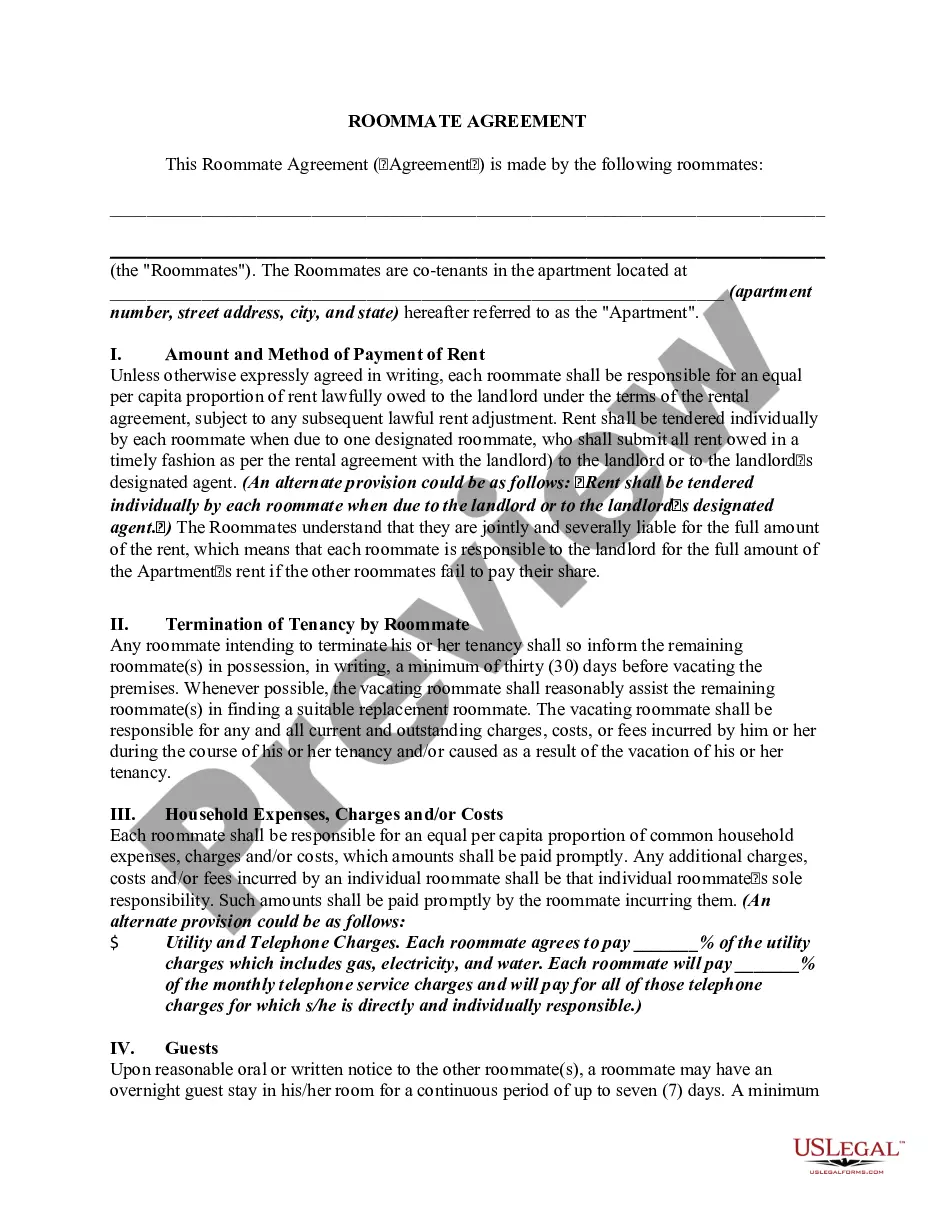
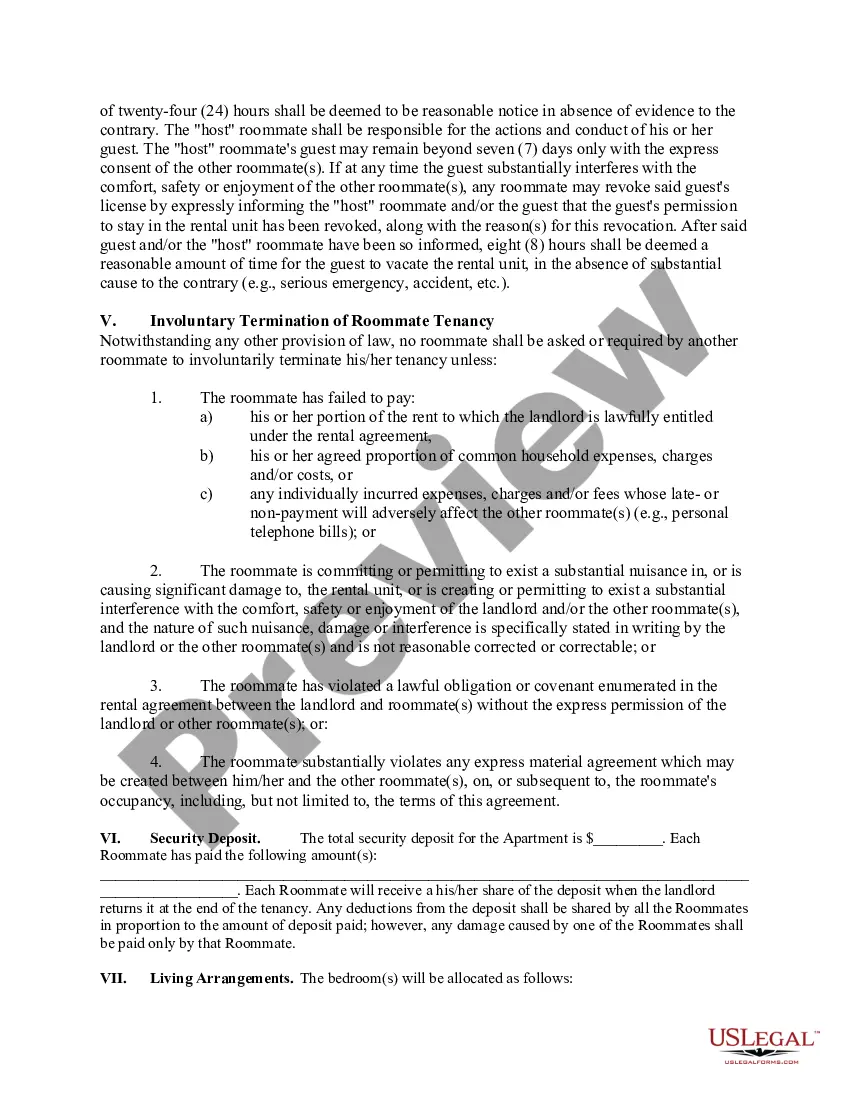
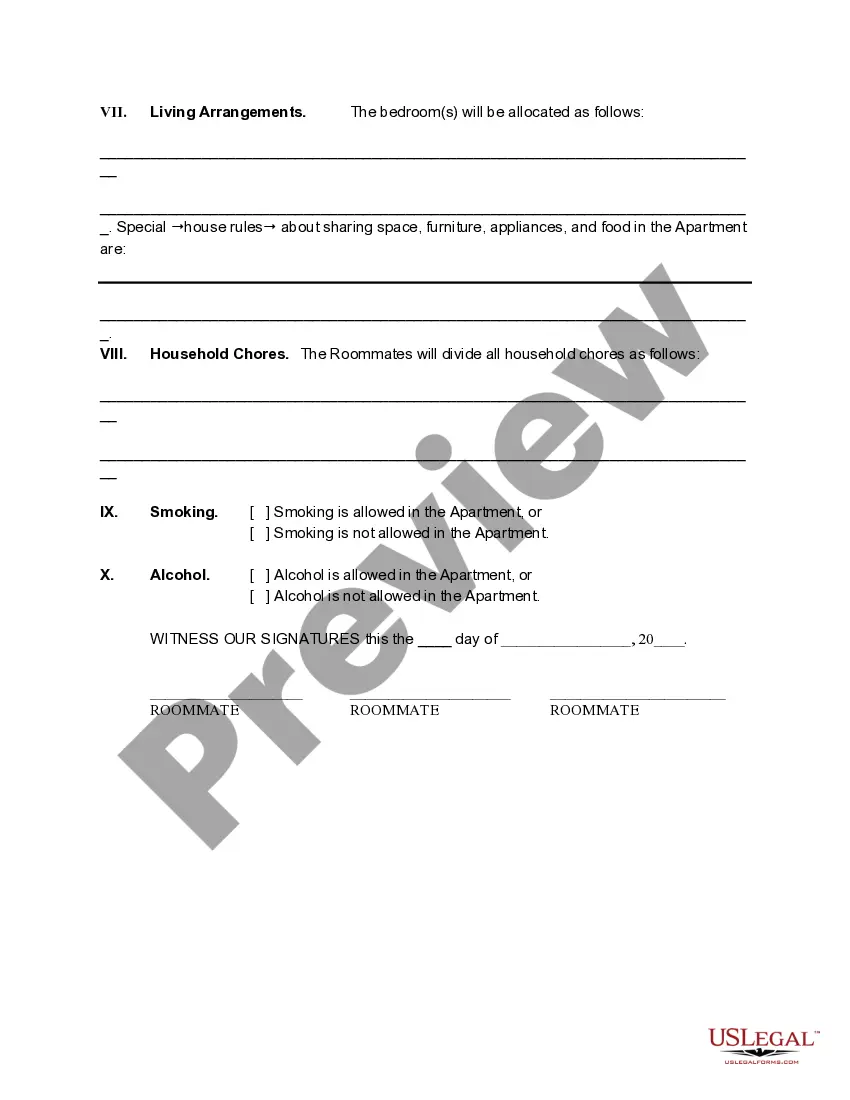
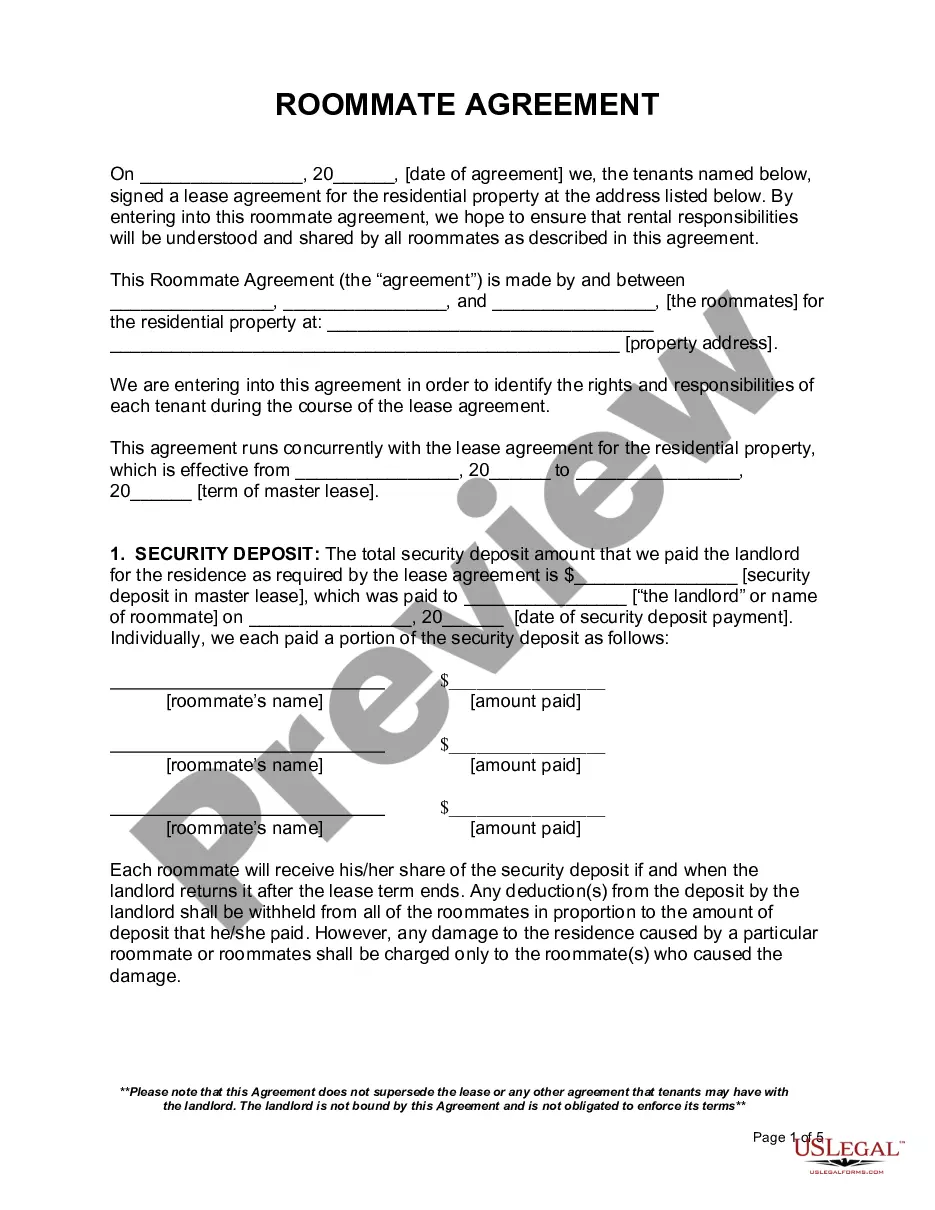
How to write a roommate agreement Names of both tenants. The property address. The dates the lease begins and ends. The amount of rent each person pays. Who pays for utilities. Who pays the security deposit. Which bedroom each person occupies. Who buys food, or if you're each buying your own food.
How to Balance Your Relationship & Your Roommates Set Time Boundaries Talk to your roommate about his/her schedule. Set Space Boundaries Don't allow your partner to sit in your roommate's chair, bed, or wherever. Ask Before Doing Set Aside Time For the Two of You Get Outta the Dorm
Let your roommate know what you are and aren't okay with. “Could we limit how often your boyfriend stays the night? Maybe you could go to his place every other day instead of always being here.” “If he's going to eat our food, he needs to contribute to the grocery bill. I can't afford to feed an extra person.”
One of the most common ways that couples get out of sync is when they fall into Roommate Syndrome. That is when life becomes routine in a way that feels comfortable, but also boring. The relationship becomes so routine that it loses its excitement. It happens when you stop investing in your relationship.
Assuming the SO doesn't have any particularly abominable personality traits (excessively loud or rude, etc.), three or four nights a week is perfectly acceptable. When you're talking five to seven nights a week, the roommate and the SO might as well make plans to get a place of their own.
If the roommate has been there more than two years, you must give 90 days notice termination. This means your notice must be given to your roommate at least the required number of days before the termination date in the notice. Extra time is ok. A shorter time is not.
(a) A tenant renting a residence pursuant to an existing lease in a dwelling having four or more residential units shall have the right to sublease his premises subject to the written consent of the landlord in advance of the subletting. Such consent shall not be unreasonably withheld.
New York State law protects the right of tenants in privately-owned buildings to have a roommate under certain conditions. If those conditions are met, tenants do not need the permission of the landlord to have an additional occupant, and are legally allowed to have a roommate even if their lease prohibits it.
