Roommate Agreement For Couples With Roommates In Queens
Description

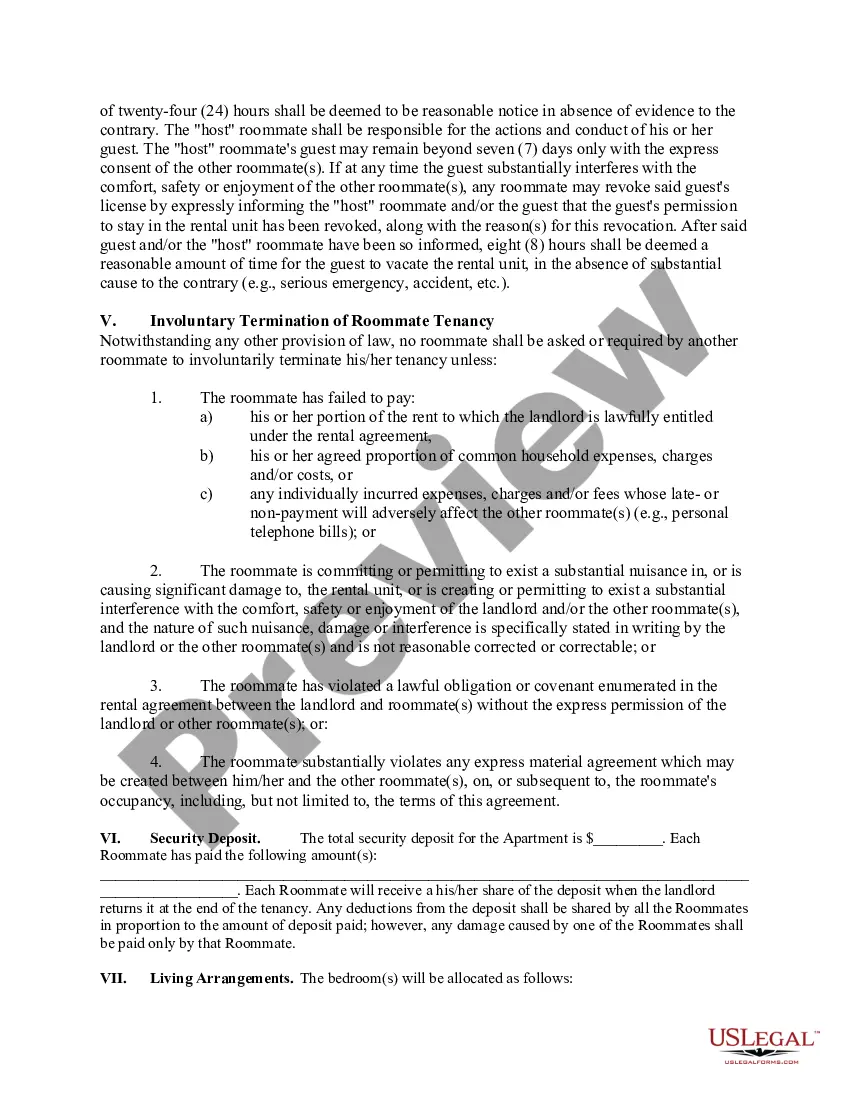
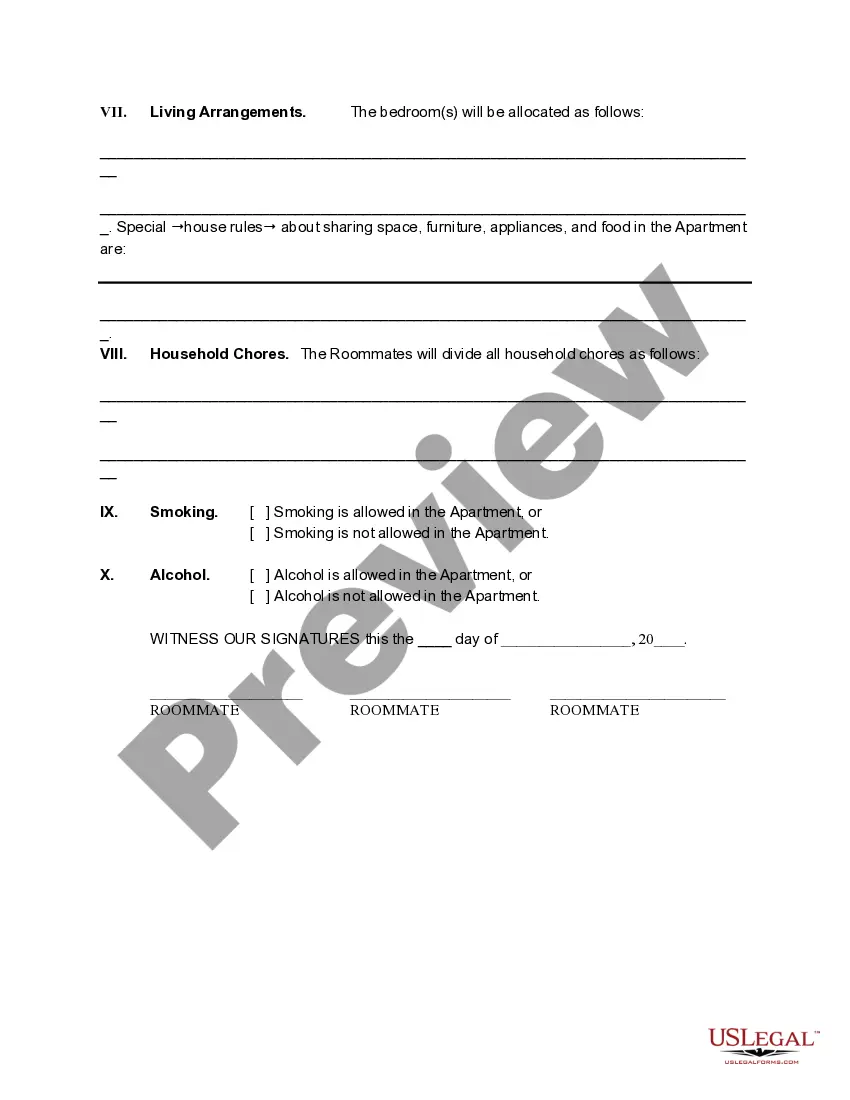

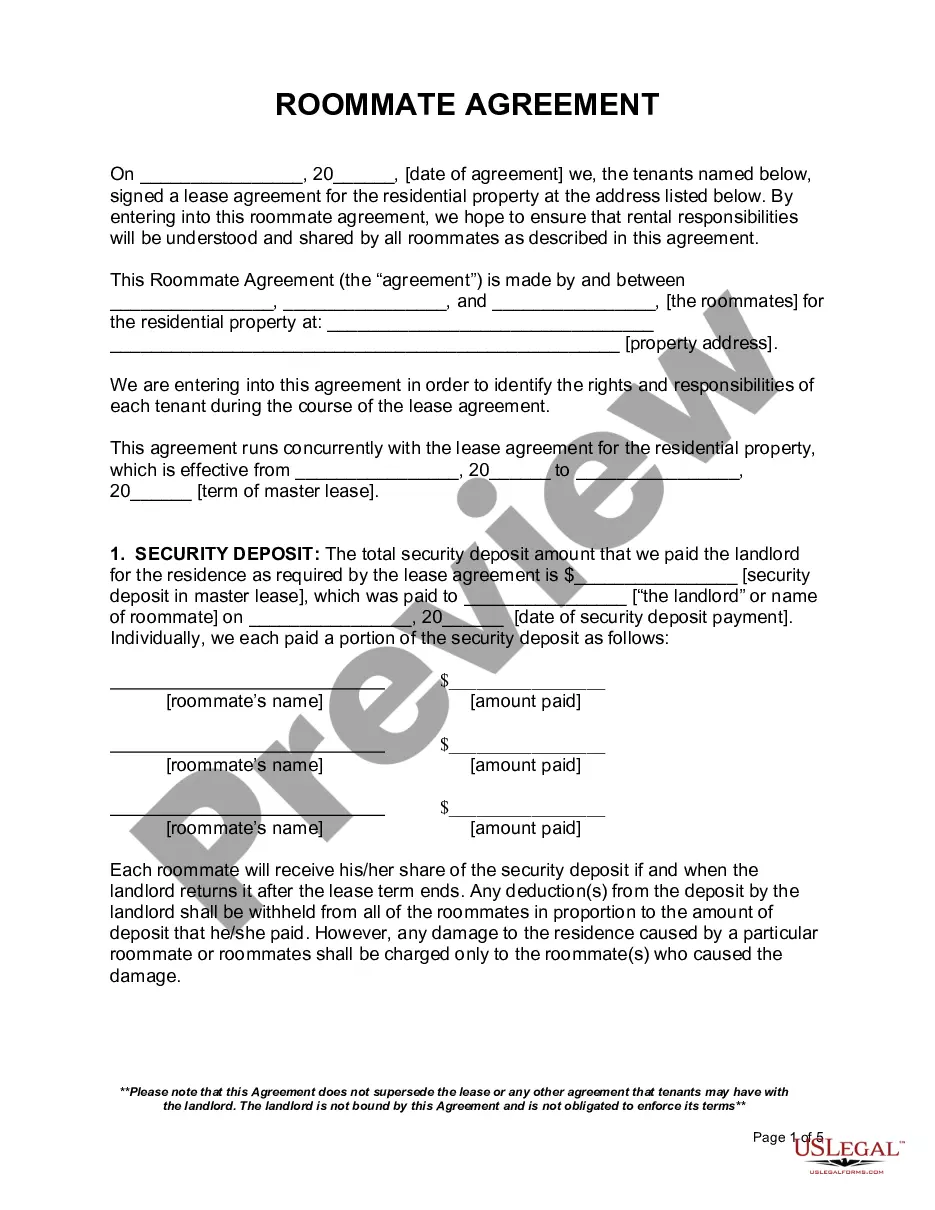
Get your form ready online
Our built-in tools help you complete, sign, share, and store your documents in one place.
Make edits, fill in missing information, and update formatting in US Legal Forms—just like you would in MS Word.
Download a copy, print it, send it by email, or mail it via USPS—whatever works best for your next step.
Sign and collect signatures with our SignNow integration. Send to multiple recipients, set reminders, and more. Go Premium to unlock E-Sign.
If this form requires notarization, complete it online through a secure video call—no need to meet a notary in person or wait for an appointment.
We protect your documents and personal data by following strict security and privacy standards.

Make edits, fill in missing information, and update formatting in US Legal Forms—just like you would in MS Word.

Download a copy, print it, send it by email, or mail it via USPS—whatever works best for your next step.

Sign and collect signatures with our SignNow integration. Send to multiple recipients, set reminders, and more. Go Premium to unlock E-Sign.

If this form requires notarization, complete it online through a secure video call—no need to meet a notary in person or wait for an appointment.

We protect your documents and personal data by following strict security and privacy standards.
Looking for another form?
Form popularity
FAQ
At the absolute maximum, depending on how "extended" the guest's stay has been, he or she should be out of the house within a week. If you have a good relationship and your roommate is relatively sane, this should be more than enough to get the freeloader out.
Yes, everyone over the age of 18 needs to be on the lease. This prevents the boyfriend or girlfriend of the children from just moving in. It also helps with the background checks too.
Under what's commonly referred to in NYC as the “Roommate Law”, you are allowed as a co-op owner one additional occupant in addition to immediate family, as long as you are currently living in the unit at the same time.
This brings us back to our original question; yes, it's possible to evict without a lease, but there are some conditions that must be satisfied when doing this. And yes, the process still mandates a formal notice be given to the tenant, but the following must also be satisfied.
Understanding the Legal Implications And in this case, it means you're both on the hook for the entire rent payment, not just your share. So, even if your ex-roommate skips town, you're still legally responsible for the full rent unless you take some action.
You can stay in a New York City apartment for 90 days without paying rent before the landlord can initiate eviction proceedings against you. This does not mean that that the landlord will take no action prior to the 90-day mark; there are several steps leading up to the eviction notice.
When only one tenant is named on a lease, the tenant has the right to take in a roommate and the roommate's dependent children. When two or more tenants are named on the lease, the number of tenants and roommates cannot exceed the number of tenants named in the lease.
Typical Expenses 1 ADULT2 ADULTS (BOTH WORKING) 0 Children0 Children Required annual income after taxes $56,138 $75,803 Annual taxes $12,200 $14,609 Required annual income before taxes $68,338 $90,4128 more rows
New York State law protects the right of tenants in privately-owned buildings to have a roommate under certain conditions. If those conditions are met, tenants do not need the permission of the landlord to have an additional occupant, and are legally allowed to have a roommate even if their lease prohibits it.
New York law (RPL 235-f) allows a tenant of any private residential apartment to share their apartment with their immediate family members, one additional occupant and any dependent children of that occupant so long as the apartment is the tenant's primary residence, so long as there is only one tenant on the lease.
