Roommate Agreement With Boyfriend Without Hurting Him In Orange
Description





Form popularity
FAQ
A tenancy agreement may end when someone goes against one of its material terms Residential Tenancy Act: Section 45.3. If a landlord or tenant breaches a material term and the other party wants to end the tenancy, they must send a written warning to the party who breached the term.
An “occupant/roommate” is a person who rents from a tenant with whom they live, rather than the landlord, and is therefore not covered under the Residential Tenancy Act. This type of living situation is common in shared houses where a “head-tenant” rents out bedrooms to roommates.
Do Not Use Each Other's Things Without Asking. Not using each other's things without asking is one of the more obvious roommate rules. While some people are more casual about sharing, others are not. You have to learn what kind of person your roommate is and then act ingly.
Any roommate who is named as a tenant in the tenancy agreement is presumptively a tenant with rights and obligations under the Act; whether any roommate is a tenant or not is ultimately a legal determination that can only be made by a Residential Tenancy Branch arbitrator who will weigh the factors in favour and ...
Assuming the SO doesn't have any particularly abominable personality traits (excessively loud or rude, etc.), three or four nights a week is perfectly acceptable. When you're talking five to seven nights a week, the roommate and the SO might as well make plans to get a place of their own.
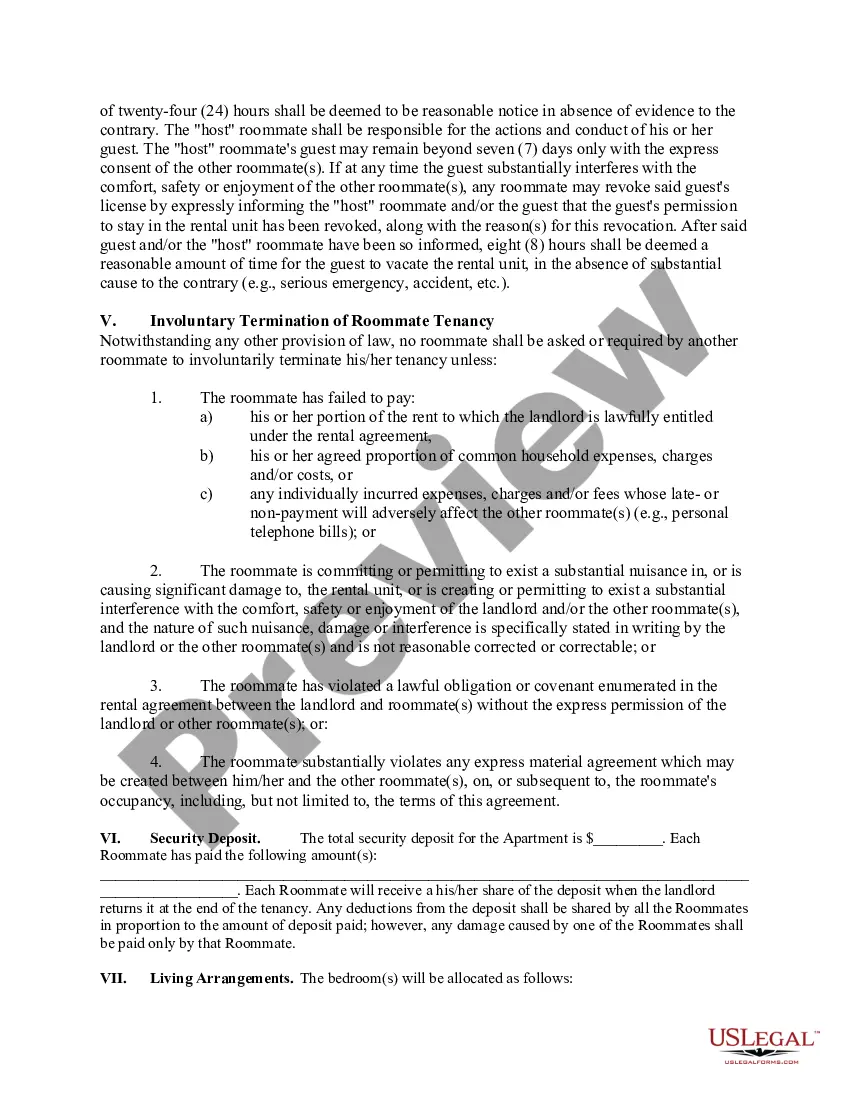
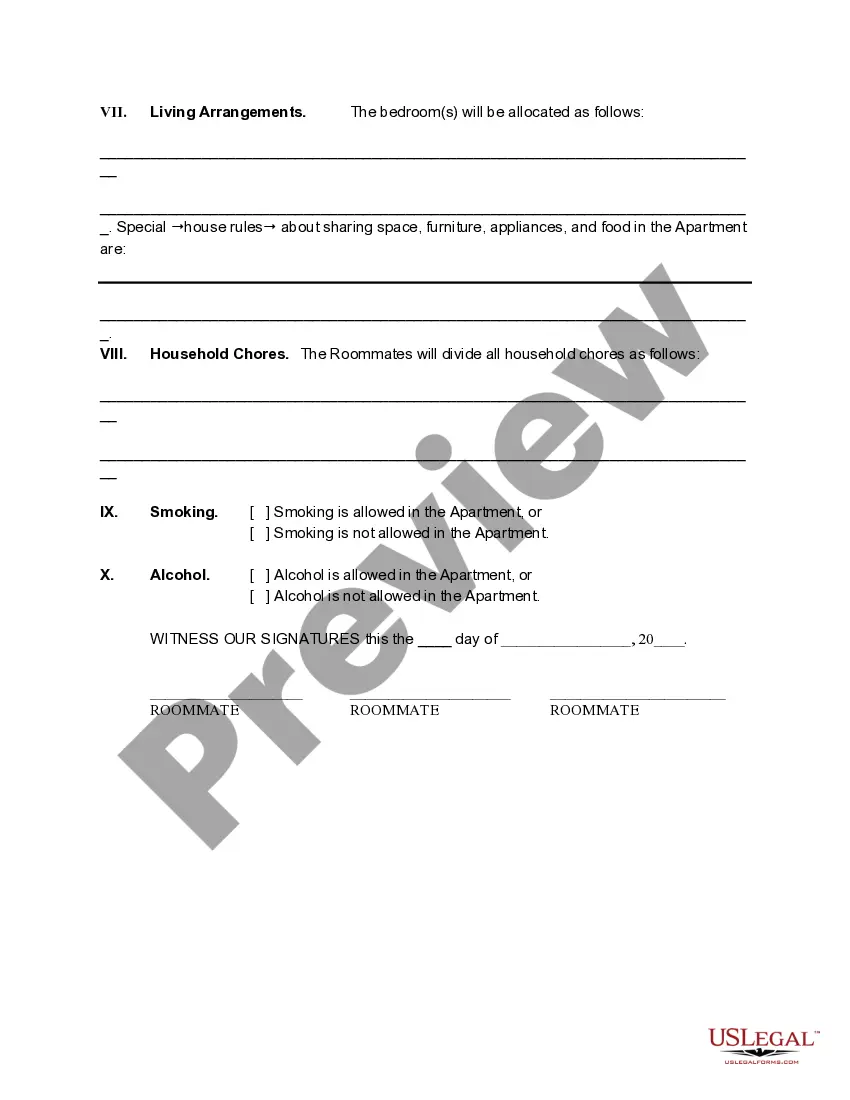
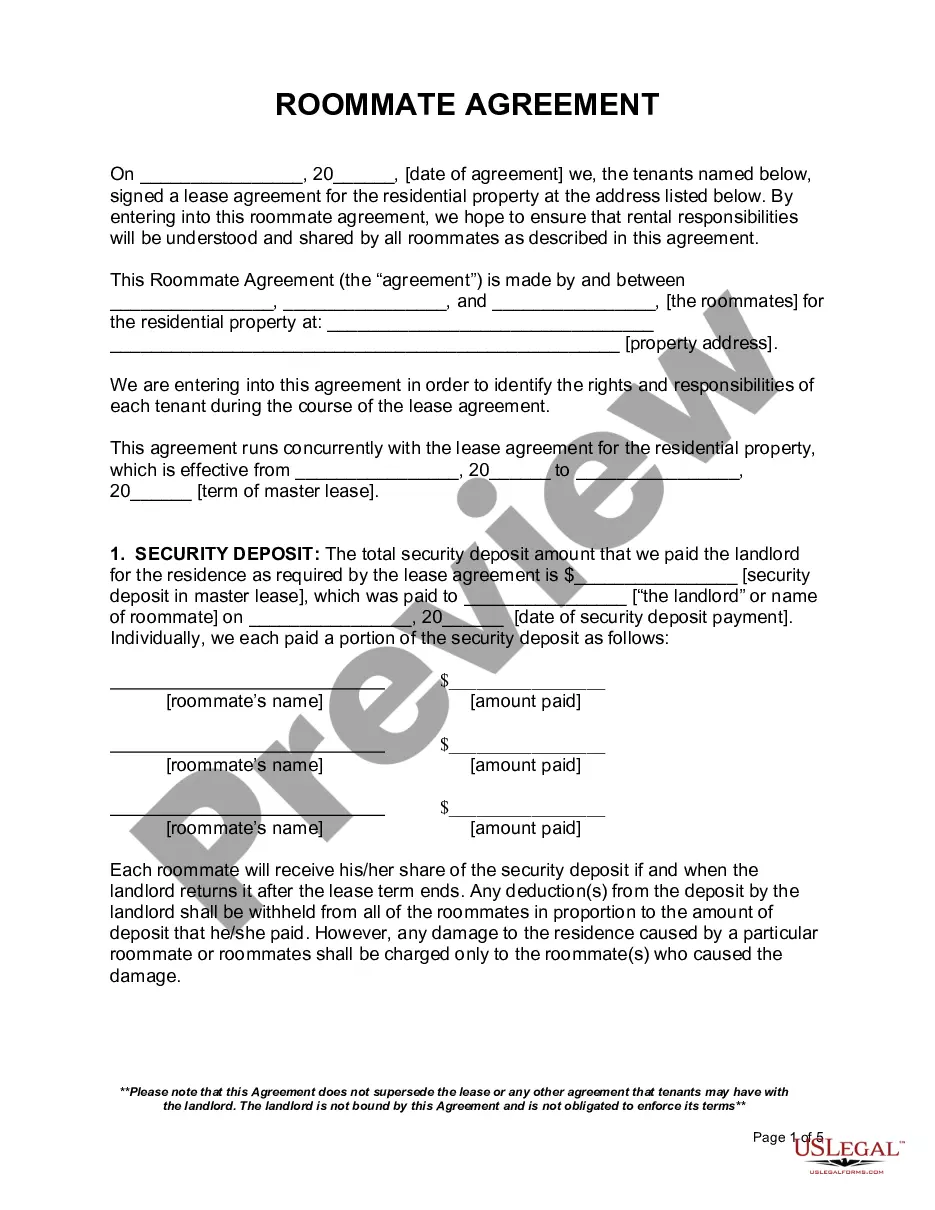
How to write a roommate agreement Names of both tenants. The property address. The dates the lease begins and ends. The amount of rent each person pays. Who pays for utilities. Who pays the security deposit. Which bedroom each person occupies. Who buys food, or if you're each buying your own food.
To write a simple contract, title it clearly, identify all parties and specify terms (services or payments). Include an offer, acceptance, consideration, and intent. Add a signature and date for enforceability. Written contracts reduce disputes and offer better legal security than verbal ones.
