Roommate Agreement For Couples Format In New York
Description

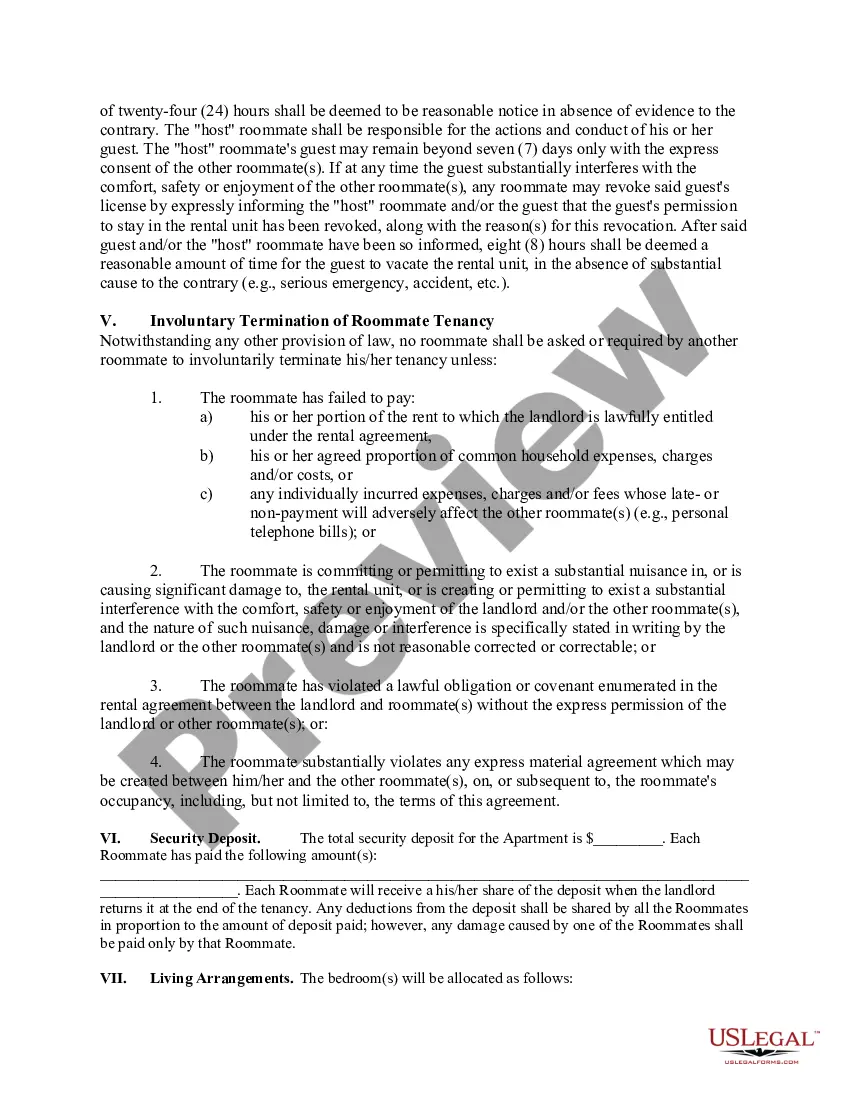
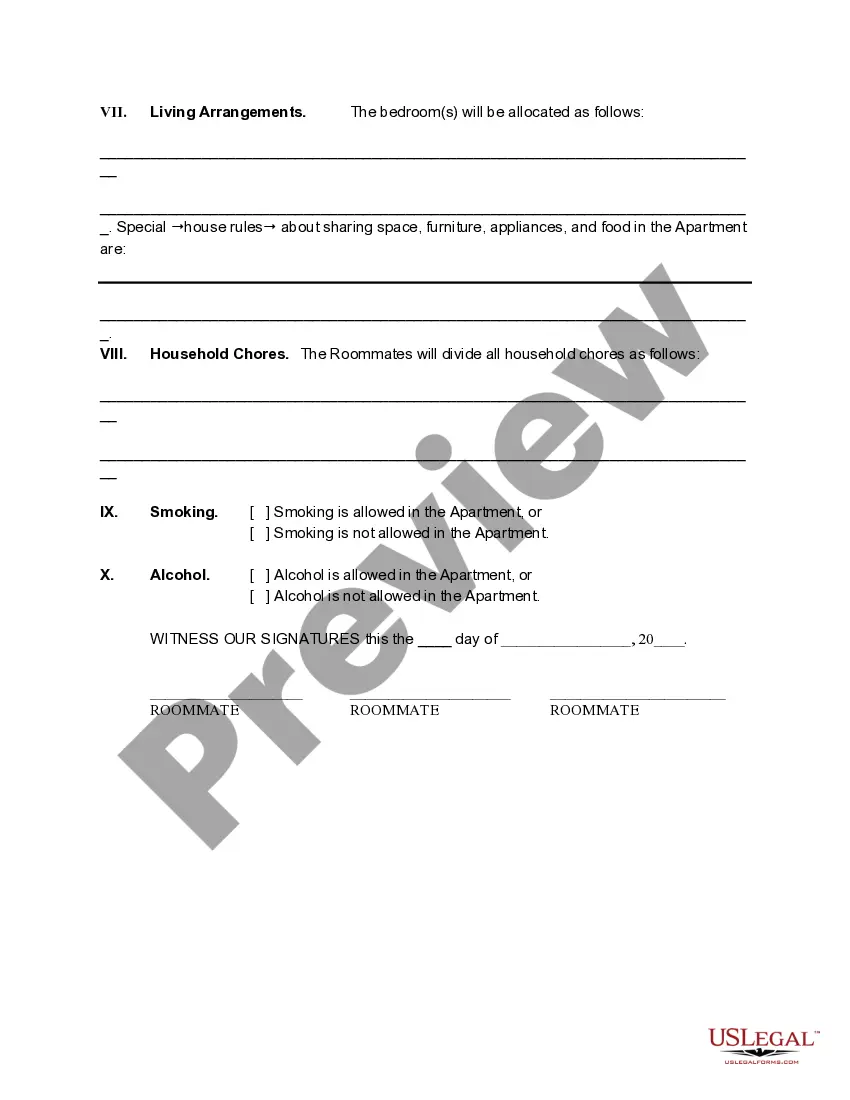

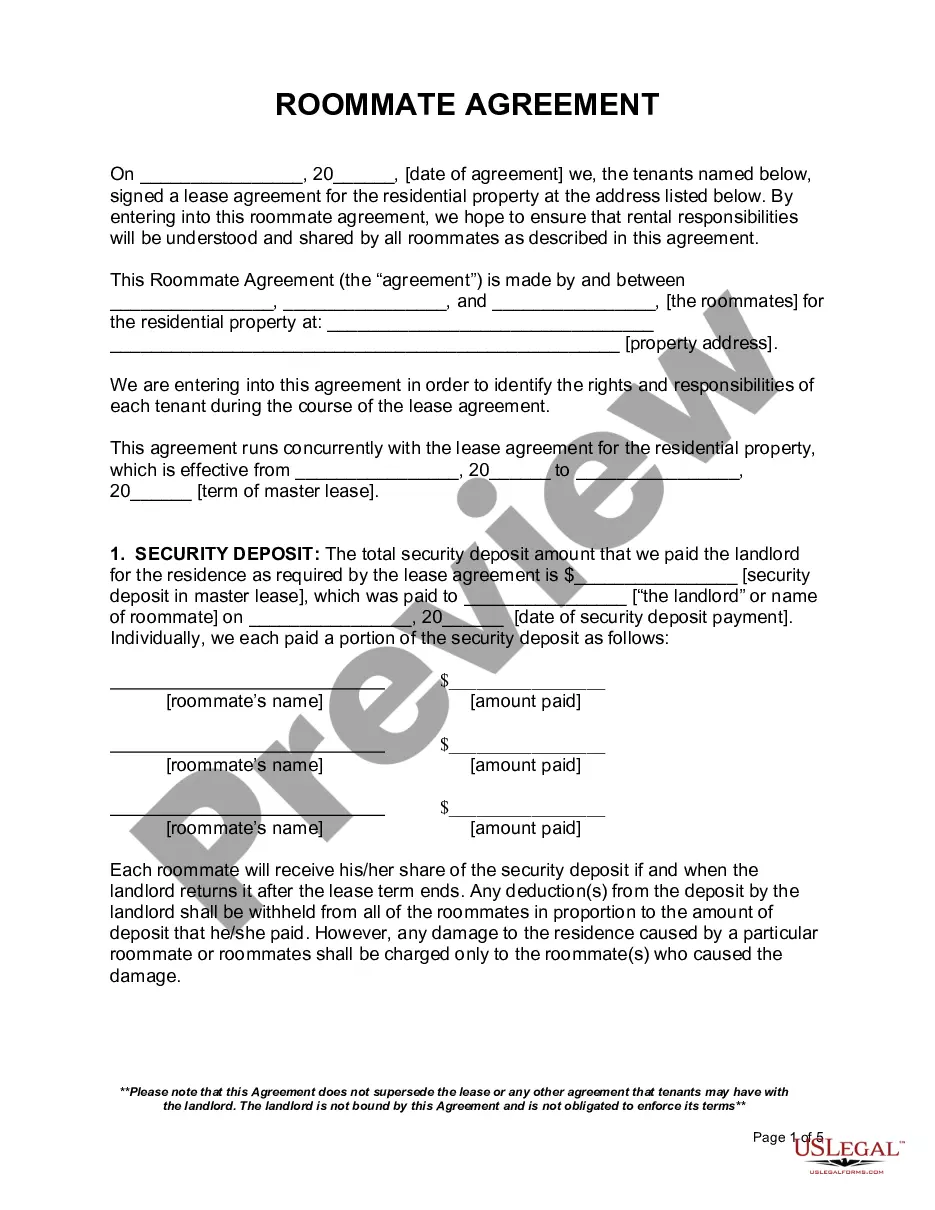
Get your form ready online
Our built-in tools help you complete, sign, share, and store your documents in one place.
Make edits, fill in missing information, and update formatting in US Legal Forms—just like you would in MS Word.
Download a copy, print it, send it by email, or mail it via USPS—whatever works best for your next step.
Sign and collect signatures with our SignNow integration. Send to multiple recipients, set reminders, and more. Go Premium to unlock E-Sign.
If this form requires notarization, complete it online through a secure video call—no need to meet a notary in person or wait for an appointment.
We protect your documents and personal data by following strict security and privacy standards.

Make edits, fill in missing information, and update formatting in US Legal Forms—just like you would in MS Word.

Download a copy, print it, send it by email, or mail it via USPS—whatever works best for your next step.

Sign and collect signatures with our SignNow integration. Send to multiple recipients, set reminders, and more. Go Premium to unlock E-Sign.

If this form requires notarization, complete it online through a secure video call—no need to meet a notary in person or wait for an appointment.

We protect your documents and personal data by following strict security and privacy standards.
Looking for another form?






Form popularity
FAQ
(a) A tenant renting a residence pursuant to an existing lease in a dwelling having four or more residential units shall have the right to sublease his premises subject to the written consent of the landlord in advance of the subletting. Such consent shall not be unreasonably withheld.
A New York standard residential lease agreement is a form that allows a landlord and tenant to enter into a legally binding arrangement for leasing residential space. The term "standard" means a fixed term that usually lasts one year.
A roommate arrangement is when multiple adults occupy a single unit together. In most cases, the renters are not related, but siblings and cousins can be roommates as well. With a traditional roommate arrangement, all roommates share a single lease.
New York State law protects the right of tenants in privately-owned buildings to have a roommate under certain conditions. If those conditions are met, tenants do not need the permission of the landlord to have an additional occupant, and are legally allowed to have a roommate even if their lease prohibits it.
When only one tenant is named on a lease, the tenant has the right to take in a roommate and the roommate's dependent children. When two or more tenants are named on the lease, the number of tenants and roommates cannot exceed the number of tenants named in the lease.
No dwelling unit shall be occupied by a greater number of persons than is permitted by this section. (1) Every person occupying an apartment in a class A or class B multiple dwelling or in a tenant-occupied apartment in a one- or two-family dwelling shall have a livable area of not less than eighty square feet.
When only one tenant is named on a lease, the tenant has the right to take in a roommate and the roommate's dependent children. When two or more tenants are named on the lease, the number of tenants and roommates cannot exceed the number of tenants named in the lease.
A: A roommate agreement is a contract made between the residents of a rental unit. The agreement outlines the terms, conditions and responsibilities agreed to by each of the residents. Roommate agreements are sometimes referred to as roommate contracts.
How to write a roommate agreement Names of both tenants. The property address. The dates the lease begins and ends. The amount of rent each person pays. Who pays for utilities. Who pays the security deposit. Which bedroom each person occupies. Who buys food, or if you're each buying your own food.
