Roommate Agreement For Couples With A Child In Dallas
Description

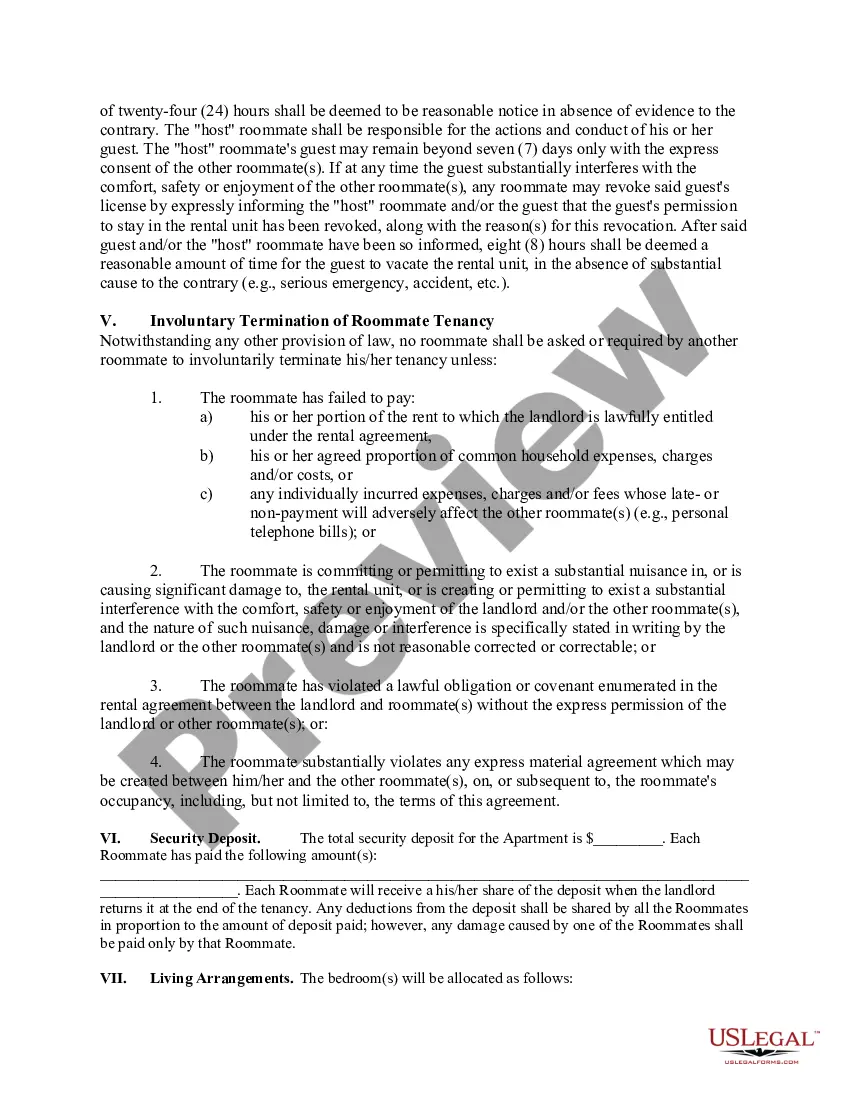
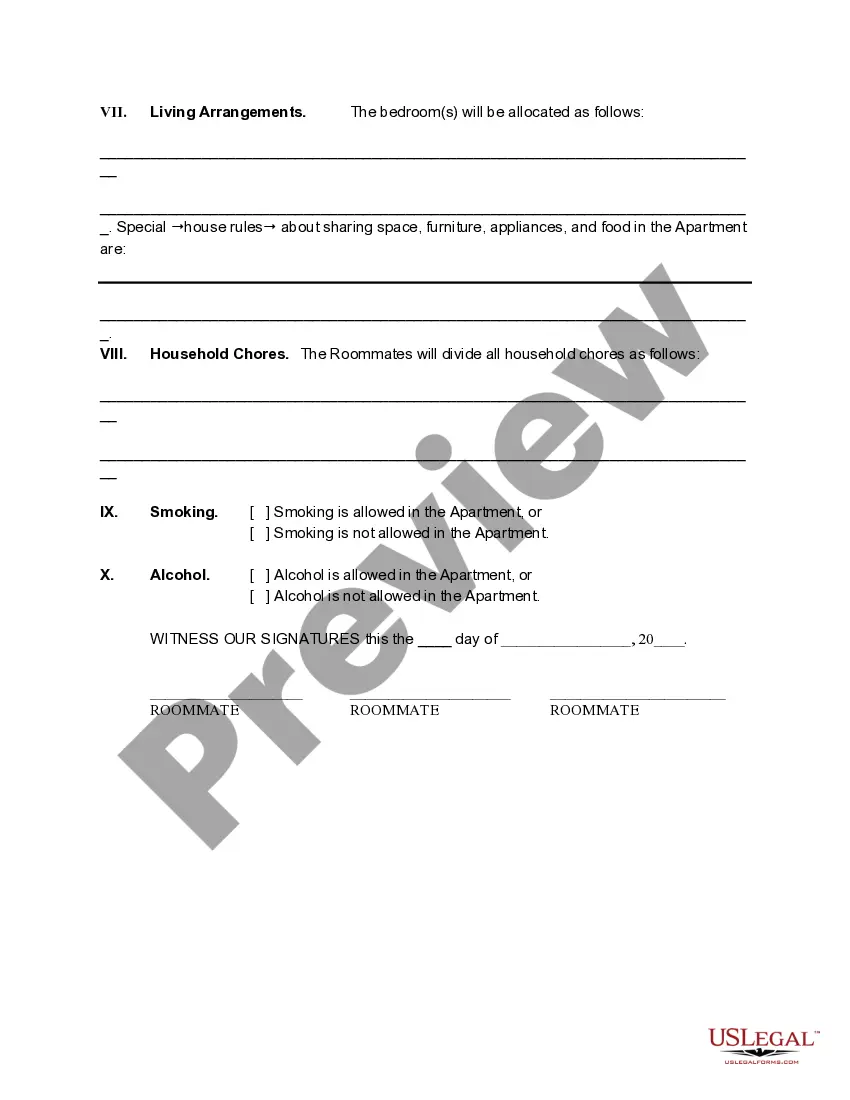

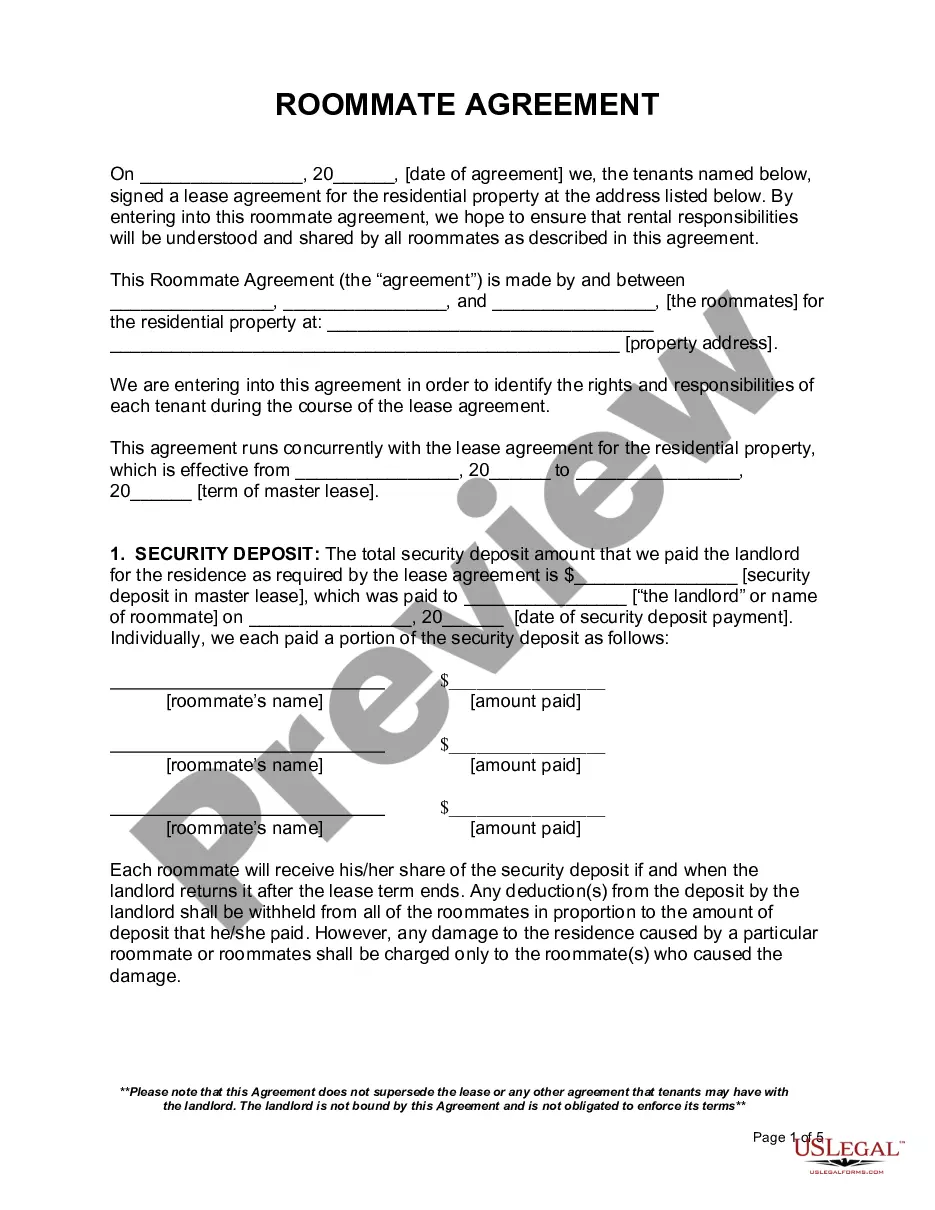
Get your form ready online
Our built-in tools help you complete, sign, share, and store your documents in one place.
Make edits, fill in missing information, and update formatting in US Legal Forms—just like you would in MS Word.
Download a copy, print it, send it by email, or mail it via USPS—whatever works best for your next step.
Sign and collect signatures with our SignNow integration. Send to multiple recipients, set reminders, and more. Go Premium to unlock E-Sign.
If this form requires notarization, complete it online through a secure video call—no need to meet a notary in person or wait for an appointment.
We protect your documents and personal data by following strict security and privacy standards.

Make edits, fill in missing information, and update formatting in US Legal Forms—just like you would in MS Word.

Download a copy, print it, send it by email, or mail it via USPS—whatever works best for your next step.

Sign and collect signatures with our SignNow integration. Send to multiple recipients, set reminders, and more. Go Premium to unlock E-Sign.

If this form requires notarization, complete it online through a secure video call—no need to meet a notary in person or wait for an appointment.

We protect your documents and personal data by following strict security and privacy standards.
Looking for another form?
Form popularity
FAQ
What do I include in a Roommate Agreement? Information about the property, roommates, and original lease. Term or length of the agreement. Rent responsibilities. Security deposit details. Responsibilities for utilities and household costs. House rules, roommate duties, and restrictions. Rules for termination of tenancy.
A Residential Sublet Agreement is a contract a tenant uses to allow someone else to occupy their rental space for a portion or the remainder of the original lease. You can sublet a portion of a rental property or the entire space. A Residential Sublet Agreement is also known as a: Sublease agreement.
A Roommate Agreement is where there is one lease, naming both parties, with the owner of the property as the Landlord. A sublease, is where one person has a lease with the Landlord, and then enters into a sublease with another person and becomes their Landlord.
Subletting is when the original renter (the “sublessor”) remains responsible for a lease, and either lives with a sublessee (the new tenant), or has a sublessee take their place living in the home.
A sublease is a lease by the lessee of an estate to a third person, conveying all or part of the estate for a shorter term than that for which the lessee holds originally. A sublease is a new contract between the lessee and the sublessee. The original lessee turns into a sublessor in this new contract.
You probably don't expect to sue your roommate someday. Yet, it does happen. An agreement creates expectations to keep the living arrangement fair. They also provide protection and peace of mind because they are legally binding.
A potentially devastating detriment to a sublease is its subject to the original tenant not defaulting. You could be compliant with your sublease and receive notice your lease is terminated because the original tenant defaulted. You could be subject to the landlord's new terms or be forced to vacate.
How to write a roommate agreement Names of both tenants. The property address. The dates the lease begins and ends. The amount of rent each person pays. Who pays for utilities. Who pays the security deposit. Which bedroom each person occupies. Who buys food, or if you're each buying your own food.
A written roommate agreement is a contract created and signed by you and your roommates (no need to get the landlord involved) before or when you move in together. It should establish house rules like quiet hours, division of household duties, a cleaning schedule, how you'll handle overnight guests, and more.
Other states, like California and Texas, require all adult tenants to sign the lease. Those who do not are considered a guest of the lease signing tenant.
