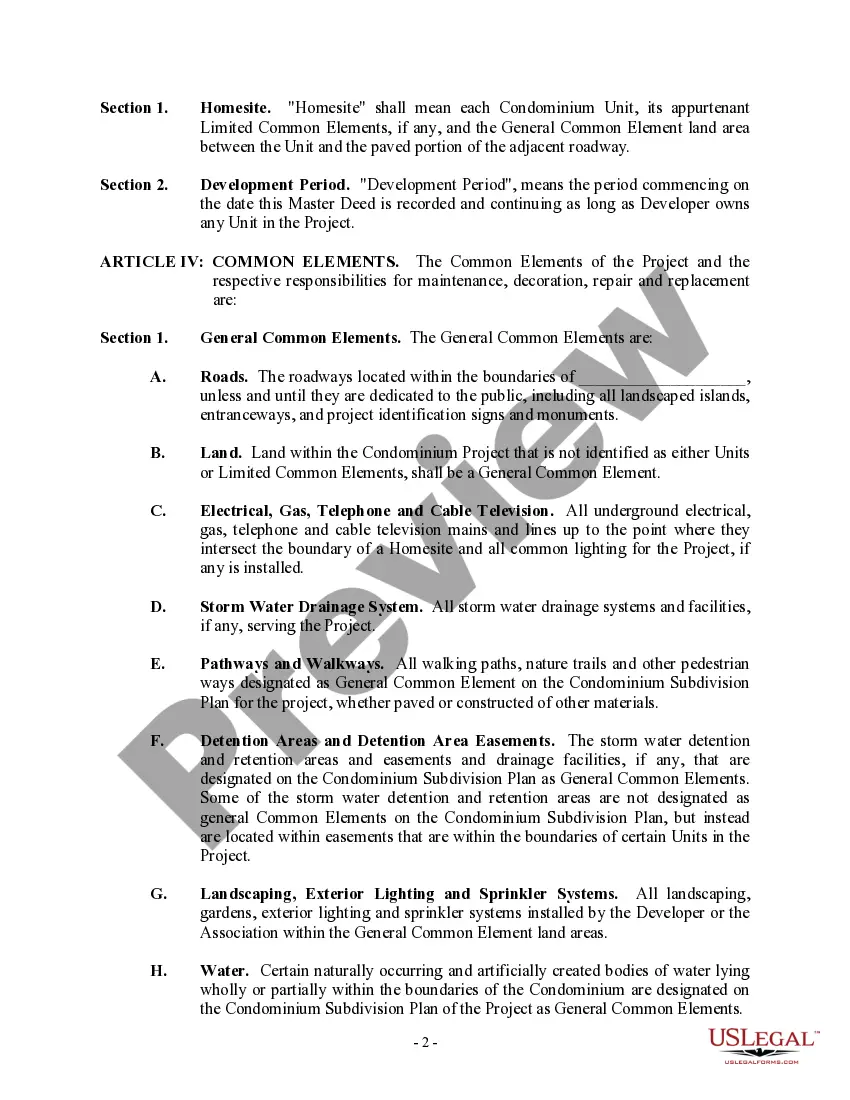
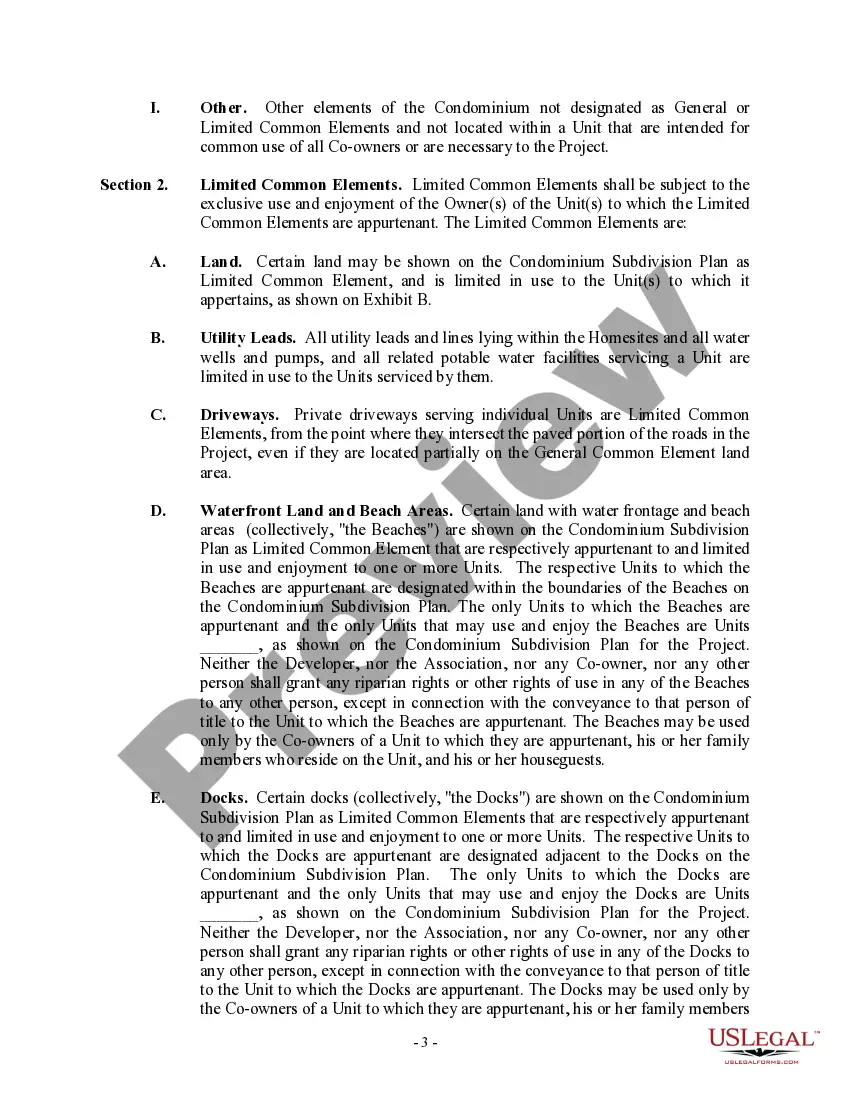
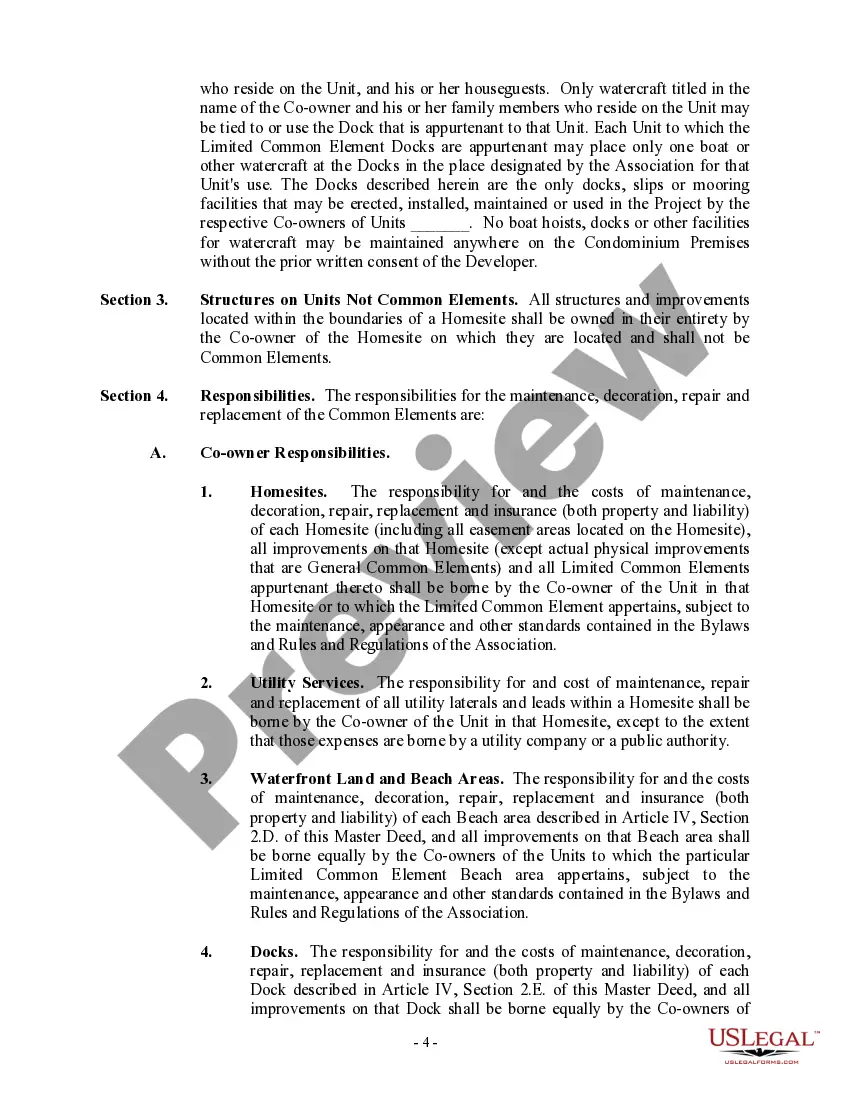
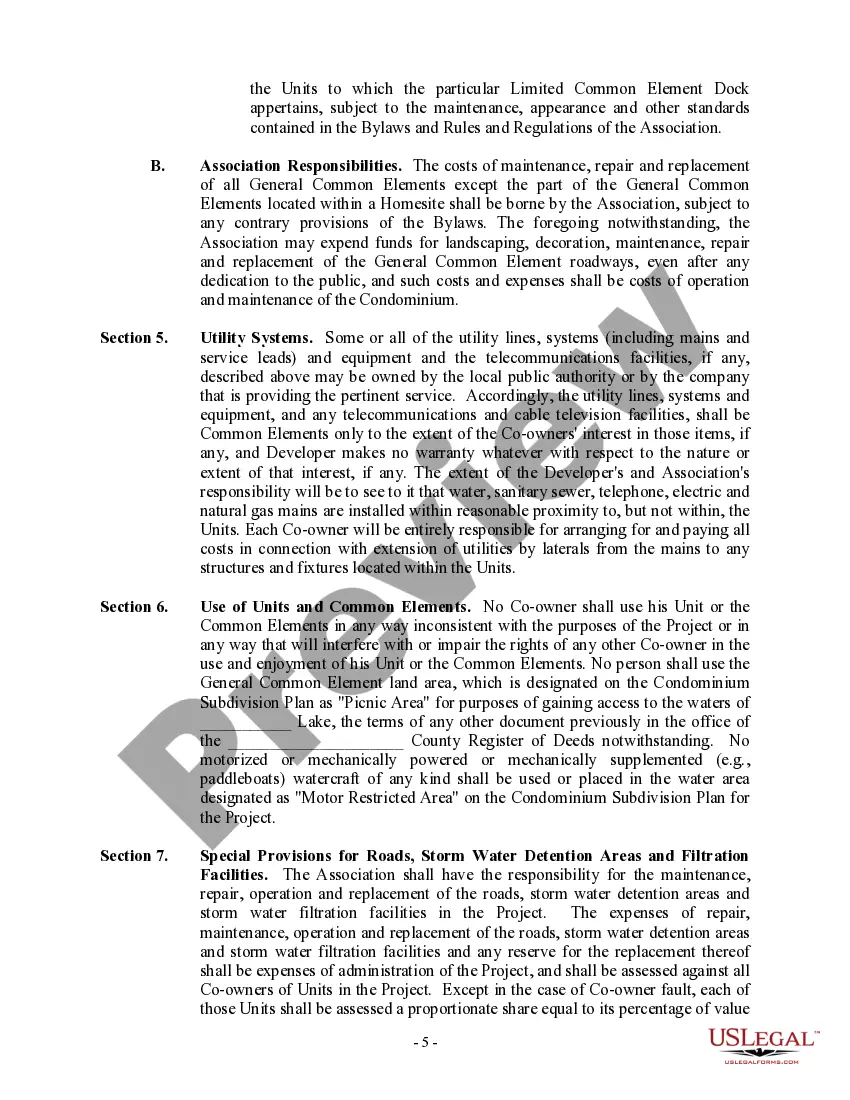
Master Deed For A Condominium In San Antonio
Description

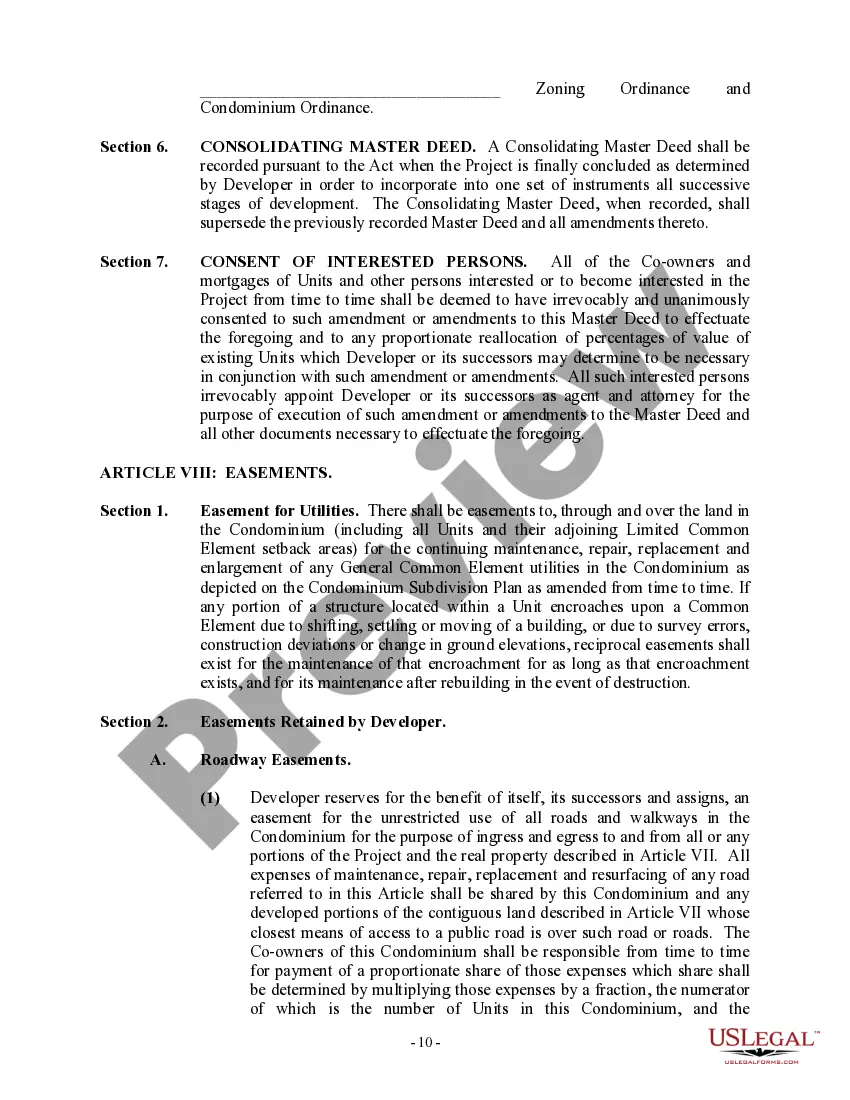


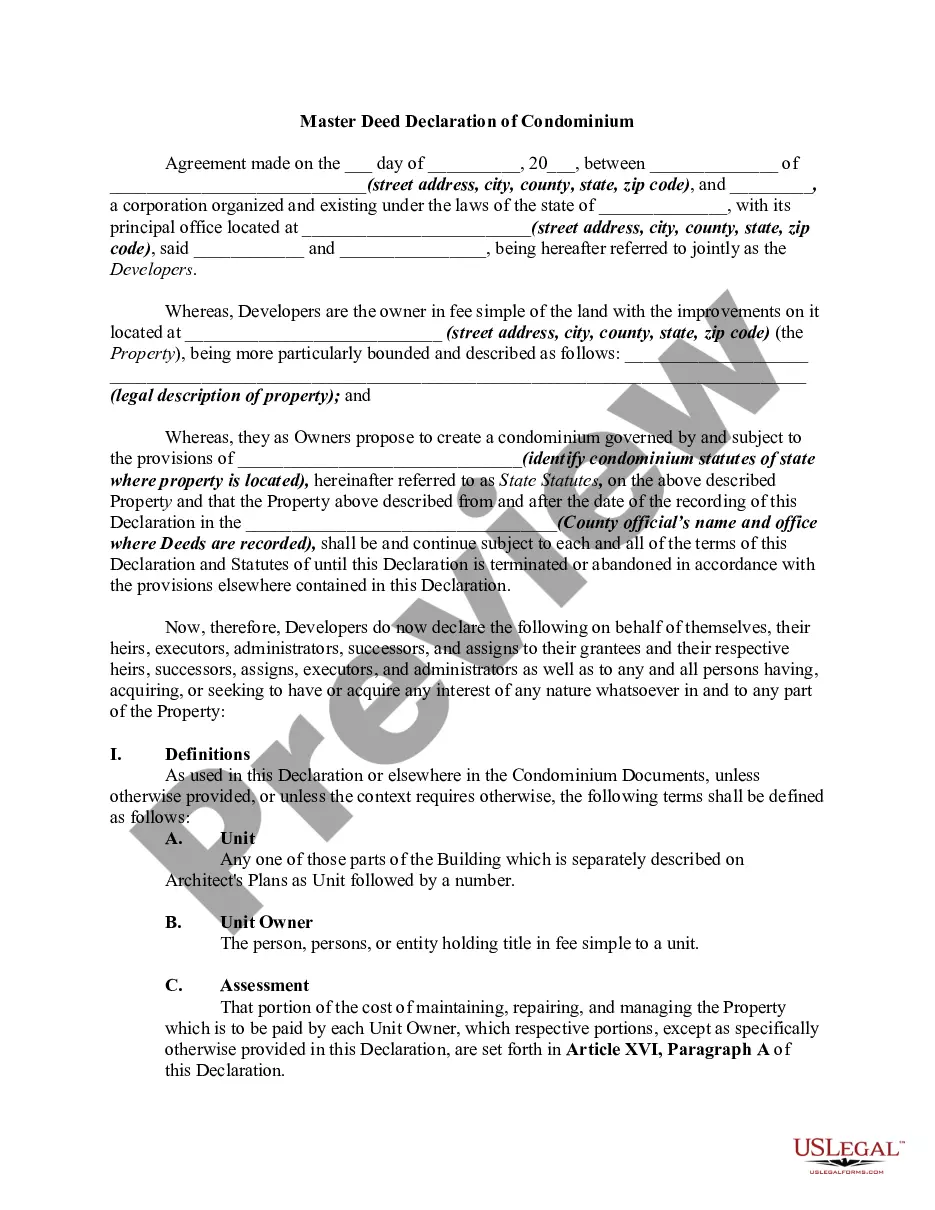
Get your form ready online
Our built-in tools help you complete, sign, share, and store your documents in one place.
Make edits, fill in missing information, and update formatting in US Legal Forms—just like you would in MS Word.
Download a copy, print it, send it by email, or mail it via USPS—whatever works best for your next step.
Sign and collect signatures with our SignNow integration. Send to multiple recipients, set reminders, and more. Go Premium to unlock E-Sign.
If this form requires notarization, complete it online through a secure video call—no need to meet a notary in person or wait for an appointment.
We protect your documents and personal data by following strict security and privacy standards.

Make edits, fill in missing information, and update formatting in US Legal Forms—just like you would in MS Word.

Download a copy, print it, send it by email, or mail it via USPS—whatever works best for your next step.

Sign and collect signatures with our SignNow integration. Send to multiple recipients, set reminders, and more. Go Premium to unlock E-Sign.

If this form requires notarization, complete it online through a secure video call—no need to meet a notary in person or wait for an appointment.

We protect your documents and personal data by following strict security and privacy standards.
Looking for another form?




Form popularity
FAQ
Your inium doesn't have a lifespan, but the corporation managing it has one. In the Philippines, 50 years is the lifespan of all companies and corporations, big or small. However, the corporation can still be renewed for another 50 years, so your inium ownership does not necessarily end at that point.
Inium is a Latin word that means "Owning property together." That's what it is like when someone buys a condo unit. They have an "interest" in the land beneath the building, but the building's association owns the actual land.
The ownership of these condos might differ; they might be leasehold or freehold. One of the main differences between these types is that in leasehold condos, you only own the right to operate your unit for a specific period. In freehold condos, you have full ownership rights forever.
When a common interest development deteriorates to the point that basic safety and habitability are called into question, the local government authority must act to either force the owners to repair it, or failing that, to close it down.
Ownership of a inium unit is evidenced by a inium certificate of title. With respect to real property other than land and inium units, there is no system that is equivalent to the Torrens system for registration under which a document is issued to evidence the owner's title.
How long does it take to get a deed in Texas? Well, sugar, the time it takes to get a deed in Texas can vary. Once all the paperwork is signed, sealed, and delivered to the county clerk's office, it can take anywhere from a few days to a couple of weeks for it to be recorded.
A deed record is a legal document that proves the transfer of property ownership. It's maintained by the County Clerk's office, containing key information like the parties involved, property description, transaction date, and any relevant clauses.
Once a deed has been recorded by the County Clerk's Office, copies of the deed may be requested if the original deed has been misplaced. Plain copies can be found by using the Official Public Records Search and selecting "Land Records". A certified copy may be purchased through request either in person or by mail.
In Texas, you record your deed with the County Clerk in the county where the property exists. If the property is in more than one county, record it in each. It is important to record your deed. In Texas, the property is legally transferred when the grantee accepts the signed deed.
A deed is a physical legal instrument that records the sale or transfer of property. It must be executed pursuant to the laws of the jurisdiction of where the property is located. A deed is executed by the grantor who is selling or transferring the property to the grantee who is buying or receiving the property.
