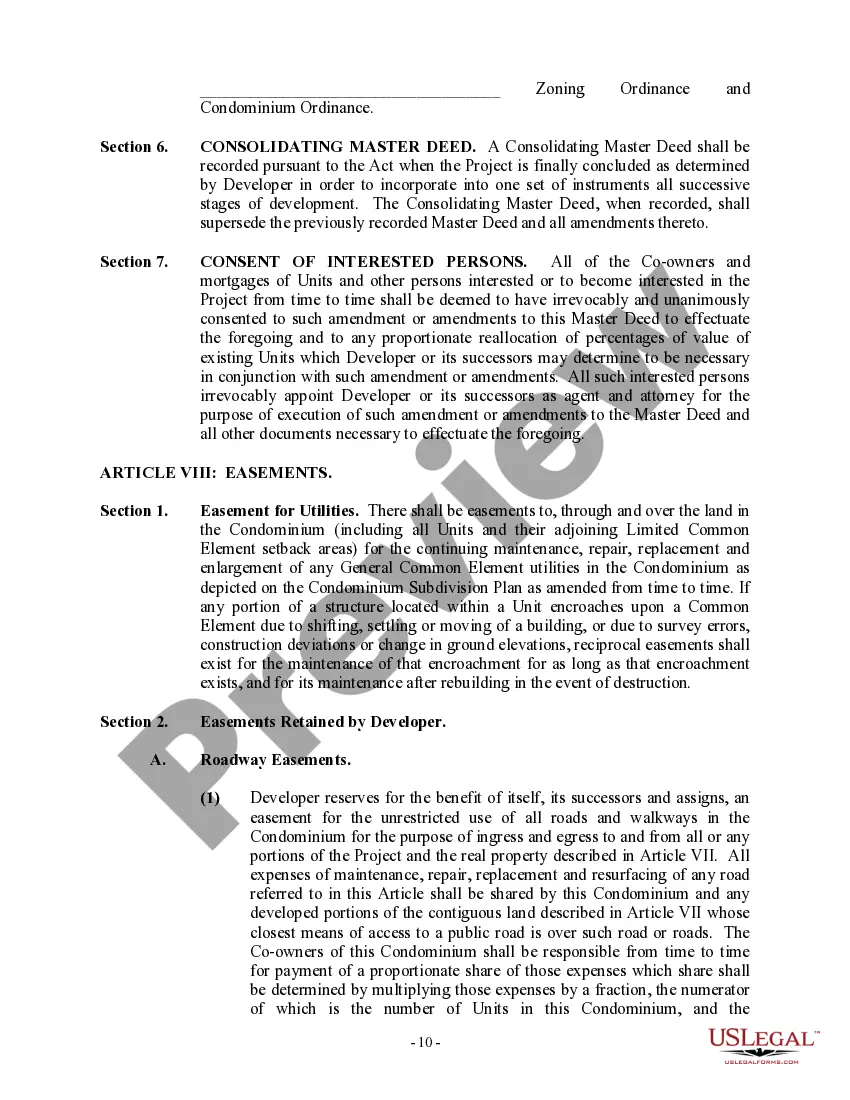
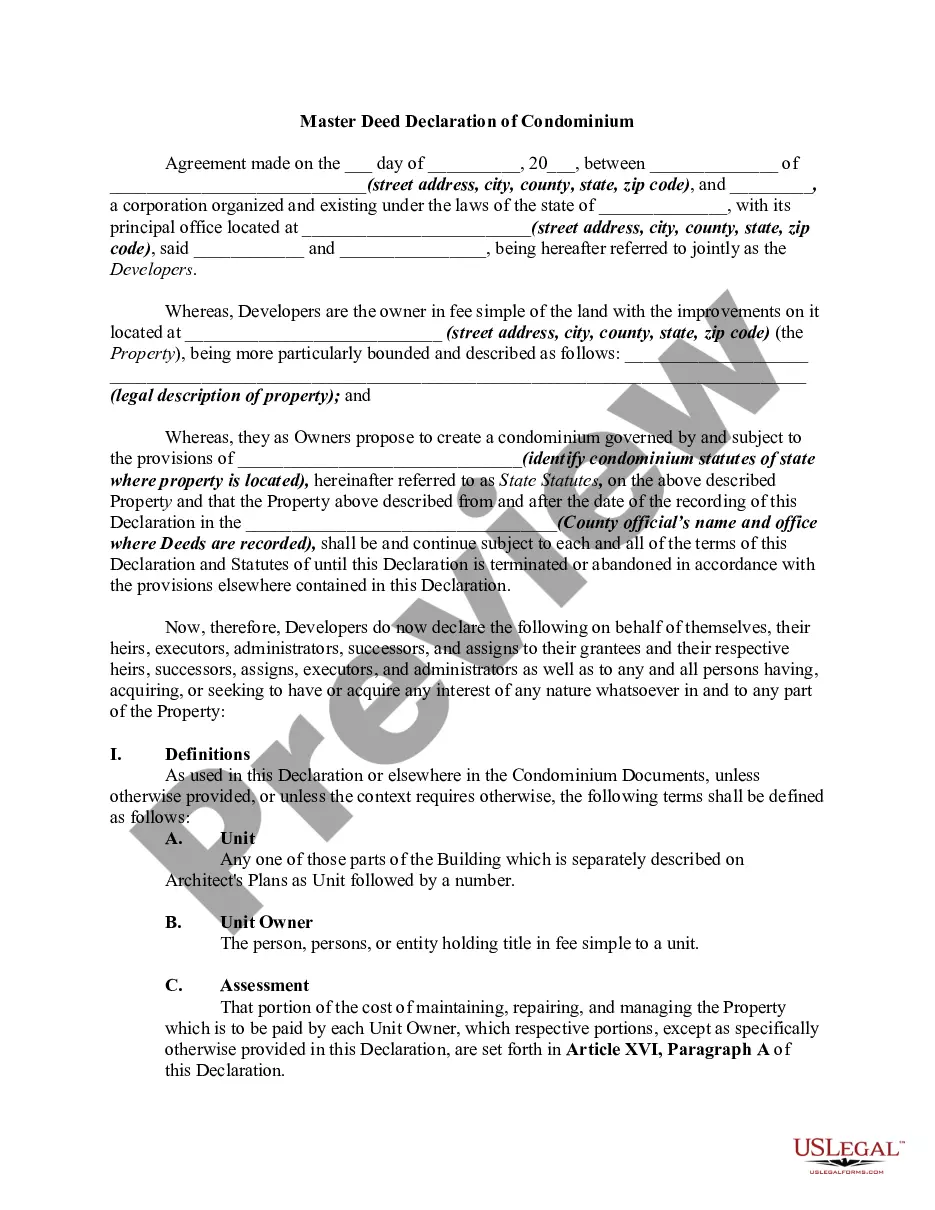
Condo Master Deed And Bylaws In Sacramento
Description



Get your form ready online
Our built-in tools help you complete, sign, share, and store your documents in one place.
Make edits, fill in missing information, and update formatting in US Legal Forms—just like you would in MS Word.
Download a copy, print it, send it by email, or mail it via USPS—whatever works best for your next step.
Sign and collect signatures with our SignNow integration. Send to multiple recipients, set reminders, and more. Go Premium to unlock E-Sign.
If this form requires notarization, complete it online through a secure video call—no need to meet a notary in person or wait for an appointment.
We protect your documents and personal data by following strict security and privacy standards.

Make edits, fill in missing information, and update formatting in US Legal Forms—just like you would in MS Word.

Download a copy, print it, send it by email, or mail it via USPS—whatever works best for your next step.

Sign and collect signatures with our SignNow integration. Send to multiple recipients, set reminders, and more. Go Premium to unlock E-Sign.

If this form requires notarization, complete it online through a secure video call—no need to meet a notary in person or wait for an appointment.

We protect your documents and personal data by following strict security and privacy standards.
Looking for another form?





Form popularity
FAQ
A PUD is a community in which individual unit owners have ownership of their home, their lot, and the common area. The difference between an HOA-run condo townhome and a PUD townhome is who owns the land on which the structure sits. In a condo situation, the association owns the land.
Additionally, condo owners often don't own the land their unit is built on—they lease it from the condo association—which can lead to different restrictions regarding renovations or modifications.
O Site iniums: A inium project “that consists entirely of single- family detached dwellings.” These homes have no attached buildings, shared garages, etc.
A planned unit development (PUD) is a group of single-family homes, condos, or townhouses where all the homeowners belong to a homeowners association (HOA). Homeowners own their home and lot and HOA membership is mandatory. This community of houses may include recreational, industrial, and commercial elements.
Often, planned developments are made up of single-family homes, local shops, restaurants, business centers, and parks. Those living within a PUD adhere to the rules provided by the HOA that governs the planned urban development.
The main difference comes down to ownership. iniums are owned by individuals and rented out privately (this is your typical landlord). In contrast, apartments are generally owned by property management companies who rent and manage all the units, creating a more standard approach and leasing process.
The major difference between a inium and a PUD is that the owner of a unit within a PUD also owns the lot under the unit which has been conveyed to them as shown in the recorded Tract Map or Parcel Map-and the structure and improvements thereon.
O HUD Rule 4000.1 which also applies to FHA states: A Site inium refers to a project of Single Family, totally detached dwellings encumbered by a Declaration of inium covenants or a inium form of ownership. They have no shared garages or any other attached buildings.
Site condos in which the unit owner owns the detached condo unit and the land upon which the unit is built are a type of detached condo.
Leaks in your unit are your responsibility, so you will need to call a plumber for repair. If the leak appears to be from a common area water line, call the Association's property manager. Provide as many details as possible about the nature and location of the leak.
