Condominium Common Element With Bright Red Blood In Orange
Description



Get your form ready online
Our built-in tools help you complete, sign, share, and store your documents in one place.
Make edits, fill in missing information, and update formatting in US Legal Forms—just like you would in MS Word.
Download a copy, print it, send it by email, or mail it via USPS—whatever works best for your next step.
Sign and collect signatures with our SignNow integration. Send to multiple recipients, set reminders, and more. Go Premium to unlock E-Sign.
If this form requires notarization, complete it online through a secure video call—no need to meet a notary in person or wait for an appointment.
We protect your documents and personal data by following strict security and privacy standards.

Make edits, fill in missing information, and update formatting in US Legal Forms—just like you would in MS Word.

Download a copy, print it, send it by email, or mail it via USPS—whatever works best for your next step.

Sign and collect signatures with our SignNow integration. Send to multiple recipients, set reminders, and more. Go Premium to unlock E-Sign.

If this form requires notarization, complete it online through a secure video call—no need to meet a notary in person or wait for an appointment.

We protect your documents and personal data by following strict security and privacy standards.
Looking for another form?







Form popularity
FAQ
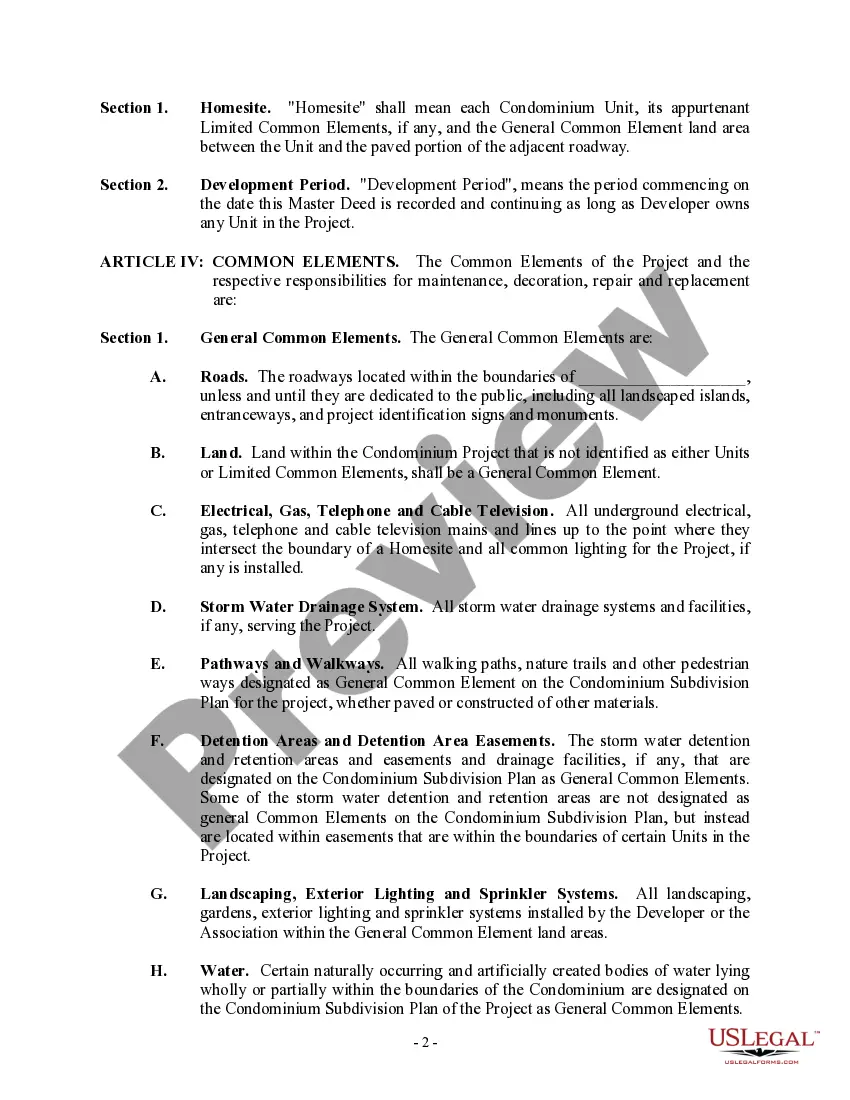
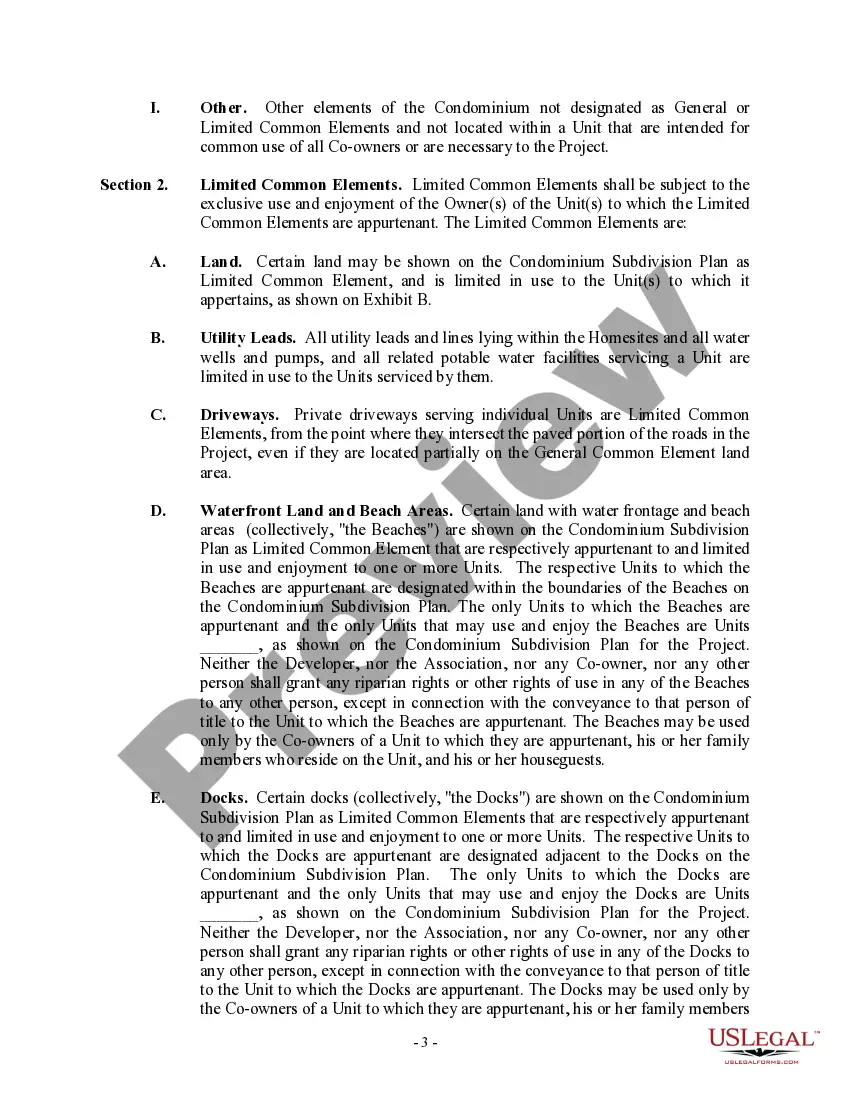
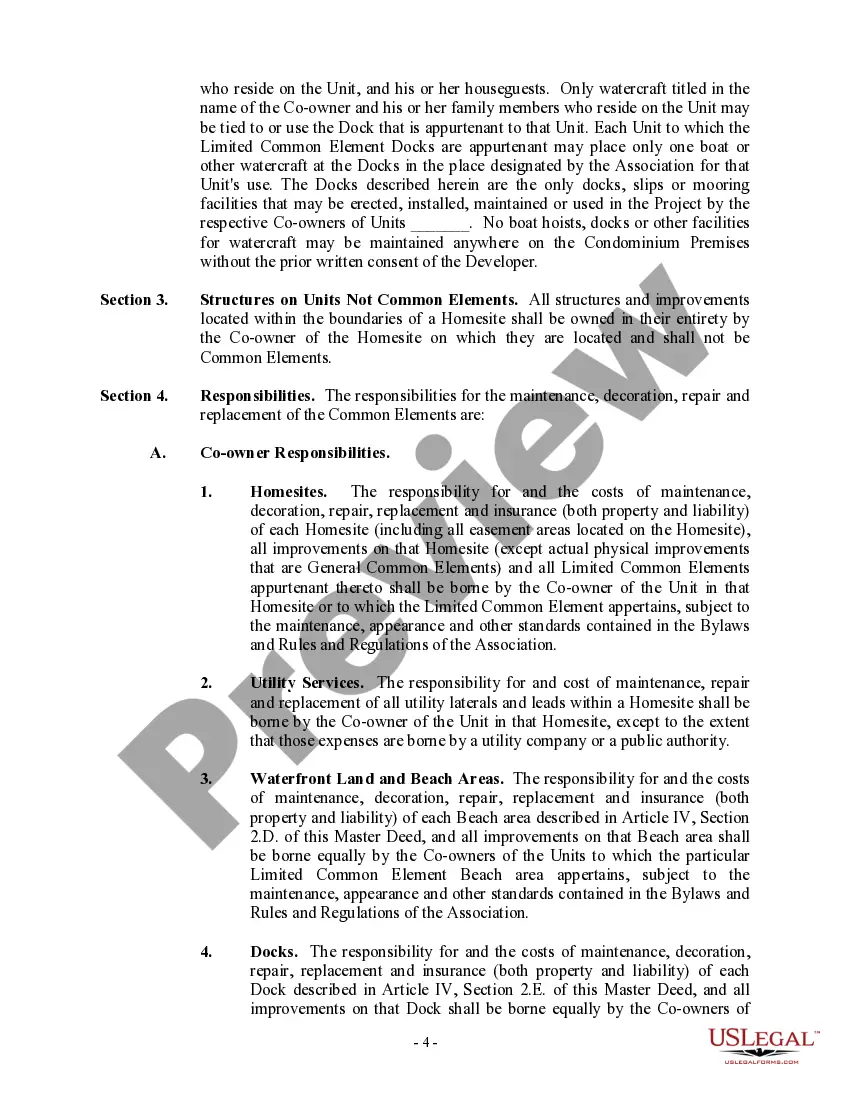
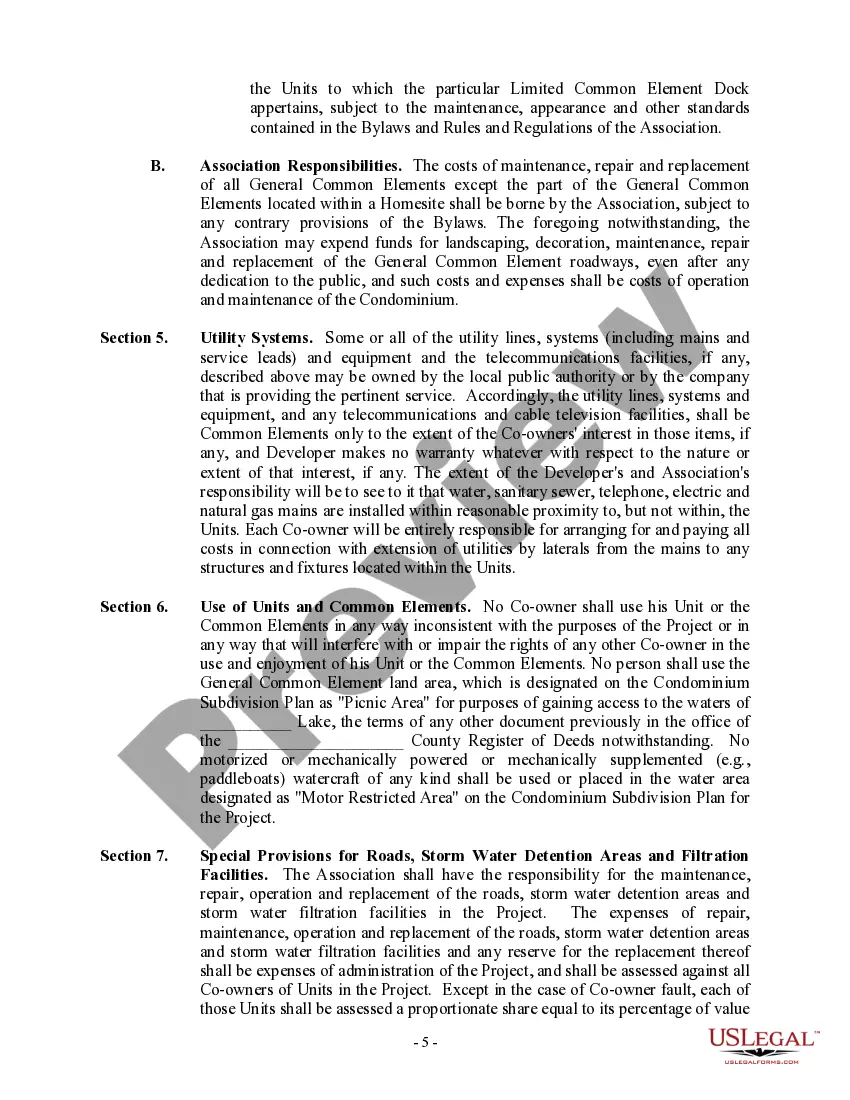
Common elements are owned in undivided shares by all inium unit owners as tenants in common and include portions of the inium shared or used in common by the inium's residents. Examples of common elements are: Building structural components and systems. Lobbies. Parking areas.
A Common Element inium is comprised solely of common elements such as a private road, parking spaces, mailbox pad, play area and any other common elements and do not include dwelling units/lots.
This means common elements could include, but are not limited to, all the following: land, foundations, hallways, stairways, entrances and exits, common parking areas, storage areas, basement, roof, incinerator, pipes, ducts, electrical wiring and conduits, central heating and air, public utility lines, floors, ...
A common element is defined as all portions of the property except the units. Examples of common elements include fitness centers, elevators, lobbies, walkways, lighting in common hallways, garbage collection areas, swimming pools, landscaping, club houses, and more.
Definition of common elements in a inium, those portions of the property not owned individually by unit owners but in which an indivisible interest is held by all unit owners. Generally includes the grounds, parking areas, recreational facilities, and external structure of the building.
If you're looking to tone things down a notch, grays are your go-to. Gray, with its cool undertones, can mellow the boldness of orange wood without diminishing its charm. It's like putting on a stylish pair of glasses—it adds sophistication to the look without stealing the show.
Balance with Neutrals: Pair orange rust with neutral colors like beige, gray, or white to create a harmonious and balanced look.
Honey: Honey balances the tanginess of orange, making for a harmonious blend perfect for glazes and dipping sauces.
Orange pairs beautifully with neutral tones such as white, cream, or gray. You can use a bright shade of orange to energize a pale neutral color scheme or an industrial-style kitchen with stainless steel appliances and charcoal walls.
The key to fixing orange hair is usually to neutralise the orange with its opposite colour – blue. Here are some tried and trusted tips we've curated to banish your orange strands at home.
