Condo Common Elements For Sale In Ohio
Description



Get your form ready online
Our built-in tools help you complete, sign, share, and store your documents in one place.
Make edits, fill in missing information, and update formatting in US Legal Forms—just like you would in MS Word.
Download a copy, print it, send it by email, or mail it via USPS—whatever works best for your next step.
Sign and collect signatures with our SignNow integration. Send to multiple recipients, set reminders, and more. Go Premium to unlock E-Sign.
If this form requires notarization, complete it online through a secure video call—no need to meet a notary in person or wait for an appointment.
We protect your documents and personal data by following strict security and privacy standards.

Make edits, fill in missing information, and update formatting in US Legal Forms—just like you would in MS Word.

Download a copy, print it, send it by email, or mail it via USPS—whatever works best for your next step.

Sign and collect signatures with our SignNow integration. Send to multiple recipients, set reminders, and more. Go Premium to unlock E-Sign.

If this form requires notarization, complete it online through a secure video call—no need to meet a notary in person or wait for an appointment.

We protect your documents and personal data by following strict security and privacy standards.
Looking for another form?








Form popularity
FAQ
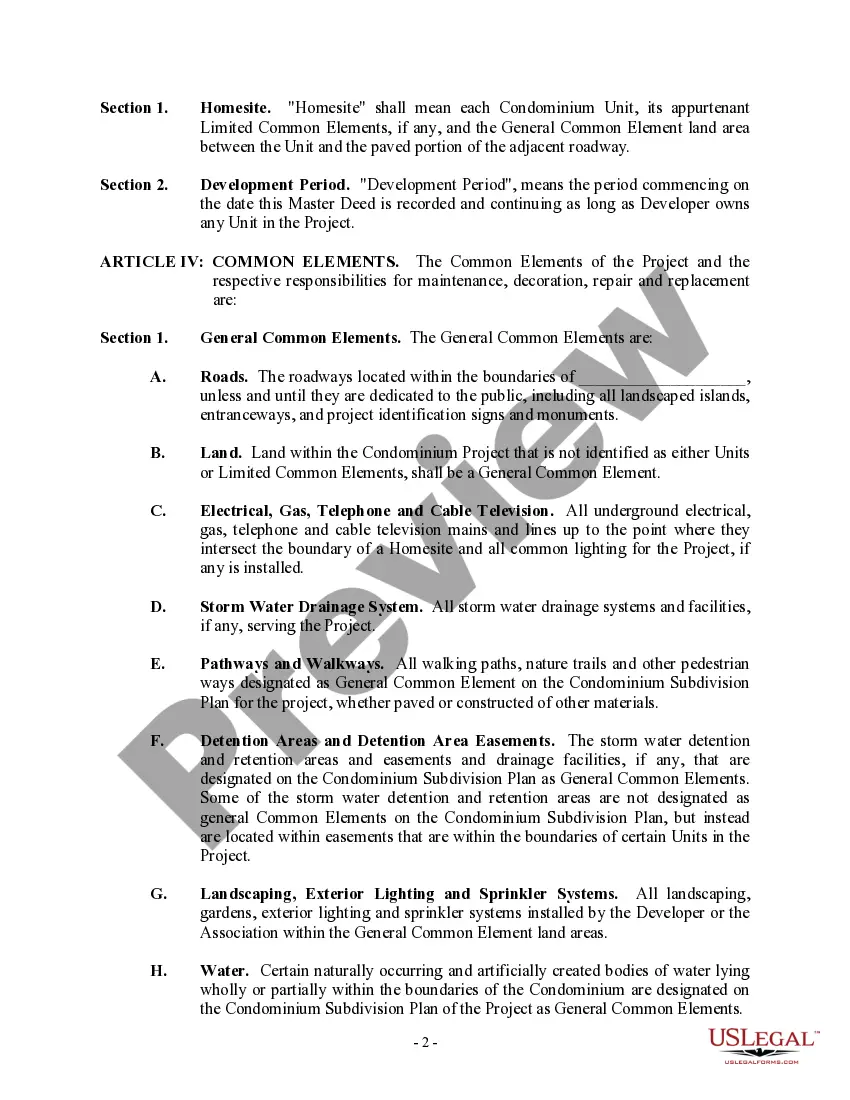
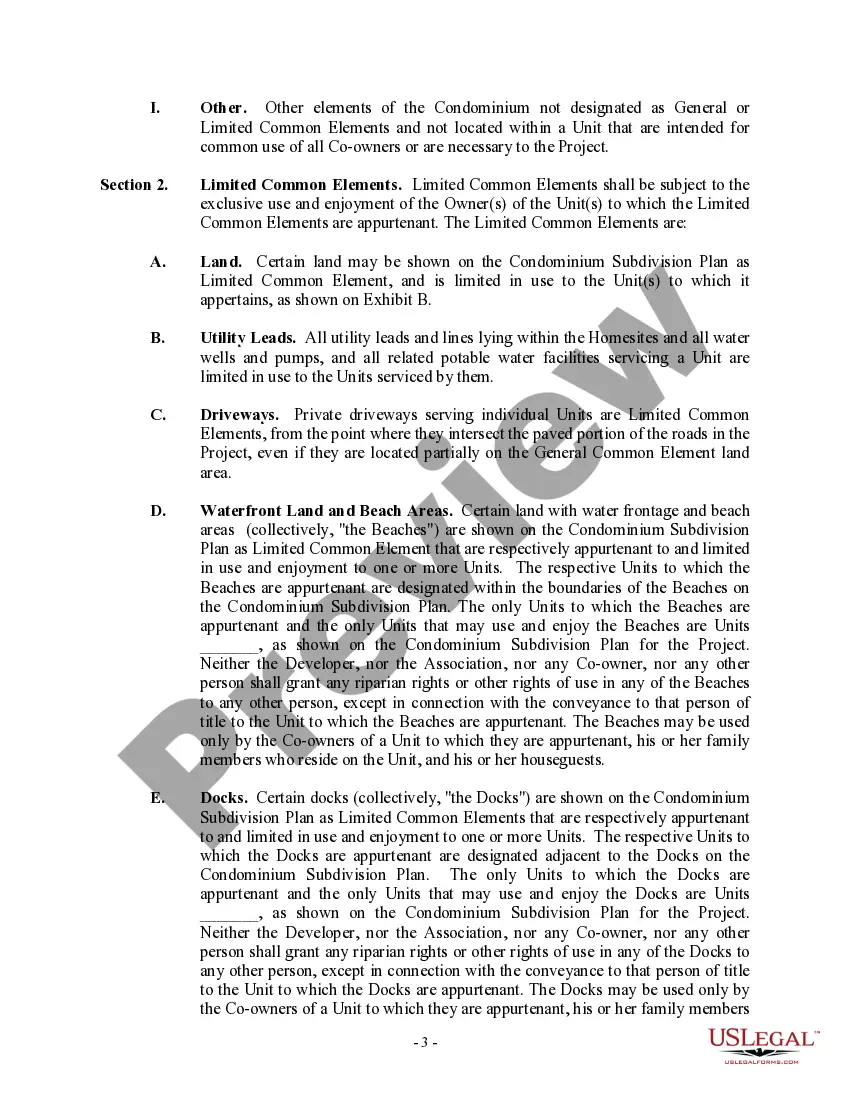
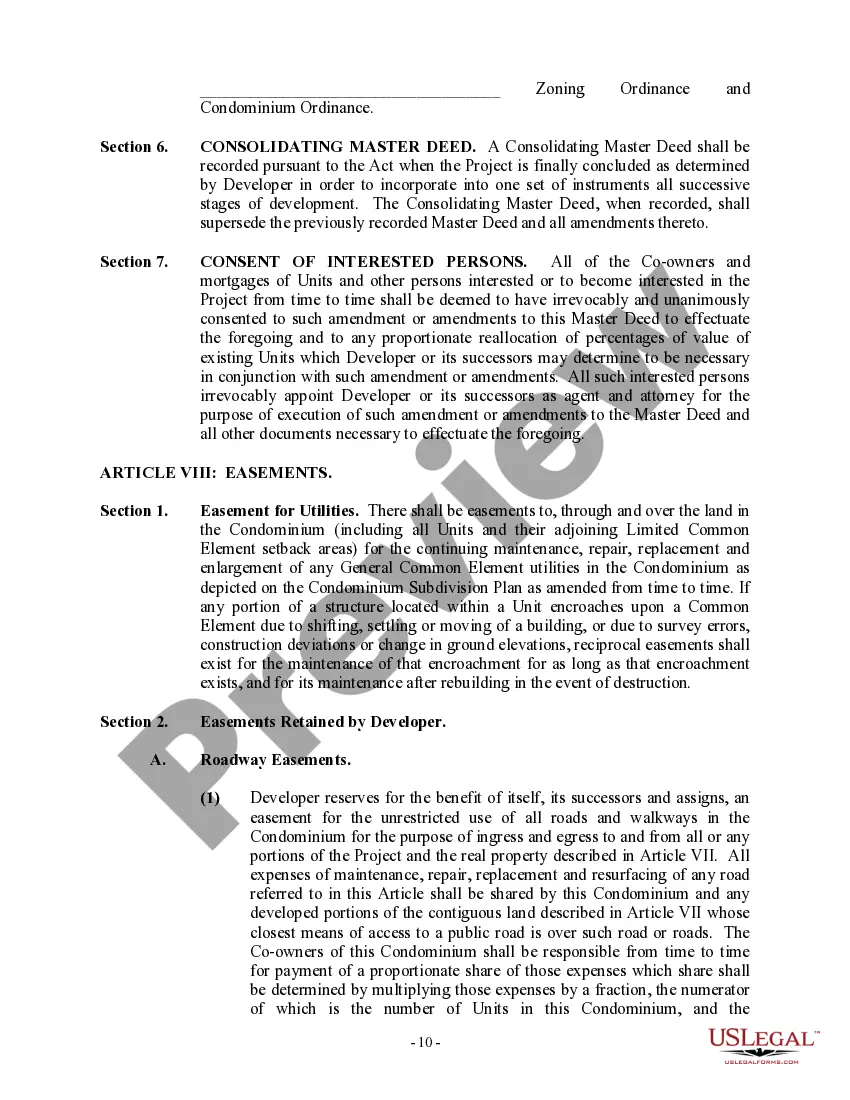
Common Elements of the inium Corporation are the land and structures in the inium Corporation other than the units themselves, such as the exterior landscaped areas, recreational facilities, parking garage, hallways, elevators, corridors, public washrooms, lobby areas, driveways, garbage rooms, electrical ...
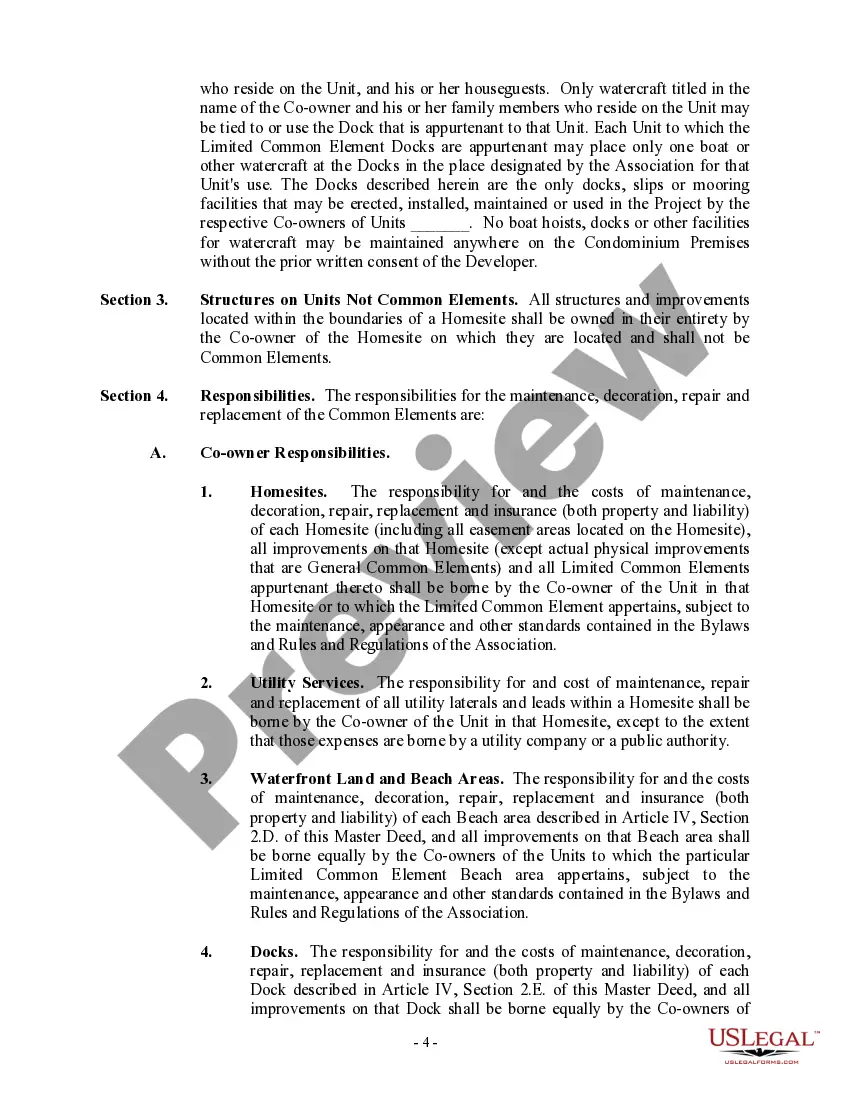
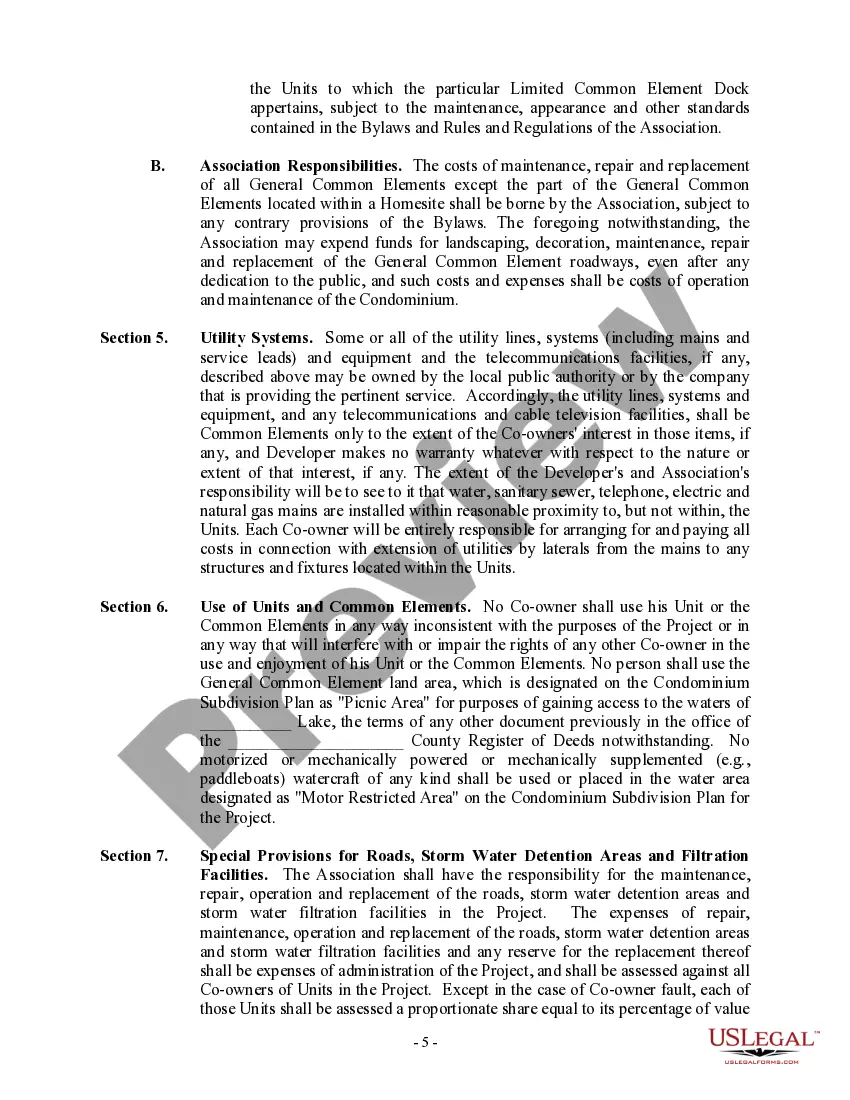
Maintenance, repair, and replacement of a limited common element is usually the responsibility of the association except to the extent the declaration shifts that duty to the unit owner.
Inium common areas are community spaces that residents can access within the neighbourhood. These areas are available to all homeowners for use and enjoyment. While all iniums are unique and offer different amenities, some common area examples include: Swimming pools.
A common element is defined as all portions of the property except the units. Examples of common elements include fitness centers, elevators, lobbies, walkways, lighting in common hallways, garbage collection areas, swimming pools, landscaping, club houses, and more.
Kitchen appliances within the units are not considered part of the common elements of a inium project since they are typically owned and maintained by individual unit owners. Swimming pools and greenbelt areas are examples of common elements as they are shared facilities within the inium project.
Thus, with regard to its organizational structure and general management, an association is subject to the authority of the Ohio Secretary of State. To the extent an HOA's activities implicate any consumer protection statutes, the HOA is subject to the enforcement power of the Ohio Attorney General.
Achieving a 70% funded reserve is considered a milestone for inium associations, indicating a reasonable level of financial preparedness. It signifies that the association has taken proactive steps to ensure the long-term sustainability of the community and mitigate the risk of financial instability.
Budgeting for reserve contributions Ohio inium law requires associations to adopt and amend budgets for revenues, expenditures, and reserves in an amount sufficient to repair and replace major capital items without the need for special assessments.
The Federal Housing Administration (FHA) has weighed in by requiring approved inium projects to have at least 10% of the annual operating budget set aside for reserves. However, that percentage is arbitrary and is usually never enough for an association that has to paint and replace roofs.
