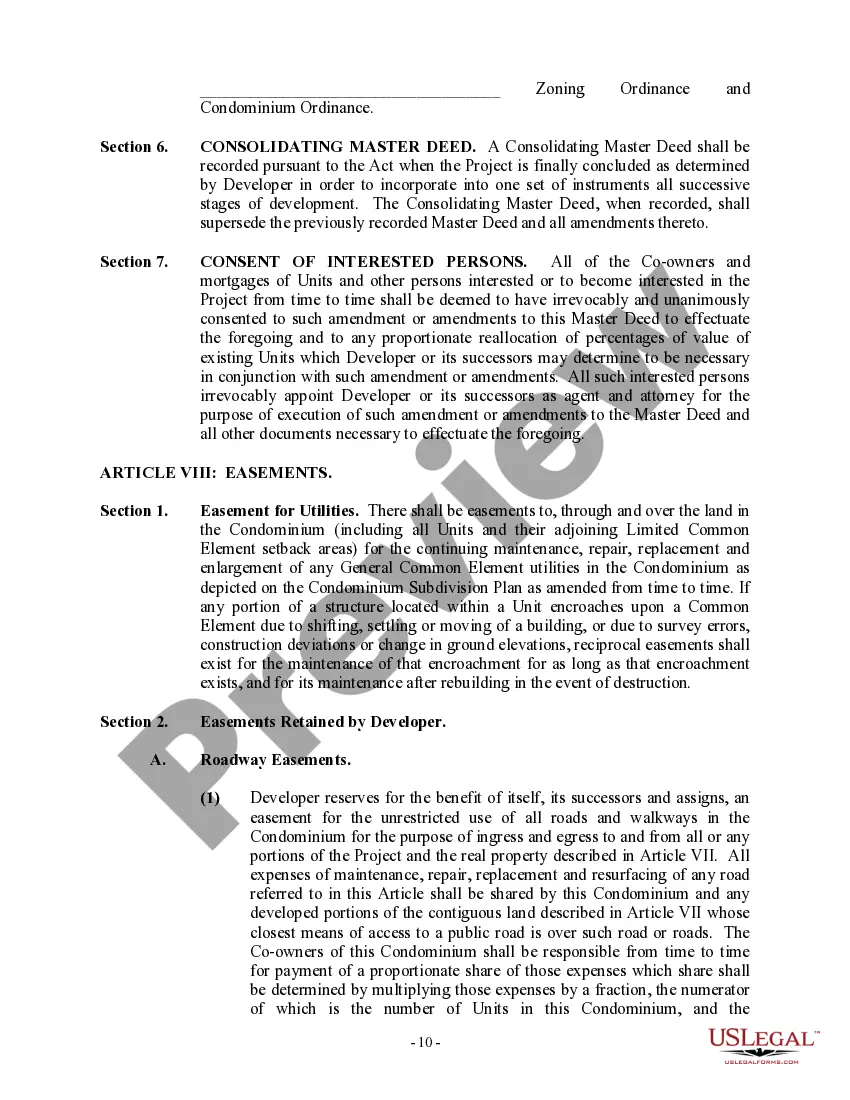
Condo Master Deed And Bylaws In Maryland
Description



Get your form ready online
Our built-in tools help you complete, sign, share, and store your documents in one place.
Make edits, fill in missing information, and update formatting in US Legal Forms—just like you would in MS Word.
Download a copy, print it, send it by email, or mail it via USPS—whatever works best for your next step.
Sign and collect signatures with our SignNow integration. Send to multiple recipients, set reminders, and more. Go Premium to unlock E-Sign.
If this form requires notarization, complete it online through a secure video call—no need to meet a notary in person or wait for an appointment.
We protect your documents and personal data by following strict security and privacy standards.

Make edits, fill in missing information, and update formatting in US Legal Forms—just like you would in MS Word.

Download a copy, print it, send it by email, or mail it via USPS—whatever works best for your next step.

Sign and collect signatures with our SignNow integration. Send to multiple recipients, set reminders, and more. Go Premium to unlock E-Sign.

If this form requires notarization, complete it online through a secure video call—no need to meet a notary in person or wait for an appointment.

We protect your documents and personal data by following strict security and privacy standards.
Looking for another form?






Form popularity
FAQ
The master deed defines the specifics of the condo association, the development, what is to be built, how it is to be managed, as well as who is responsible for what elements of the development. The master deed is the over arching. document that defines much of the development.
Maryland lawmakers lowered the percentage of unit owner consent required to amend a condo declaration from 80% to 66 2/3%. MD Condo Act § 11–103(c)(1)(i). This change simplifies amendment approvals and promotes smoother condo governance.
A Master Deed is a legal document that outlines the rules and regulations for a inium or cooperative property. It's a document that's created by the developer of the property and it's used to govern how the property is managed and maintained.
Covenants, Conditions, and Restrictions, also known as CC&Rs and sometimes called the declaration or master deed, are typically the most thorough and comprehensive documents. Legally binding and filed with the state, they include the obligations of the entire association.
The inium bylaws govern the structure and operation of the association. They contain information regarding board meetings, elections, board terms, voting procedures, and the like. The bylaws are more about the management of the association than the rules that govern it and its members.
Any restrictions on the use of the units and common areas. The bylaws are actually a part of the Master Deed itself. Most often, in the case of such an inconsistency, the Master Deed provision would prevail.
An HOA's governing documents are usually in the form of a Declaration of Covenants, Conditions, and Restrictions (CC&Rs) and bylaws. The CC&Rs explain the rules of the HOA community, while the bylaws cover how the HOA operates.
The Declaration (or Master Deed) contains the CC&Rs that regulate resident behavior. They bind all the owners to the association, establish association responsibilities, and define owners' rights and obligations. (In cooperatives, this document is called the proprietary lease or occupancy agreement.)
COUNCIL OF UNIT OWNERS MAY AMEND THE BYLAWS BY THE AFFIRMATIVE VOTE OF UNIT OWNERS IN GOOD STANDING HAVING AT LEAST 55% 60% OF THE VOTES IN THE COUNCIL, OR BY A LOWER PERCENTAGE IF REQUIRED IN THE BYLAWS.
