Condo Common Elements For Sale In Alameda
Description

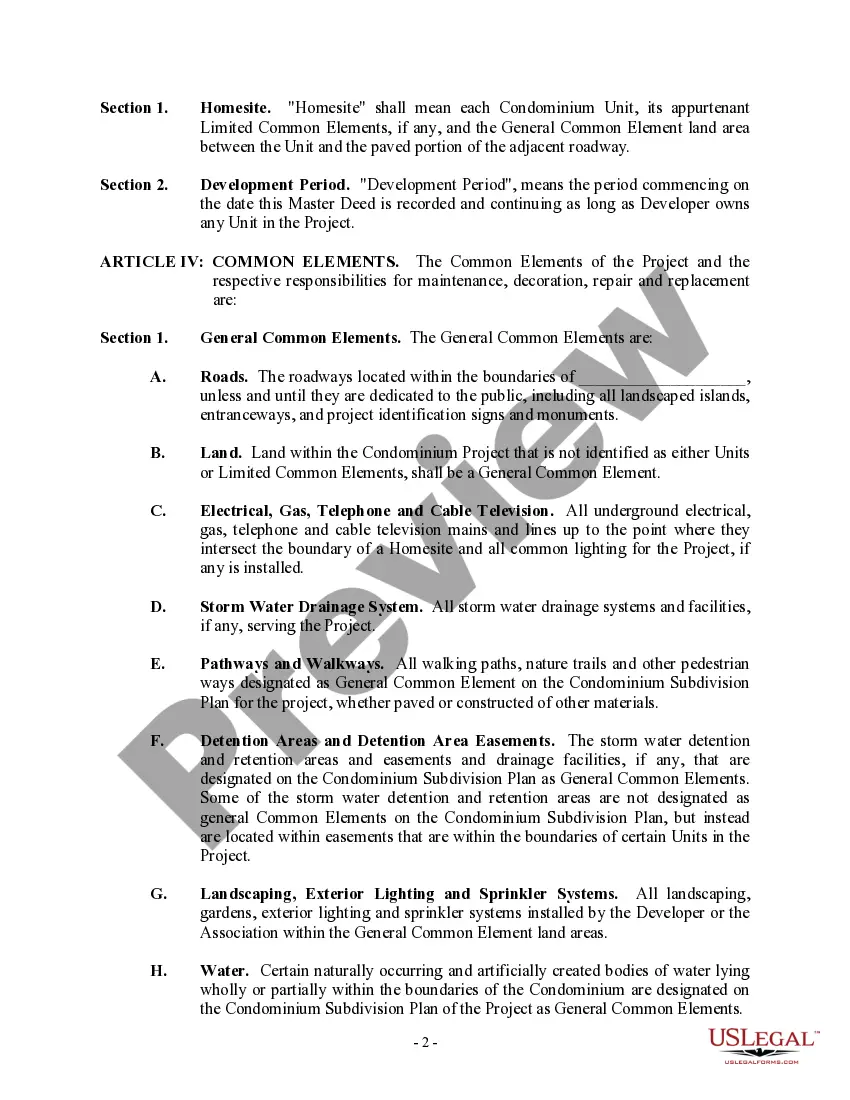
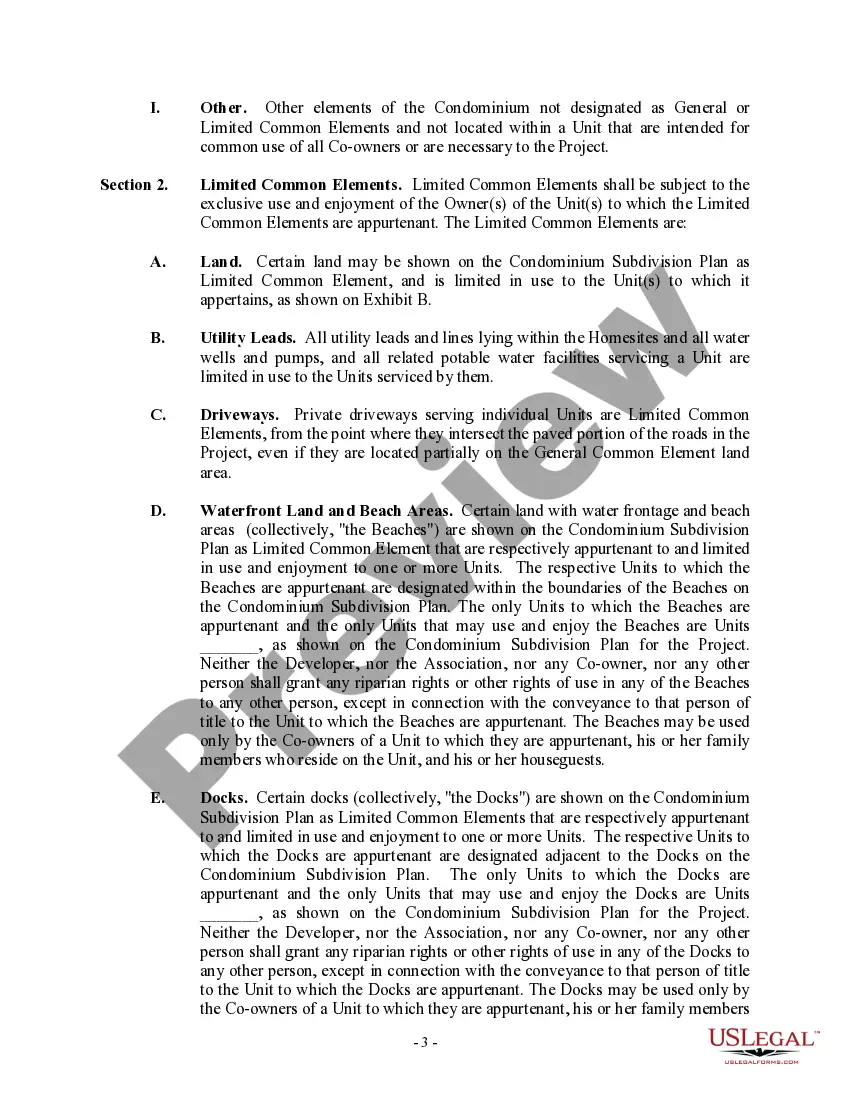
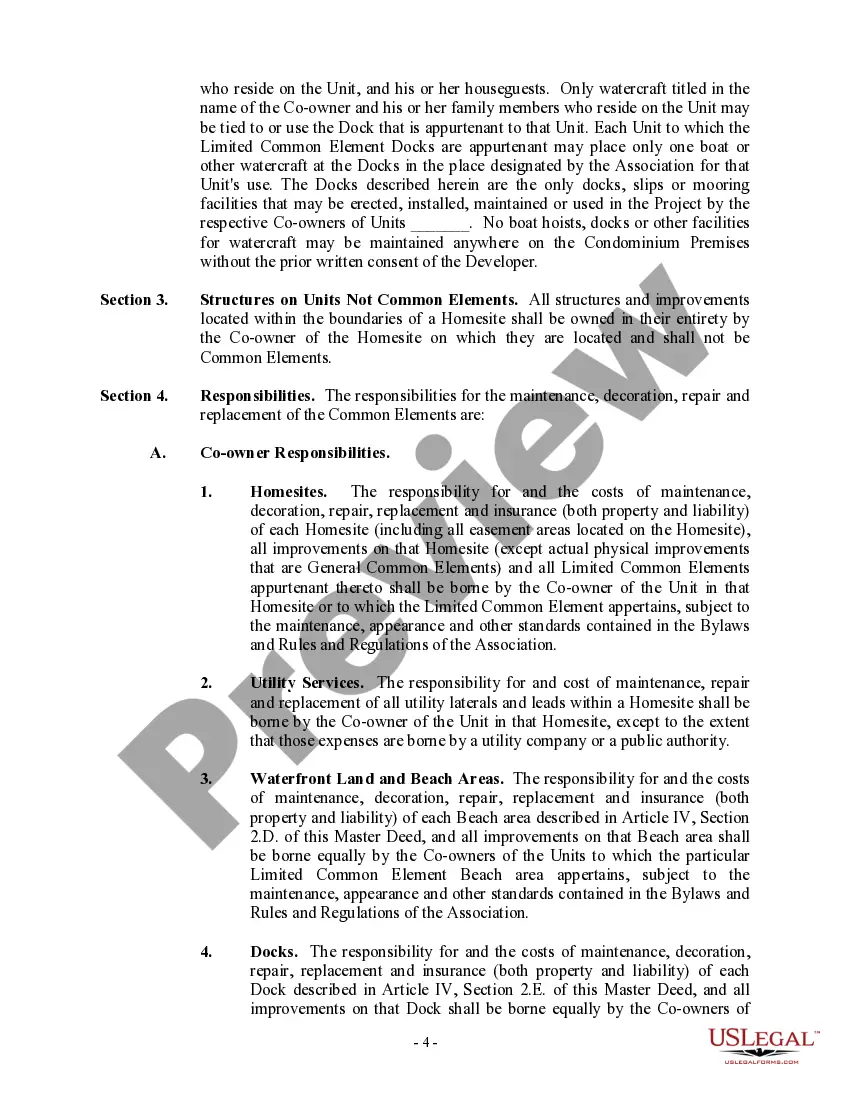
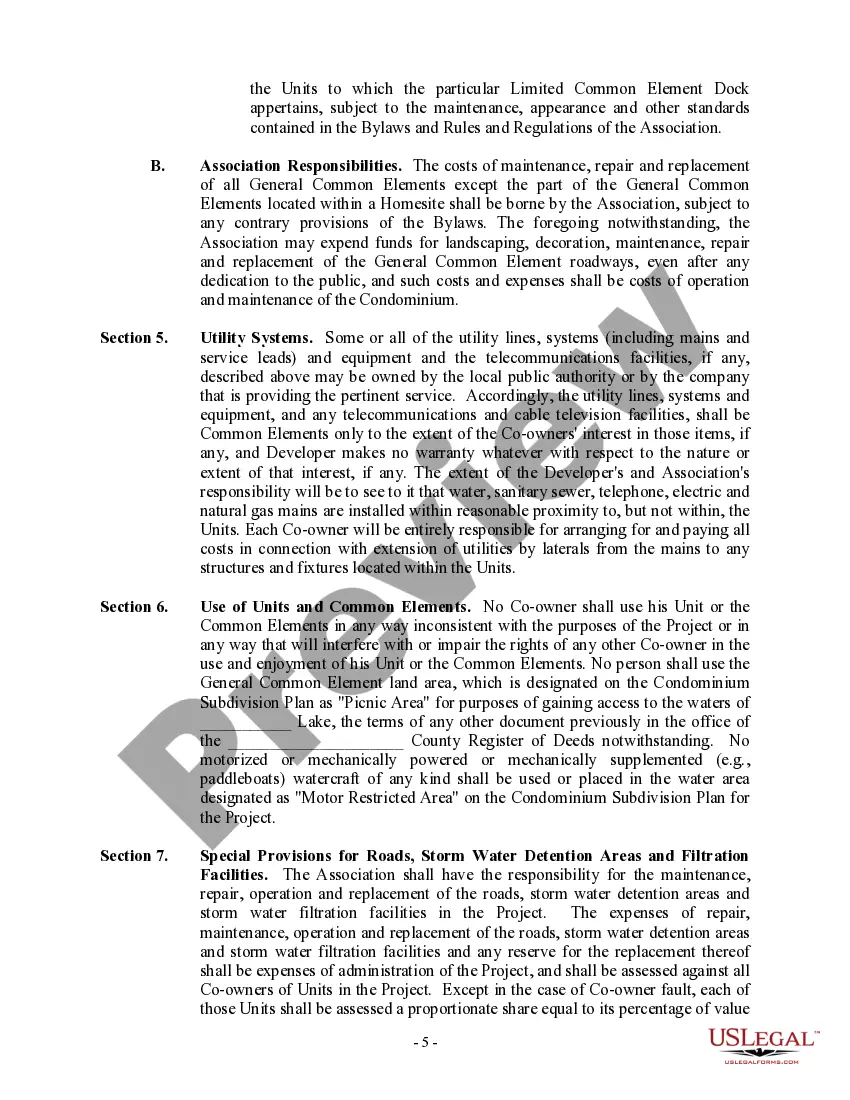


Get your form ready online
Our built-in tools help you complete, sign, share, and store your documents in one place.
Make edits, fill in missing information, and update formatting in US Legal Forms—just like you would in MS Word.
Download a copy, print it, send it by email, or mail it via USPS—whatever works best for your next step.
Sign and collect signatures with our SignNow integration. Send to multiple recipients, set reminders, and more. Go Premium to unlock E-Sign.
If this form requires notarization, complete it online through a secure video call—no need to meet a notary in person or wait for an appointment.
We protect your documents and personal data by following strict security and privacy standards.

Make edits, fill in missing information, and update formatting in US Legal Forms—just like you would in MS Word.

Download a copy, print it, send it by email, or mail it via USPS—whatever works best for your next step.

Sign and collect signatures with our SignNow integration. Send to multiple recipients, set reminders, and more. Go Premium to unlock E-Sign.

If this form requires notarization, complete it online through a secure video call—no need to meet a notary in person or wait for an appointment.

We protect your documents and personal data by following strict security and privacy standards.
Looking for another form?









Form popularity
FAQ
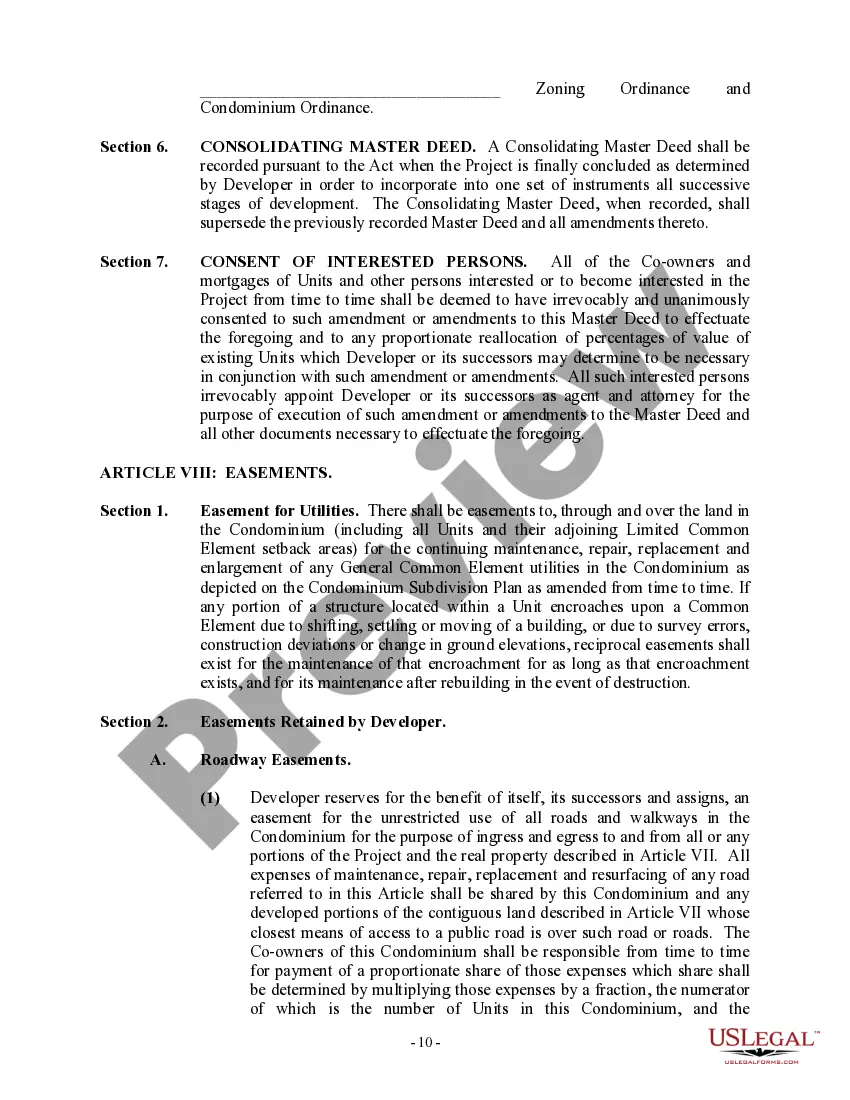
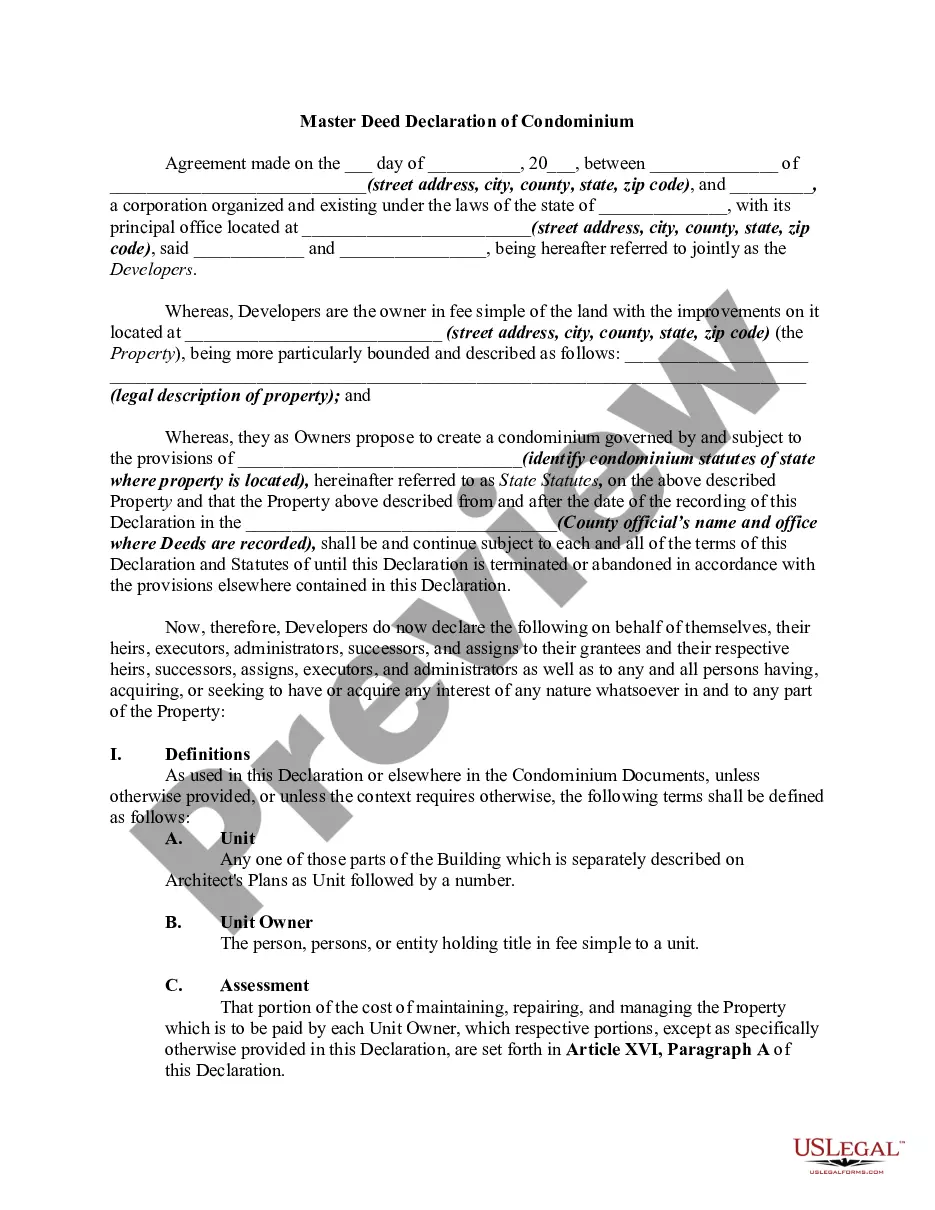
Declaration of Covenants, Conditions and Restrictions, or “CC&Rs” The Declaration of Covenants, Conditions and Restrictions, or “CC&Rs”, is the primary and most important governing document for a inium or planned development, and is required for all iniums and planned developments.
The Declaration of Covenants, Conditions and Restrictions, or “CC&Rs”, is the primary and most important governing document for a inium or planned development, and is required for all iniums and planned developments.
A common element is defined as all portions of the property except the units. Examples of common elements include fitness centers, elevators, lobbies, walkways, lighting in common hallways, garbage collection areas, swimming pools, landscaping, club houses, and more. What is a Limited Common Element?
Examples of limited common elements include windows, balconies, driveways, elevators, clubhouses, and swimming pools.
Kitchen appliances within the units are not considered part of the common elements of a inium project since they are typically owned and maintained by individual unit owners. Swimming pools and greenbelt areas are examples of common elements as they are shared facilities within the inium project.
A common element is defined as all portions of the property except the units. Examples of common elements include fitness centers, elevators, lobbies, walkways, lighting in common hallways, garbage collection areas, swimming pools, landscaping, club houses, and more.
Definition of common elements in a inium, those portions of the property not owned individually by unit owners but in which an indivisible interest is held by all unit owners. Generally includes the grounds, parking areas, recreational facilities, and external structure of the building.
Final answer: The incorrect statement about a inium is that owners usually cannot sell or sublease without other owners' approval.
Common Elements of the inium Corporation are the land and structures in the inium Corporation other than the units themselves, such as the exterior landscaped areas, recreational facilities, parking garage, hallways, elevators, corridors, public washrooms, lobby areas, driveways, garbage rooms, electrical ...
