Condominium Bylaws Condo Association Format In Salt Lake
Description




Get your form ready online
Our built-in tools help you complete, sign, share, and store your documents in one place.
Make edits, fill in missing information, and update formatting in US Legal Forms—just like you would in MS Word.
Download a copy, print it, send it by email, or mail it via USPS—whatever works best for your next step.
Sign and collect signatures with our SignNow integration. Send to multiple recipients, set reminders, and more. Go Premium to unlock E-Sign.
If this form requires notarization, complete it online through a secure video call—no need to meet a notary in person or wait for an appointment.
We protect your documents and personal data by following strict security and privacy standards.

Make edits, fill in missing information, and update formatting in US Legal Forms—just like you would in MS Word.

Download a copy, print it, send it by email, or mail it via USPS—whatever works best for your next step.

Sign and collect signatures with our SignNow integration. Send to multiple recipients, set reminders, and more. Go Premium to unlock E-Sign.

If this form requires notarization, complete it online through a secure video call—no need to meet a notary in person or wait for an appointment.

We protect your documents and personal data by following strict security and privacy standards.
Looking for another form?








Form popularity
FAQ
Utah HOAs are primarily governed by the Utah Revised Nonprofit Corporation Act as well as specific legislation pertaining to iniums and community associations. These state laws are designed to work in conjunction with relevant federal laws to ensure that HOAs operate within the legal framework.
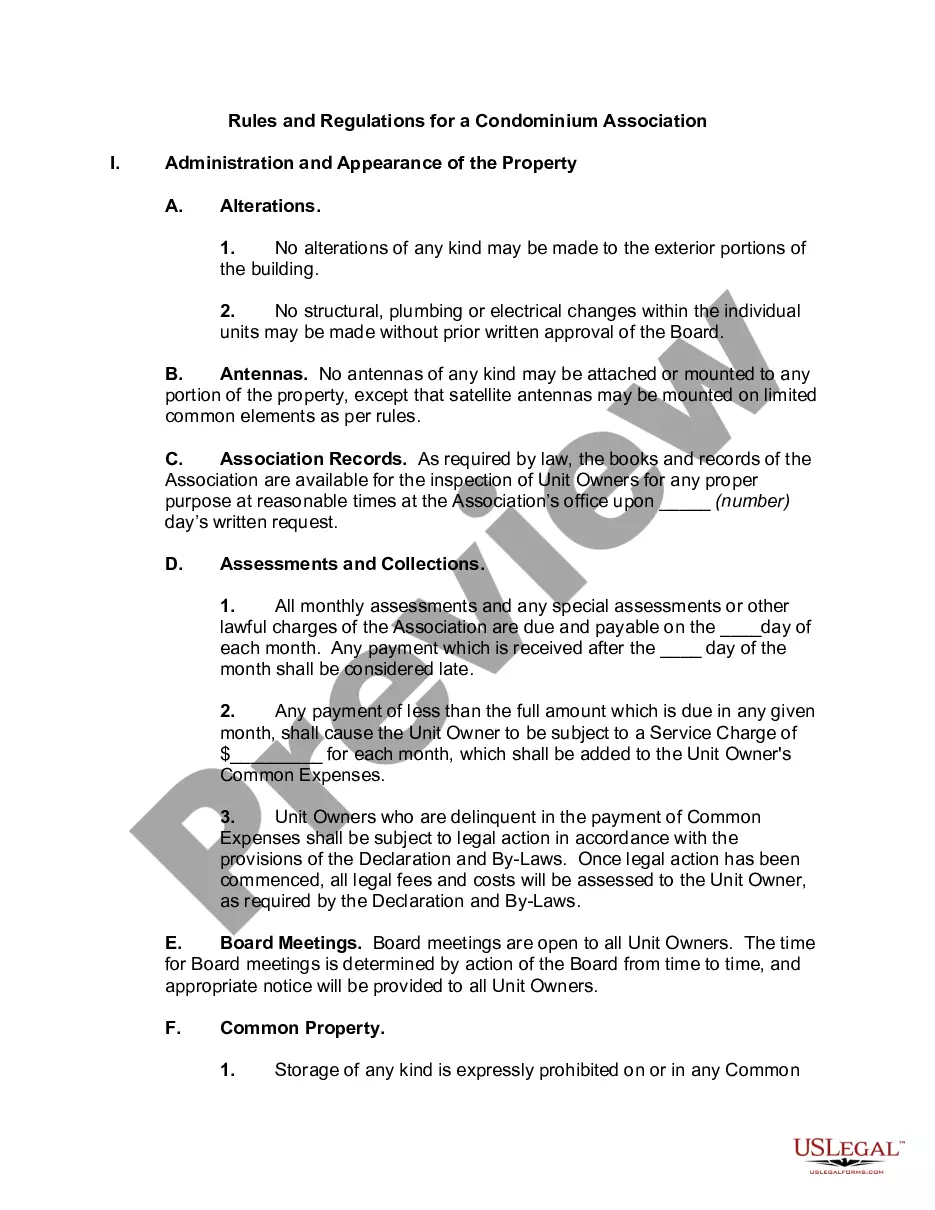
Inium Rules means the Rules for the use of the Premises that are adopted from time to time by the Board of Directors. inium Rules . Your unit is confirmed with the understanding that you will adhere to the rules and regulations set by individual inium or homeowner associations.
Property insurance shall include coverage for any fixture, improvement, or betterment installed at any time to an attached dwelling or to a limited common area appurtenant to a dwelling on a lot, whether installed in the original construction or in any remodel or later alteration, including a floor covering, cabinet, ...
Utah Code Title 57 Chapter 8 is the inium Ownership Act authored by Keith Romney and passed into law in 1960. The Act allowed individuals to have private ownership of property in a collective unit. Although authored in 1960, the Act wasn't officially adopted until 1963.
Utah Code Ann. §63-30d-603. Under the Utah Governmental Immunity Act a government entity is immune from liability from acts constituting a government function. Nonetheless, immunity can be waived, for example, if the conduct was negligent.
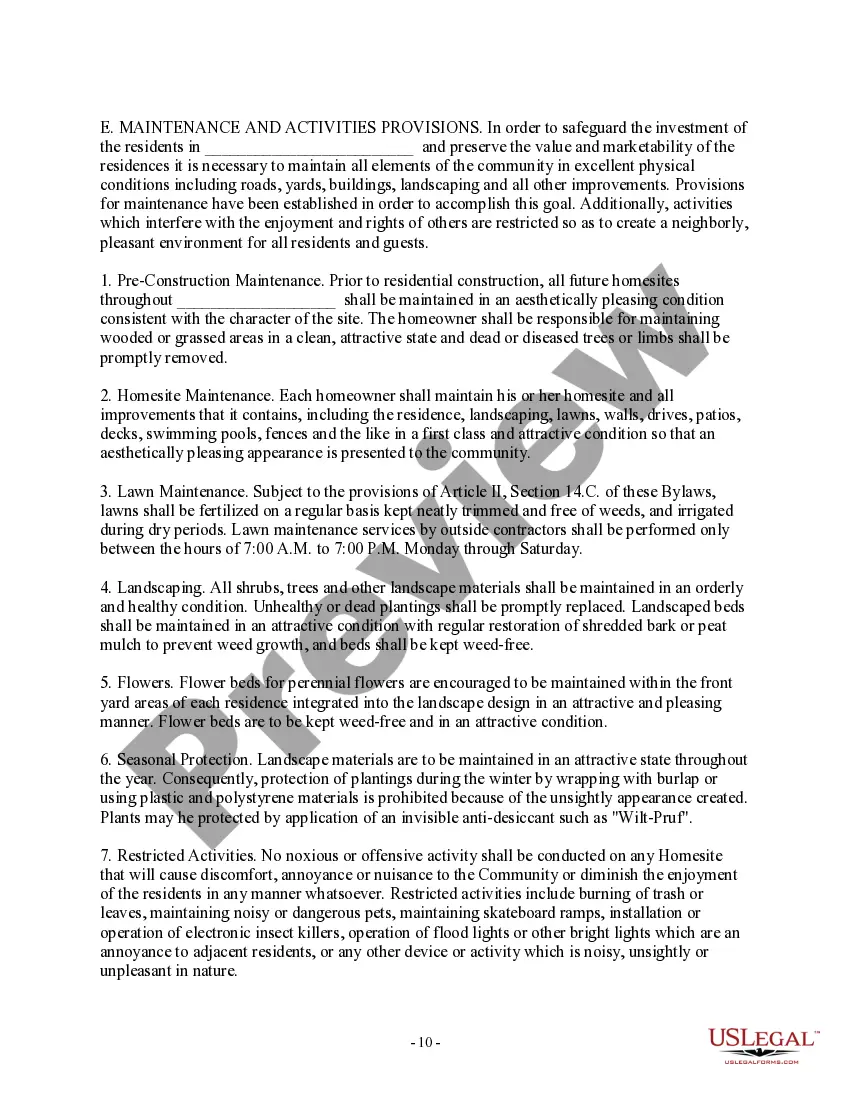
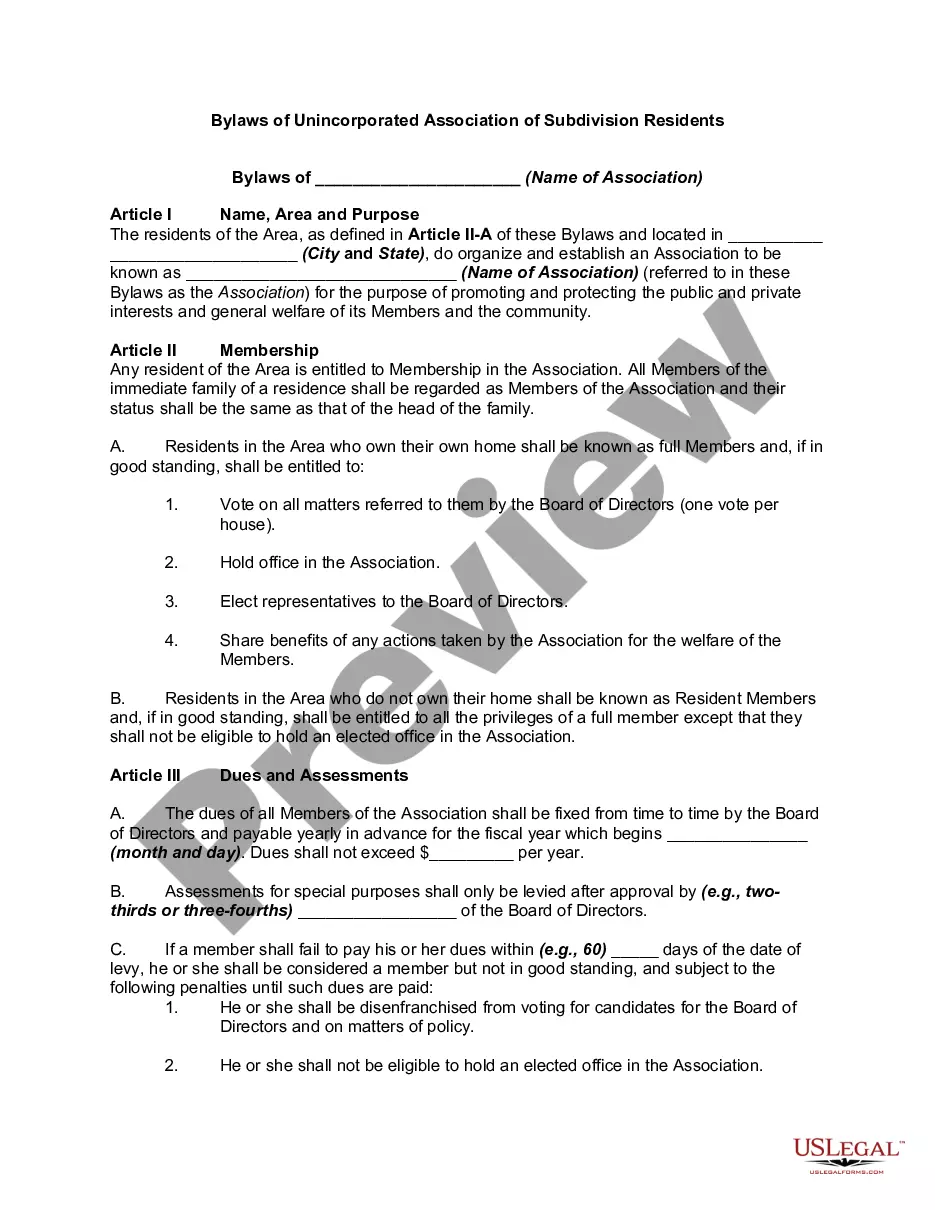
The bylaws go into detail about individual roles, terms, how to elect the President, and may list board powers one by one. The Declarations define the use and occupancy rules of the units and common areas. Condo bylaws outline the remedies for breach of these rules.
10 things to include in your HOA bylaws Name and purpose. The very first bylaws are the ones in which the association states its. Membership requirements. Board duties. Officer duties. Board member meetings. Member meetings. Committees. Non-compliance to bylaws.
Bylaws state when the meetings of the association are held. Standing rules tell where and what time association meetings are held, and when executive board meetings are held. Bylaws give the primary responsibilities of officers and chairmen. Standing rules give the specifics.
Be concise and make your purpose/request clear. You can add a friendly greeting at the beginning, but there is no need to provide paragraphs of background information or personal opinions. Offer a solution, if possible. Complete the letter or email with a suggestion on how the board can take action.
To have a pleasant condo living experience, keep in mind these legal rights for condo owners. The Right to Access Condo Documents. The Right to Equality and Non-Discrimination. The Right to Notice and Meetings. The Right to Run and Vote During Elections. The Right to Protest.
