Condominium Bylaws Condo For Hoa In Pennsylvania
Description

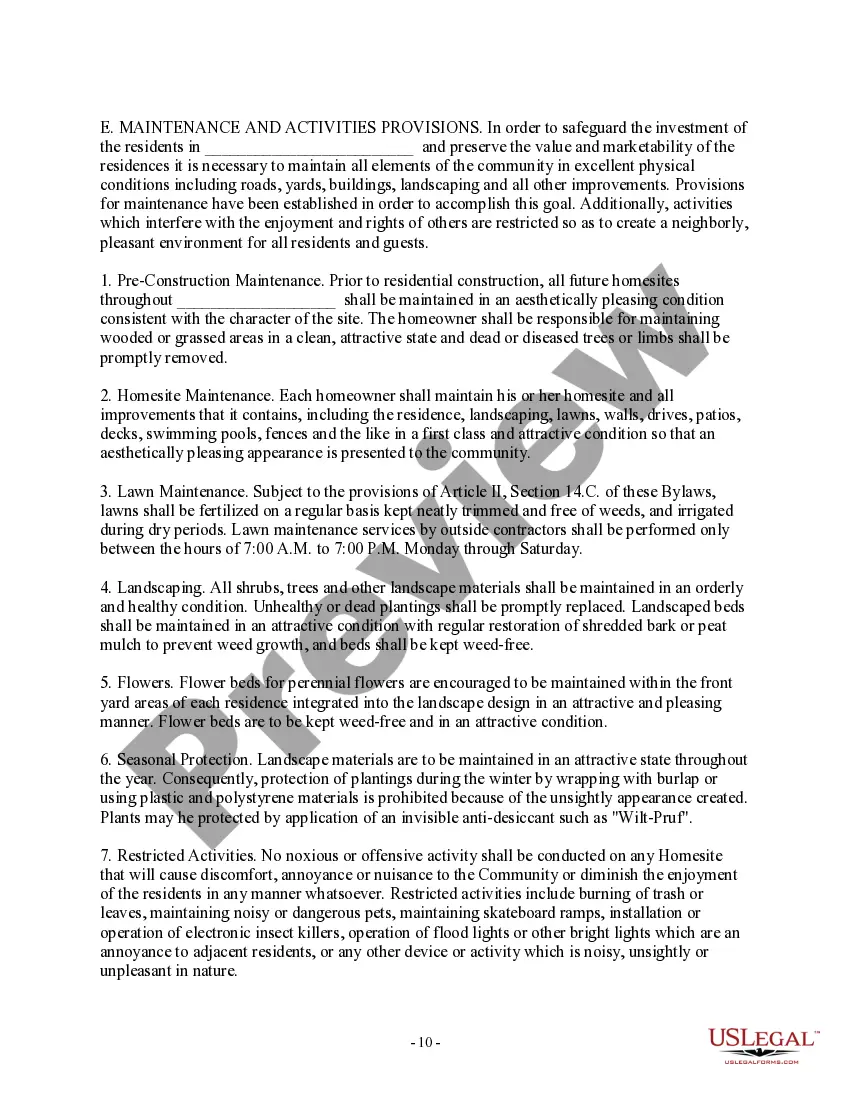


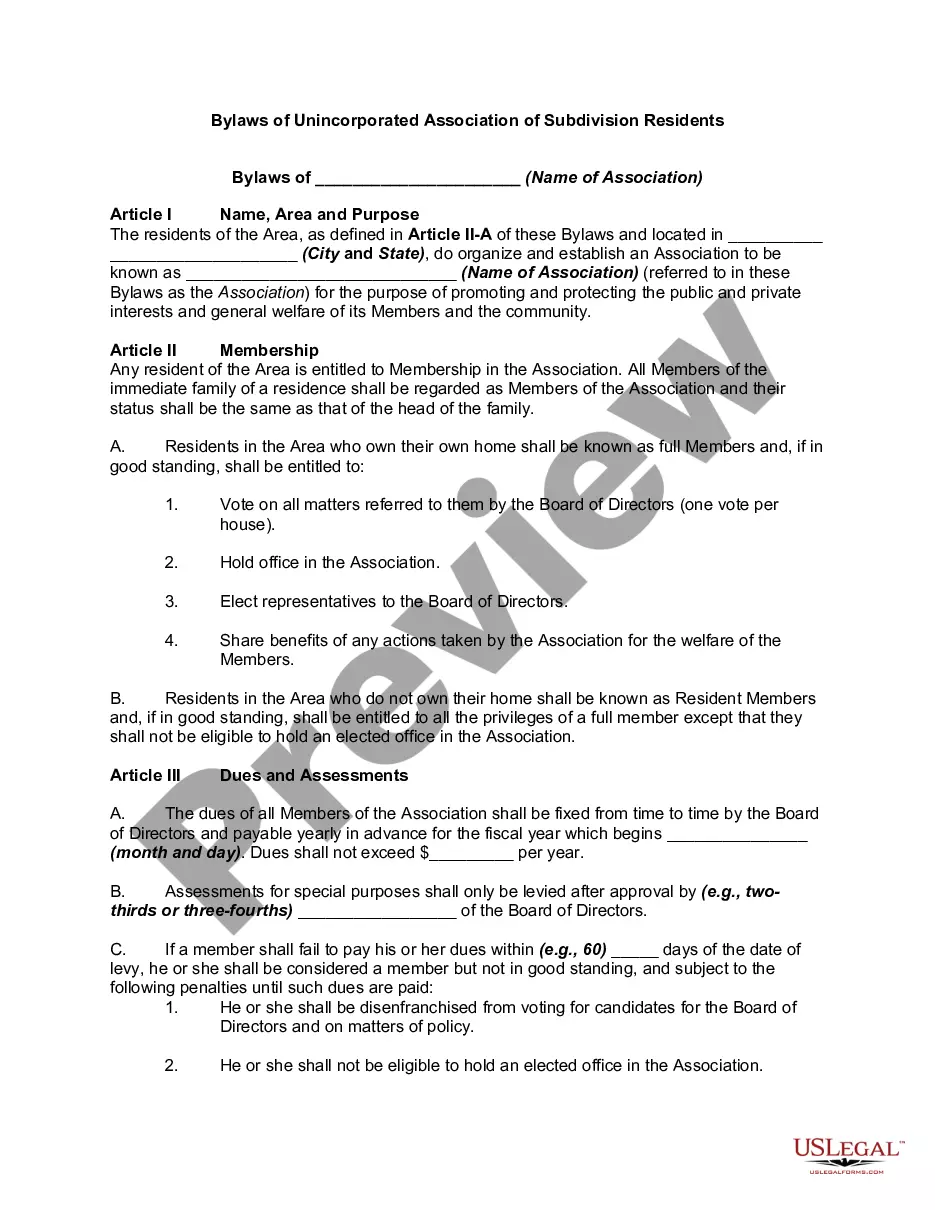
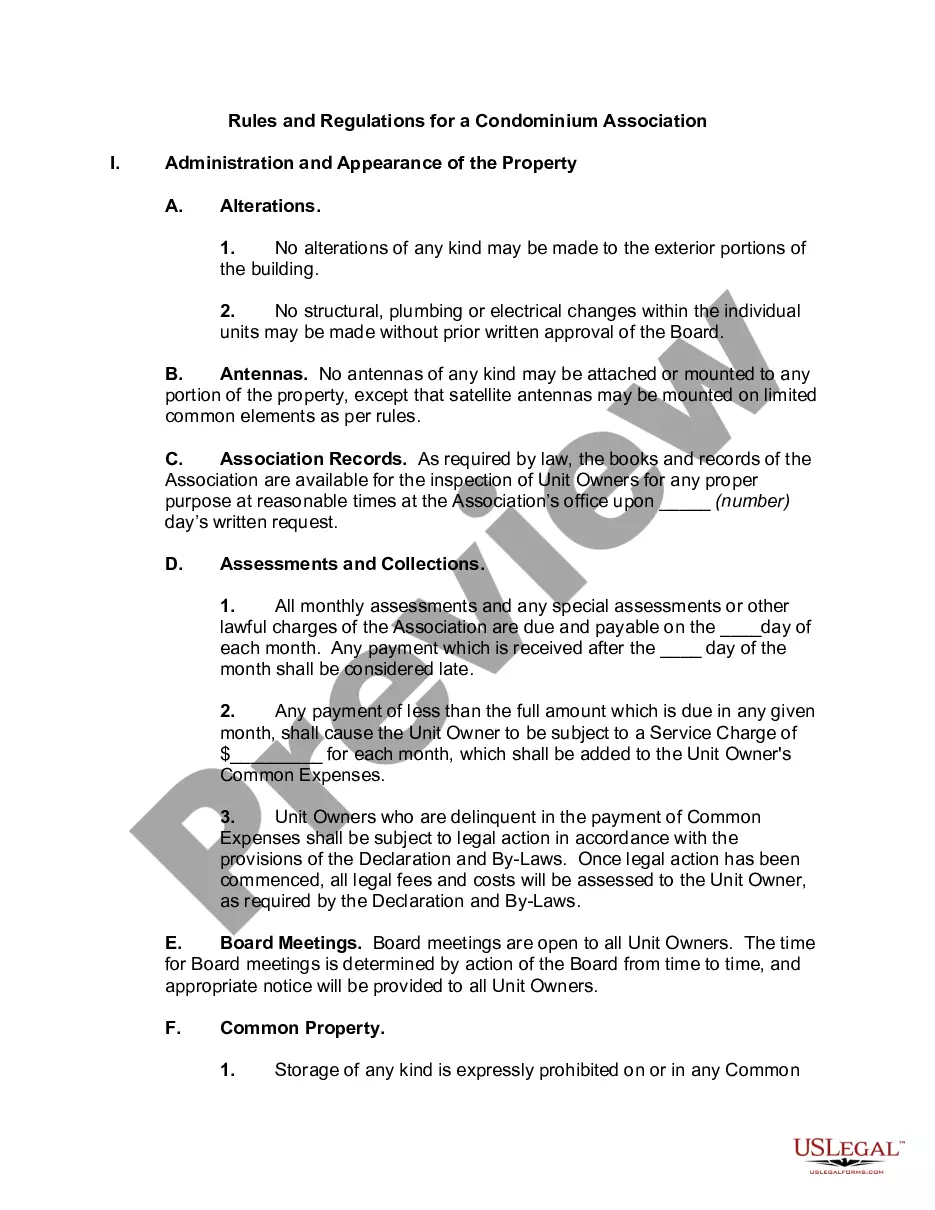

Get your form ready online
Our built-in tools help you complete, sign, share, and store your documents in one place.
Make edits, fill in missing information, and update formatting in US Legal Forms—just like you would in MS Word.
Download a copy, print it, send it by email, or mail it via USPS—whatever works best for your next step.
Sign and collect signatures with our SignNow integration. Send to multiple recipients, set reminders, and more. Go Premium to unlock E-Sign.
If this form requires notarization, complete it online through a secure video call—no need to meet a notary in person or wait for an appointment.
We protect your documents and personal data by following strict security and privacy standards.

Make edits, fill in missing information, and update formatting in US Legal Forms—just like you would in MS Word.

Download a copy, print it, send it by email, or mail it via USPS—whatever works best for your next step.

Sign and collect signatures with our SignNow integration. Send to multiple recipients, set reminders, and more. Go Premium to unlock E-Sign.

If this form requires notarization, complete it online through a secure video call—no need to meet a notary in person or wait for an appointment.

We protect your documents and personal data by following strict security and privacy standards.
Looking for another form?

Form popularity
FAQ
The Pennsylvania General Assembly enacted Act 115, which amends Title 68 of the Pennsylvania Consolidated Statutes and impacts the governance of homeowners associations (also known as planned communities), inium associations and cooperatives in the Commonwealth.
Finally, is an HOA considered a local government? No—HOAs are not considered a local government entity. While they do hold some administrative functions for a community, such as collecting assessments and enforcing rules, they do not possess the authority granted to real government bodies.
HOA fees generally cover the maintenance of common areas, such as lobbies, patios, landscaping, swimming pools, tennis courts, and community clubhouses. In many cases, the fees also cover utilities like water, sewer services, and garbage disposal.
For instance, in Pennsylvania, HOAs are regulated by the Uniformed Planned Community Act (UPCA). This act applies to all planned communities with more than 12 units and creates responsibilities for HOAs to oversee these communities. That said, HOAs typically have documents that regulate themselves.
Iniums in Pennsylvania are governed by the Uniform inium Act, 68 Pa. Stat. §§ 3101 to 3414 (the “UCA”). Although “inium” is a term generally used to refer to an individually-owed unit, it is also a form of ownership where property other than the individual unit is deemed to be common property.
Iniums in Pennsylvania are governed by the Uniform inium Act, 68 Pa. Stat. §§ 3101 to 3414 (the “UCA”). Although “inium” is a term generally used to refer to an individually-owed unit, it is also a form of ownership where property other than the individual unit is deemed to be common property.
For instance, in Pennsylvania, HOAs are regulated by the Uniformed Planned Community Act (UPCA). This act applies to all planned communities with more than 12 units and creates responsibilities for HOAs to oversee these communities. That said, HOAs typically have documents that regulate themselves.
With PUDs, the owner owns the actual lot or ground underneath the unit. With condos, the owner owns an equal and undivided interest in the entire condo project's lot (and common areas).
