Condominium Bylaws Association With In Minnesota
Description




Get your form ready online
Our built-in tools help you complete, sign, share, and store your documents in one place.
Make edits, fill in missing information, and update formatting in US Legal Forms—just like you would in MS Word.
Download a copy, print it, send it by email, or mail it via USPS—whatever works best for your next step.
Sign and collect signatures with our SignNow integration. Send to multiple recipients, set reminders, and more. Go Premium to unlock E-Sign.
If this form requires notarization, complete it online through a secure video call—no need to meet a notary in person or wait for an appointment.
We protect your documents and personal data by following strict security and privacy standards.

Make edits, fill in missing information, and update formatting in US Legal Forms—just like you would in MS Word.

Download a copy, print it, send it by email, or mail it via USPS—whatever works best for your next step.

Sign and collect signatures with our SignNow integration. Send to multiple recipients, set reminders, and more. Go Premium to unlock E-Sign.

If this form requires notarization, complete it online through a secure video call—no need to meet a notary in person or wait for an appointment.

We protect your documents and personal data by following strict security and privacy standards.
Looking for another form?




Form popularity
FAQ
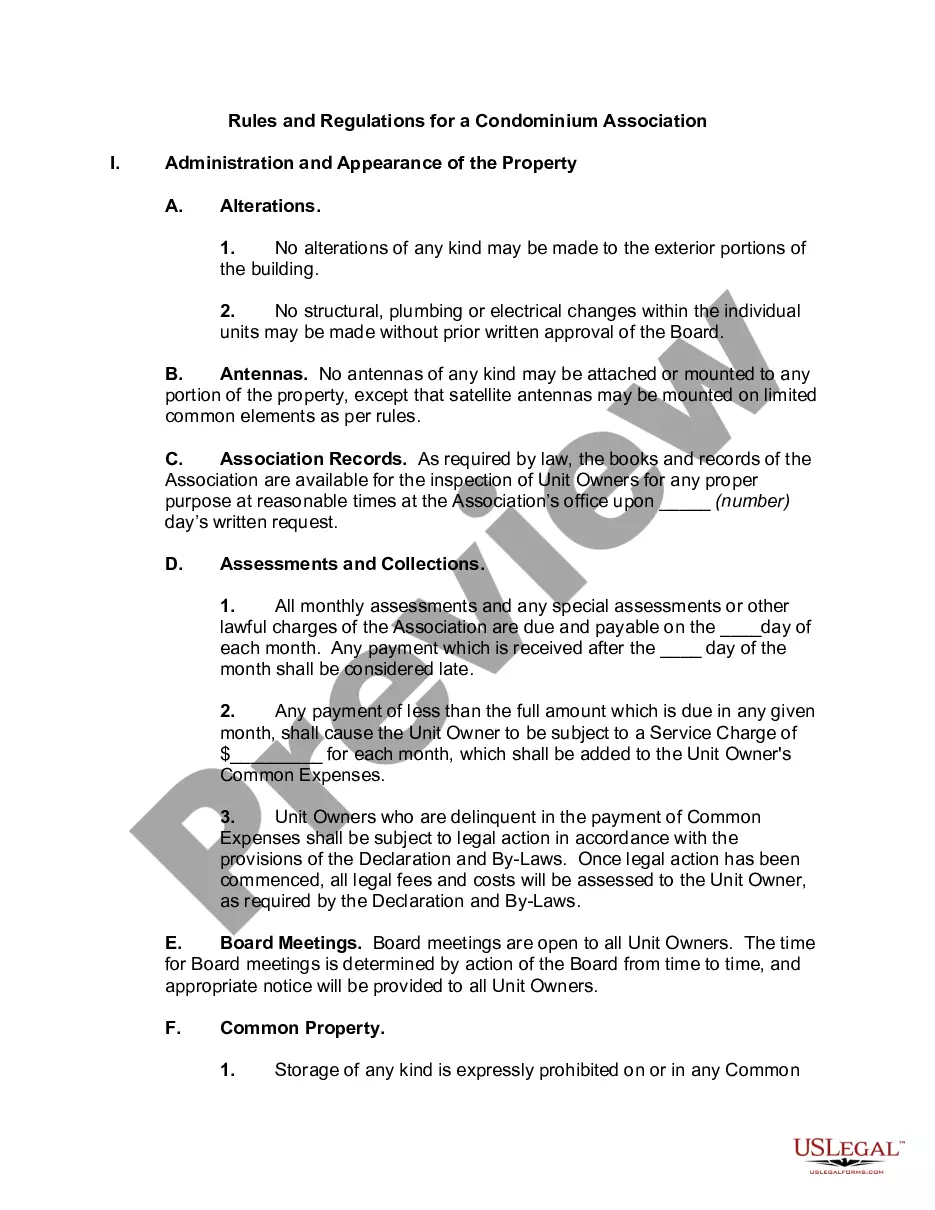
Condo associations are responsible for maintaining and managing common areas and amenities, creating and enforcing bylaws, and collecting dues from other homeowners to cover expenses such as building repairs. The association board is made up of unit owners who are elected by the community.
Overall, MCIOA serves as the legal framework that governs the rights and responsibilities of HOAs and homeowners in Minnesota.
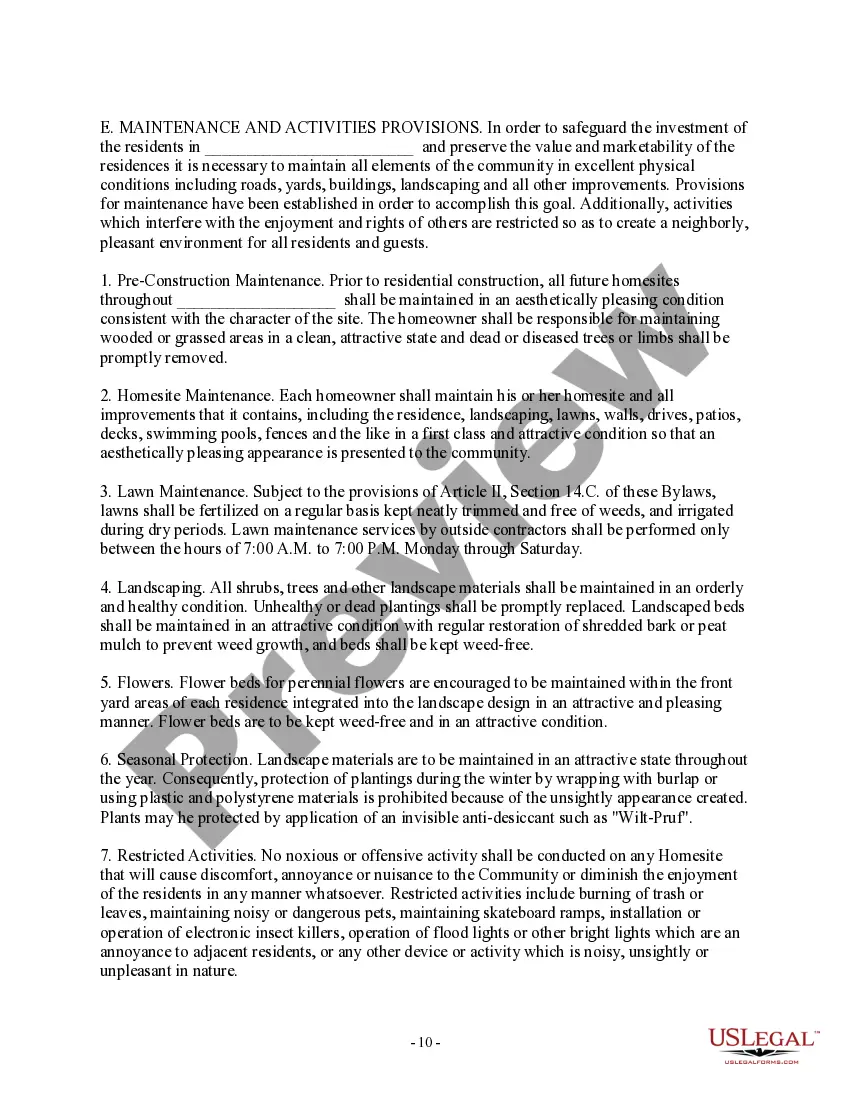
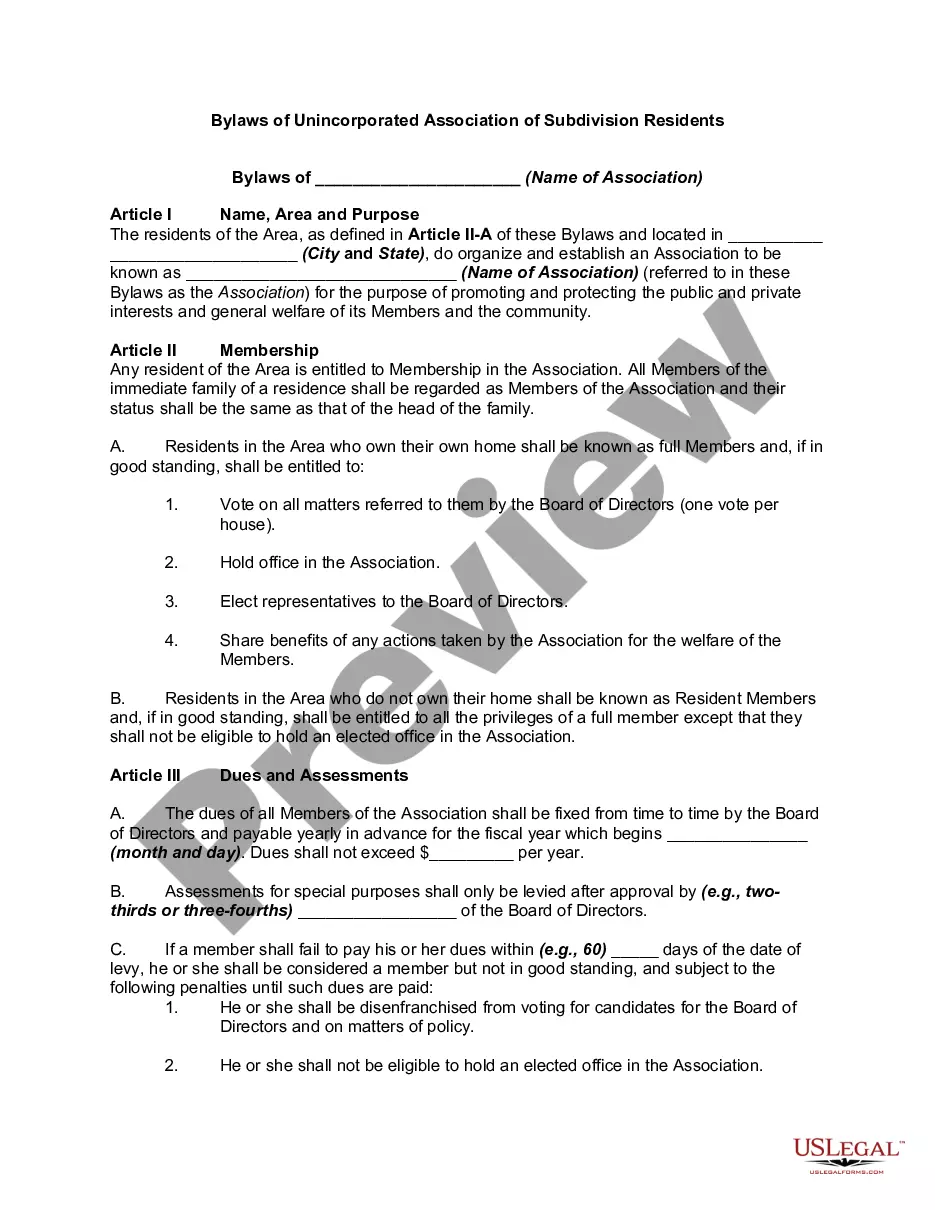
The inium bylaws govern the structure and operation of the association. They contain information regarding board meetings, elections, board terms, voting procedures, and the like. The bylaws are more about the management of the association than the rules that govern it and its members.
An HOA's governing documents are usually in the form of a Declaration of Covenants, Conditions, and Restrictions (CC&Rs) and bylaws. The CC&Rs explain the rules of the HOA community, while the bylaws cover how the HOA operates.
The inium bylaws govern the structure and operation of the association. They contain information regarding board meetings, elections, board terms, voting procedures, and the like. The bylaws are more about the management of the association than the rules that govern it and its members.
Check the State's Business Filings Once you're on the website, you can search for the HOA's business filings using the name of your subdivision or community. This search will often reveal the HOA's mailing address, registered agent name and address, and sometimes officer or director contact details.
Ultimately, one of the main purposes of a condo association is to ensure your safety and convenience, as well as that of the other unit owners and residents in your complex or building. Another objective is maintaining property values so the community continues to be a good investment.
To initiate the process of dissolving your HOA in Minnesota, follow these steps: Gather all evidence of the HOA's failures, broken promises, and abuses of power, including unpaid dues and promised amenities not delivered. Consult an attorney to review your case and guide you through the process.
6 Steps to Amend HOA Bylaws and Covenants Amendment Proposal. The first step consists of a proposal describing the changes to the bylaw or covenant. Discussion Meeting. The board will then discuss the proposed amendment at a board meeting. Give it a Vote. Count the Votes. Amendment Approval. Recording and Effectivity.
