Bylaws Residential Association With Board Members In Minnesota
Description


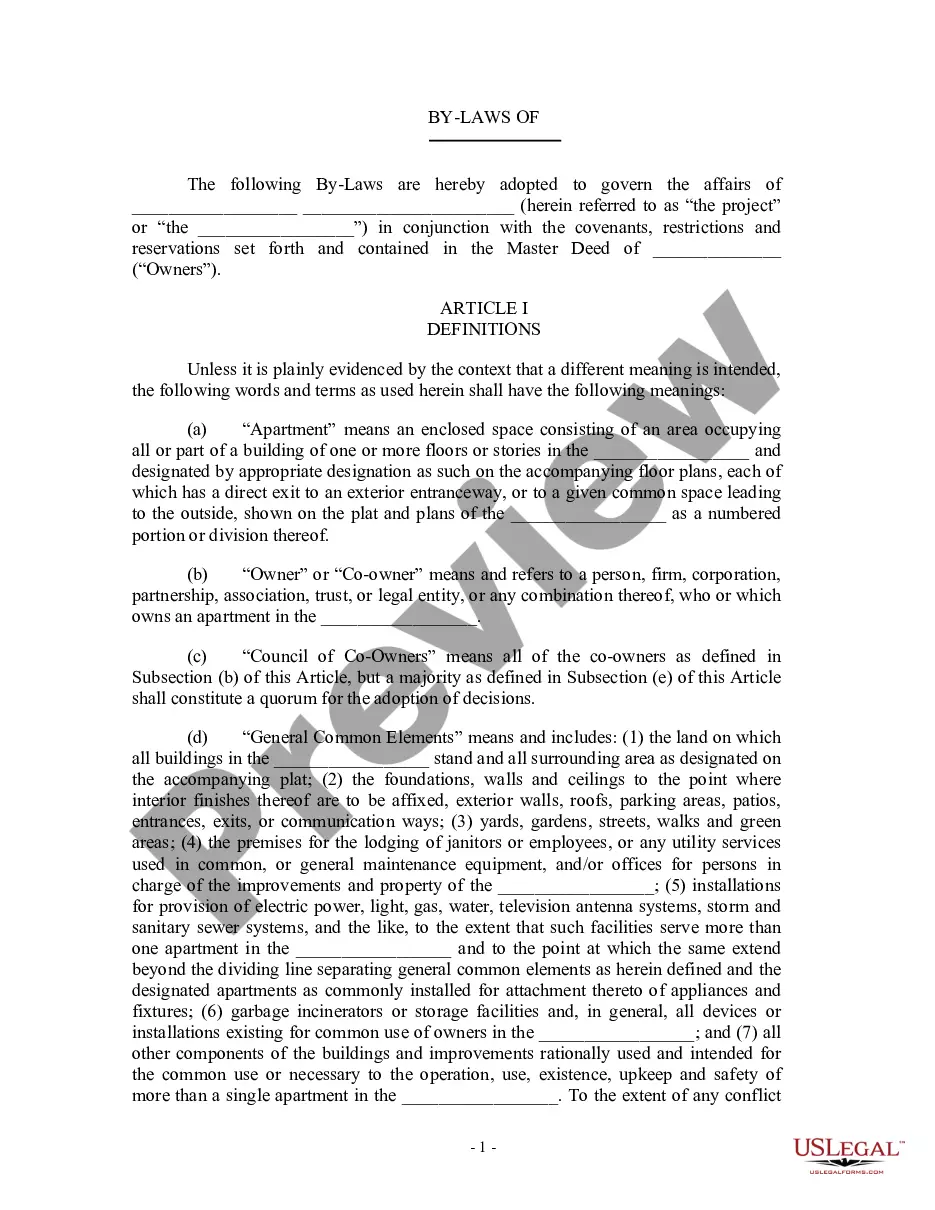
Get your form ready online
Our built-in tools help you complete, sign, share, and store your documents in one place.
Make edits, fill in missing information, and update formatting in US Legal Forms—just like you would in MS Word.
Download a copy, print it, send it by email, or mail it via USPS—whatever works best for your next step.
Sign and collect signatures with our SignNow integration. Send to multiple recipients, set reminders, and more. Go Premium to unlock E-Sign.
If this form requires notarization, complete it online through a secure video call—no need to meet a notary in person or wait for an appointment.
We protect your documents and personal data by following strict security and privacy standards.

Make edits, fill in missing information, and update formatting in US Legal Forms—just like you would in MS Word.

Download a copy, print it, send it by email, or mail it via USPS—whatever works best for your next step.

Sign and collect signatures with our SignNow integration. Send to multiple recipients, set reminders, and more. Go Premium to unlock E-Sign.

If this form requires notarization, complete it online through a secure video call—no need to meet a notary in person or wait for an appointment.

We protect your documents and personal data by following strict security and privacy standards.
Looking for another form?








Form popularity
FAQ
If your business is a corporation, then you are required by law to have a board of directors.
The absence of an HOA board can result in significant risks, including financial mismanagement, where bills go unpaid and dues are uncollected, leading to financial instability. Residents and city officials can also bring about legal actions against the HOA, resulting in expensive court actions.
Duties and powers of an HOA's board, granted by the NCPCA and the community's declaration, include enforcement of covenants, adopting budgets, assessing and collecting member fees, maintaining and regulating commons areas, and acting on behalf of the association in legal matters. N.C. Gen. Stat. §47F-3-102.
Subdivisions with homeowners' associations established after Jan. 1, 1999, are governed by the North Carolina Planned Community Act found in Chapter 47F of the North Carolina General Statutes. However, no state or federal agency oversees homeowners' associations.
For instance, California's Civil Code Section 4925 states that members can attend any non-executive portion of board meetings. For most HOAs, association members are allowed to attend most meetings.
Overall, MCIOA serves as the legal framework that governs the rights and responsibilities of HOAs and homeowners in Minnesota.
The board of directors is an essential—and required—aspect of any homeowners' association (HOA).
HOA Governance Structure in Minnesota The board of directors is usually responsible for managing the HOA's day-to-day affairs, making policy decisions, enforcing rules and regulations, and overseeing financial matters. The board members are elected by homeowners and serve terms outlined in the governing documents.
Yes, if the HOA fails to maintain common areas as required by the governing documents, you may have grounds for a lawsuit. Proper maintenance is often a primary duty of the HOA, and failure to uphold this duty can lead to property damage or safety hazards.
In summary, there is no case where HOA rules override state law. Considering the hierarchy, federal, state, and local laws always take precedence over an association's rules. Board members should have a solid grasp of these laws. In doing so, they can protect the HOA and mitigate the risk of liability.
