Condominium Bylaws Condo With Hoa In Harris
Description




Get your form ready online
Our built-in tools help you complete, sign, share, and store your documents in one place.
Make edits, fill in missing information, and update formatting in US Legal Forms—just like you would in MS Word.
Download a copy, print it, send it by email, or mail it via USPS—whatever works best for your next step.
Sign and collect signatures with our SignNow integration. Send to multiple recipients, set reminders, and more. Go Premium to unlock E-Sign.
If this form requires notarization, complete it online through a secure video call—no need to meet a notary in person or wait for an appointment.
We protect your documents and personal data by following strict security and privacy standards.

Make edits, fill in missing information, and update formatting in US Legal Forms—just like you would in MS Word.

Download a copy, print it, send it by email, or mail it via USPS—whatever works best for your next step.

Sign and collect signatures with our SignNow integration. Send to multiple recipients, set reminders, and more. Go Premium to unlock E-Sign.

If this form requires notarization, complete it online through a secure video call—no need to meet a notary in person or wait for an appointment.

We protect your documents and personal data by following strict security and privacy standards.
Looking for another form?





Form popularity
FAQ
The new law went into effect on Jan. 1, 2024. HOAs are mandated by law to provide property owners with a catalog outlining prohibited items, a fine timetable, and details on the conduct of hearings. The information must be posted to their website and given annually to residents via delivery, first-class mail, or email.
Most HOA documents are public record, including governing documents. Some states only require the HOA to make certain documents public, while others can be kept confidential.
The new law went into effect on Jan. 1, 2024. HOAs are mandated by law to provide property owners with a catalog outlining prohibited items, a fine timetable, and details on the conduct of hearings. The information must be posted to their website and given annually to residents via delivery, first-class mail, or email.
Homeowners associations (HOAs) can no longer deny building a fence for security. ing to a state law passed on Texas HOA fence rules in 2021, homeowners anywhere in the state are allowed to put up a perimeter fence for added security along the front, sides and/or back of their property.
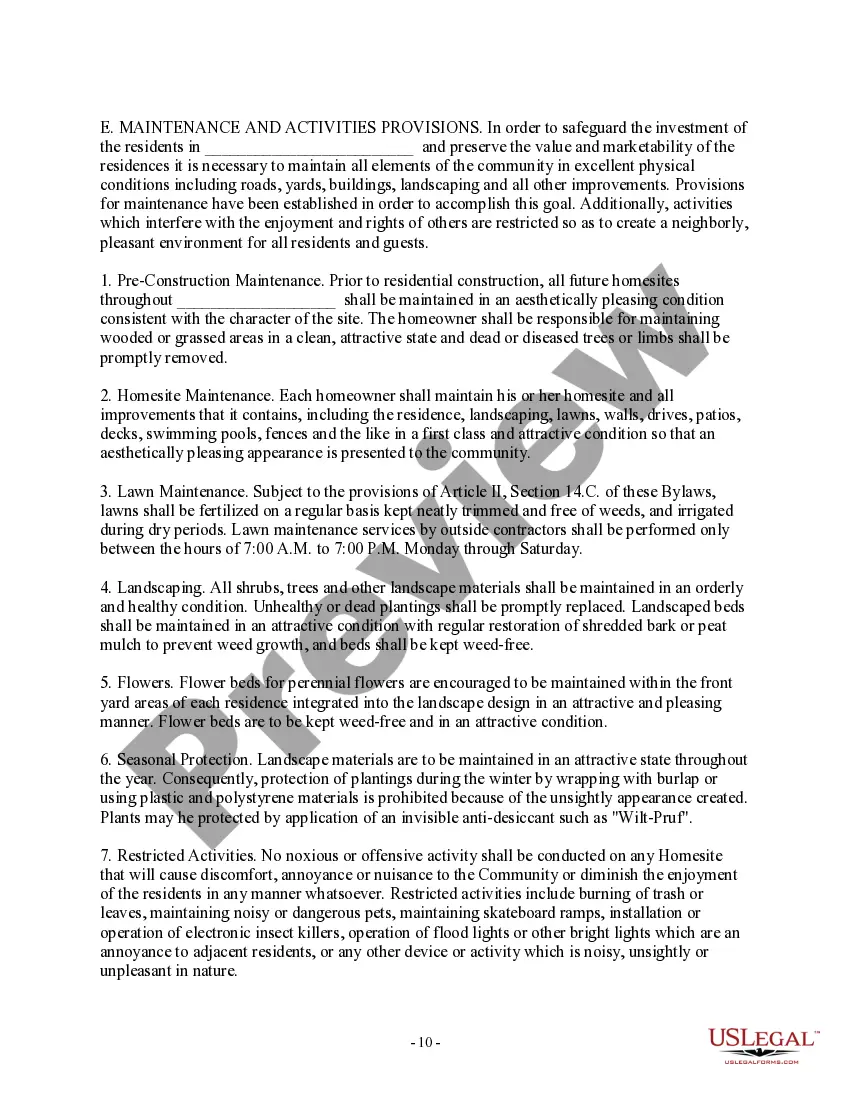
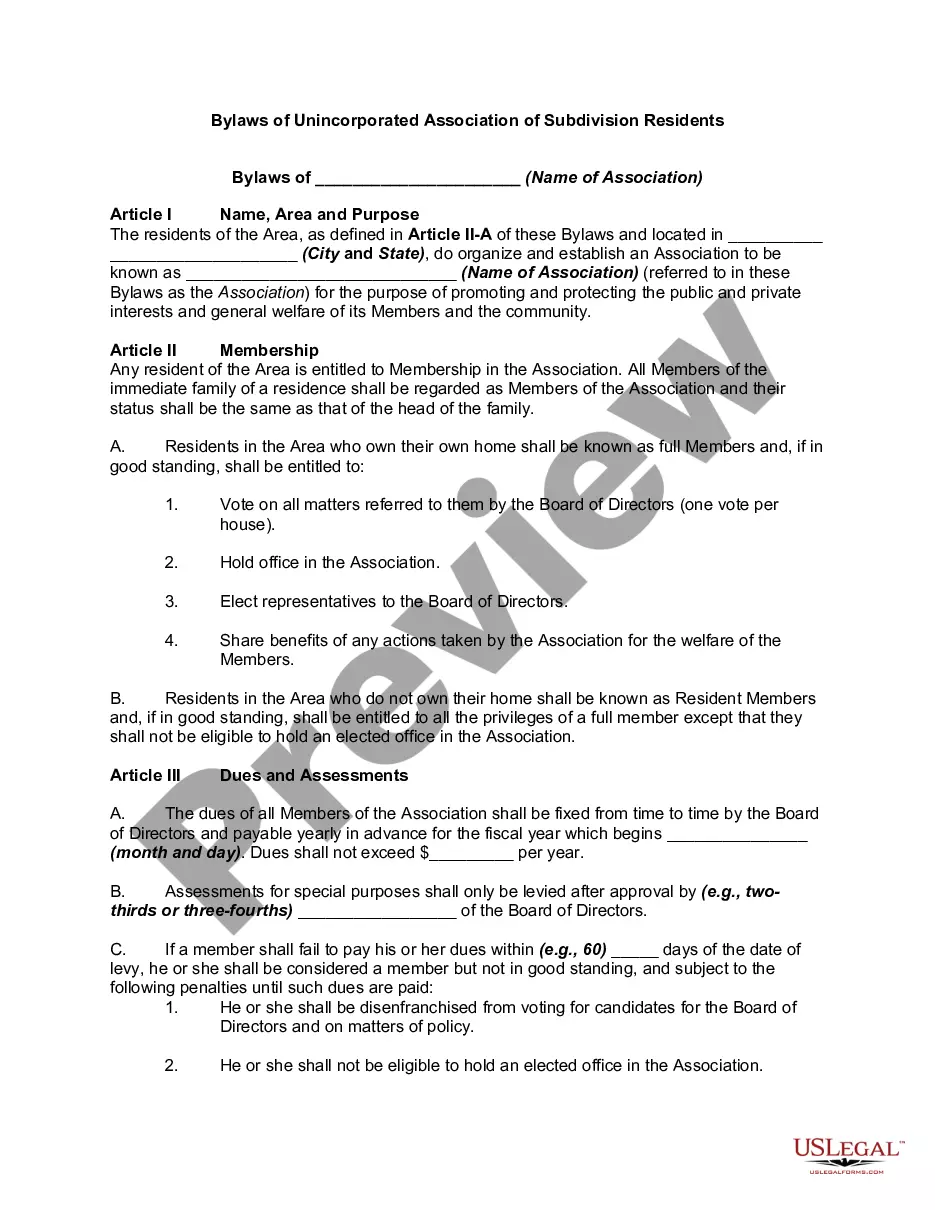
The inium bylaws govern the structure and operation of the association. They contain information regarding board meetings, elections, board terms, voting procedures, and the like. The bylaws are more about the management of the association than the rules that govern it and its members.
Disclosure Requirements Disclosure is mandated by law, often through public records and real property records. Before purchasing a home, buyers must receive a set of documents detailing the HOA's health, such as its covenants, conditions, restrictions, bylaws, rules, and financial statements.
4 years. The statute of limitations periods for HOA claims are different for every state. In Texas, consumer debt such as HOA & Condo fees have a statute of limitations of 4 years. Section 16.004 of the Texas Civil Practice and Remedies Code.
Texas law places limits on HOA power, including restrictions on their ability to prohibit certain types of construction like solar panels and rules against unreasonable fines or foreclosure practices. The exact limitations are outlined in state statutes, which are intended to protect homeowners' rights.
Consumer complaints may be submitted to the Texas Attorney General's Office.
