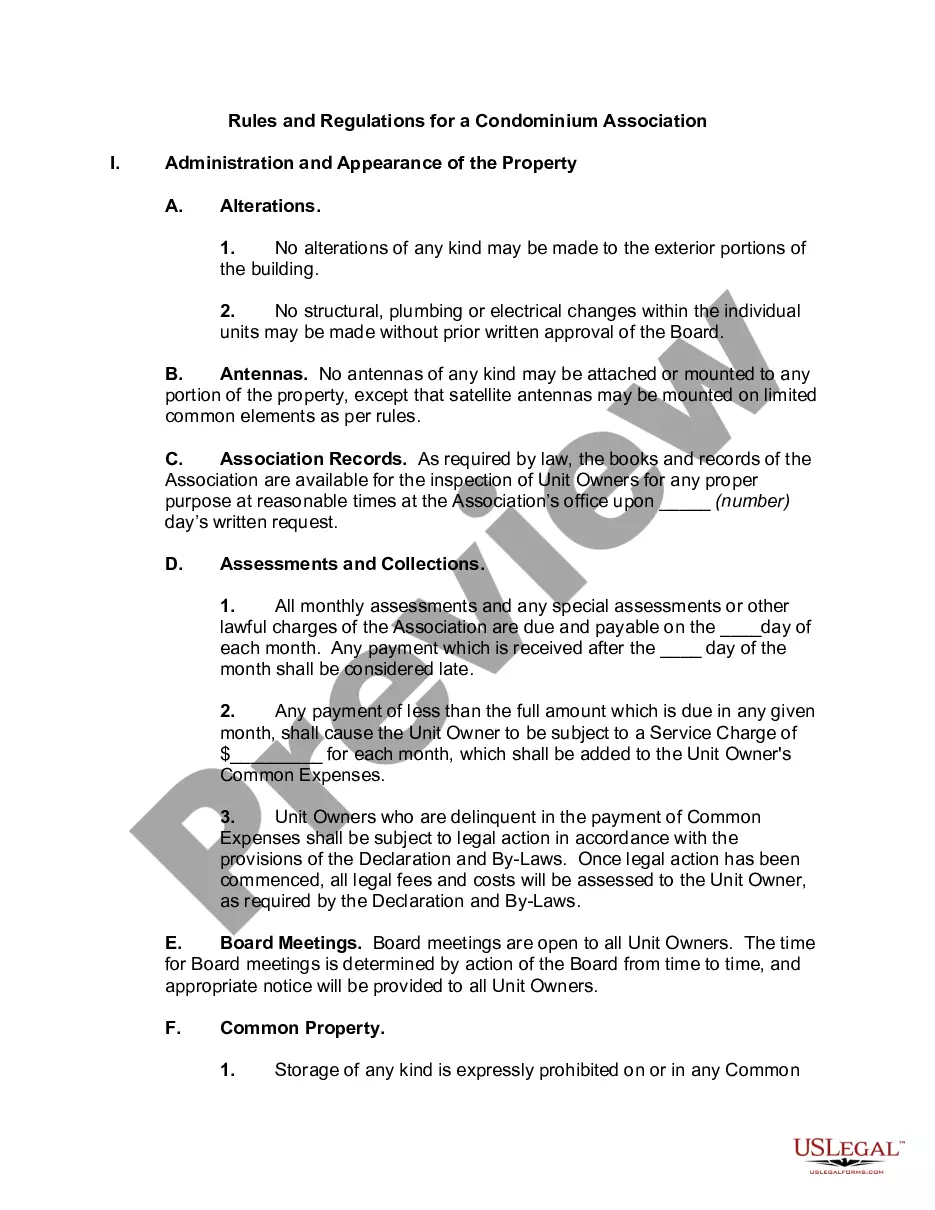
Bylaws For Condo Association In California
Description














Get your form ready online
Our built-in tools help you complete, sign, share, and store your documents in one place.
Make edits, fill in missing information, and update formatting in US Legal Forms—just like you would in MS Word.
Download a copy, print it, send it by email, or mail it via USPS—whatever works best for your next step.
Sign and collect signatures with our SignNow integration. Send to multiple recipients, set reminders, and more. Go Premium to unlock E-Sign.
If this form requires notarization, complete it online through a secure video call—no need to meet a notary in person or wait for an appointment.
We protect your documents and personal data by following strict security and privacy standards.

Make edits, fill in missing information, and update formatting in US Legal Forms—just like you would in MS Word.

Download a copy, print it, send it by email, or mail it via USPS—whatever works best for your next step.

Sign and collect signatures with our SignNow integration. Send to multiple recipients, set reminders, and more. Go Premium to unlock E-Sign.

If this form requires notarization, complete it online through a secure video call—no need to meet a notary in person or wait for an appointment.

We protect your documents and personal data by following strict security and privacy standards.
Looking for another form?






Form popularity
FAQ
What are unenforceable HOA rules? Keep you out of court. Hush up litigation. Discriminate indiscriminately. Enter your home without cause or notice. String you out on the (clothes)line. Fine you for fun. Change rules on the fly. Demand you take down your dish.
An HOA has the authority to enforce the rules and regulations of the community using the community rules, or “bylaws and covenants.” These rules are considered “agreed upon” since homeowners approve them through board-elected representatives.
While you can propose rule changes through proper channels, there's no legal way to simply ignore or “get around” the HOA's covenants, conditions, and restrictions (CC&Rs) that you agreed to when purchasing in the community.
In 2024, the California legislature passed an amendment that allowed online elections to be held within HOAs. It recognized that this could open the door to digital vote manipulation within the HOA's management, though, so the state mandated that each HOA election needed to have an independent inspector of elections.
The new HOA law in California, passed in September 2024, includes amendments to the Davis-Stirling Act of 1985. These amendments make it possible for HOAs to conduct elections online rather than through costly and time-consuming paper balloting.
Laws always supersede governing documents IF they conflict and the law applies to your HOA. In California, the Davis-Stirling Act may take precedent over general corporation codes because it's specific to HOAs.
The number is usually five. Very small associations sometimes call for three directors, and very large associations may have seven or more.
California Secretary of State Filings This process legalizes the HOA and creates a public record of its existence. The filings include not only the Articles of Incorporation but can also encompass records of financial statements and any potential dissolution of the HOA.
Email Discussions Outside of Board Meetings are Permitted Although the Open Meeting Act prohibits the board from acting on items of Association business outside a board meeting…it does not prohibit the board from discussing the items outside a meeting.” (LNSU #1, LLC v. Alta Del Mar Coastal Community Assn (2023).)
