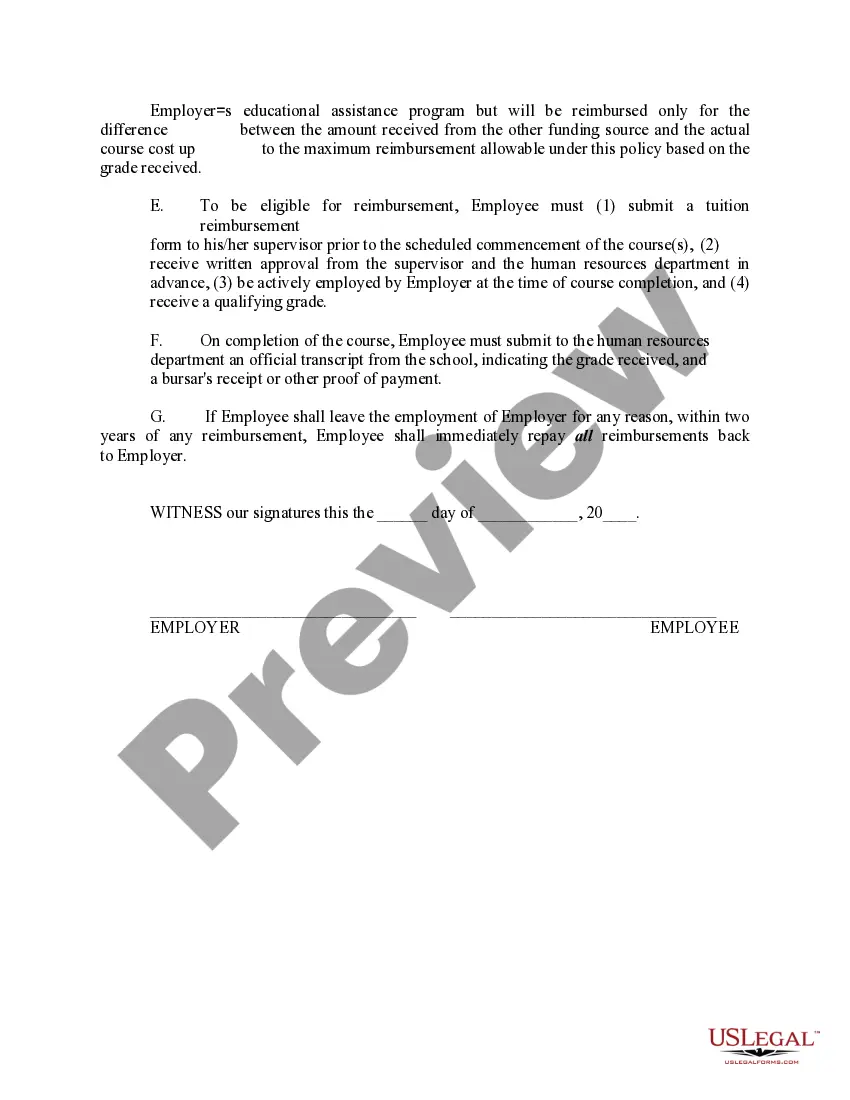
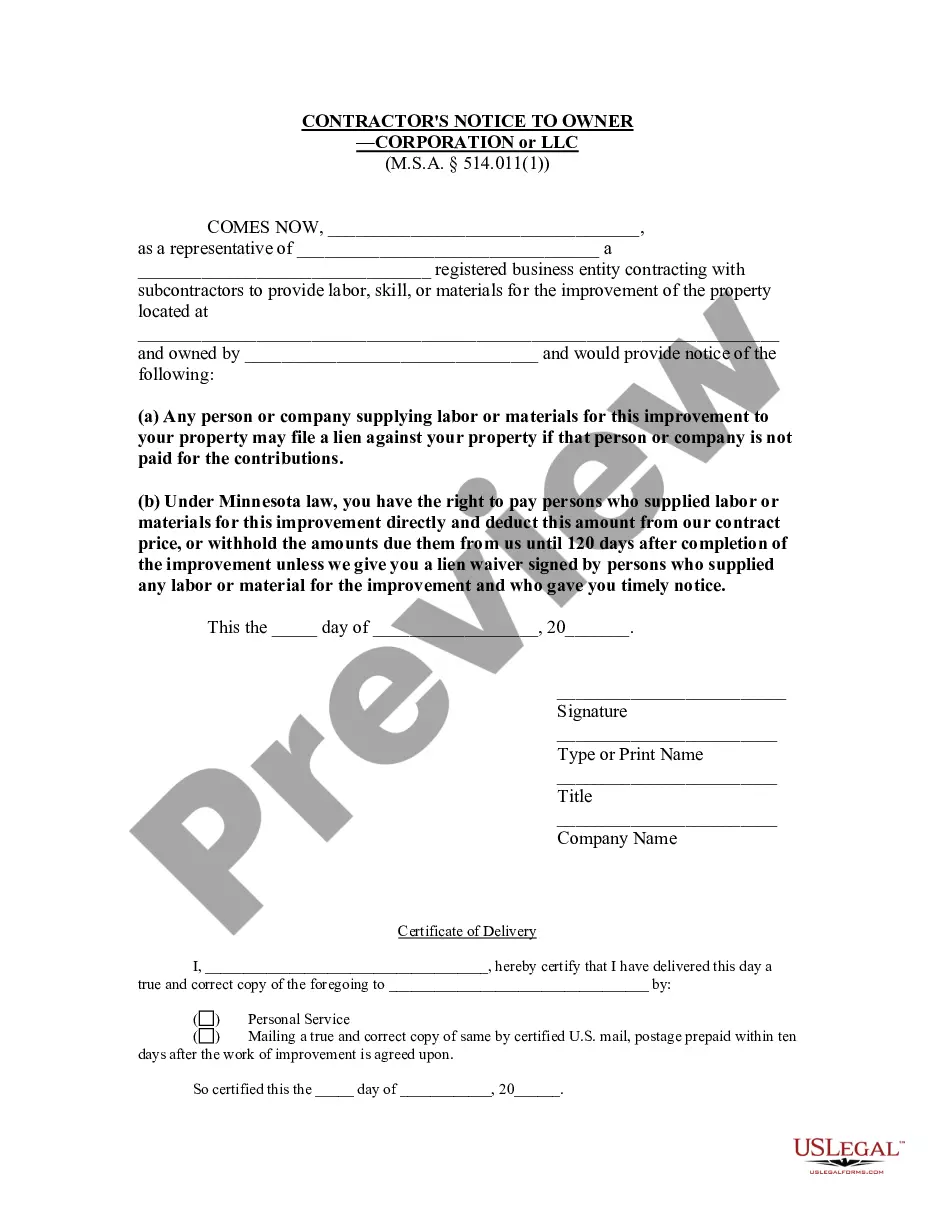
Educational Assistance Programs Employee With Non Work-related Problems In Nevada
Description

Get your form ready online
Our built-in tools help you complete, sign, share, and store your documents in one place.
Make edits, fill in missing information, and update formatting in US Legal Forms—just like you would in MS Word.
Download a copy, print it, send it by email, or mail it via USPS—whatever works best for your next step.
Sign and collect signatures with our SignNow integration. Send to multiple recipients, set reminders, and more. Go Premium to unlock E-Sign.
If this form requires notarization, complete it online through a secure video call—no need to meet a notary in person or wait for an appointment.
We protect your documents and personal data by following strict security and privacy standards.

Make edits, fill in missing information, and update formatting in US Legal Forms—just like you would in MS Word.

Download a copy, print it, send it by email, or mail it via USPS—whatever works best for your next step.

Sign and collect signatures with our SignNow integration. Send to multiple recipients, set reminders, and more. Go Premium to unlock E-Sign.

If this form requires notarization, complete it online through a secure video call—no need to meet a notary in person or wait for an appointment.

We protect your documents and personal data by following strict security and privacy standards.
Looking for another form?






Form popularity
FAQ
Nevada: Financial Assistance Resources for Families Child Care Financial Assistance. Temporary Assistance for Needy Families (TANF) ... Children's Health Insurance Program (CHIP) ... Women, Infants, and Children (WIC) ... Supplemental Nutritional Assistance Program (SNAP formerly Food Stamps) ... Low Income Energy Assistance Program.
The SNAP program is administered by the Nevada Department of Welfare and Social Services (DWSS). SNAP eligibility involves four elements: (1) low income and few assets, (2) citizenship or qualified alien status, (3) a Social Security Card, and (4) working or looking for work.
By definition, a “low-income” family typically earns 80 percent or less of the median family income for an area. For example, a family of four in Clark County can earn no more than $67,700 to be considered a low-income family.
Formal management referral is the most common type of EAP referral.
Similar to EAPs, a resource provided to members giving them access to counseling and referral services to assist with problems they may be having which negatively impact job performance. The union or business pays for this service for its members.
Federal EAP's are the first component of an Employee Wellness Program and should be designed to support and uplift the 8 Dimensions of Wellness, which include emotional, physical, occupational, intellectual, financial, social, environmental, and psychological aspects.
For the American Opportunity Credit the education credit income limit is as follows: Single, head of household, or qualifying widow(er) — $80,000-$90,000. Married filing jointly — $160,000-$180,000.
